
Photo: Wikipedia
Political ClimatePolitical Climate in Chamberlain, SD
District shown is the primary district for this city’s centroid. Cities may span multiple districts.
Inherited from parent state — no local data available.
Local Political AnalysisPolitical Analysis of Chamberlain, SD
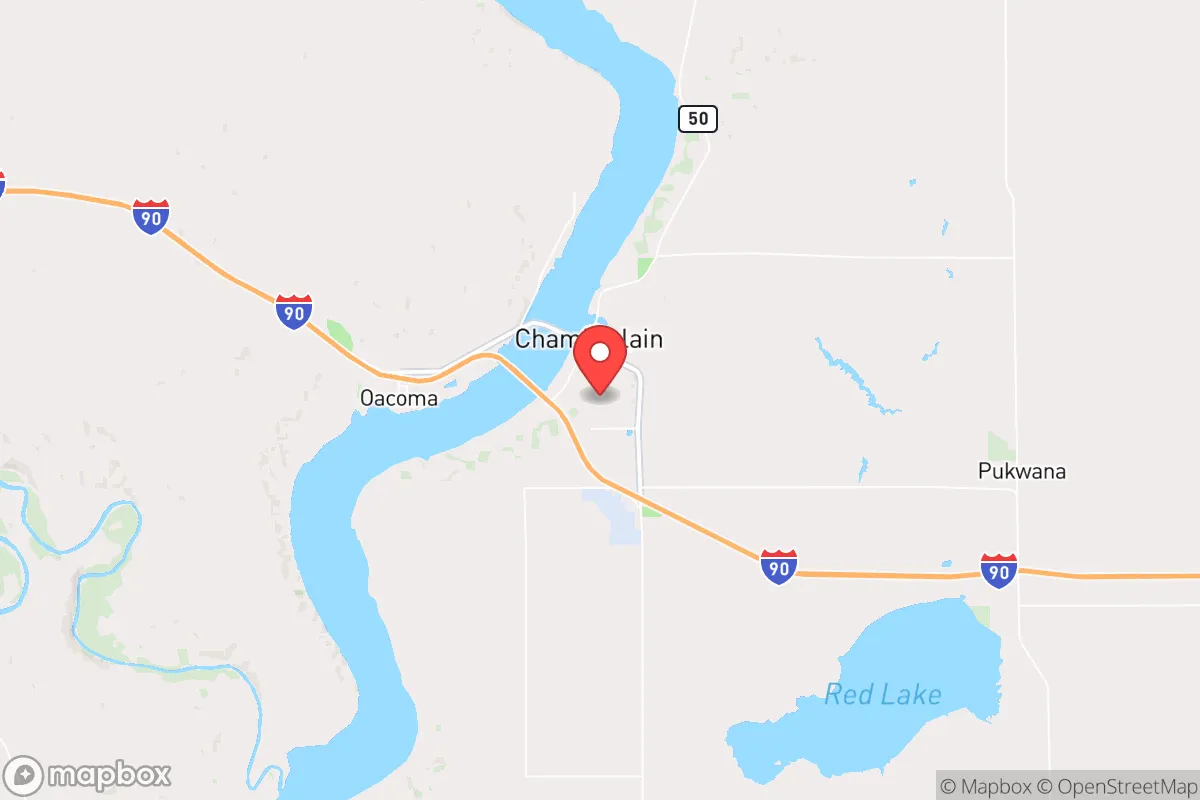
Chamberlain, South Dakota, sits in a reliably conservative corner of the state, with a Cook PVI of R+15 that reflects the area’s long-standing preference for limited government and traditional values. The town itself leans solidly Republican, though you’ll find a mix of independent ranchers and small-business owners who vote their conscience rather than a party line. Over the past decade, the political climate has stayed steady, but there’s a growing unease among locals about outside influences creeping in—especially from the more progressive pockets of Sioux Falls and Rapid City, which are about 90 miles east and 180 miles west, respectively. For a longtime resident, the feeling is that Chamberlain has held the line, but the pressure to shift left is real, and it’s something worth keeping an eye on.
How it compares
Compared to nearby towns like Platte (about 30 miles south) or Kimball (20 miles north), Chamberlain is actually a bit more moderate, thanks to its role as a regional hub for healthcare and tourism along I-90. Platte is even more conservative, with a stronger agricultural base and fewer outside influences, while Kimball leans similar but quieter. The real contrast comes when you look at the state’s two biggest cities: Sioux Falls has seen a noticeable shift toward progressive policies on taxes and social issues, and Rapid City has its own brand of libertarian-leaning conservatism that sometimes clashes with Chamberlain’s more traditional approach. In the 2024 election, Brule County (where Chamberlain sits) voted about 68% Republican, which is slightly below the state average but still deep red. The difference is that Chamberlain’s politics are more pragmatic—people here care about property rights, school choice, and keeping government out of their personal lives, rather than getting caught up in national culture wars.
What this means for residents
For someone moving here, the political climate means you’ll enjoy a lot of personal freedom—low taxes, minimal zoning restrictions, and a general attitude of “live and let live” as long as you’re not hurting anyone. The downside is that any push toward progressive ideology, like stricter environmental regulations or expanded government programs, is met with serious skepticism. Locals remember when the federal government tried to impose new water quality rules on the Missouri River (which runs right through town), and it sparked a fierce backlash that united ranchers, farmers, and small-business owners. That same spirit applies to issues like gun rights, homeschooling, and medical freedom—people here don’t want bureaucrats telling them how to raise their kids or run their land. If you value that kind of independence, you’ll fit right in. But if you’re hoping for a more activist government or a shift toward progressive social policies, you’ll find Chamberlain frustratingly resistant to change.
One cultural distinction worth noting is the strong influence of the Lower Brule Sioux Tribe, whose reservation borders Chamberlain to the north. Tribal politics are complex and often separate from the town’s, but there’s a mutual respect for sovereignty and self-determination—a value that aligns with the conservative emphasis on local control. That said, the town itself remains overwhelmingly white and Christian, with a social fabric built around churches, hunting, and high school sports. The biggest policy fights in recent years have been over school curriculum (parents successfully pushed back against critical race theory materials) and a proposed wind farm that locals worried would disrupt the landscape and property values. Looking ahead, the long-term trajectory depends on whether Chamberlain can maintain its conservative identity while attracting new residents from more liberal areas. For now, the vibe is cautious optimism—people are proud of their way of life, but they’re watching the horizon for any signs of government overreach.

State Political ClimatePolitical Climate in South Dakota
State Political AnalysisPolitical Environment in the State
South Dakota is a deeply conservative state, with a Republican lean that has only intensified over the past two decades. The GOP holds a supermajority in both legislative chambers, and the state hasn't voted for a Democratic presidential candidate since 1964. In 2024, Donald Trump carried the state by over 30 points. The dominant coalition is a blend of rural traditionalists, libertarian-leaning ranchers, and a growing number of conservative transplants fleeing blue states. The trajectory since 2000 has been a steady march rightward, with the state becoming a national laboratory for conservative policy—from permitless carry to near-total abortion bans.
Urban vs. rural divide
The political map is starkly divided between a few small urban islands and a vast conservative sea. Sioux Falls, the largest city, is the most competitive area—Minnehaha County voted +12 R in 2024, down from +18 in 2020, as transplants from Minnesota and California have nudged it slightly left. Rapid City and Pennington County are reliably Republican but with a libertarian streak, often clashing with state leadership on land-use issues. The real engine of conservatism is the rural expanse: counties like Harding, Perkins, and Jones routinely vote 85-90% Republican. Brookings (home to SDSU) and Vermillion (home to USD) are the only true blue dots, driven by university populations, but they're too small to shift statewide results. The Black Hills region around Custer and Lead is a mix of libertarian-leaning miners and conservative retirees, while the Missouri River counties like Stanley and Hughes (Pierre) are solidly red but more moderate on fiscal issues.
Policy environment
South Dakota's policy environment is aggressively pro-business and low-tax, with no state income tax and a sales tax capped at 4.5%. Property taxes are moderate, though they've crept up in growing areas like Harrisburg and Tea near Sioux Falls. The regulatory posture is light—no state-level occupational licensing for dozens of trades, and environmental reviews are minimal. Education policy is a mixed bag: the state passed a school choice bill in 2025 that expanded education savings accounts (ESAs) to all families, but teacher unions remain weak. Healthcare is dominated by Sanford Health and Avera, with no Medicaid expansion until 2023 (voters approved it via ballot measure, overriding the legislature). Election laws are among the most secure in the nation: voter ID is required, same-day registration is not allowed, and the state uses paper ballots audited by hand. There's no mail-in voting unless you have an excuse. The legislature has also passed laws banning ranked-choice voting and restricting ballot initiatives after out-of-state money funded the Medicaid expansion campaign.
Trajectory & freedom
South Dakota is becoming more free in most respects, but with some worrying signs of government overreach. On the plus side: in 2023, the state enacted permitless carry for handguns, joining the constitutional carry movement. In 2024, it passed a parental rights bill requiring schools to notify parents of any curriculum involving sexuality or gender identity, and allowing parents to opt their children out. The state also banned nearly all abortions after six weeks in 2022, with no exceptions for rape or incest—a law that survived a 2024 ballot measure attempt to overturn it. Property rights were strengthened with a 2023 law limiting eminent domain for carbon pipelines, a direct response to the Summit Carbon Solutions controversy. On the negative side: the state has expanded its sales tax on services (including streaming and ride-sharing) in 2024, a move that feels like a hidden tax hike. There's also been a push to ban TikTok on state devices and restrict certain social media algorithms, which some see as a slippery slope. Medical freedom took a hit with a 2023 law requiring prescription-only access to ivermectin and hydroxychloroquine, a reaction to COVID-era controversies.
Civil unrest & political movements
South Dakota is remarkably stable compared to coastal states, but there have been flashpoints. The Keystone XL pipeline protests in 2020-21 drew a mix of Native American activists and environmentalists, with the Rosebud Sioux Tribe leading opposition. The state's response was heavy-handed—Governor Kristi Noem deployed the National Guard and signed a law criminalizing trespassing near critical infrastructure. In 2023, the Summit Carbon Solutions pipeline sparked a new wave of landowner resistance, with ranchers in Spink and Beadle counties forming the "Landowner Action Fund" to fight eminent domain. On the right, the South Dakota Freedom Caucus has grown more assertive, pushing for a constitutional amendment to require a supermajority for tax increases. Immigration politics are low-key—the state has a small but growing Hispanic population in Sioux Falls and Yankton, and the legislature passed a 2024 law requiring local law enforcement to cooperate with ICE. There's no sanctuary city movement. Election integrity controversies are minimal, though a 2022 audit of Minnehaha County found no significant issues. The most visible flashpoint for a new resident would be the Mount Rushmore Fireworks controversy—the state sued the Biden administration in 2021 for blocking the event, and it's become a symbol of the state's defiance of federal overreach.
Projection
Over the next 5-10 years, South Dakota will likely become more conservative, but with a growing libertarian-populist tension. The in-migration from California, Colorado, and Minnesota is accelerating—Sioux Falls grew 15% between 2020 and 2025, and Rapid City is seeing a boom of remote workers. These newcomers are generally conservative but bring a "leave me alone" ethos that clashes with the state's traditional social conservatism. Expect more fights over property rights (pipelines, wind farms), school choice (ESAs will likely expand to cover private school tuition), and tax policy (a flat income tax is being debated). The biggest wildcard is the Native American vote—the nine reservations make up about 9% of the population but have low turnout. If Democrats ever invest in registration drives on the Pine Ridge and Cheyenne River reservations, it could flip a few legislative seats. But overall, the state's political trajectory is solidly red, with the only real debate being between establishment Republicans and the Freedom Caucus wing. A new resident moving in now should expect a state that values low taxes, gun rights, and local control, but with a growing tension between the old-school "good ol' boy" network and the new wave of liberty-minded transplants.
For a conservative-leaning individual or family, South Dakota offers a rare combination of fiscal sanity, cultural stability, and personal freedom. The tax burden is among the lowest in the nation, the schools are still teaching traditional values (with parental rights enshrined in law), and the gun laws are as free as they get. The downsides are real but manageable: a harsh winter, limited healthcare options in rural areas, and a political class that sometimes overreaches on social issues. If you're looking to escape a blue state's regulatory nightmare, South Dakota is a solid bet—just be prepared for the cold and the occasional fight over a pipeline. The state is what you make of it, and right now, it's making a strong case for itself as a refuge for the freedom-minded.
* Values derived from national, state, county, city and local statistics and may differ in a specific area. Last updated: 2026-05-02T05:34:28.000Z
Narrative content on this page is AI-generated and may contain mistakes. Verify any details that matter before acting on them.
ReloMaps may earn a commission from affiliate links at no extra cost to you.

