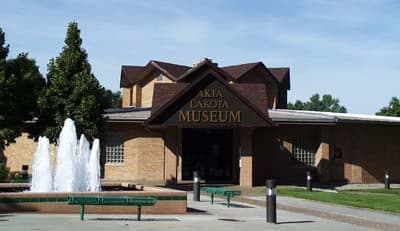
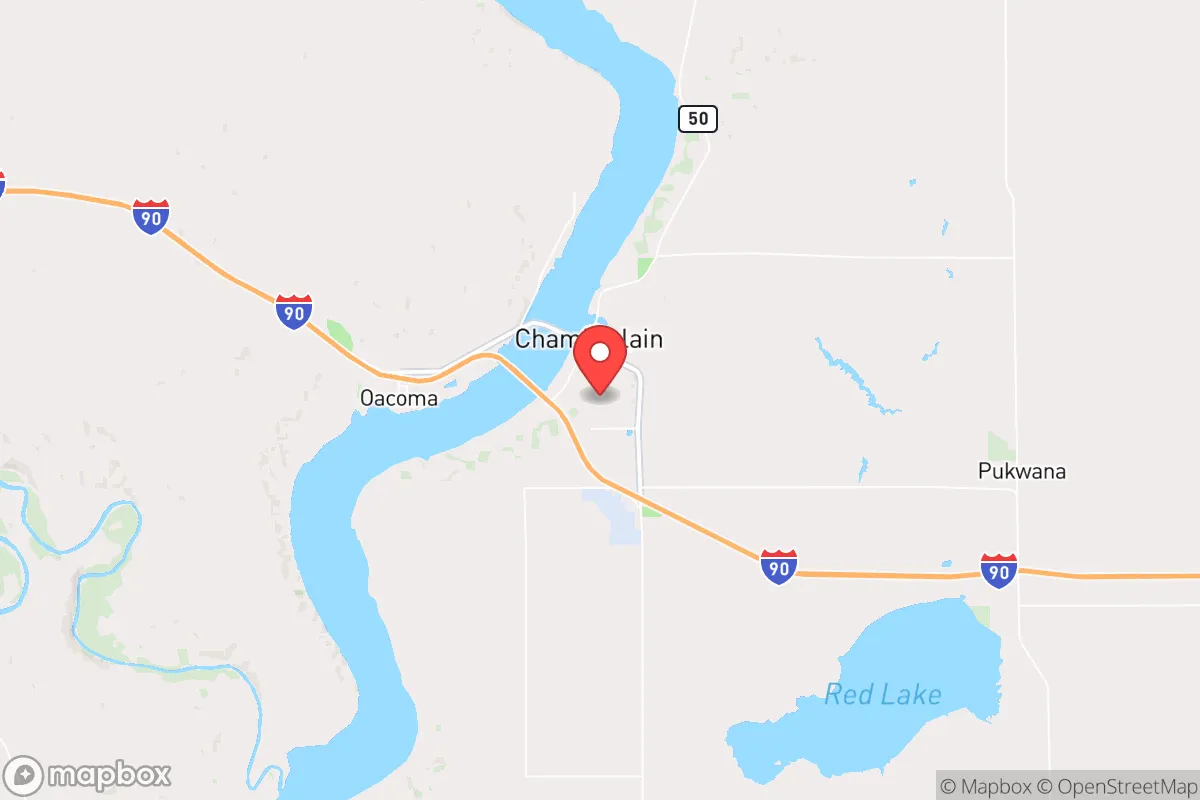
Photo: Wikipedia
Demographics of Chamberlain, SD
Affluence Level in Chamberlain, SD
A middle-class area roughly in line with national averages across income, home values, education, and employment.
People of Chamberlain, SD
The people of Chamberlain, South Dakota, today number 2,621, forming a tight-knit community that is predominantly White (69.2%) with a notable Native American presence (not explicitly listed in the data but historically significant given the city’s location near the Crow Creek and Lower Brule Sioux reservations). The city is characterized by a low population density, a strong sense of local identity tied to the Missouri River and the Lewis & Clark Trail, and a college-educated rate of 36.6% that reflects the influence of local healthcare and education sectors. Distinctive markers include a zero percent foreign-born population and a small Hispanic (2.6%) and Black (1.9%) presence, making Chamberlain one of the most ethnically homogenous small cities in the region.
How the city was settled and grew
Chamberlain was founded in 1881 as a railroad town on the Missouri River, serving as a key stop for the Chicago, Milwaukee, St. Paul and Pacific Railroad. The original population was drawn by the promise of land under the Homestead Act and the economic opportunities of river trade and agriculture. The first wave of settlers were primarily Northern European immigrants—Germans, Norwegians, and Swedes—who built the early neighborhoods along Main Street and the riverfront district now known as Old Town Chamberlain. These groups established the town’s Lutheran and Catholic churches, which remain community anchors. A second wave in the early 1900s brought Irish and Czech families, who settled in the West Side neighborhood near the railroad tracks, working as laborers and small business owners. By 1950, the population had grown to around 1,800, with the economy shifting from agriculture to include tourism and the St. Joseph’s Indian School (founded in 1927), which drew Native American students and staff from the surrounding reservations.
Modern era (post-1965)
After the 1965 Immigration and Nationality Act, Chamberlain saw virtually no international immigration—the foreign-born population remains at 0.0% today. Instead, domestic in-migration from rural South Dakota and neighboring states like Nebraska and Iowa drove modest growth. The construction of Interstate 90 in the 1960s bypassed the city center, leading to the development of East Highway 16 as a commercial corridor with motels, gas stations, and the iconic Dignity statue. The Lakeview Heights subdivision, built in the 1970s and 1980s, attracted middle-class families seeking newer housing, while the South Side neighborhood near the river saw an influx of retirees and seasonal residents. The Native American population, though not captured in the racial data provided, remains a significant presence, with many families living in the St. Joseph’s area and commuting from the nearby reservations. The Hispanic and Black populations, while small, have grown slightly since 2000, primarily through employment at the local hospital and the Avera Health system.
The future
Chamberlain’s population is projected to remain stable or decline slightly over the next 10-20 years, mirroring trends in rural South Dakota. The city is not homogenizing into a single enclave but rather tribalizing into distinct neighborhoods: Old Town remains the historic core with older, long-term residents; Lakeview Heights is the preferred area for young families and professionals; and the East Highway 16 corridor is becoming a transient zone of service workers and short-term residents. The immigrant communities are not growing—the foreign-born share is zero—and the Hispanic and Black populations are plateauing at low single-digit percentages. The Native American population, however, may increase slightly as the St. Joseph’s Indian School expands its programs and as tribal members move closer to healthcare and education services. The college-educated rate of 36.6% is likely to rise as remote work attracts a small number of professionals seeking a low-cost, rural lifestyle.
Chamberlain is becoming a stable, slow-growth community where the population is aging in place, with limited in-migration from outside the region. For someone moving in now, the city offers a predictable, low-diversity environment with strong social ties, but little demographic dynamism or growth in new ethnic or cultural groups. The neighborhoods are clearly defined by income and length of residence, making it a place where newcomers will need to actively integrate into existing social networks.

* Values derived from national, state, county, city and local statistics and may differ in a specific area. Last updated: 2026-05-02T05:34:28.000Z
Narrative content on this page is AI-generated and may contain mistakes. Verify any details that matter before acting on them.
ReloMaps may earn a commission from affiliate links at no extra cost to you.

