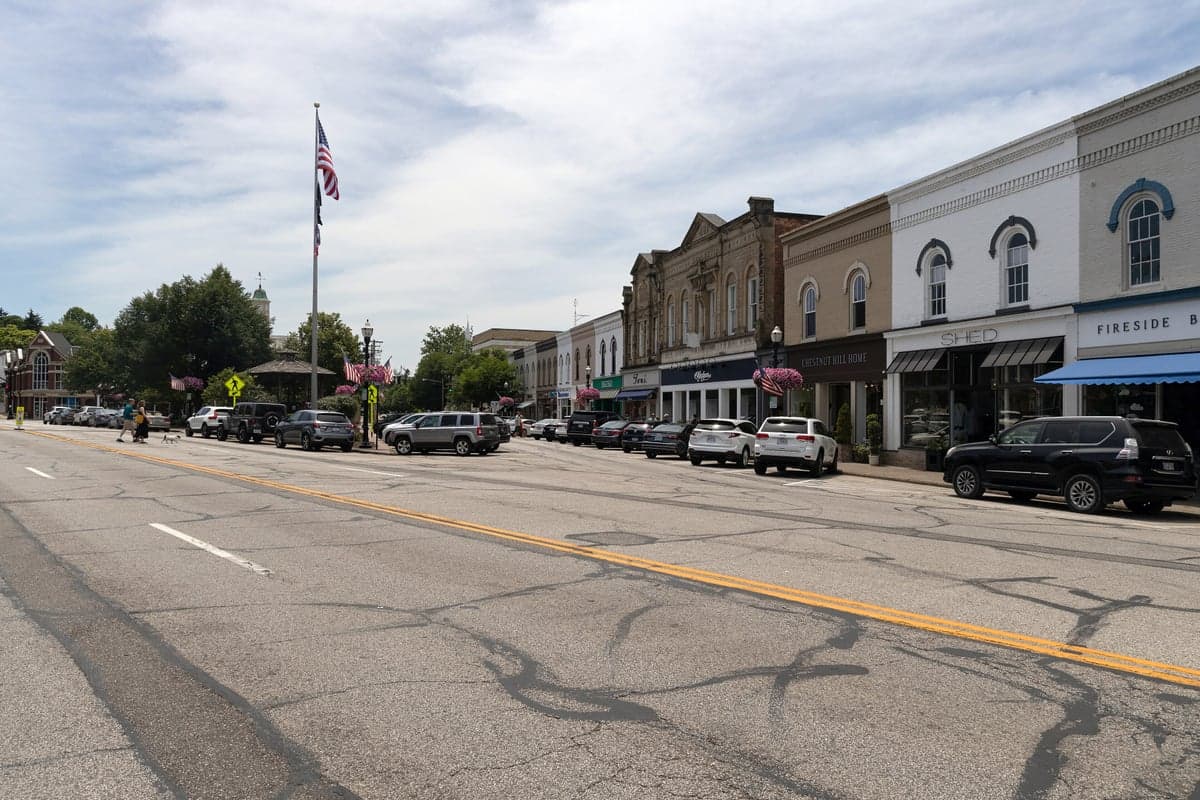
Photo: Wikipedia
Strategic Assessment of Chagrin Falls, OH
Meaningful friction. Expect exposure to either population pressure, blast zones, or natural disaster risk. Consider buying a retreat property.
What does the Strategic Assessment tell us?
Our Strategic Assessment grades tactical survivability of an area. Major population centers, military targets, fallout zones, natural disasters, and border exposure all drive risk — lower exposure means a more defensible position in a crisis.
This is heavily inspired by Joel Skousen's Strategic Relocation book. Highly recommended you checkout the book ($)What does this tell us?
Our Strategic Assessment grades tactical survivability of an area. Major population centers, military targets, fallout zones, natural disasters, and border exposure all drive risk — lower exposure means a more defensible position in a crisis.
This is heavily inspired by Joel Skousen's Strategic Relocation book. Highly recommended you checkout the book ($)Strategic Pillars

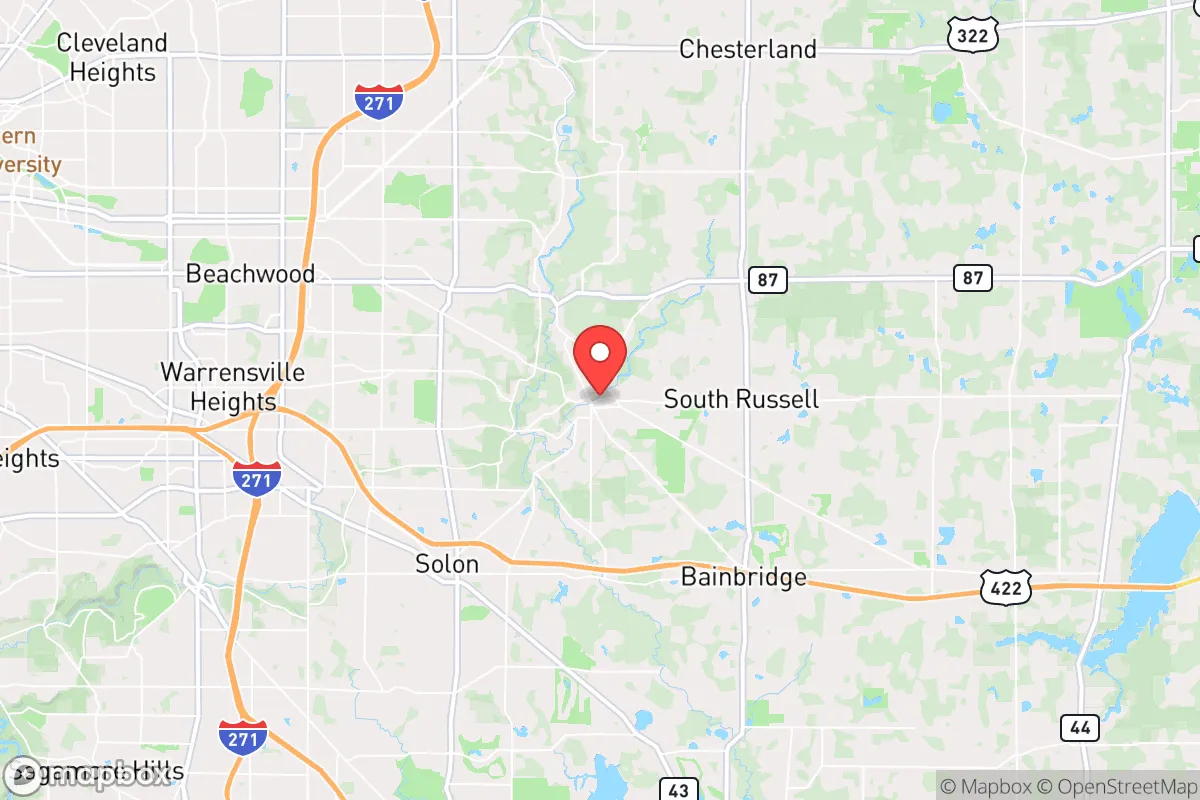
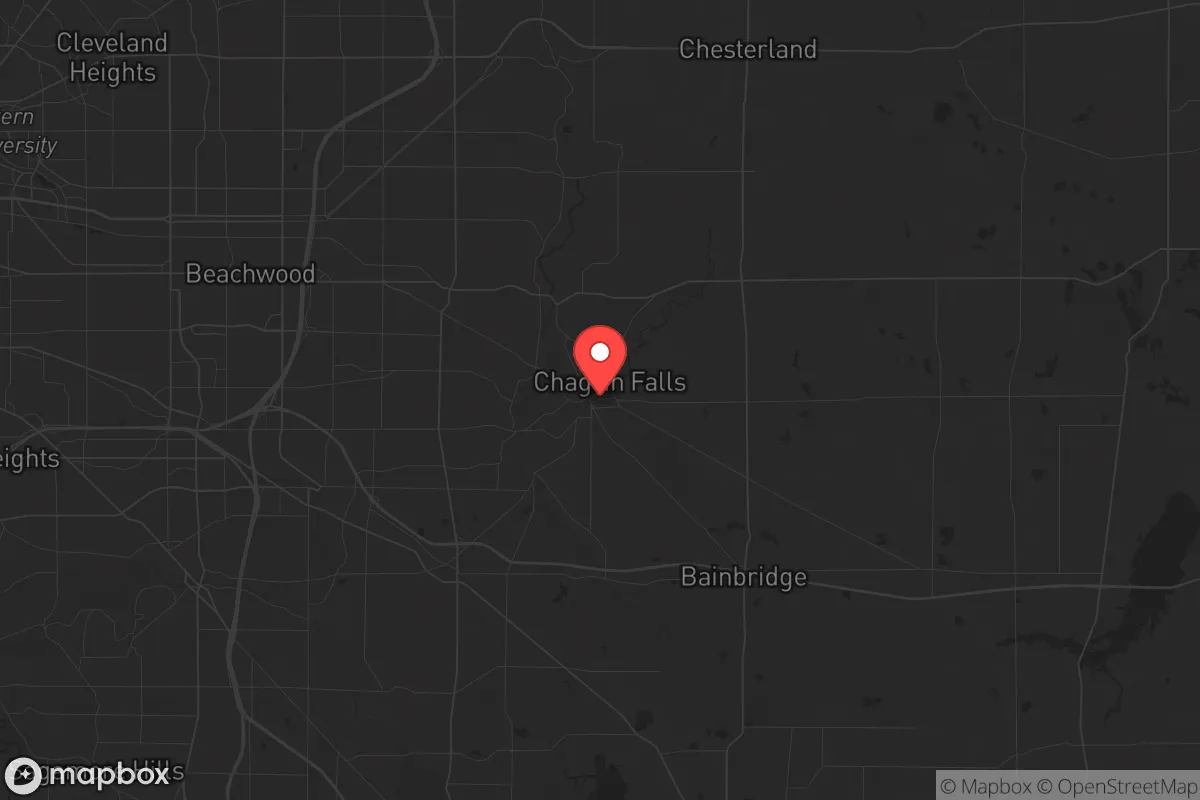
Key Distances
Regional Safe Places
Below is our recommended "safe zones" in Ohio and the surrounding area based on our strategic heuristics. For most people, it's unrealistic to live in a “safe zone” full-time due to work, family or other personal reasons. They tend to be more rural. However, many of these areas are perfect for second homes and retreat properties that double as a vacation home or even a short-term rental.

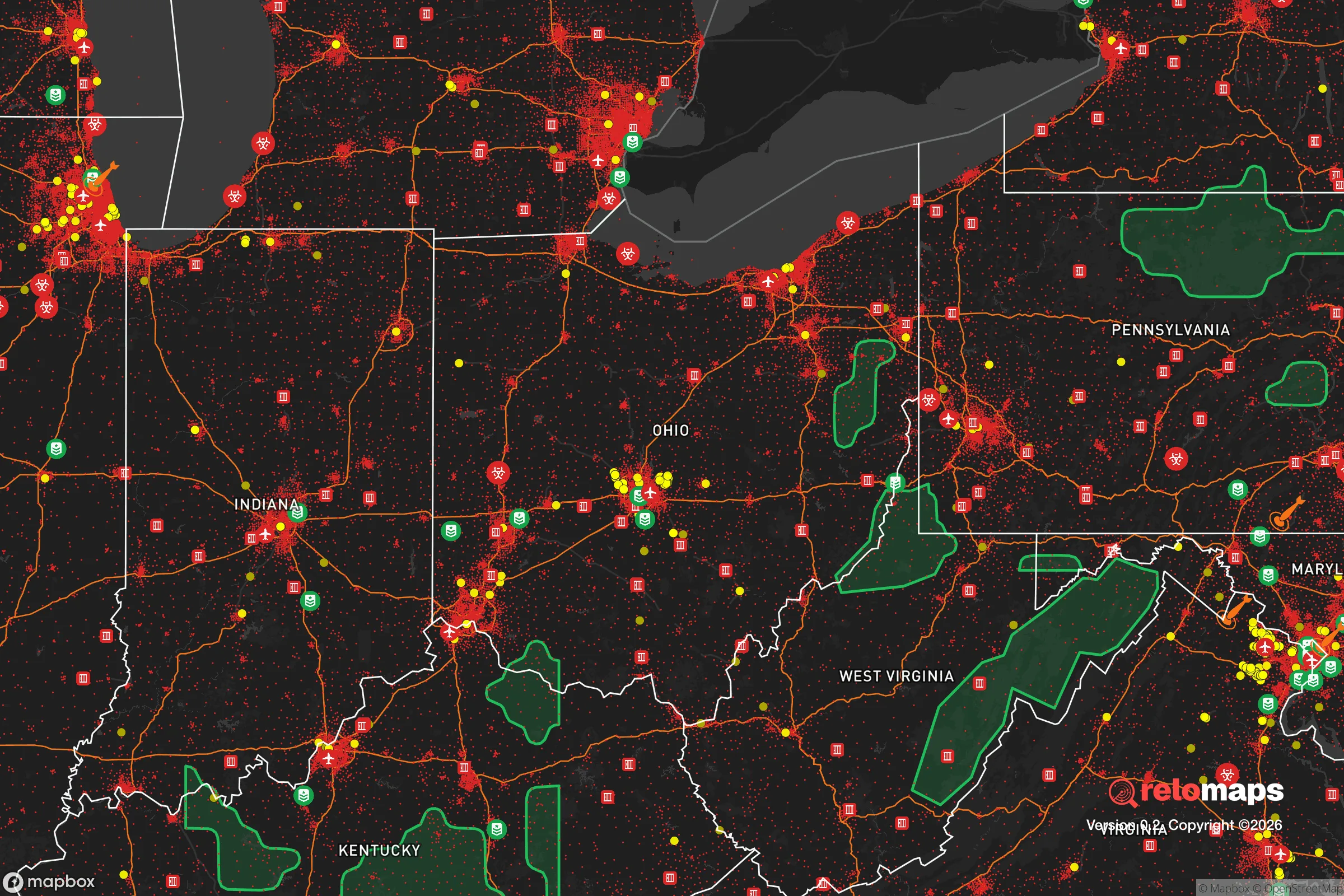


Important Note: For informational purposes only. This does not mean nothing bad ever happens in the green zones. Please use common sense. This is based on public data and modeled with AI. We tried to take a conservative approach but mistakes happen. We update this regularly as new information becomes available.
Solar Generator Recommendations
Backup power matters more here than in safer locations. We've picked three solar generators across budgets and capacity tiers — start with the budget unit if you only need a few essentials, or step up if you want to run a fridge and HVAC for days at a time.

Jackery Portable Power Station Explorer 300
Budget OptionPower on the Go: Weighing only 11 lbs, it's convenient to set up and store with book-sized foldable solar panels

BLUETTI Portable Power Station AC180
Designed for both indoor and outdoor scenarios, AC180 is highly capable as it has a robost capacity and continuous output power.

EF ECOFLOW DELTA Pro Ultra Power Station
Upgraded PickEcoFlow DELTA Pro Ultra is a whole-home energy system designed to grow with your family. Integrated with the Smart Home Panel 2, it scales to meet your evolving energy needs — keeping your home powered, intelligent, and secure through every stage of life.
We earn a commission, at no additional cost to you.
Strategic Assessment Analysis
Chagrin Falls, Ohio, occupies a strategic position that balances the advantages of Northeast Ohio’s natural geography with the inherent vulnerabilities of proximity to a major metropolitan area. For a relocator prioritizing disaster readiness and self-sufficiency, the village offers a mix of defensible terrain and resource access, but its resilience is heavily contingent on understanding the risks posed by its location within the Greater Cleveland orbit. The Cuyahoga River Valley and the surrounding Chagrin Valley provide natural buffers and water resources, yet the area’s dependence on regional infrastructure and its proximity to potential fallout targets demand a clear-eyed assessment.
Geographic position and natural advantages for preparedness
The village sits within the glaciated Allegheny Plateau, a region characterized by rolling hills, deep river valleys, and dense deciduous forest. This topography offers natural concealment and defensibility—the steep valley walls and winding roads create chokepoints that would slow unauthorized movement, a feature not lost on those planning for grid-down scenarios. The Cuyahoga River, which runs through the village, provides a reliable surface water source, though treatment would be necessary. The area’s elevation, roughly 750 feet above sea level, places it above the Lake Erie floodplain, reducing exposure to lake-effect storm surges. The surrounding Chagrin Valley is part of the larger Western Allegheny Plateau ecoregion, which supports diverse wildlife and hardwood forests suitable for foraging, fuel, and timber. The region’s average annual precipitation of 40 inches ensures consistent water availability, and the deep, well-drained soils in the valley bottoms are viable for small-scale agriculture. For a relocator, the natural advantages are real but localized—the village itself is a dense, walkable settlement, but the surrounding townships (Bainbridge, South Russell, and Hunting Valley) offer more acreage and lower population density, which improves long-term sustainability.
Risks, exposures, and proximity to fallout-relevant landmarks
The most significant vulnerability for Chagrin Falls is its location within the Cleveland-Akron-Canton combined statistical area, a region with a population exceeding 3.5 million. Cleveland’s industrial and infrastructure assets—including the Cleveland Hopkins International Airport, the Port of Cleveland, and multiple rail yards—are potential targets in a conflict scenario. The Davis-Besse Nuclear Power Station, located 40 miles west of Chagrin Falls along Lake Erie, represents a dual risk: a conventional attack or catastrophic failure could produce a radioactive plume that, under prevailing westerly winds, would travel directly over the village. The Perry Nuclear Power Plant, 30 miles northeast, poses a similar but less direct threat. Additionally, the village lies within 20 miles of the Cuyahoga Valley National Park, a popular recreation area that would likely become a refugee corridor in a crisis, straining local resources. Natural risks are comparatively moderate: the region is in a low-seismic zone, and tornado activity is below the Great Plains average, though severe thunderstorms and occasional ice storms can disrupt power for days. Flooding along the Cuyahoga River is a localized concern for properties within the 100-year floodplain, but the village’s stormwater management system is generally adequate for routine events.
Practical resilience for a relocator: food, water, energy, and defensibility
For a relocator serious about self-sufficiency, Chagrin Falls presents a mixed picture. The village’s water supply comes from the Cleveland Water Department, which draws from Lake Erie—a system vulnerable to both contamination and infrastructure failure. A private well is not feasible within the village limits due to lot sizes and bedrock depth, but properties in adjacent Bainbridge and Russell townships commonly have wells, offering a decentralized water source. The electric grid is served by FirstEnergy, with overhead lines that are susceptible to ice and wind damage; a backup generator or solar-plus-battery system is advisable. Natural gas is widely available for heating, but a grid-down scenario would require wood or propane. The local food system is robust by Rust Belt standards: the Chagrin Falls Farmers Market operates seasonally, and the surrounding Geauga and Portage counties have a strong agricultural base, including Amish and Mennonite farms within a 30-minute drive. For long-term food security, the area’s growing season (roughly 150 frost-free days) supports cool-weather crops, but soil acidity in the valley may require amendment. Defensibility is moderate: the village’s compact layout and single main road (Ohio Route 422) create a natural funnel, but the dense tree cover and steep ravines offer cover for perimeter security. The local police department is small (roughly 15 officers), and the Cuyahoga County Sheriff’s Office provides backup, but response times in a widespread event would be stretched. The community’s social cohesion is a genuine asset—Chagrin Falls has a strong civic culture, with active churches, a volunteer fire department, and neighborhood watch programs that would facilitate mutual aid.
The overall strategic picture for Chagrin Falls is one of conditional resilience. The natural geography—forested hills, river access, and moderate climate—provides a solid foundation for a prepared relocator, but the village’s integration into the Cleveland metro area introduces risks that cannot be mitigated solely by individual action. For a family or individual willing to invest in off-grid infrastructure (well water, solar, food storage) and to establish relationships with the surrounding rural communities, Chagrin Falls offers a defensible base with access to both wilderness and regional resources. However, those seeking complete isolation or a location far from population centers and critical infrastructure should look farther east into Ashtabula or Trumbull counties. For the strategic-minded relocator who values community, natural beauty, and a moderate climate but understands the trade-offs of suburban proximity, Chagrin Falls is a viable, if not optimal, choice.

* Values derived from national, state, county, city and local statistics and may differ in a specific area. Last updated: 2026-08-10T17:45:38.000Z
Narrative content on this page is AI-generated and may contain mistakes. Verify any details that matter before acting on them.
ReloMaps may earn a commission from affiliate links at no extra cost to you.

