Photo: Wikipedia
Demographics of Celina, OH
Affluence Level in Celina, OH
A middle-class area roughly in line with national averages across income, home values, education, and employment.
People of Celina, OH
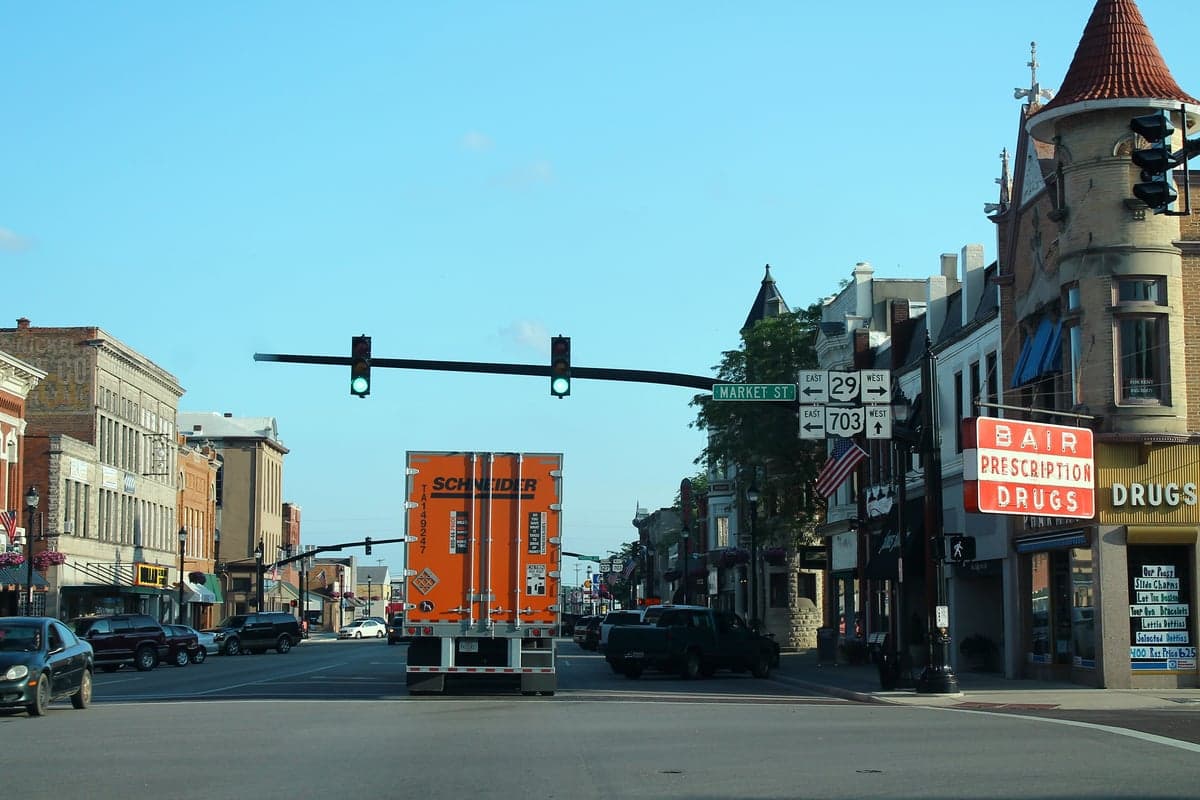
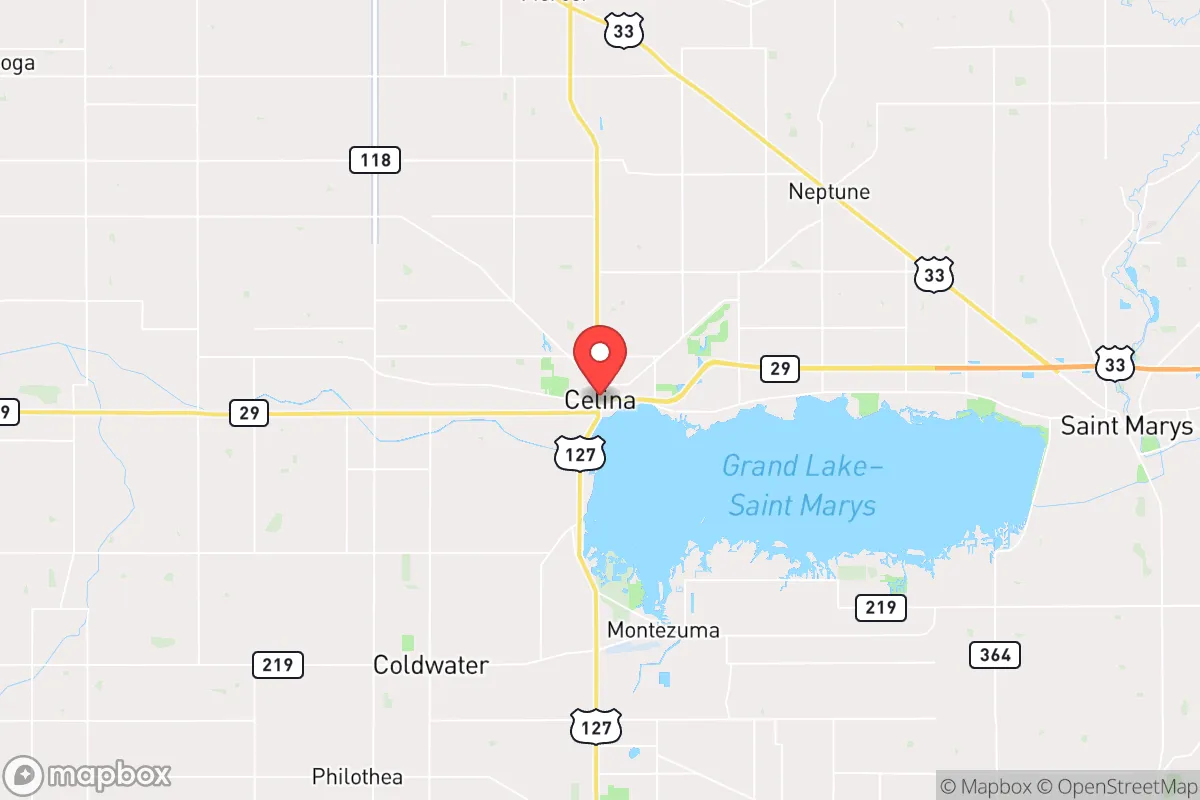
The people of Celina, Ohio today number 11,017, forming a predominantly white (90.6%) and native-born (98.9% U.S.-born) community centered on the shores of Grand Lake St. Marys. The city’s identity is rooted in its role as the Mercer County seat and a regional hub for agriculture, manufacturing, and lake-based recreation, giving it a stable, family-oriented character with a median age slightly older than the national average. With only 21.4% of adults holding a bachelor’s degree or higher, the workforce leans heavily toward skilled trades, factory work, and small business, reflecting a practical, blue-collar ethos that has defined the area for generations.
How the city was settled and grew
Celina’s original population was drawn by the promise of fertile farmland and the construction of the Miami and Erie Canal in the 1830s and 1840s. The canal, which connected the Ohio River to Lake Erie, made Celina a key shipping point for grain and livestock, attracting a wave of German and Irish immigrants who dug the canal and later settled the land. The German Catholic families, in particular, established a strong cultural and religious presence that persists today, building St. Marys Catholic Church and anchoring the North Main Street Historic District, where many of their original brick homes and storefronts still stand. The Irish laborers, meanwhile, clustered in the Westown neighborhood near the canal basin, an area that remained working-class through the early 1900s. A second wave arrived in the late 19th century with the discovery of oil and natural gas in the region, bringing a smaller influx of Eastern European workers—mostly Polish and Slovak—who settled in the South Side near the railroad yards. By 1900, Celina’s population had reached roughly 4,000, and the city’s ethnic makeup was overwhelmingly German and Irish, with a small but visible Black community that had formed around the East Market Street corridor, drawn by railroad and domestic work.
Modern era (post-1965)
After the 1965 Immigration and Nationality Act, Celina saw virtually no new foreign-born arrivals—its foreign-born share today is just 1.1%, far below the national average. Instead, the city’s modern demographic story is one of domestic stability and modest suburbanization. The 1970s and 1980s brought a wave of white families from rural Mercer County into Celina proper, drawn by the expansion of manufacturing plants like Crown Equipment Corporation (forklifts) and Reynolds and Reynolds (business forms), which became the area’s largest private employers. These new residents filled the Lake Shore Drive and Parkwood Estates subdivisions, post-war neighborhoods of ranch homes and split-levels that ring the lake’s eastern edge. The city’s Black population, which had peaked at around 3% in the 1960s, declined to 2.0% by 2020 as younger families left for larger cities. The Hispanic share grew slightly to 3.2%, driven by a small number of Mexican-origin workers employed in agriculture and food processing, concentrated in the Westown area near the former canal corridor. East and Southeast Asian residents (0.2%) and Indian-subcontinent residents (0.0%) are virtually absent, reflecting Celina’s limited draw for high-skilled immigration or university-related migration.
The future
Celina’s population is projected to remain flat or decline slightly over the next decade, mirroring trends across rural Ohio. The city’s low college attainment rate and limited job growth outside manufacturing suggest that out-migration of young adults will continue, while the aging white population (median age roughly 40) will grow as a share. The Hispanic population is the only group expected to increase meaningfully, potentially reaching 5-6% by 2040, as agricultural and food-processing jobs in the surrounding county attract more families. These new residents are likely to settle in the Westown and South Side neighborhoods, where housing is more affordable and rental stock is available. The city’s cultural identity will likely remain strongly German Catholic and lake-oriented, with little pressure toward the diversification seen in larger Ohio metros. For a new resident, Celina offers a stable, low-crime environment with a tight-knit social fabric, but those seeking racial or ethnic diversity will find it largely absent.
Celina is becoming a quieter, older, and slightly more Hispanic version of its 20th-century self—a place where family roots run deep, the lake defines the rhythm of life, and change comes slowly. For someone moving in now, the city offers a predictable, community-focused lifestyle with strong schools and low cost of living, but little of the cultural variety or economic dynamism found in larger cities.

* Values derived from national, state, county, city and local statistics and may differ in a specific area. Last updated: 2026-10-15T00:57:02.000Z
Narrative content on this page is AI-generated and may contain mistakes. Verify any details that matter before acting on them.
ReloMaps may earn a commission from affiliate links at no extra cost to you.

