 Popular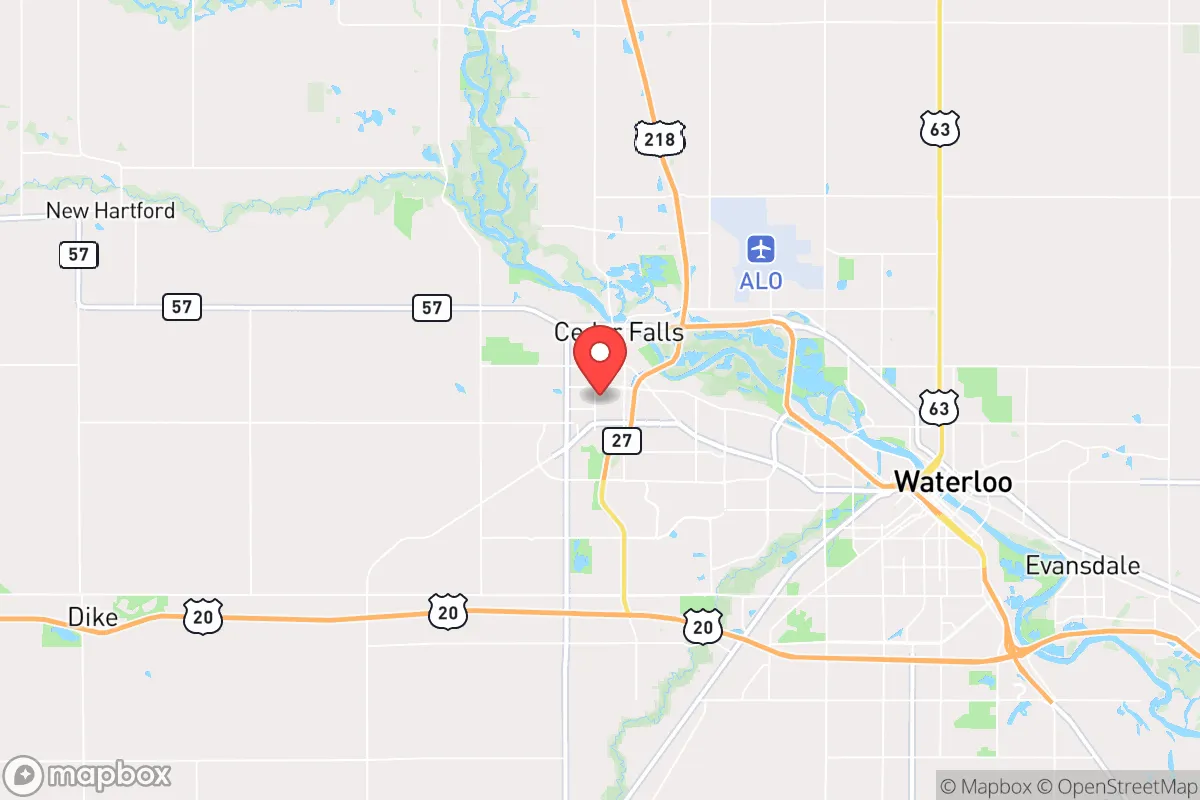

Photo by Brett Foreman on Unsplash
Political ClimatePolitical Climate in Cedar Falls, IA
District shown is the primary district for this city’s centroid. Cities may span multiple districts.
Local Political AnalysisPolitical Analysis of Cedar Falls, IA
Cedar Falls has long been a bit of a political oddball in Iowa—a college town with a conservative streak that’s held on tighter than most. The Cook PVI of R+4 tells the real story: this isn’t some deep-red rural outpost, but it’s also not the progressive stronghold you’d expect from a city that hosts the University of Northern Iowa. For decades, the local vibe was reliably center-right, with a focus on fiscal responsibility and a live-and-let-live attitude toward personal choices. But lately, you can feel the ground shifting under your feet. The university’s influence is pulling things left, and the old-school conservative majority is getting squeezed between a growing progressive student population and the steady, traditional values of the surrounding Black Hawk County farm communities.
How it compares
Drive ten miles south to Waterloo, and you’re in a different world—politically, it’s a blue dot in a red county, with a much stronger union and minority presence. Head west to Hudson or east to Dunkerton, and you’ll find the kind of rock-ribbed Republican strongholds where the PVI might as well be R+20. Cedar Falls sits right in the middle, and that’s where the tension lives. The city council has seen a slow creep of progressive priorities—think bike lanes over road repairs, and symbolic resolutions on national issues that have nothing to do with potholes or property taxes. Meanwhile, the surrounding towns are watching with a wary eye, worried that Cedar Falls is becoming a test case for the kind of government overreach that starts with “well-intentioned” policies and ends with mandates on everything from lawn care to landlord rights.
What this means for residents
If you value personal freedoms—the right to run your business without a dozen new regulations, or to send your kids to school without a political agenda baked into the curriculum—you’re going to feel the squeeze in Cedar Falls over the next few years. The local school board has already seen heated battles over library books and parental notification policies, and the city’s recent flirtation with a “welcoming city” ordinance raised eyebrows among folks who just want the cops to enforce the law, not pick sides. Property taxes are creeping up to fund pet projects that benefit a vocal minority, and the old guard is getting tired of fighting every zoning change and budget line item. The long-term trajectory is concerning: if the progressive wave keeps rolling, you could see Cedar Falls turn into a smaller version of Iowa City—a place where government feels like it’s in your business more than it’s on your side.
On the cultural side, Cedar Falls still has its charms—the Sturgis Falls celebration, the farmer’s market, and a downtown that hasn’t been completely sanitized by chain stores. But the policy distinctions are sharpening. The city’s decision to opt into the state’s “back the blue” resolution was a win for common sense, but the push for a diversity, equity, and inclusion office at city hall feels like a solution in search of a problem. If you’re looking for a place where government stays out of your way and lets you live your life, Cedar Falls is still a decent bet—but you’ll want to keep an eye on the city council meetings and school board elections. The next few cycles will decide whether this town stays true to its roots or gets pulled into the kind of top-down governance that’s made other college towns feel less like home.

State Political ClimatePolitical Climate in Iowa
State Political AnalysisPolitical Environment in the State
Iowa has been a reliably Republican state in presidential elections since 2016, but it wasn't always that way. The state voted for Barack Obama in 2008 and 2012, making its shift to the right one of the most dramatic in the Midwest. Today, the GOP holds all four U.S. House seats, both U.S. Senate seats, and supermajorities in the state legislature. The governor’s mansion has been held by Republicans since 2011. This isn't a purple state anymore — it's a solid red one, driven by a coalition of rural conservatives, evangelical voters, and suburbanites who have soured on the national Democratic brand. The 2024 presidential election saw Donald Trump win Iowa by roughly 13 points, a margin that would have been unthinkable a decade ago.
Urban vs. rural divide
The political map of Iowa is a textbook case of the urban-rural split. The state’s two largest metros — Des Moines and Iowa City — are the blue islands in a sea of red. Polk County (Des Moines) has trended Democratic, but it’s not enough to offset the massive Republican margins in the rest of the state. Johnson County, home to the University of Iowa in Iowa City, is the most reliably Democratic county in the state, often voting 70%+ for Democratic candidates. Meanwhile, rural counties like Sioux County in the northwest (home to a large Dutch Reformed population) and Grundy County in the central part of the state routinely deliver 75-80% of their votes to Republicans. The suburbs around Des Moines — places like Ankeny, Waukee, and Urbandale — are the real battlegrounds. These areas were once swing territory, but they’ve shifted rightward in recent cycles, especially among parents concerned about school policies and COVID-era mandates. The 2022 midterms saw these suburbs break heavily for Governor Kim Reynolds, who won re-election by nearly 19 points.
Policy environment
Iowa’s policy environment is among the most conservative in the Midwest. The state has a flat income tax rate of 3.8% (down from nearly 9% a decade ago), with a plan to drop to 3.5% by 2027. There is no inheritance tax, and property taxes are relatively low compared to neighboring states like Illinois and Minnesota. The regulatory posture is business-friendly, with a right-to-work law on the books and no state-level minimum wage above the federal $7.25. Education policy has been a major focus: in 2023, Governor Reynolds signed a universal school choice bill, creating Education Savings Accounts (ESAs) that allow any family to use public funds for private or homeschool expenses. This was a huge win for parental rights advocates. On healthcare, Iowa expanded Medicaid under the Affordable Care Act, but the state has also pursued work requirements for able-bodied adults on the program. Election laws were tightened in 2021 with a law that reduced early voting days, required polls to close at 8 p.m., and banned private funding for election administration. The state also passed a voter ID law in 2017. On guns, Iowa became a permitless carry state in 2021, allowing any law-abiding adult to carry a concealed firearm without a permit. The state also has a "stand your ground" law and preempts local gun ordinances, meaning cities like Des Moines cannot enact their own restrictions.
Trajectory & freedom
Iowa is clearly trending toward more personal freedom, at least from a conservative perspective. The 2021 permitless carry law (HF 756) was a landmark expansion of Second Amendment rights. The 2023 school choice law (HF 68) gave parents unprecedented control over their children’s education, breaking the public school monopoly. On medical freedom, Iowa passed a law in 2022 prohibiting mask mandates in schools and another in 2023 banning COVID-19 vaccine mandates for state employees and contractors. The state also passed a "medical conscience" law allowing healthcare providers to refuse to participate in procedures they object to, such as abortion or gender transition treatments. On the abortion front, Iowa passed a "fetal heartbeat" law in 2018 (blocked by courts until 2023), and after the Dobbs decision, the state enacted a six-week abortion ban in 2023, which was upheld by the Iowa Supreme Court in 2024. Property rights are strong, with no statewide zoning mandates and a relatively low property tax burden. The only area where freedom has arguably contracted is in the realm of gender identity: a 2023 law banned transgender athletes from competing in girls’ sports, and a 2024 law restricted gender transition procedures for minors. For a conservative family, these are seen as protections, not restrictions.
Civil unrest & political movements
Iowa has not seen the kind of large-scale civil unrest seen in coastal states. The 2020 Black Lives Matter protests in Des Moines and Iowa City were relatively small and peaceful compared to cities like Portland or Seattle. The most visible political movements in recent years have been on the right. The "Parents’ Rights" movement exploded in 2021-2022, with school board meetings in suburbs like Ankeny and Waukee drawing hundreds of parents angry about mask mandates, critical race theory, and library books. This grassroots energy directly fueled the 2023 school choice law. On the left, the most organized group is the Iowa Democratic Party’s rural outreach arm, but it has struggled to gain traction. Immigration politics are less heated than in border states, but there have been flashpoints: in 2023, Governor Reynolds sent Iowa National Guard troops to the Texas border, and the state passed a law making it a crime for someone previously deported to re-enter Iowa. There is no sanctuary city policy anywhere in the state; in fact, a 2018 law requires local law enforcement to cooperate with federal immigration authorities. Election integrity remains a hot topic: the 2020 election in Iowa was widely seen as secure, but the 2021 voting law was a direct response to concerns about mail-in ballot fraud. You won’t see protests in the streets, but you will see passionate debates at county fairs and church potlucks.
Projection
Over the next 5-10 years, Iowa is likely to become even more conservative. The state is experiencing a slow but steady population shift: rural counties are losing population, while the Des Moines metro is growing. However, the newcomers to the suburbs are often conservatives fleeing high-tax states like Illinois and California. A 2023 study by the Iowa Department of Revenue found that the largest share of new residents came from Illinois, followed by Minnesota and California — all blue states. These migrants tend to be fiscally conservative and socially moderate-to-conservative, reinforcing the state’s rightward tilt. The Democratic Party’s base is shrinking as older, more liberal voters in rural areas die off and are not replaced. The state’s congressional delegation is likely to remain all-Republican for the foreseeable future. The only wild card is the possibility of a national Democratic wave, but even then, Iowa’s structural advantages for the GOP are strong. For a new resident, expect the state to continue cutting taxes, expanding school choice, and protecting gun rights. The culture war issues — abortion, transgender rights, and education — will remain front and center, with the legislature likely to pass further restrictions.
For a conservative individual or family considering a move, Iowa offers a stable, low-tax, high-freedom environment that is only getting better. The state is safe, the schools are improving thanks to choice, and the political climate is aligned with traditional values. You won’t find the chaos of coastal cities here. What you will find is a place where your vote actually counts, your rights are respected, and your children can grow up in a community that shares your values. Just be prepared for cold winters and even colder attitudes toward government overreach.
* Values derived from national, state, county, city and local statistics and may differ in a specific area. Last updated: 2026-04-30T05:51:35.000Z
Narrative content on this page is AI-generated and may contain mistakes. Verify any details that matter before acting on them.
ReloMaps may earn a commission from affiliate links at no extra cost to you.

