 Popular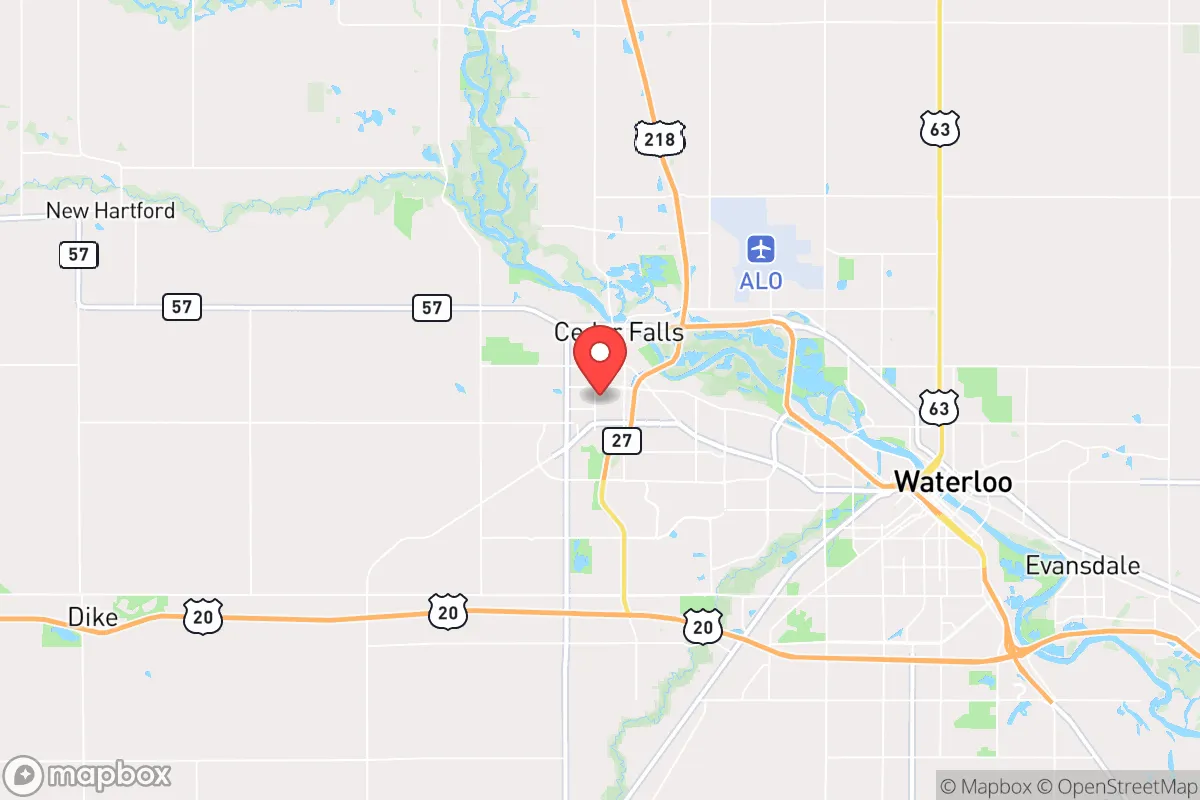
Photo by Brett Foreman on Unsplash
Demographics of Cedar Falls, IA
Affluence Level in Cedar Falls, IA
A middle-class area roughly in line with national averages across income, home values, education, and employment.
People of Cedar Falls, IA
The people of Cedar Falls, Iowa, number roughly 40,662 and form a predominantly white, highly educated community with a distinctive small-city character shaped by its university presence and historic industrial roots. With 89.9% of residents identifying as white and 49.2% holding a college degree, the city stands out as an academic and professional hub within the Cedar Valley region. A notably low foreign-born population of 2.2% and small minority shares—2.8% Hispanic, 1.9% East/Southeast Asian, 1.5% Black, and 1.4% Indian—reflect a demographically stable, largely native-born population that has grown gradually rather than through rapid diversification.
How the city was settled and grew
Cedar Falls was founded in 1845 along the Cedar River, with its early population drawn by waterpower for milling and later by the arrival of the Illinois Central Railroad in the 1860s. The original settlers were primarily Yankee migrants from New England and upstate New York, followed by waves of German and Irish immigrants who built the city's early industrial base. These groups concentrated in the Old Cedar Falls Historic District, where the original mill workers' cottages and merchant homes still stand, and in the College Hill area, which grew around the Iowa State Normal School (now the University of Northern Iowa) founded in 1876. By the early 20th century, Scandinavian immigrants—particularly Swedes and Norwegians—joined the mix, settling in the North Cedar neighborhood near the railroad yards and the John Deere foundry, which became the city's largest employer. The city's population grew steadily through the mid-20th century, reaching roughly 30,000 by 1960, driven by manufacturing jobs at Viking Pump and the expanding university.
Modern era (post-1965)
After the 1965 Immigration and Nationality Act, Cedar Falls saw only modest demographic change compared to larger Midwestern cities. The foreign-born population remains low at 2.2%, and the city's growth since the 1970s has come primarily from domestic in-migration—professionals and families drawn to the university, the strong public schools, and the relatively low cost of living. The Greenhill neighborhood, developed from the 1970s through the 1990s, absorbed many of these new residents, particularly university faculty and white-collar workers employed at the UNI campus or at nearby Waterloo's manufacturing plants. The small East/Southeast Asian community (1.9%) includes families connected to the university's international programs and a handful of professionals in engineering and healthcare, with a modest concentration near College Hill. The Indian community (1.4%) is similarly university-linked, with many households in the University Hills area near campus. The Hispanic population (2.8%) has grown slowly, with some families settling in the South Cedar area near the industrial corridor along Highway 58. The Black population (1.5%) remains very small, with no distinct ethnic enclave; most Black residents are professionals or students associated with UNI.
The future
Cedar Falls is likely to remain a predominantly white, highly educated community over the next 10–20 years, with gradual rather than transformative demographic change. The city's population has grown at a modest pace—roughly 5% since 2010—and projections suggest continued slow growth driven by university enrollment and retirement migration from rural Iowa. The foreign-born population may increase slightly as UNI expands its international student recruitment, but the city lacks the large immigrant-employing industries or refugee resettlement programs that drive rapid diversification in other Midwestern cities. The small Hispanic and East/Southeast Asian communities are likely to grow incrementally through family reunification and second-generation settlement, but they will remain small shares of the total. The Indian community, tied to university and tech-sector employment, may see modest growth if the local economy diversifies beyond manufacturing and education. The city is not tribalizing into distinct ethnic enclaves; rather, its minority populations are dispersed and integrated into predominantly white neighborhoods. The most notable demographic trend is the aging of the white population, with the 65+ cohort growing faster than the under-18 group, a pattern that will shape housing demand and school enrollment in the coming decade.
For someone moving to Cedar Falls now, the city offers a stable, safe, and academically oriented environment where the population is homogeneous by national standards but not insular. The low crime rates, strong public schools, and university amenities appeal to conservative-leaning families and professionals seeking a predictable, family-friendly community. The demographic trajectory points toward continued stability rather than rapid change, making Cedar Falls a reliable choice for those who value consistency over diversity-driven dynamism.

* Values derived from national, state, county, city and local statistics and may differ in a specific area. Last updated: 2026-04-30T05:51:35.000Z
Narrative content on this page is AI-generated and may contain mistakes. Verify any details that matter before acting on them.
ReloMaps may earn a commission from affiliate links at no extra cost to you.

