Photo: City of Casselton
Political ClimatePolitical Climate in Casselton, ND
District shown is the primary district for this city’s centroid. Cities may span multiple districts.
Inherited from parent state — no local data available.
Local Political AnalysisPolitical Analysis of Casselton, ND
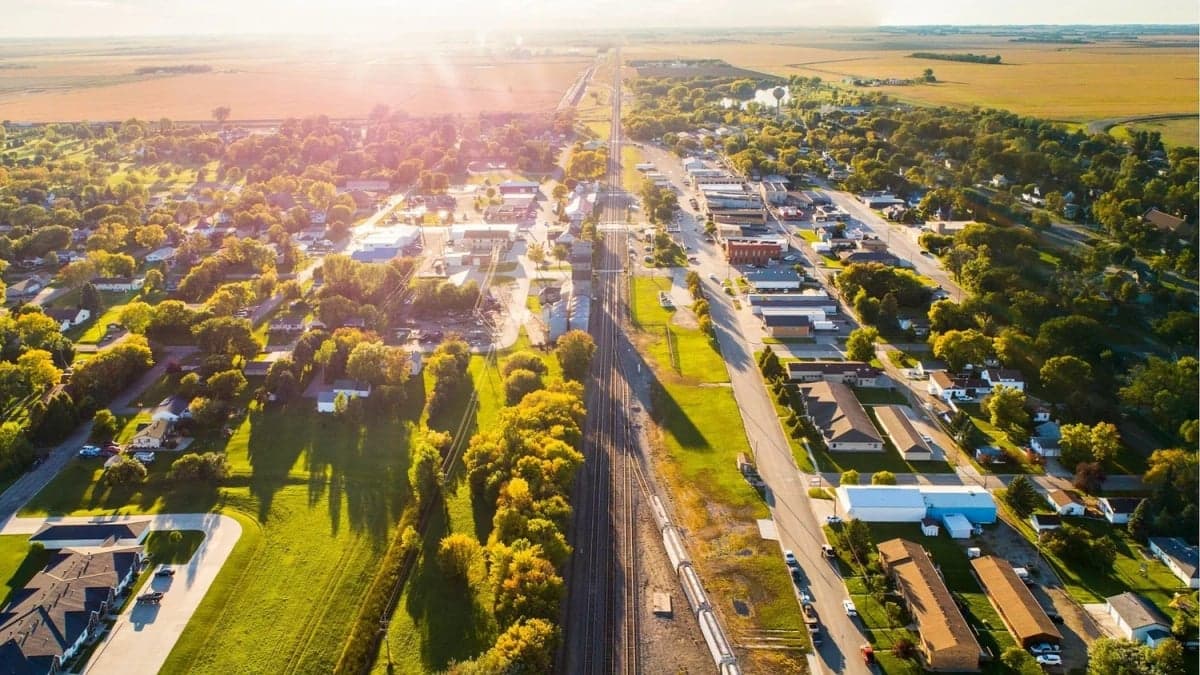
Casselton, North Dakota, is about as solidly conservative as small-town America gets, and that’s not changing anytime soon. With a Cook PVI of R+18, this Cass County community votes reliably Republican, and the political culture here is deeply rooted in traditional values, personal responsibility, and a healthy skepticism of government overreach. If you’re looking for a place where folks still believe the best government is the one that stays out of your business, you’re in the right spot. The trajectory here is steady—no dramatic swings leftward, just a quiet, determined commitment to keeping things the way they’ve always been.
How it compares
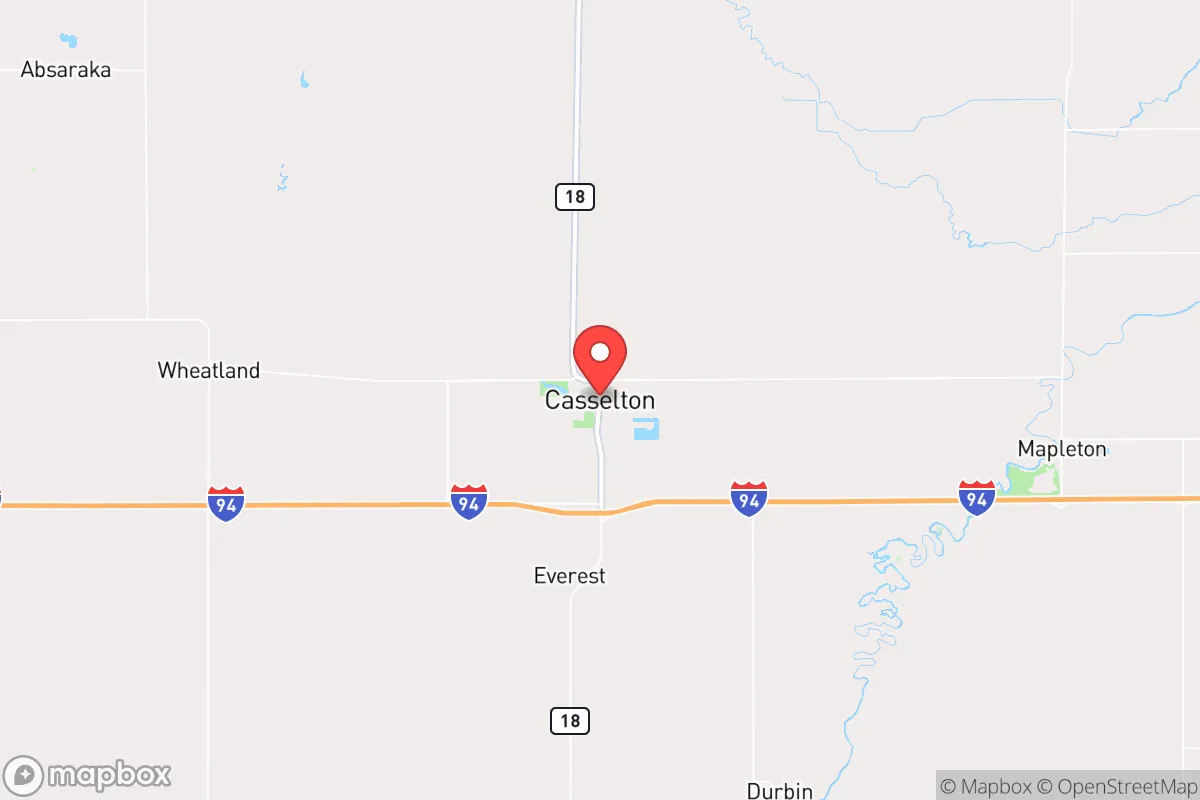
Drive 20 miles south to Fargo, and you’ll feel the difference immediately. Fargo is a blue dot in a red state, with a younger, more diverse population and a noticeable progressive tilt—especially in city politics and the university crowd. Casselton, by contrast, is a farming and railroad town where neighbors know each other, and the local government is more about fixing potholes than pushing social experiments. Head west to towns like Mapleton or Horace, and you’ll find similar conservative values, but Casselton has a quieter, more settled feel—less growth pressure, fewer transplants bringing big-city ideas. The contrast with Fargo is stark: here, the Second Amendment isn’t debated, taxes are low, and the idea of a county health department telling you what to do in your own home would get laughed out of a town hall meeting.
What this means for residents
For the people who live here, the political climate means a lot of freedom and very little hassle. You won’t see mask mandates, vaccine passports, or heavy-handed zoning rules that tell you what color to paint your barn. The local school board focuses on reading, writing, and arithmetic—not critical race theory or gender ideology. Property taxes are among the lowest in the state, and there’s no state income tax, which means more money stays in your pocket. The downside? If you’re hoping for rapid change or progressive policies, you’ll be frustrated. But for most residents, that’s a feature, not a bug. The biggest concern I hear from longtime locals is that Fargo’s influence could creep north as the metro expands, bringing with it higher taxes and more regulations. So far, Casselton has held the line, but it’s something to keep an eye on.
Culturally, Casselton is a place where the Lutheran church and the American Legion hall are still the social hubs, and the annual Corn Feed is a bigger deal than any political rally. There’s a strong sense of self-reliance here—people take care of their own problems without calling the government. One policy distinction worth noting: Casselton’s city council has consistently rejected any form of local gun control, and the county sheriff’s office is known for a “don’t ask, don’t tell” approach to minor personal choices that don’t hurt anyone. If you value privacy, low taxes, and a community that respects your right to live your life without interference, Casselton is a rare gem. Just don’t expect it to change—because it won’t.

State Political ClimatePolitical Climate in North Dakota
State Political AnalysisPolitical Environment in the State
North Dakota is a deeply red state, but the kind of red that’s been shifting under your feet for the last decade. The state’s overall partisan lean is still solidly Republican — Trump won it by 33 points in 2024 — but the coalition that makes up that majority is changing. The old-school, small-government, leave-me-alone conservatism that defined the state for generations is now competing with a newer, more culturally assertive strain, and the tension between them is the real story. Over the last 15 years, the oil boom in the Bakken brought an influx of out-of-state workers and money that reshaped the western half of the state, while the eastern corridor — Fargo, Grand Forks, and the Red River Valley — has seen steady growth from college towns and healthcare expansion. The result is a state that votes red but is increasingly split between a libertarian-leaning rural base and a more establishment, business-friendly Republicanism in the metros.
Urban vs. rural divide
The political map of North Dakota is a study in contrasts. The rural counties west of the Missouri River — places like McKenzie, Williams, and Dunn counties — are the heart of the state’s conservative base. These are the oil patch counties, where the economy runs on extraction and the culture is fiercely independent. McKenzie County voted 85% for Trump in 2024. But the real action is in the eastern cities. Fargo, the state’s largest city, is a blue dot in a red sea — Cass County went 48% for Biden in 2020, and while it swung back to Trump in 2024, the margin was only 12 points. That’s a far cry from the 40-point margins in the rural west. Grand Forks, home to the University of North Dakota, is similarly competitive, with Grand Forks County voting 55% Trump in 2024. Bismarck and Mandan, the capital region, are reliably red but with a more moderate, establishment flavor — Burleigh County went 64% for Trump. The real outlier is Minot, a military town that leans conservative but has a transient population that doesn’t always vote in line with the local culture. The divide isn’t just about population density; it’s about economic base. The rural west is extractive and cyclical, the east is agricultural and service-based, and the cities are increasingly white-collar and professional. That economic split is driving a cultural and political one.
Policy environment
North Dakota’s policy environment is a mixed bag for a conservative. On the plus side, the state has no personal income tax — a major draw for anyone looking to keep more of their paycheck. The corporate income tax rate is a flat 4.31%, and the sales tax is 5%, with local options that can push it to 8% in some cities. Property taxes are high relative to the region, but the state has a homestead credit for homeowners. The regulatory posture is generally light-touch, especially for energy and agriculture. The state has a right-to-work law, and it’s a shall-issue state for concealed carry. On education, North Dakota has a robust school choice landscape — there’s a tax credit for private school tuition, and the state has a thriving homeschool community. But there are red flags. The state’s healthcare system is heavily regulated, with certificate-of-need laws that limit competition and drive up costs. The state also expanded Medicaid under the Affordable Care Act, which some conservatives view as a federal overreach that’s now baked into the budget. Election laws are solid — voter ID is required, and the state has no same-day registration — but there’s been a push from the left to weaken those laws, and it’s something to watch.
Trajectory & freedom
North Dakota is in a tug-of-war between expanding and contracting personal freedom. On the positive side, the state has been a leader in gun rights — it passed constitutional carry in 2017, and there’s no waiting period or magazine capacity limit. The state also passed a parental rights in education bill in 2023 that requires schools to notify parents about curriculum changes and prohibits instruction on gender identity in K-3. That’s a win for family autonomy. But there are concerning trends. The state has a history of using eminent domain aggressively for pipeline projects — the Dakota Access Pipeline protests in 2016-2017 were a flashpoint, and the state’s response was to criminalize protest activity with a 2017 law that made it a felony to trespass on critical infrastructure. That law was struck down in 2020, but the impulse to use state power to suppress dissent is still there. On medical freedom, North Dakota has a relatively weak vaccine mandate landscape — no state-level mandates for COVID-19 — but the state’s health department has broad authority to impose quarantine and isolation orders, which was used during the pandemic. The state also has a history of using tax policy to pick winners and losers, with generous subsidies for wind energy and ethanol that some conservatives view as corporate welfare. The trajectory is mixed: the state is expanding freedom in some areas (guns, parental rights) while contracting it in others (eminent domain, health mandates).
Civil unrest & political movements
The most visible political flashpoint in North Dakota in recent years was the Dakota Access Pipeline protests near the Standing Rock Reservation in 2016-2017. That was a national story, and it brought thousands of activists from across the country to the state. The state’s response was heavy-handed — the National Guard was deployed, and the state passed the critical infrastructure law mentioned above. The protests have largely subsided, but the underlying tensions over tribal sovereignty and energy development remain. On the right, there’s a growing populist movement that’s skeptical of both the Republican establishment and the federal government. The state’s Republican Party has seen internal fights between the more libertarian, anti-establishment wing and the Chamber of Commerce wing. The 2022 gubernatorial primary saw a challenge to incumbent Doug Burgum from a more conservative candidate, though Burgum won easily. There’s also a small but vocal secessionist movement in the western part of the state, driven by frustration with federal land management and environmental regulations. On immigration, North Dakota is not a border state, but the issue is present — the state has a small but growing immigrant population, particularly in the oil patch and in Fargo’s meatpacking plants. There’s no sanctuary city policy in the state, and local law enforcement generally cooperates with federal immigration authorities. Election integrity has been a topic of debate, but the state’s system is widely seen as secure — there’s no evidence of widespread fraud, and the state’s voter ID laws are among the strongest in the nation.
Projection
Over the next 5-10 years, North Dakota is likely to become more politically divided, not less. The eastern cities — Fargo, Grand Forks, and to a lesser extent Bismarck — will continue to grow, driven by healthcare, education, and tech jobs. That growth will bring in more moderate and even left-leaning voters, particularly as young professionals and academics move in. The rural west will continue to shrink, as the oil boom matures and automation reduces the need for labor. That demographic shift will make the state’s politics more competitive at the margins, but it won’t flip the state blue — the rural vote is too strong. What it will do is intensify the internal Republican fight between the establishment and the populist wings. The state’s tax structure is likely to remain favorable, but there will be pressure to increase spending on infrastructure and education as the cities grow. The biggest wildcard is the federal government — if the Biden administration or a future Democratic administration pushes aggressive climate policies, it could devastate the state’s oil and coal industries, which would have a massive economic and political impact. A new resident moving in now should expect a state that is still deeply conservative but increasingly contested, with a political culture that values independence but is struggling with the realities of growth and change.
For someone moving to North Dakota, the bottom line is this: you’re getting a state that is still one of the most conservative in the country, but the kind of conservatism you’ll find depends on where you land. If you’re looking for a place where the government stays out of your life, the rural west is your best bet. If you want a more suburban, family-oriented environment with good schools and a growing economy, the Fargo metro is the place, but you’ll have to accept that the politics there are more moderate. The state’s policy environment is generally favorable — no income tax, strong gun rights, and a growing school choice movement — but there are areas of concern, particularly around eminent domain and health mandates. The key is to pick your location carefully and understand that the state’s political trajectory is toward more division, not less. If you’re willing to engage in that fight, North Dakota is a great place to make a stand. If you just want to be left alone, the western counties still offer that, but the clock is ticking.
* Values derived from national, state, county, city and local statistics and may differ in a specific area. Last updated: 2026-04-19T05:58:16.000Z
Narrative content on this page is AI-generated and may contain mistakes. Verify any details that matter before acting on them.
ReloMaps may earn a commission from affiliate links at no extra cost to you.

