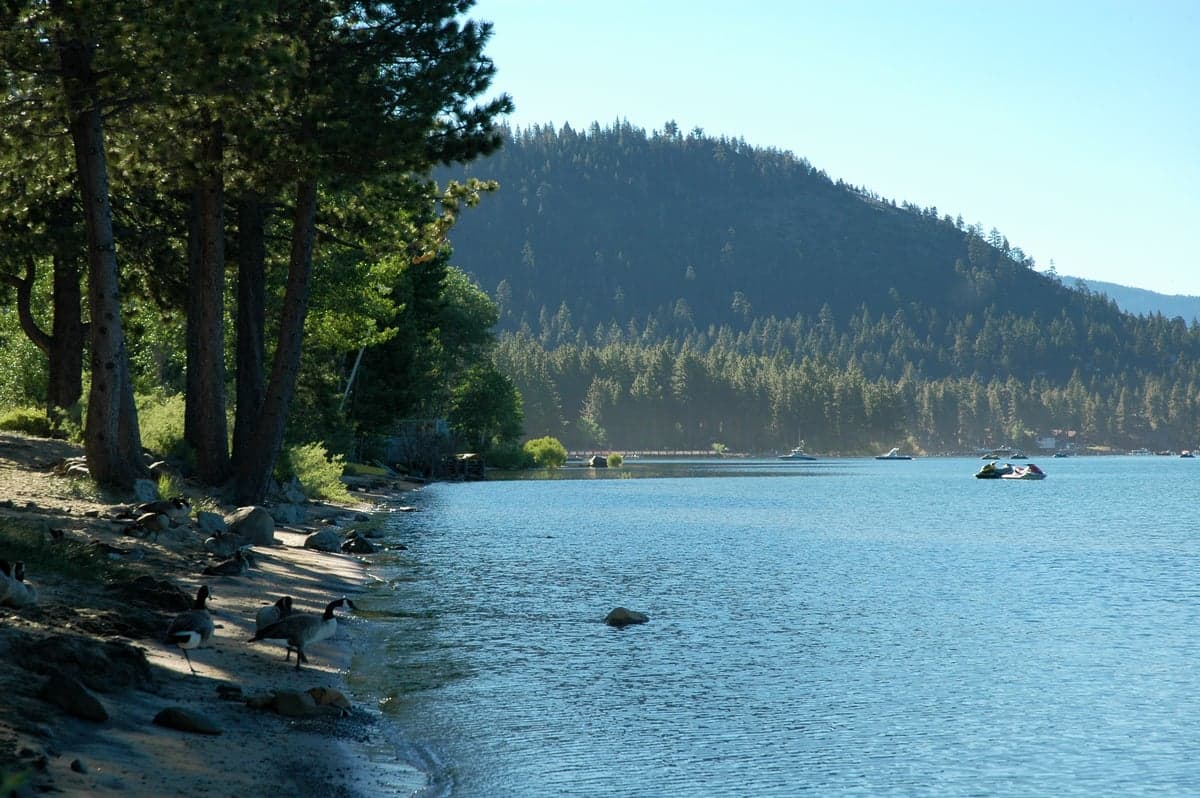
Photo: Wikipedia
Quality of Life in Placer County
A livable area that tracks near national norms for affordability, walkability, and neighborhood health.
What does Quality of Life tell us?
Quality of Life measures an area by evaluating factors like cost of living, nearby amenities, country club access, airport proximity, socioeconomic signals and neighborhood character. For large states, this is a general average — quality of life can vary dramatically between metro areas, suburbs, and rural communities within the same state.
What does this tell us?
Quality of Life measures an area by evaluating factors like cost of living, nearby amenities, country club access, airport proximity, socioeconomic signals and neighborhood character. For large states, this is a general average — quality of life can vary dramatically between metro areas, suburbs, and rural communities within the same state.
Cost of Living
96% above national average
61%
The Real Cost of Living in Placer County for 2026
| Tier | Individual | Family (4) |
|---|---|---|
| Survival | $32k | $60k |
| Comfortable | $128k | $188k |
| Luxury | $194k+ | $301k+ |
| Elite (Top 5%) | $228k+ | $354k+ |
Quality-of-Life Analysis
Placer County, California, offers one of the most dramatic quality-of-life spectrums in the state, ranging from the dense, amenity-rich suburbs of the Sacramento metro fringe to the historic, car-dependent small towns of the Sierra Nevada foothills and the remote, forested homesteads of the high country. The county’s eastern half is dominated by the Tahoe National Forest and the ski resorts of North Lake Tahoe, while the western half is a rapidly urbanizing corridor along Interstate 80. This geographic split means the county simultaneously attracts Sacramento commuters seeking new subdivisions, second-home buyers looking for lakefront cabins, and retirees seeking a slower pace in gold-rush era towns.
Largest town(s) & population centers
The county’s primary population anchor is Roseville, a city of roughly 150,000 that functions as a major retail and employment hub for the entire region. Daily life in Roseville revolves around master-planned communities like West Roseville, the sprawling Westfield Galleria mall, and a dense network of chain restaurants and medical offices. It is a quintessential family-oriented suburb with top-rated schools in the Roseville City School District and a commute to downtown Sacramento averaging 25–30 minutes. Adjacent Rocklin and Lincoln form a contiguous suburban band: Rocklin is known for its high-performing public schools and the Quarry Park sports complex, while Lincoln is the fastest-growing city in the county, with new home construction pushing eastward toward the foothills. Auburn, the county seat, sits at the transition point between the valley floor and the Sierra foothills, offering a historic downtown with boutique shopping and the popular Auburn State Recreation Area, which draws hikers and mountain bikers to the American River canyons.
Smaller towns & rural pockets
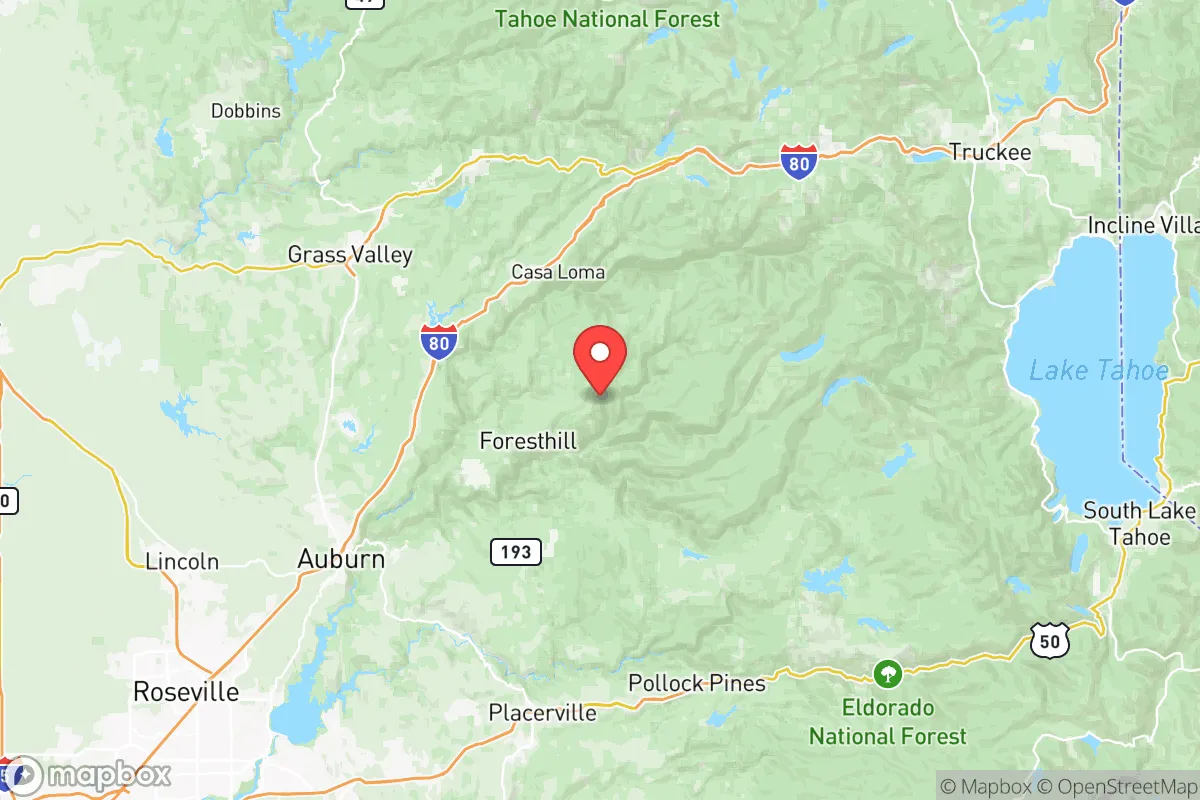
East of Auburn, the landscape and lifestyle shift markedly. Colfax is a small railroad town (population ~2,000) that serves as a bedroom community for commuters willing to endure a 45–50 minute drive to Roseville or Sacramento in exchange for lower home prices and direct access to the Tahoe National Forest. Further up the mountain, Foresthill is a true rural outpost with a population under 1,500, where residents often live on acreage and rely on septic systems and well water. The North Lake Tahoe communities—including Kings Beach, Tahoe Vista, and Carnelian Bay—are entirely different worlds: tourism-driven economies, seasonal rental markets, and a recreational lifestyle centered on skiing at Palisades Tahoe or Northstar and summer water sports on Lake Tahoe. These areas have a high proportion of second homes and short-term rentals, which has driven up property values and created a tight housing market for year-round workers. The unincorporated community of Loomis, just south of Rocklin, retains a semi-rural feel with horse properties and citrus groves, though it is increasingly surrounded by suburban development.
Cost & lifestyle range
The cost of living across Placer County varies enormously by location. The county-wide composite cost-of-living index of 196 (nearly double the U.S. average) is heavily skewed by the Lake Tahoe communities, where median home values exceed $800,000 and a modest cabin can cost over $1 million. At the lower end, the median home value of $658,800 and median rent of $1,991 are more reflective of the Roseville-Rocklin-Lincoln corridor, where new construction has kept inventory relatively high. The average commute of 27.7 minutes is manageable for most suburban residents but can stretch to 45–60 minutes for those living in Colfax or Foresthill and working in the valley. Amenities follow a similar gradient: Roseville offers every big-box retailer and medical specialist, while Foresthill has a single grocery store and no urgent care. Property taxes are generally lower than in coastal California due to Proposition 13, but newer subdivisions in Lincoln and Roseville often carry Mello-Roos special assessments that add $200–$400 per month to a mortgage payment.
This county is best suited for people who know exactly which trade-offs they are willing to make. Families who prioritize schools, shopping, and a short commute will thrive in Roseville or Rocklin. Outdoor enthusiasts and remote workers who value space and recreation over convenience will find their niche in Colfax, Foresthill, or the North Lake Tahoe basin. Retirees and second-home buyers are drawn to Auburn’s walkable historic core or the lakefront communities, though both require a premium budget. Placer County’s strength is that it offers a legitimate choice between suburban convenience and mountain solitude—but the price of that choice is a steep cost gradient and a commute that can define your daily life.

Crime in Placer County
WARNING: The crime statistics are unreliable for this jurisdiction. Local authorities have either not reported or under reported their data to the FBI. This could be due to bad intentions, incompetence or technical issues. Regardless, we suggest skepticism.
Higher crime rates than 72% of comparable U.S. locations.
Violent CrimeViolent Crime Analysis
Property CrimeProperty Crime Analysis
Crime Analysis
Placer County, California, presents a mixed safety profile: its overall violent crime rate of 434.5 per 100,000 residents sits slightly below the national average but remains a concern in specific urban corridors, while property crime at 1,819.1 per 100,000 is notably higher than state and national benchmarks. The county’s geography creates a sharp divide—affluent foothill communities like Rocklin and Granite Bay report far fewer incidents than the more densely populated areas of Roseville and Lincoln. Understanding where you live within Placer County is critical to assessing personal risk.
Crime in context
Placer County’s violent crime rate of 434.5 per 100,000 is roughly 10% above the national average of 395.7 but significantly lower than California’s state rate of 499.5 per 100,000. Property crime, however, tells a different story: at 1,819.1 per 100,000, it exceeds both the national average (1,954.4) and the California average (2,110.5) by a narrower margin. The county’s property crime rate has been driven upward by organized retail theft rings and vehicle break-ins in commercial hubs like Roseville’s Galleria Mall area and along the Interstate 80 corridor. Violent crime, while less frequent, is concentrated in Auburn and Colfax, where drug-related offenses and gang activity contribute to higher per-capita rates. By contrast, Loomis and Penryn consistently report violent crime rates below 200 per 100,000, reflecting their small-town, low-density character.
What residents experience
Daily life for most Placer County residents involves low risk of violent victimization, but property crime is a routine annoyance. Roseville, the county’s largest city, sees the highest absolute numbers of theft and burglary, though its police department has responded with targeted patrols and a property-crime task force. In Rocklin, residents report feeling safe walking at night, with violent crime rates roughly half the county average. The progressive judicial philosophy of Placer County’s District Attorney’s office—which has emphasized diversion programs and reduced sentencing for non-violent offenders—has drawn criticism from public safety advocates. Critics argue that lenient plea deals and early releases for repeat property offenders in Roseville and Auburn have emboldened criminals, contributing to a 12% rise in auto burglaries between 2023 and 2025. Residents in unincorporated areas near Foresthill and Applegate often rely on the Placer County Sheriff’s Office, which maintains a more conservative enforcement posture, but response times can exceed 20 minutes in remote zones.
Neighborhood-level variation
The safest neighborhoods in Placer County are concentrated in the western portion of the county, particularly in Granite Bay and Rocklin’s Whitney Ranch area, where violent crime rates fall below 150 per 100,000 and property crime is roughly half the county average. Lincoln, a fast-growing city north of Roseville, has seen property crime rise 8% year-over-year as new subdivisions attract transient theft rings. Auburn’s historic downtown and Colfax report the highest violent crime rates in the county—above 600 per 100,000—driven by drug-related assaults and domestic violence incidents. For those considering relocation, the safest bet is Granite Bay or Loomis, while Roseville and Auburn require vigilance, especially near commercial corridors and transit hubs. The county’s progressive DA policies, while well-intentioned, have created a patchwork of safety where a crime in one jurisdiction may be treated more leniently than in another, making neighborhood selection paramount.
* Values derived from national, state, county, city and local statistics and may differ in a specific area. Last updated: 2026-07-23T08:20:24.000Z
Narrative content on this page is AI-generated and may contain mistakes. Verify any details that matter before acting on them.
ReloMaps may earn a commission from affiliate links at no extra cost to you.

