Photo: Wikipedia
Personal Sovereignty in Placer County
Viable for self-reliance. Generally workable, though some barriers may limit total independence.
What does Personal Sovereignty tell us?
Personal Sovereignty measures your capacity for self-reliance and independence with minimal government friction. Higher scores mean fewer barriers between you and the way you want to live... but it assumes you have the space you need and good neighbors.
What does this tell us?
Personal Sovereignty measures your capacity for self-reliance and independence with minimal government friction. Higher scores mean fewer barriers between you and the way you want to live... but it assumes you have the space you need and good neighbors.
State Policy
Energy independence: Importer (33% of energy produced in-state)
Personal Liberty
Homesteading

Personal Liberty Analysis
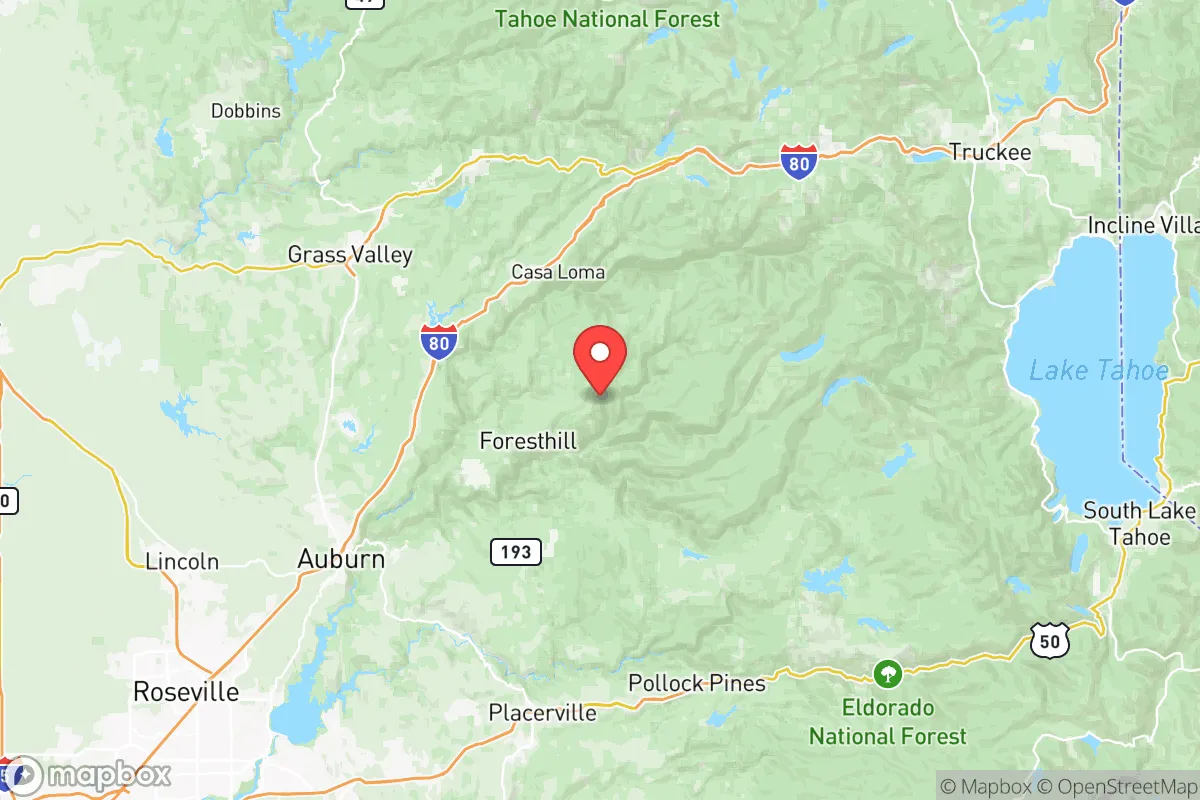
Placer County, California, presents a nuanced personal sovereignty environment that is markedly more autonomy-friendly than the coastal urban centers of the state, though it operates firmly within California’s broader regulatory framework. The county’s political geography is a patchwork: the more rural, higher-elevation communities like Auburn, Foresthill, and Colfax lean conservative and prioritize self-reliance, while the western slope suburbs such as Roseville and Rocklin are more moderate and growth-oriented, with a correspondingly higher degree of local regulation. For a relocation-minded individual or family seeking maximum personal freedom, understanding these internal divisions is critical to choosing the right location within the county.
Tax burden and regulatory posture in Placer County’s diverse communities
California’s state-level tax burden is among the highest in the nation, and Placer County is not exempt. Residents pay a state income tax that tops out at 13.3% on high earners, and a statewide sales tax of 7.25% (with local add-ons pushing the rate in Roseville and Rocklin to 7.75%). However, Proposition 13 caps property tax increases at 2% annually, which provides long-term predictability for homeowners. The county’s regulatory posture varies significantly by jurisdiction. Auburn, the county seat, maintains a relatively light-touch approach to land use and business licensing compared to the more suburbanized Roseville, which has a detailed zoning code and a more active planning department. Foresthill, a small unincorporated community in the Sierra Nevada foothills, operates under county-level regulations that are generally less restrictive than those in incorporated cities, making it a more attractive option for those seeking to minimize bureaucratic interaction. The county’s overall regulatory environment is best described as moderate for California — meaning it is still more burdensome than most states in the Mountain West or South, but significantly lighter than the Bay Area or Los Angeles County.
Self-defense and gun law specifics in Placer County
California’s firearm laws are among the most restrictive in the nation, and Placer County operates within that state framework. The state requires a 10-day waiting period, a Firearm Safety Certificate, and a background check for all purchases. The county is a “may-issue” jurisdiction for concealed carry permits (CCW), but in practice, the Placer County Sheriff’s Office is notably more permissive than many other California counties. As of 2025, the sheriff’s office has streamlined the CCW application process, with good cause requirements interpreted broadly, and issuance rates are high relative to the state average. Colfax and Foresthill have a visible gun culture, with local shooting ranges and firearm retailers serving a community where hunting and sport shooting are common. Roseville and Rocklin are more suburban, and while gun ownership is legal, the culture is less overt. The state’s ban on “assault weapons” and high-capacity magazines applies countywide, and the recent addition of a state-level “sensitive places” law restricts carry in many public spaces. For a self-defense-minded individual, Placer County offers a more favorable environment than the Bay Area or Los Angeles, but it is still far more restrictive than states like Texas, Arizona, or Idaho.
Self-reliance and homesteading viability: lot sizes, zoning, and off-grid feasibility
Homesteading and off-grid living are viable in Placer County, but only in specific areas. The county’s zoning code is tiered: the western suburbs (Roseville, Rocklin, Lincoln) are zoned for standard suburban lots of 6,000 to 10,000 square feet, with strict building codes, HOA covenants in many subdivisions, and limited allowance for agricultural uses. In contrast, the unincorporated areas east of Auburn — particularly around Foresthill, Colfax, and the rural stretches of Highway 49 — offer parcels of 5 to 40 acres zoned for agricultural or residential-agricultural use. These areas allow for livestock, gardening, and limited commercial farming without the permitting hurdles common in suburban zones. Off-grid feasibility is mixed: California’s building code requires a permanent foundation and connection to a septic system, but solar panels and rainwater catchment are legal and increasingly common. The county does not prohibit composting toilets or alternative energy systems, but permits are required. Foresthill is the most off-grid-friendly community in the county, with many residents relying on well water, propane, and solar power. Colfax also has a rural character, though its proximity to the railroad and Highway 80 means less isolation. The key constraint is water rights: new wells require a permit and a hydrogeological study, and the county has become stricter about approving new wells in areas with declining groundwater levels. For a family seeking true self-reliance, the eastern half of Placer County is viable, but the western suburbs are not.
Personal liberties: parental rights, medical autonomy, speech, and property
California’s state-level policies on parental rights and medical autonomy are among the most progressive in the nation, which creates tension for conservative-leaning residents. The state mandates comprehensive sex education in public schools, allows minors to consent to certain medical treatments without parental notification, and has strong anti-discrimination laws that protect LGBTQ+ students. Placer County’s school districts — particularly in Rocklin and Roseville — have seen active school board debates over curriculum transparency and parental notification policies, with conservative parents organizing to push back against state mandates. In practice, many families in Auburn and Foresthill opt for homeschooling or private religious schools to avoid the state’s public school curriculum. Medical autonomy is similarly constrained: California has strict vaccine mandates for school attendance and has expanded Medicaid coverage for gender-affirming care. For a family prioritizing medical freedom, Placer County offers no legal carve-outs from state law, but the cultural environment in the eastern communities is more supportive of alternative medical choices. Free speech protections are robust under the First Amendment, and Placer County has not seen the kind of local ordinances restricting public speech that have emerged in some coastal cities. Property rights are a mixed bag: the California Environmental Quality Act (CEQA) can be used to delay or block development projects, and the state’s rent control laws apply to certain properties. However, Placer County’s Board of Supervisors has generally been pro-development and pro-property rights, approving new subdivisions and commercial projects more readily than many other California counties.
Overall, Placer County offers a higher degree of personal sovereignty than most of California, but it is not a libertarian haven. The county’s eastern rural communities — Foresthill, Colfax, and the Auburn foothills — provide a meaningful escape from the regulatory density of the state’s urban centers, with lower taxes, a more permissive gun culture, and viable homesteading opportunities. The western suburbs — Roseville, Rocklin, and Lincoln — are more conventional, with higher costs and more regulation, but still offer a better autonomy environment than the Bay Area or Los Angeles. For a relocation-minded individual or family who values personal freedom but is not willing to leave California entirely, Placer County represents the best balance available in the state, with the caveat that state-level constraints on medical autonomy, education, and firearms remain inescapable.

* Values derived from national, state, county, city and local statistics and may differ in a specific area. Last updated: 2026-07-23T08:20:24.000Z
Narrative content on this page is AI-generated and may contain mistakes. Verify any details that matter before acting on them.
ReloMaps may earn a commission from affiliate links at no extra cost to you.

