Photo: Wikipedia
Quality of Life in Orange County
A livable area that tracks near national norms for affordability, walkability, and neighborhood health.
What does Quality of Life tell us?
Quality of Life measures an area by evaluating factors like cost of living, nearby amenities, country club access, airport proximity, socioeconomic signals and neighborhood character. For large states, this is a general average — quality of life can vary dramatically between metro areas, suburbs, and rural communities within the same state.
What does this tell us?
Quality of Life measures an area by evaluating factors like cost of living, nearby amenities, country club access, airport proximity, socioeconomic signals and neighborhood character. For large states, this is a general average — quality of life can vary dramatically between metro areas, suburbs, and rural communities within the same state.
Cost of Living
151% above national average
54%
The Real Cost of Living in Orange County for 2026
| Tier | Individual | Family (4) |
|---|---|---|
| Survival | $38k | $71k |
| Comfortable | $142k | $209k |
| Luxury | $205k+ | $318k+ |
| Elite (Top 5%) | $245k+ | $380k+ |
Quality-of-Life Analysis
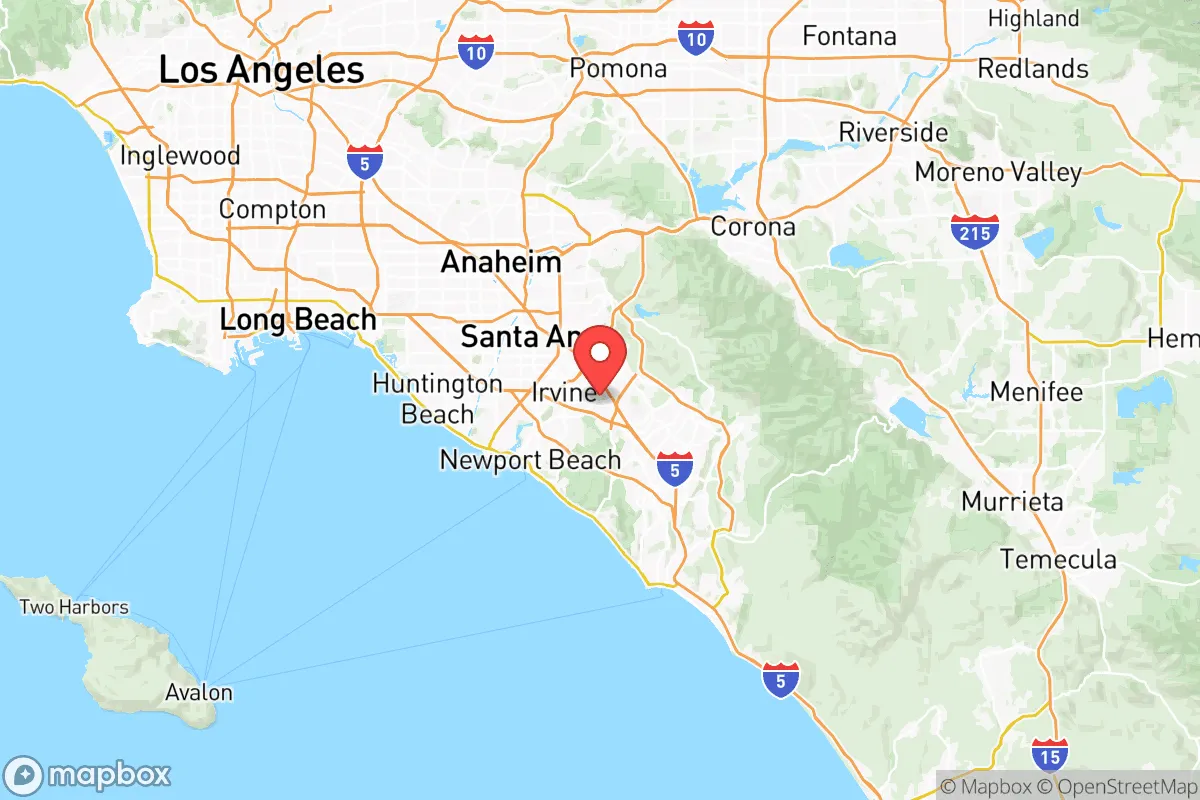
Orange County, California, offers one of the most dramatic quality-of-life spectrums in the nation, ranging from dense, transit-oriented urban centers to quiet, semi-rural horse-country enclaves. With a cost of living index of 251 (more than 2.5 times the national average), a median home value of $915,500, and a median rent of $2,352, the county draws everyone from high-earning tech and finance professionals to long-established agricultural families and creative-class workers willing to pay a premium for coastal access and year-round mild weather. The average commute of 27 minutes—relatively short for Southern California—reflects the county’s job density and its network of freeways and toll roads that connect distinct lifestyle zones.
Largest town(s) & population centers
The county’s urban core is anchored by Santa Ana (population ~310,000), the county seat, and Anaheim (~345,000), home to Disneyland Resort and the Honda Center. Daily life in these cities is fast-paced and walkable in parts, with dense neighborhoods, frequent bus and Metrolink rail service, and a heavy concentration of Latino-owned businesses, taquerias, and swap meets. Santa Ana’s downtown arts district and the Bowers Museum provide cultural anchors, while Anaheim’s Platinum Triangle area has seen a surge of high-rise apartments and breweries. Irvine (~310,000) sits at the opposite end of the urban spectrum: a master-planned city with wide boulevards, manicured parks, top-rated Irvine Unified School District schools, and a large Asian-American population drawn to its safe streets and tech/healthcare job base (e.g., Blizzard Entertainment, Edwards Lifesciences). Huntington Beach (~200,000) and Costa Mesa (~110,000) offer a beach-town lifestyle with surf breaks, the Pacific City outdoor mall, and the Segerstrom Center for the Arts, though housing costs are among the county’s highest—median home values in Huntington Beach often exceed $1.2 million.
Smaller towns & rural pockets
Orange County’s eastern and southern edges contain genuine small-town and rural pockets that feel worlds away from the coastal strip. San Juan Capistrano (population ~35,000) retains a historic mission-town character with adobe buildings, equestrian trails, and the annual Swallows Day Parade. Silverado Canyon and Modjeska Canyon, unincorporated communities in the Santa Ana Mountains, are home to fewer than 2,000 residents each, with dirt roads, creek-side cabins, and a strong off-grid ethos—no streetlights, limited cell service, and a volunteer fire department. Trabuco Canyon and Rancho Santa Margarita (a planned city of ~48,000) offer a buffer between suburban sprawl and Cleveland National Forest, with hiking access to Holy Jim Falls and O’Neill Regional Park. These areas attract equestrians, hikers, and retirees seeking quiet, but they also face longer commutes (often 35–45 minutes to Irvine or Santa Ana) and limited public transit.
Cost & lifestyle range
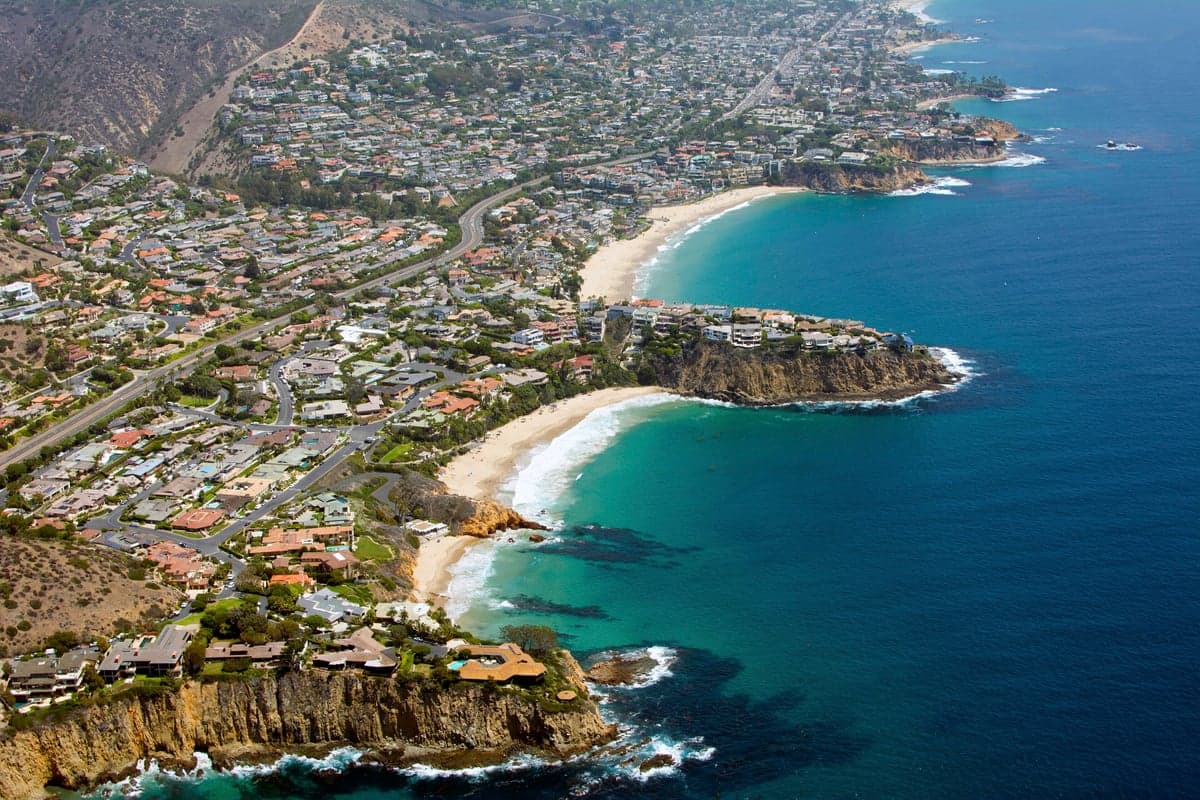
The cost spread across Orange County is stark. At the high end, Newport Beach and Laguna Beach command median home values above $2.5 million, with waterfront properties exceeding $5 million; residents here enjoy private beach access, high-end dining on Balboa Island, and a car-centric but scenic commute along Pacific Coast Highway. At the moderate end, Buena Park and Westminster offer median home values around $750,000–$850,000, with older single-family homes and strong Korean-American and Vietnamese-American communities (Westminster’s Little Saigon is the largest Vietnamese commercial district outside Vietnam). Santa Ana provides the most affordable rentals in the county—median rent near $1,800—but also the highest crime rates and lowest-performing schools in some zip codes. The lifestyle range is equally broad: a surfer in San Clemente, a tech worker in Irvine, a rancher in Silverado Canyon, and a retiree in Laguna Woods (a 55+ community with 18,000 residents) all share the same county but experience radically different daily realities in terms of noise, nature, and neighbor density.
Who thrives in Orange County? The county best suits professionals and families who prioritize climate, coastal access, and job density over square footage and land—and who can afford the premium. It also works for those willing to trade commute time for rural quiet in the canyons, or for retirees and empty-nesters who downsize into condos in beach-adjacent communities like Seal Beach or Dana Point. The county’s diversity of microclimates and microcultures means that a person seeking a 24-hour urban buzz, a suburban school district, or a mountain cabin can find it within a 30-mile radius—but only if their budget aligns with the specific niche they choose.

Crime in Orange County
WARNING: The crime statistics are unreliable for this jurisdiction. Local authorities have either not reported or under reported their data to the FBI. This could be due to bad intentions, incompetence or technical issues. Regardless, we suggest skepticism.
Higher crime rates than 65% of comparable U.S. locations.
Violent CrimeViolent Crime Analysis
Property CrimeProperty Crime Analysis
Crime Analysis
Orange County, California, presents a split safety profile: its overall violent crime rate of 328.5 per 100,000 residents sits below the national average, but property crime at 1,394.1 per 100,000 is elevated, driven largely by theft and vehicle break-ins in high-traffic corridors. The county’s 34 cities range from some of the safest in the state to pockets where crime is a persistent concern, making neighborhood selection critical for anyone relocating here.
Crime in context
Orange County’s violent crime rate of 328.5 per 100,000 is roughly 10% lower than the national average of 366.7 per 100,000 and significantly below the California state average of 442 per 100,000. Property crime, however, runs higher than the national rate of 1,954 per 100,000, but the county’s figure of 1,394.1 per 100,000 is actually below the California average of 2,110 per 100,000. This means a resident is statistically more likely to experience a property crime in Orange County than in the U.S. overall, but less likely than in many other parts of California. The gap between violent and property crime rates is notable: the county’s safety reputation is largely built on low homicide and aggravated assault numbers, while larceny and motor vehicle theft remain persistent issues.
What residents experience
Daily life in Orange County is shaped by a stark contrast between its safest and most challenged cities. Yorba Linda, Mission Viejo, and Laguna Niguel consistently report violent crime rates below 150 per 100,000, making them among the safest communities in Southern California. In these areas, residents commonly leave doors unlocked during the day and children play outside without constant supervision. By contrast, Santa Ana and Anaheim — the county’s two largest cities — drive the regional crime averages upward. Santa Ana’s violent crime rate exceeds 500 per 100,000, fueled by gang-related activity and property theft tied to its dense urban core. Anaheim, home to Disneyland and major tourist zones, sees property crime spikes near the resort corridor and along the I-5 and 57 freeway interchanges. Garden Grove and Westminster also report elevated property crime rates, particularly auto burglary and package theft, linked to their high-density apartment districts and commercial strips.
Residents in the safer cities express frustration with the county’s progressive judicial policies. The Orange County District Attorney’s office, under recent leadership, has emphasized diversion programs and reduced sentencing for non-violent property offenders. Critics argue this approach, while sympathetic to offenders, directly leads to more criminals on the street and negatively impacts justice for victims and the public. In practice, this means a stolen catalytic converter or a smashed car window in Irvine or Newport Beach often results in a citation rather than jail time, emboldening repeat offenders who travel between cities. The county’s Prop 47 implementation — which reclassified many thefts under $950 as misdemeanors — is frequently cited by local police chiefs as a driver of the property crime surge, particularly in retail-heavy areas like Costa Mesa’s South Coast Plaza and Brea’s shopping district.
Neighborhood-level variation
Within individual cities, safety can vary dramatically block by block. In Santa Ana, the Floral Park and Park Santiago neighborhoods near the civic center report crime rates comparable to Mission Viejo, while the area around Bristol Street and the 5 freeway sees frequent gang incidents. In Anaheim, the Anaheim Hills gated communities are statistically among the safest in the county, while the West Anaheim corridor near Beach Boulevard has property crime rates triple the city average. Huntington Beach illustrates the coastal divide: the downtown and pier areas experience high theft from vehicles and bicycles, while the residential tracts east of the 405 freeway are quiet and low-crime. For anyone moving to Orange County, the safest strategy is to target cities with strong municipal police departments — like Yorba Linda, Mission Viejo, and Laguna Niguel — and avoid the dense, transit-adjacent neighborhoods of Santa Ana, Anaheim, and Garden Grove where progressive policies have the most visible impact on street-level crime.
* Values derived from national, state, county, city and local statistics and may differ in a specific area. Last updated: 2026-07-15T04:49:20.000Z
Narrative content on this page is AI-generated and may contain mistakes. Verify any details that matter before acting on them.
ReloMaps may earn a commission from affiliate links at no extra cost to you.

