Photo: Wikipedia
Strategic Assessment of Caldwell, TX
Meaningful friction. Expect exposure to either population pressure, blast zones, or natural disaster risk. Consider buying a retreat property.
What does the Strategic Assessment tell us?
Our Strategic Assessment grades tactical survivability of an area. Major population centers, military targets, fallout zones, natural disasters, and border exposure all drive risk — lower exposure means a more defensible position in a crisis.
This is heavily inspired by Joel Skousen's Strategic Relocation book. Highly recommended you checkout the book ($)What does this tell us?
Our Strategic Assessment grades tactical survivability of an area. Major population centers, military targets, fallout zones, natural disasters, and border exposure all drive risk — lower exposure means a more defensible position in a crisis.
This is heavily inspired by Joel Skousen's Strategic Relocation book. Highly recommended you checkout the book ($)Strategic Pillars
Key Distances
Regional Safe Places
Below is our recommended "safe zones" in Texas and the surrounding area based on our strategic heuristics. For most people, it's unrealistic to live in a “safe zone” full-time due to work, family or other personal reasons. They tend to be more rural. However, many of these areas are perfect for second homes and retreat properties that double as a vacation home or even a short-term rental.

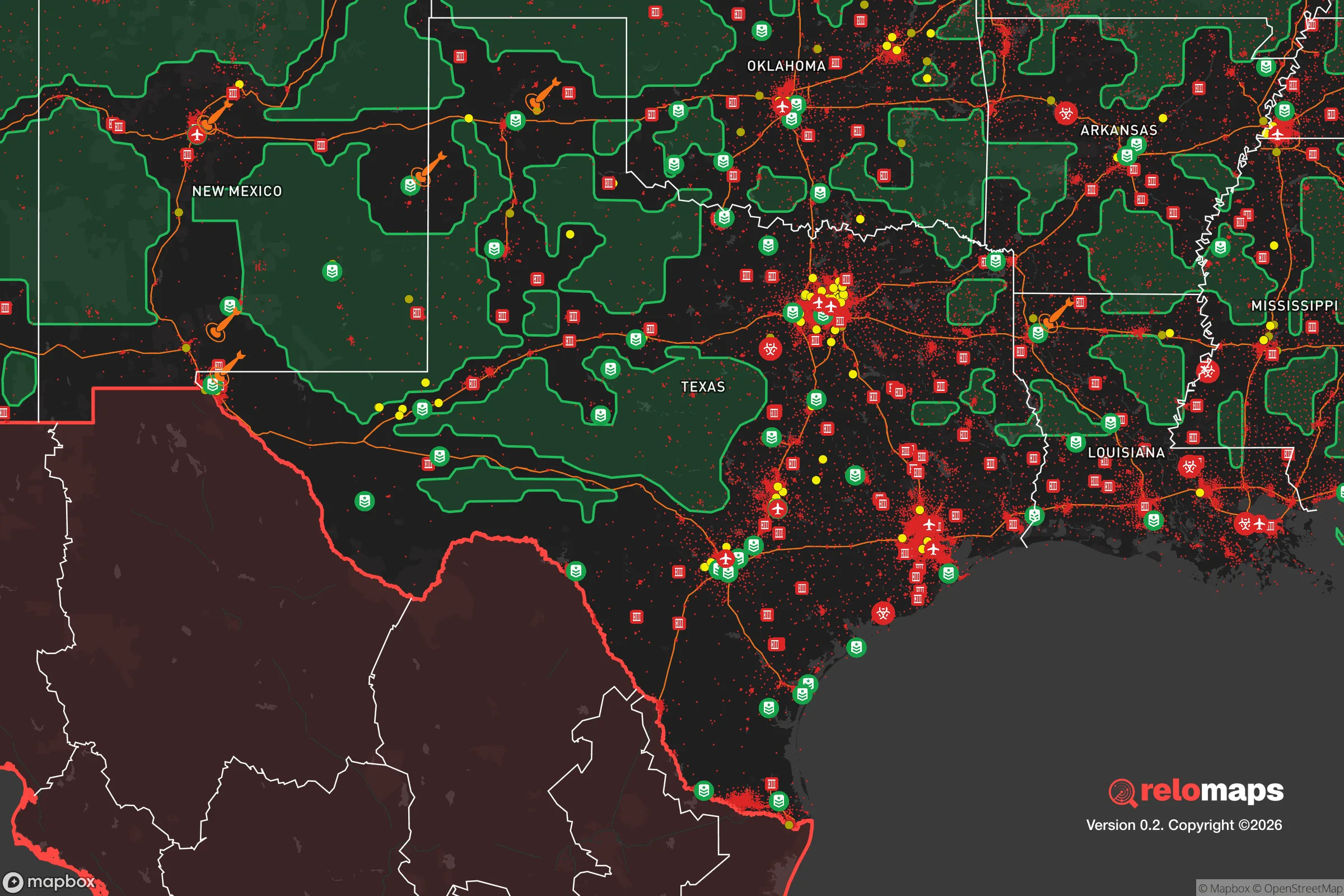


Important Note: For informational purposes only. This does not mean nothing bad ever happens in the green zones. Please use common sense. This is based on public data and modeled with AI. We tried to take a conservative approach but mistakes happen. We update this regularly as new information becomes available.
Solar Generator Recommendations
Backup power matters more here than in safer locations. We've picked three solar generators across budgets and capacity tiers — start with the budget unit if you only need a few essentials, or step up if you want to run a fridge and HVAC for days at a time.
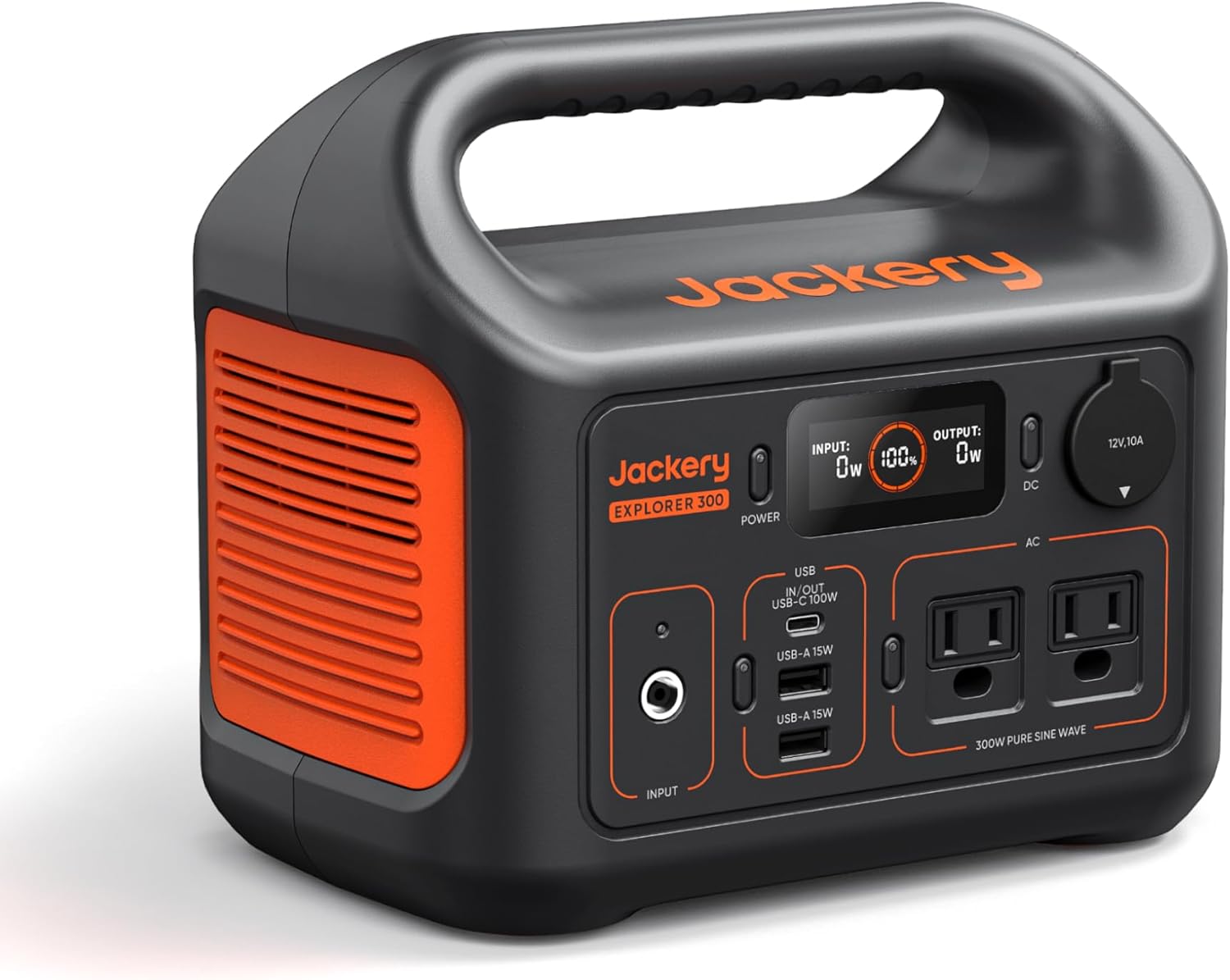
Jackery Portable Power Station Explorer 300
Budget OptionPower on the Go: Weighing only 11 lbs, it's convenient to set up and store with book-sized foldable solar panels

BLUETTI Portable Power Station AC180
Designed for both indoor and outdoor scenarios, AC180 is highly capable as it has a robost capacity and continuous output power.

EF ECOFLOW DELTA Pro Ultra Power Station
Upgraded PickEcoFlow DELTA Pro Ultra is a whole-home energy system designed to grow with your family. Integrated with the Smart Home Panel 2, it scales to meet your evolving energy needs — keeping your home powered, intelligent, and secure through every stage of life.
We earn a commission, at no additional cost to you.
Strategic Assessment Analysis
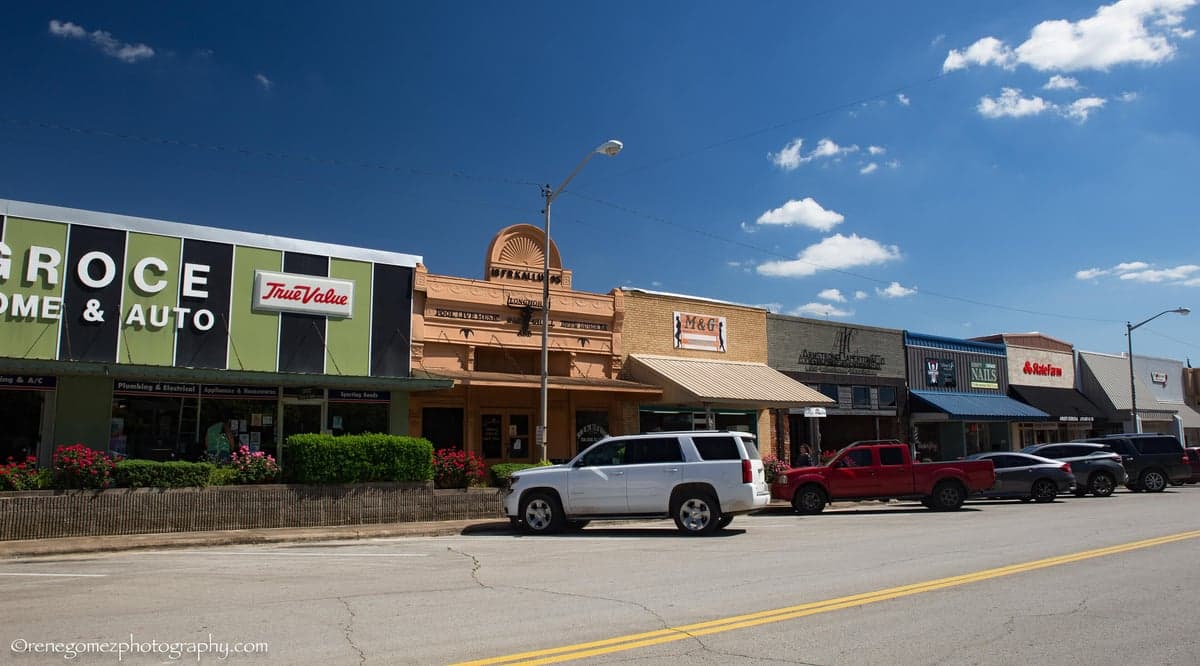
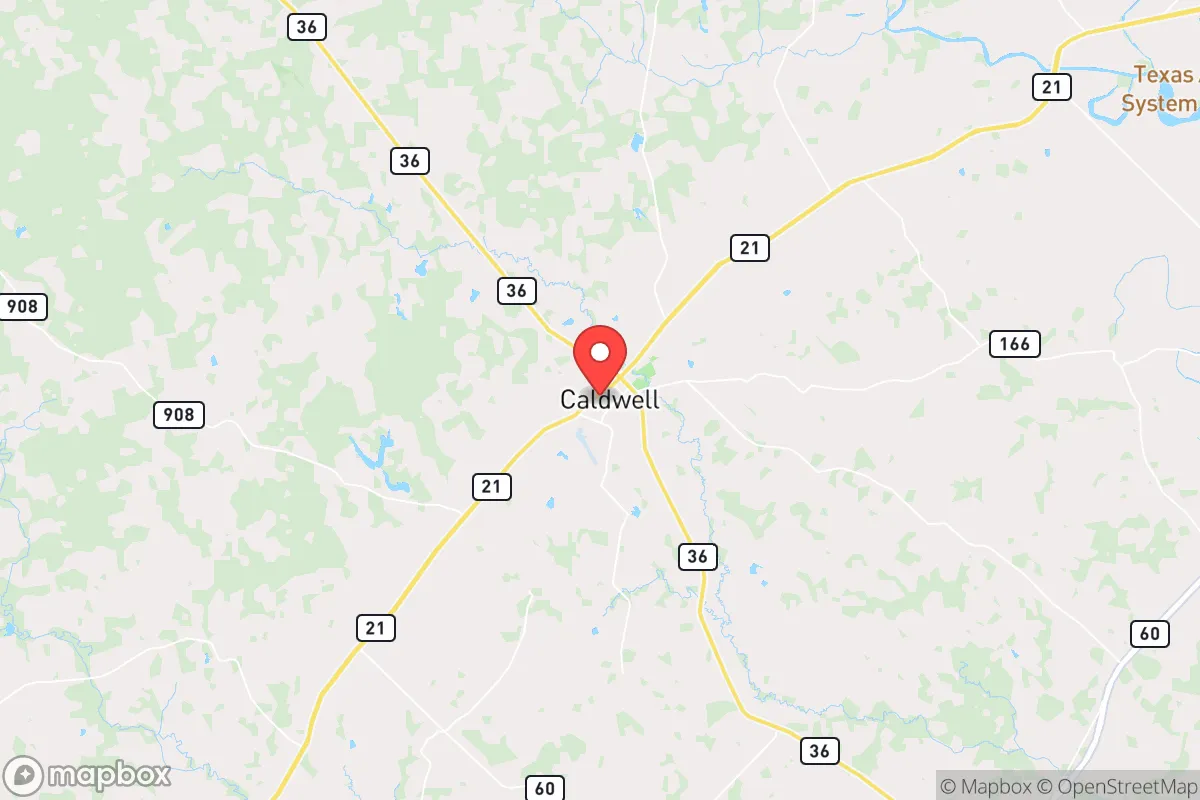
Caldwell, Texas, offers a resilience profile that punches well above its weight for a town of roughly 4,500 people, largely because it sits in a sweet spot of proximity without exposure. You get the economic and logistical pull of the Bryan-College Station metro (about 25 miles southeast) and Austin (roughly 90 miles west), but you are far enough off the interstate spine that you are not a primary target or a choke point for evacuation traffic. The strategic value here is that Caldwell functions as a quiet, defensible staging ground with deep agricultural roots, a functioning county seat infrastructure, and a community that still knows how to do things for itself.
Geographic position and natural advantages for long-term stability
Burleson County, with Caldwell at its center, sits in the Post Oak Savannah ecoregion, a transitional zone between the piney woods and the blackland prairie. That matters more than most people realize. The sandy loam soils drain well, which means less flooding and better groundwater recharge than the heavy clay soils to the west. The area is not in the 100-year floodplain for the most part, and the Brazos River, while a significant feature to the east, is far enough from the town center that a major flood event would disrupt access routes more than it would inundate homes. The terrain is gently rolling, offering natural drainage and multiple defensible high points, a subtle advantage that flat prairie towns lack.
Water availability is the single strongest natural asset. Burleson County sits atop the Gulf Coast Aquifer system, and Caldwell's municipal water supply is drawn from the Carrizo-Wilcox Aquifer, one of the more productive and reliable groundwater sources in Texas. For a relocator thinking about self-sufficiency, this means private wells in the county are generally productive at reasonable depths, and the water table has proven resilient even through the drought years of 2011 and 2022–2023. The county also has access to surface water via the Brazos River Authority, giving municipal supply a dual-source redundancy that many small Texas towns lack.
Risk exposure and proximity to fallout-relevant landmarks
No honest resilience assessment can ignore the man-made risk picture, and here Caldwell's position is a genuine asset. The town is roughly 90 miles from Austin and about 100 miles from Houston, which puts it outside the immediate blast and fallout zones of a worst-case urban strike. The nearest nuclear power generation is the South Texas Project near Bay City, approximately 130 miles south, and the decommissioned Comanche Peak is over 150 miles northwest. Neither is a realistic fallout source for Caldwell in a conventional disaster scenario. The more relevant industrial risks are the chemical and refining corridors along the Gulf Coast, but prevailing winds in Central Texas generally carry Gulf moisture from the southeast, which means a plume event would push inland toward the I-35 corridor rather than toward Caldwell.
The realistic risk profile is dominated by weather, not geopolitics. Severe thunderstorms, hail, and the occasional tornado are the baseline threats, and the area sits on the western edge of Dixie Alley, where tornado risk is elevated but not extreme. Heat is the chronic stressor; Caldwell averages over 100 days above 90°F, and summer grid strain is a real concern. The ERCOT power grid has failed during winter storms in 2011 and 2021, and while Caldwell is not uniquely exposed, it is also not uniquely protected. The practical takeaway is that a relocator should plan for multi-day power outages in winter and rolling blackouts in summer, but the natural hazard profile is far more benign than coastal or wildfire-prone regions of the state.
Practical resilience for a relocator: food, water, energy, and defensibility
For the serious preparedness-minded reader, Caldwell's practical resilience comes down to four pillars, and the town scores well on all of them. Food security is the strongest. Burleson County is active agricultural land, with row crops, cattle operations, and a growing number of small farms and homesteads within a 10-mile radius. The Caldwell Farmers Market operates seasonally, and the surrounding county has multiple feed stores, seed suppliers, and agricultural co-ops that keep the knowledge base and supply chains local. A relocator with even a half-acre can produce a meaningful portion of their own calories here, and the growing season runs from March through November, which is generous by national standards.
Water and energy require more deliberate planning. Municipal water is reliable, but a well with a hand-pump backup or a rainwater catchment system is a realistic and affordable upgrade on most residential lots in the county. The aquifer depth varies, but many domestic wells in the area come in at 150 to 400 feet, which is manageable for a solar-powered submersible pump. On energy, the grid is the weak link, but the region's solar resource is excellent, with an average of 5.5 peak sun hours per day. A modest solar array with battery storage can cover the critical loads of a typical household, and the county's rural character means there are fewer tree-fall and line-failure risks than in more wooded areas to the east.
Defensibility is the factor most relocation guides ignore, but it matters for this audience. Caldwell's layout is compact, with a traditional square and courthouse at the center, and the residential streets radiate outward in a pattern that is easy to secure and hard to navigate for someone unfamiliar with the area. The town has two primary access routes, Highway 21 and Highway 36, both of which can be monitored or closed with minimal effort. The surrounding county is sparsely populated, with roughly 18,000 total residents, which means a low density of potential competition for resources in a crisis scenario. The local law enforcement presence is small but professional, and the Burleson County Sheriff's Office has a reputation for responsiveness that larger jurisdictions cannot match.
The overall strategic picture for Caldwell is one of quiet competence. It lacks the glamour of Hill Country towns like Fredericksburg or the infrastructure of a Bryan-College Station suburb, but that is precisely the point. This is a place where a prepared individual or family can build genuine self-sufficiency without being isolated, where the land gives back more than it takes, and where the risk profile is dominated by manageable weather events rather than existential threats. For a relocator who wants to be close enough to civilization to use it but far enough to survive without it, Caldwell is a defensible, rational choice.

* Values derived from national, state, county, city and local statistics and may differ in a specific area. Last updated: 2026-10-31T04:26:06.000Z
Narrative content on this page is AI-generated and may contain mistakes. Verify any details that matter before acting on them.
ReloMaps may earn a commission from affiliate links at no extra cost to you.

