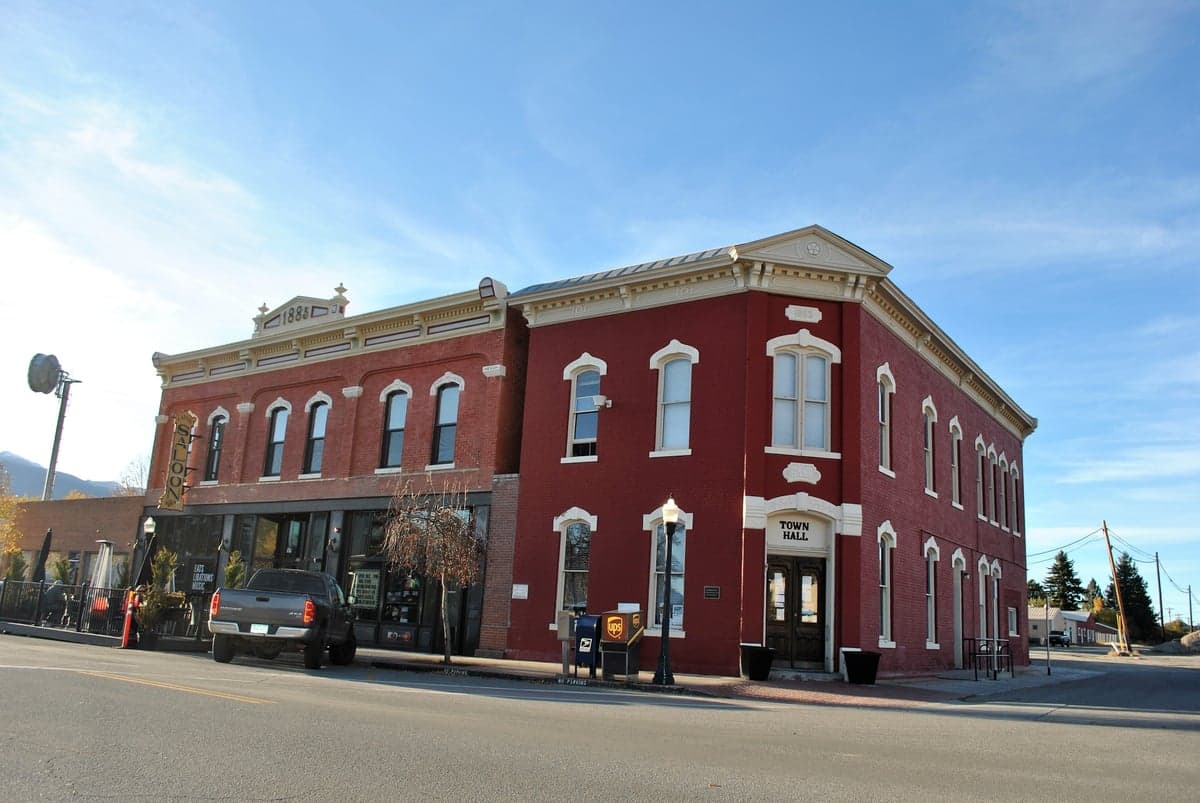
Photo: Wikipedia
Political ClimatePolitical Climate in Buena Vista, CO
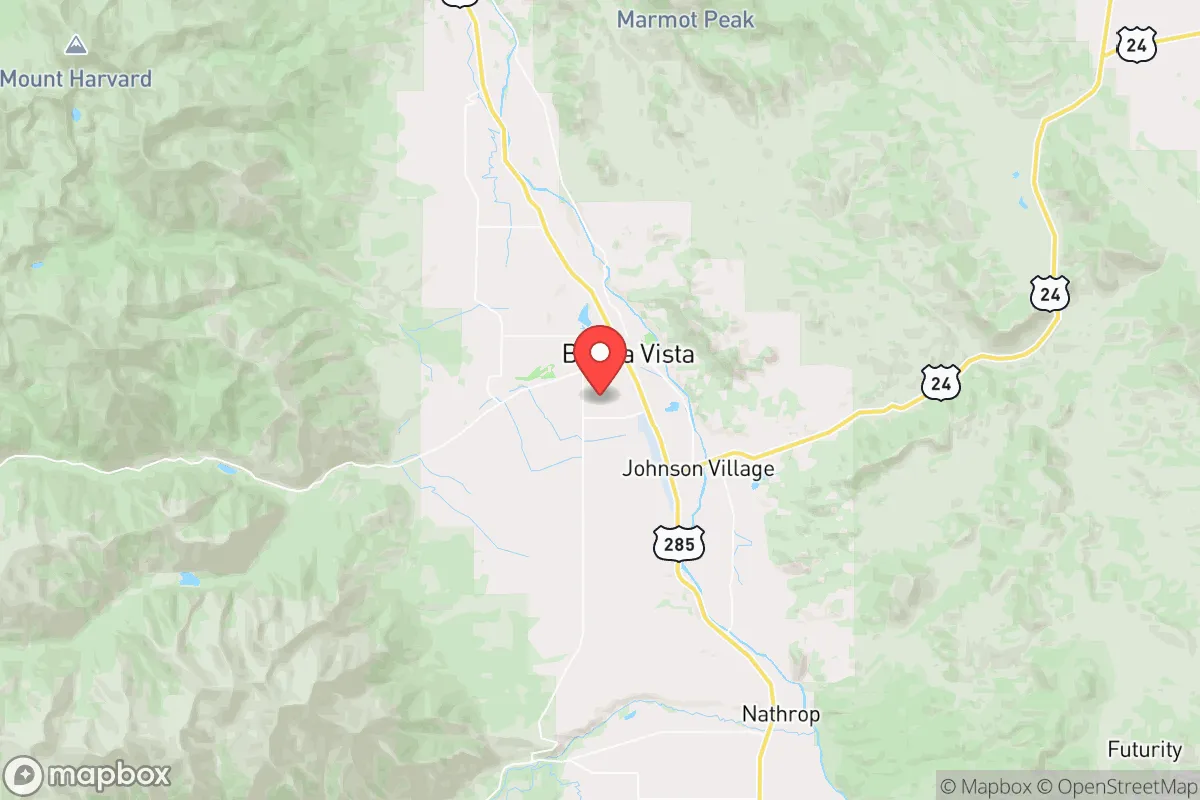
District shown is the primary district for this city’s centroid. Cities may span multiple districts.
Local Political AnalysisPolitical Analysis of Buena Vista, CO
Look, I’ve been around Buena Vista long enough to remember when this town was a quiet, no-nonsense place where folks minded their own business and the biggest political debate was whether to pave another dirt road. Today, the political climate here is shifting, and not necessarily in a direction that sits well with those of us who value personal freedom and limited government. Buena Vista sits in Chaffee County, which has a Cook Partisan Voting Index (PVI) of D+8, meaning it leans about 8 points more Democratic than the national average. That’s a noticeable shift from even a decade ago, when the area was more of a purple patch. The surrounding state of Colorado, CO, has a PVI of D+6, so Buena Vista is actually a couple points bluer than the state as a whole. That’s a red flag for anyone who worries about government overreach creeping into daily life.
How it compares
Compared to the rest of Colorado, Buena Vista’s D+8 rating puts it slightly to the left of the state’s D+6 average. But the real contrast is with nearby towns. Head 20 miles south to Salida, and you’ll find an even more progressive vibe—lots of art galleries, organic co-ops, and a city council that’s been pushing bike lanes and density zoning. Drive north to Leadville, and it’s a different story: that town leans more conservative, with a strong mining heritage and a “keep your hands off my property” attitude. Then there’s Poncha Springs, just a few miles east, which still feels like old-school Colorado—fewer regulations, more pickup trucks, and a general skepticism of Boulder-style politics. So Buena Vista is caught in the middle: we’ve got the outdoor recreation crowd moving in from Denver and California, bringing their progressive ideas about land use and taxes, while the long-time ranchers and miners just want to be left alone. That tension is real, and it’s growing.
What this means for residents
For those of us who’ve lived here a while, the D+8 lean translates into concrete changes that feel like government overreach. Property taxes have crept up as the county board—now with a progressive majority—approves new bonds for “community amenities” like expanded trails and a rec center. Zoning rules have gotten tighter, making it harder to build a workshop on your own land without a stack of permits. And there’s a push for more “sustainable” development mandates, which sounds nice until you realize it means higher costs for homeowners and small builders. The local school board has also shifted, with more emphasis on DEI training and less on core academics. If you value personal freedom—the right to use your property as you see fit, to keep more of your paycheck, and to raise your kids without ideological pressure—these trends are concerning. The trajectory suggests more regulation, not less, in the years ahead.
On the cultural side, Buena Vista still has a strong outdoor recreation identity—rafting, hiking, fishing—but the politics are splitting along lifestyle lines. The newcomers tend to vote for more government services and environmental restrictions, while the old guard pushes back. If you’re considering a move here, know that the political climate is becoming more progressive, and that shift is likely to accelerate as more people relocate from blue states. For now, you can still find like-minded neighbors in the county’s rural pockets, but the town core is drifting left. Keep an eye on local elections—that’s where the real battles over your freedoms are being fought.

State Political ClimatePolitical Climate in Colorado
State Political AnalysisPolitical Environment in the State
Colorado has shifted from a classic purple swing state to a solidly blue one, carrying a Cook PVI of D+6, meaning it votes about six points more Democratic than the national average. Over the last 20 years, the state has moved leftward in every presidential cycle except 2016, driven by explosive population growth in the Denver metro and a steady exodus of rural conservatives from the political mainstream. The dominant coalition is now a mix of urban progressives, suburban moderates, and a shrinking but vocal conservative base concentrated in the eastern plains and Western Slope.
Urban vs. rural divide
The political map of Colorado is a tale of two states. The Denver-Aurora-Lakewood metro area, home to roughly 60% of the state's population, is the engine of Democratic power. Boulder County is the bluest of the blue, with precincts routinely voting 80%+ Democrat. Denver County itself is reliably progressive, while Jefferson and Arapahoe counties have flipped from swing to solid blue in the last decade. The I-25 corridor from Fort Collins down to Colorado Springs is a microcosm of the divide: Fort Collins (Larimer County) leans left, Colorado Springs (El Paso County) remains a conservative stronghold, and Pueblo County has trended blue as union and Hispanic voters align with Democrats. Outside the Front Range, the Eastern Plains (counties like Yuma, Kit Carson, and Prowers) vote heavily Republican, as do many Western Slope counties like Mesa (Grand Junction) and Montrose. However, these rural areas lack the population to counterbalance the metro growth. The 2020 census showed that 9 of the 10 fastest-growing counties were along the Front Range, cementing the urban-rural split.
Policy environment
Colorado's policy environment reflects its blue tilt, with a state income tax flat rate of 4.4% (down from 4.63% after a 2020 ballot measure) and a property tax system that has become a flashpoint. In 2024, voters approved Proposition HH, which temporarily reduced property tax growth but also expanded the state's revenue cap, effectively locking in higher spending. The regulatory posture is aggressive: the state has some of the strictest oil and gas regulations in the nation (SB 19-181), which has slowed drilling in the Denver-Julesburg Basin. Education policy is dominated by the 2019 Student Success Act, which increased per-pupil funding but tied it to progressive equity metrics. Healthcare is heavily regulated, with a state-based exchange and a 2022 law capping insulin copays at $50. Election laws have been liberalized: Colorado was one of the first states to implement universal mail-in voting (2013) and same-day voter registration, which critics argue weakens ballot security. The state also has a "red flag" law (2019) allowing courts to temporarily seize firearms from individuals deemed a risk, a policy that remains deeply controversial among conservatives.
Trajectory & freedom
Colorado is becoming less free by traditional conservative measures. The 2019 red flag law (HB 19-1177) was followed by a 2023 ban on "ghost guns" and a 2024 law raising the minimum age to purchase any firearm to 21. Parental rights have taken hits: a 2023 law (SB 23-195) removed the requirement for schools to notify parents of a student's gender identity changes, sparking outrage in conservative suburbs like Douglas County. Medical autonomy has expanded in one direction—abortion access is codified into state law (HB 22-1279)—but restricted in others, with vaccine mandates for healthcare workers and school staff remaining in place post-COVID. Property rights are under pressure from a 2024 "right to repair" law for farm equipment, which conservatives argue undermines intellectual property, and from local zoning battles in mountain towns like Breckenridge and Durango that limit short-term rentals. The state's tax burden is moderate, but the trend is toward higher spending: the 2024 state budget topped $40 billion, a 40% increase from 2019. The overall trajectory is one of expanding government control over personal choices, from guns to healthcare to education.
Civil unrest & political movements
Colorado has seen its share of political flashpoints. The 2020 protests in Denver over George Floyd's death turned violent, with property damage and clashes between demonstrators and police. The "Defund the Police" movement gained traction in Denver City Council, though it was largely symbolic. On the right, the "Colorado Project" and "Liberty in Colorado" groups have organized around election integrity and school board races, particularly in Douglas and El Paso counties. The 2022 election saw a wave of conservative school board wins in these areas, but the state legislature has since passed laws limiting local control over curriculum. Immigration politics are heated: Denver became a sanctuary city in 2019, and the influx of migrants from the southern border in 2023-2024 strained city resources and sparked backlash in suburban communities like Aurora, where a 2024 city council vote to limit sanctuary policies failed. Election integrity remains a sore point: the 2020 election saw a controversial "curing" process for mail-in ballots, and a 2022 audit of Dominion voting machines in Mesa County led to the indictment of the county clerk, a Republican, on charges of tampering. These events have deepened distrust among conservatives.
Projection
Over the next 5-10 years, Colorado will likely continue its leftward drift. In-migration from blue states like California and Illinois is accelerating—the state gained over 100,000 new residents from California alone between 2018 and 2023—and these newcomers tend to vote Democratic. The rural population is aging and shrinking, while the Front Range grows younger and more diverse. The 2030 redistricting cycle will likely lock in Democratic control of the state legislature and congressional delegation. However, there are countercurrents: the 2024 election saw a slight rightward shift in some suburban counties, and the state's housing crisis (median home price over $550,000) could push younger voters toward libertarian or conservative positions on property rights and regulation. A conservative moving in now should expect a state where their vote is increasingly marginalized, but where local control in counties like El Paso, Douglas, and Mesa offers a buffer. The state's natural beauty and outdoor economy will remain draws, but the political climate will feel more like a coastal blue state than a Western swing state within a decade.
For a conservative relocating to Colorado, the bottom line is this: you'll find like-minded communities in Colorado Springs, Grand Junction, and the Eastern Plains, but you'll be fighting an uphill battle at the state level. The tax burden is moderate but rising, gun rights are eroding, and parental rights are under assault in the legislature. If you value personal freedom and limited government, you'll need to engage locally—school boards, county commissions, and city councils—to preserve what's left. The state's beauty is undeniable, but its political trajectory is a warning sign for anyone who believes in individual liberty over state control. Choose your county carefully, and don't expect the state to swing back anytime soon.
* Values derived from national, state, county, city and local statistics and may differ in a specific area. Last updated: 2026-05-11T22:22:42.000Z
Narrative content on this page is AI-generated and may contain mistakes. Verify any details that matter before acting on them.
ReloMaps may earn a commission from affiliate links at no extra cost to you.

