Photo: Wikipedia
Demographics of Buena Vista, CO
Affluence Level in Buena Vista, CO
A below-average socioeconomic profile. Incomes, home values, and educational attainment trail the U.S., with higher poverty and unemployment.
People of Buena Vista, CO
Today, Buena Vista, Colorado, is a small, predominantly white community of 2,966 residents, characterized by a strong outdoor-recreation identity and a notably high college-educated population of 41.6%. The city’s population is 91.4% white and 6.3% Hispanic, with virtually no Black, East/Southeast Asian, or Indian-subcontinent residents (each 0.0%), and a foreign-born share of just 1.6%. This is a place where generational ranching families live alongside newer remote workers and second-home owners, creating a distinct blend of Western independence and amenity-driven migration.
How the city was settled and grew
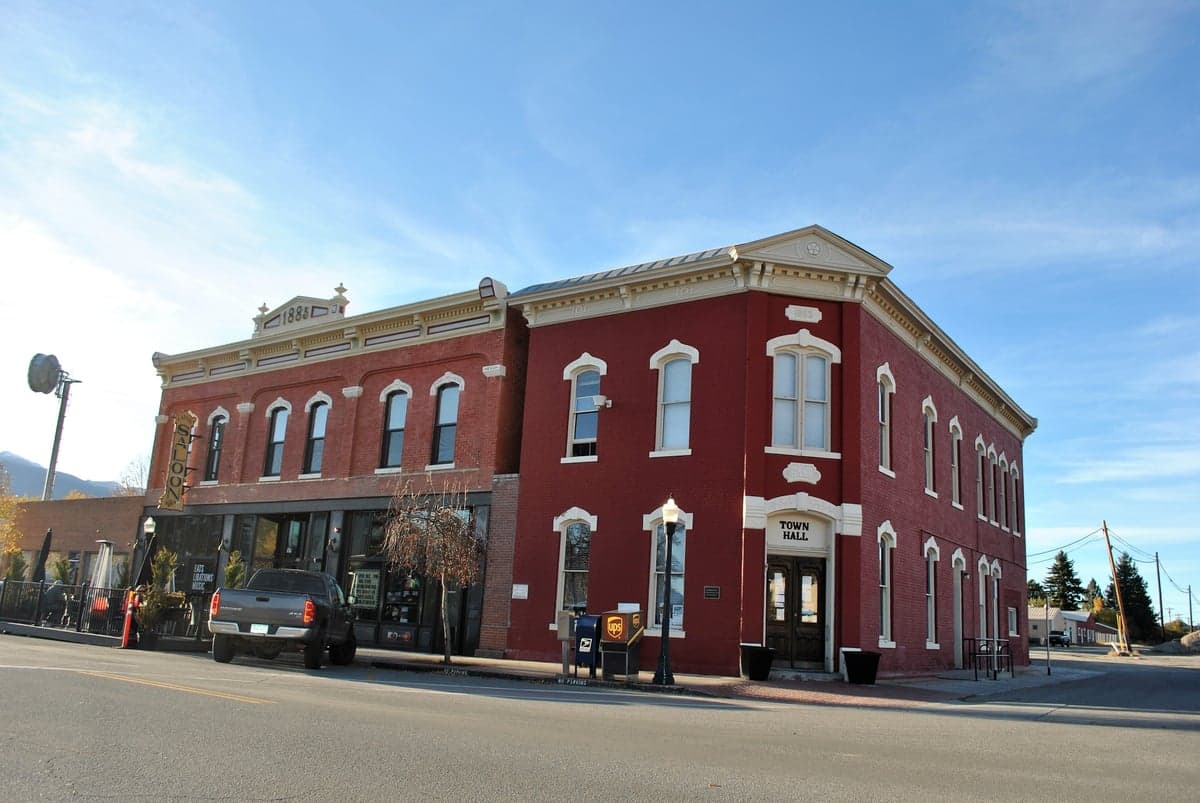
Buena Vista’s original population was drawn by the Colorado gold rush of the 1860s, with the town officially platted in 1879 as a supply hub for nearby mining camps like St. Elmo and Tincup. The earliest settlers were Anglo-American prospectors, merchants, and farmers, many of whom built homes in the Historic Downtown district along East Main Street, where false-front buildings still stand. A second wave arrived with the Denver & Rio Grande Railroad in 1880, which turned Buena Vista into a regional shipping point for ore and livestock. This era brought a small number of Mexican and Mexican-American railroad workers, who settled in what is now the South Main area, near the rail corridor. By the early 1900s, the population stabilized around 1,000, supported by ranching and agriculture in the surrounding Arkansas River Valley. The West Side neighborhood, west of U.S. 24, developed as a residential area for these farming families, with larger lots and irrigation ditches still visible today.
Modern era (post-1965)
After the 1965 Hart-Cellar Act, Buena Vista saw almost no new immigration—its foreign-born share remains negligible. Instead, the modern population shift came from domestic in-migration, beginning in the 1970s and accelerating after 2000. The Collegiate Peaks subdivision, built in the 1990s on the town’s north end, attracted early remote workers and retirees seeking mountain views and lower costs than Summit County. A second domestic wave arrived after the 2008 recession, when younger families and entrepreneurs bought properties in the Cottonwood Meadows area, drawn by the town’s proximity to whitewater rafting on the Arkansas River and hiking in the San Isabel National Forest. The Hispanic population, which grew from roughly 3% in 2000 to 6.3% today, is concentrated in the South Main and East Main corridors, where some families have lived for three generations, working in construction, hospitality, and the county government. The white population, meanwhile, has become more transient and affluent, with many new arrivals coming from Colorado’s Front Range (Denver, Colorado Springs) and out of state (Texas, California).
The future
Buena Vista’s population is trending toward further homogenization by income and lifestyle, rather than by race or ethnicity. The Hispanic share is plateauing—birth rates among established families are stable, but new Hispanic in-migration is low due to limited affordable housing and few entry-level jobs. The white population is likely to grow modestly, driven by continued domestic migration of remote workers and retirees, especially into the North End and Collegiate Peaks subdivisions, where new single-family homes are being built. The city’s 41.6% college-educated rate is well above the state average (about 40%), and this share will rise as more professionals relocate. There is no sign of tribalization into distinct ethnic enclaves; instead, the divide is economic, with long-term locals in older neighborhoods like West Side and South Main facing rising property taxes and home prices, while newcomers dominate the newer subdivisions. The foreign-born population will likely remain below 2%, as Buena Vista lacks the industrial or agricultural base that attracts immigrant labor in other Colorado towns.
For a conservative-leaning individual or family considering relocation, Buena Vista is becoming a place where traditional Western values of self-reliance and community coexist with an influx of educated, outdoors-oriented newcomers. The population is stable, overwhelmingly white, and increasingly affluent, with little racial or ethnic diversity. The main tension is not between groups but between longtime residents and newer arrivals over growth, water rights, and housing affordability—a dynamic that shapes daily life and local politics in this small mountain town.

* Values derived from national, state, county, city and local statistics and may differ in a specific area. Last updated: 2026-05-11T22:22:42.000Z
Narrative content on this page is AI-generated and may contain mistakes. Verify any details that matter before acting on them.
ReloMaps may earn a commission from affiliate links at no extra cost to you.

