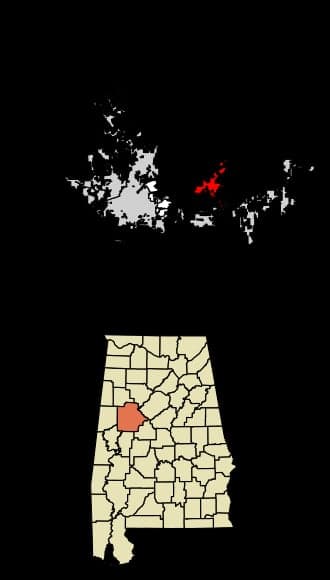
Photo: Wikipedia
Strategic Assessment of Brookwood, AL
Workable tactical position. Some exposure to population density or targets, but generally defensible in a crisis.
What does the Strategic Assessment tell us?
Our Strategic Assessment grades tactical survivability of an area. Major population centers, military targets, fallout zones, natural disasters, and border exposure all drive risk — lower exposure means a more defensible position in a crisis.
This is heavily inspired by Joel Skousen's Strategic Relocation book. Highly recommended you checkout the book ($)What does this tell us?
Our Strategic Assessment grades tactical survivability of an area. Major population centers, military targets, fallout zones, natural disasters, and border exposure all drive risk — lower exposure means a more defensible position in a crisis.
This is heavily inspired by Joel Skousen's Strategic Relocation book. Highly recommended you checkout the book ($)Strategic Pillars
Key Distances
Regional Safe Places
Below is our recommended "safe zones" in Alabama and the surrounding area based on our strategic heuristics. For most people, it's unrealistic to live in a “safe zone” full-time due to work, family or other personal reasons. They tend to be more rural. However, many of these areas are perfect for second homes and retreat properties that double as a vacation home or even a short-term rental.
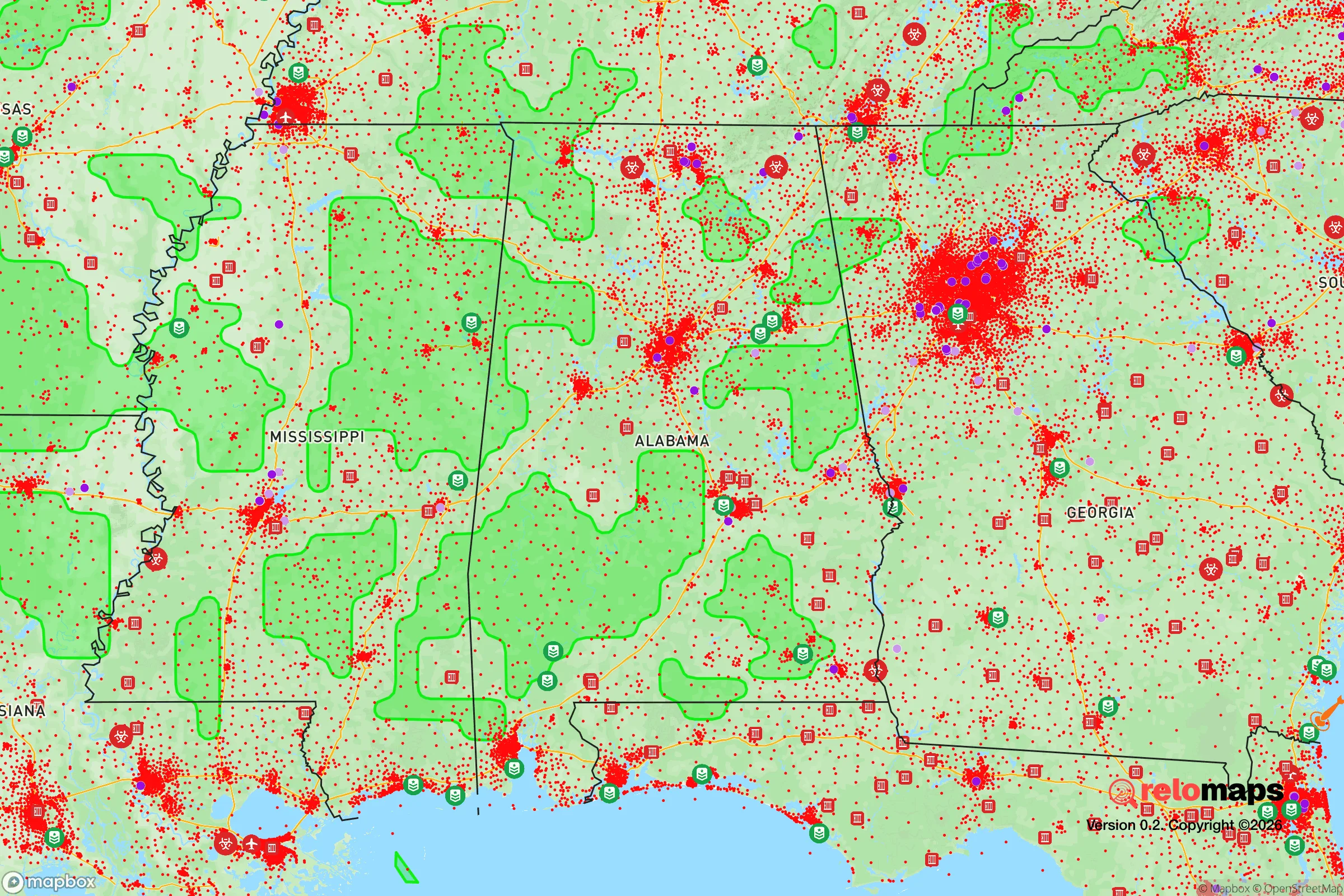
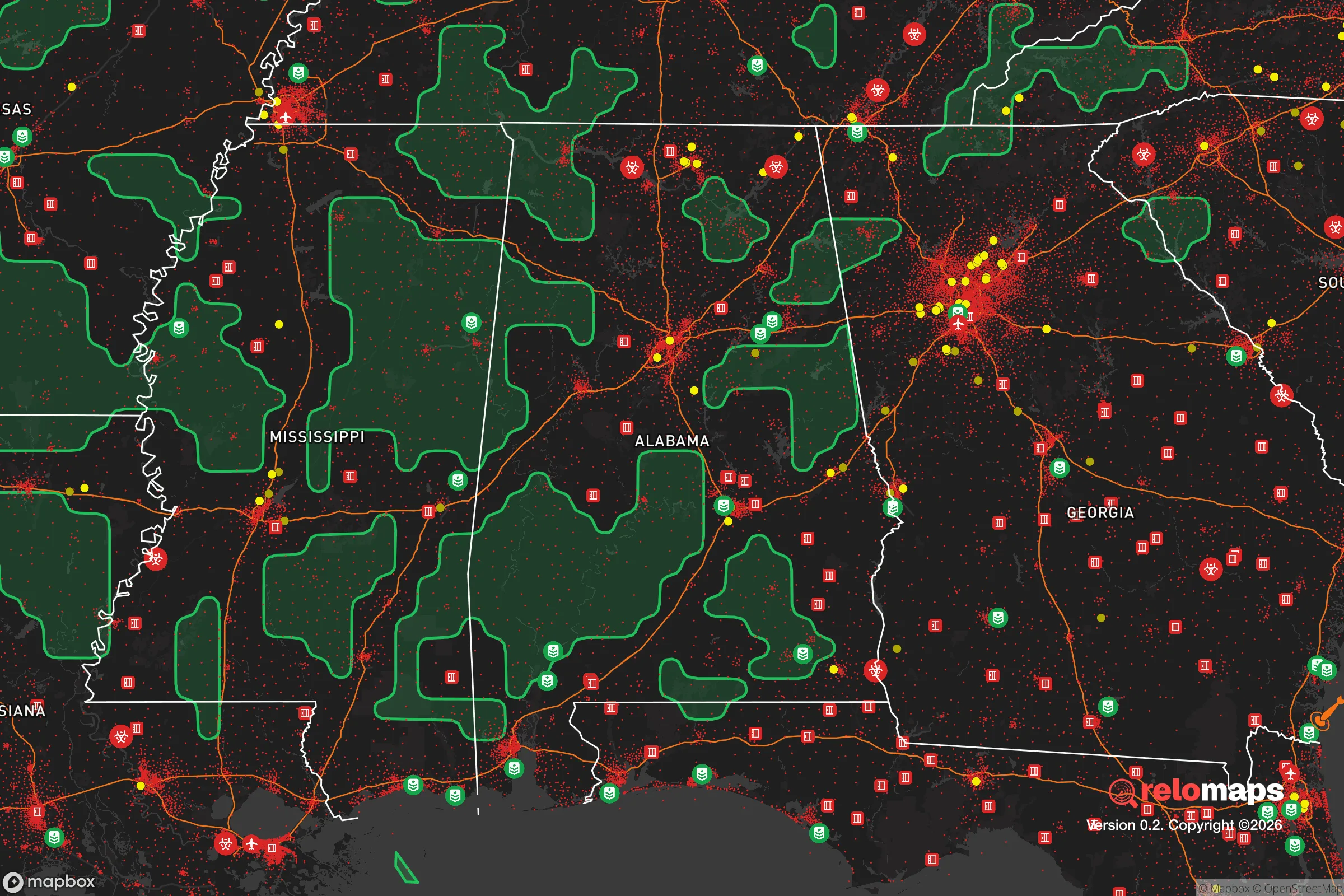


Important Note: For informational purposes only. This does not mean nothing bad ever happens in the green zones. Please use common sense. This is based on public data and modeled with AI. We tried to take a conservative approach but mistakes happen. We update this regularly as new information becomes available.
Solar Generator Recommendations
Backup power matters more here than in safer locations. We've picked three solar generators across budgets and capacity tiers — start with the budget unit if you only need a few essentials, or step up if you want to run a fridge and HVAC for days at a time.
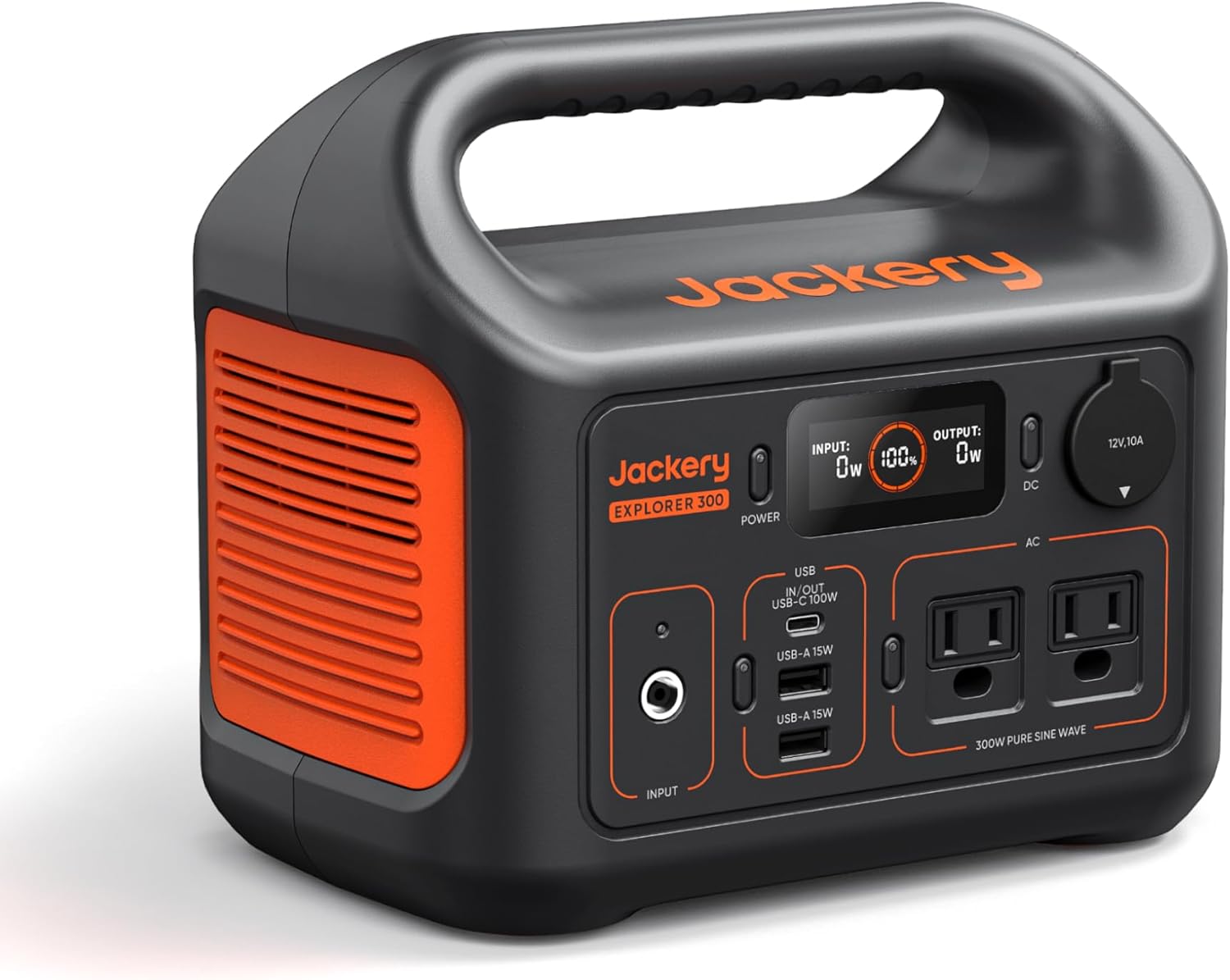
Jackery Portable Power Station Explorer 300
Budget OptionPower on the Go: Weighing only 11 lbs, it's convenient to set up and store with book-sized foldable solar panels

BLUETTI Portable Power Station AC180
Designed for both indoor and outdoor scenarios, AC180 is highly capable as it has a robost capacity and continuous output power.

EF ECOFLOW DELTA Pro Ultra Power Station
Upgraded PickEcoFlow DELTA Pro Ultra is a whole-home energy system designed to grow with your family. Integrated with the Smart Home Panel 2, it scales to meet your evolving energy needs — keeping your home powered, intelligent, and secure through every stage of life.
We earn a commission, at no additional cost to you.
Strategic Assessment Analysis
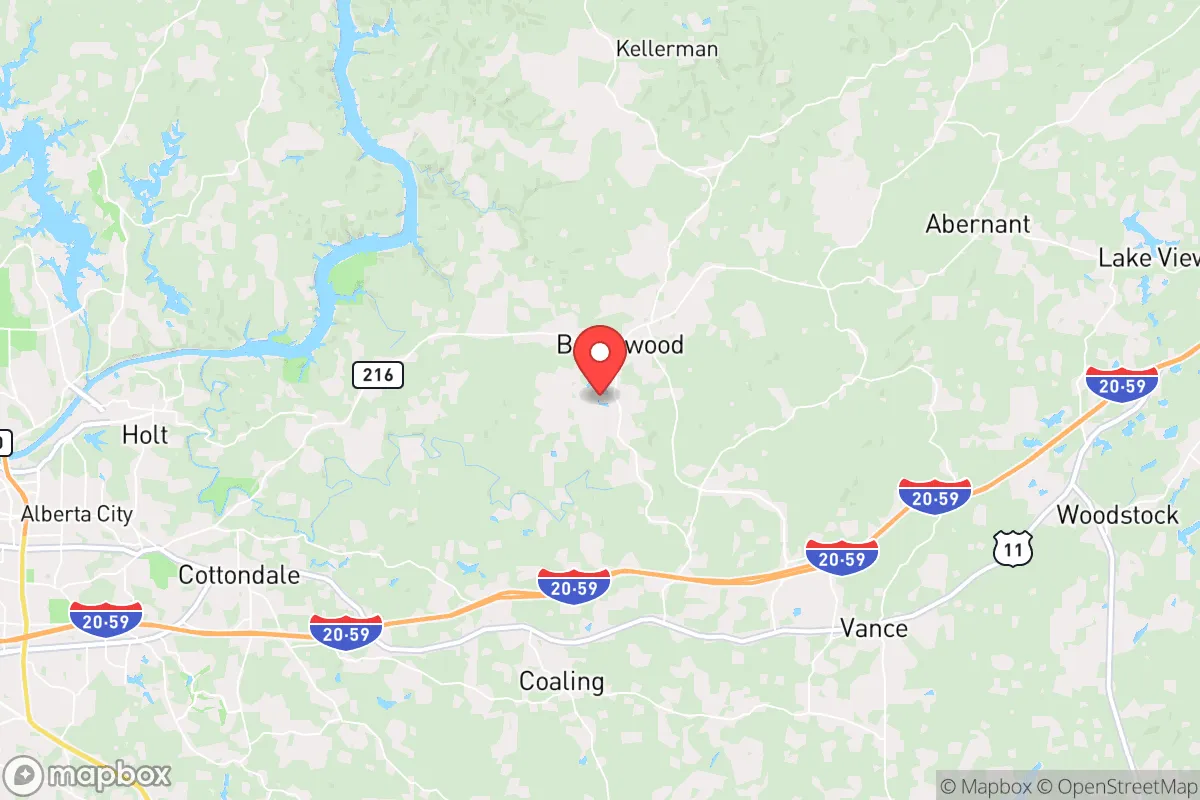
Brookwood, Alabama, occupies a strategic position in the state's west-central corridor that offers a meaningful blend of rural seclusion and practical access, making it a location worth serious consideration for those prioritizing disaster readiness and self-sufficiency. Situated roughly 12 miles southwest of Tuscaloosa and about 55 miles southwest of Birmingham, the town sits at a distance from major urban centers that is close enough for supply runs and employment but far enough to avoid the worst of a metropolitan collapse scenario. The area's resilience is anchored in its location within the Black Belt region, characterized by rolling hills, mixed pine-hardwood forests, and a relatively low population density of around 1,200 residents, which inherently reduces competition for resources during a crisis.
Geographic position and natural advantages for self-sufficiency
Brookwood's geography provides several tangible benefits for a relocator focused on long-term sustainability. The town lies in the Warrior River basin, with the Black Warrior River flowing roughly 5 miles to the west, offering a reliable surface water source that is less prone to contamination than urban reservoirs. The surrounding terrain is a mix of gently sloping hills and flat bottomlands, with elevations ranging from 200 to 400 feet above sea level, which minimizes flood risk for most properties while still allowing for productive gardening and small-scale agriculture. The area's soils, primarily classified as Lucedale and Savannah series, are well-drained and suitable for row crops and orchards, though they require amendment for heavy vegetable production. The moderate climate—average annual rainfall of 54 inches, a growing season of roughly 220 days, and winter lows that rarely dip below 20°F—supports year-round food cultivation without the extreme weather events that plague other regions. The proximity to the Talladega National Forest, about 30 miles to the east, provides a buffer of public land for foraging, hunting, and emergency timber, though access is regulated. For a relocator, the key takeaway is that Brookwood sits in a sweet spot: close enough to the Tennessee-Tombigbee Waterway for bulk transport of supplies, but far enough from the Gulf Coast to avoid the worst hurricane storm surge and the concentration of petrochemical infrastructure along the coast.
Risks, exposures, and proximity to fallout-relevant landmarks
No strategic assessment is complete without a clear-eyed look at the risks, and Brookwood has several that demand attention. The most significant man-made threat is the proximity to the Browns Ferry Nuclear Plant, located roughly 20 miles to the northwest near Athens, Alabama. This three-unit boiling water reactor is one of the largest nuclear facilities in the country, and while its safety record is solid, a major incident—whether from sabotage, seismic event, or grid failure—could render the Brookwood area uninhabitable for an extended period depending on wind patterns. The prevailing winds in the region are from the south and southwest, which means fallout from Browns Ferry would typically be carried away from Brookwood, but a shift during a release could change that calculus. Additionally, the town lies within 50 miles of the Miller Steam Plant (coal-fired) and the James H. Miller Jr. Electric Generating Plant, both of which are potential targets for sabotage or collateral damage during a conflict. The proximity to Tuscaloosa (population 100,000) and Birmingham (population 200,000 metro) introduces risks of refugee flow during a crisis, as major highways like I-20/59 and US-82 pass within 10 miles, creating natural evacuation corridors that could funnel desperate populations south and west. Natural hazards are less severe but still present: the area experiences an average of 40-50 tornado warnings per year, with the peak season from March to May, and the flat terrain offers little natural shielding from severe weather. Flooding is a concern in low-lying areas near the Black Warrior River, particularly during prolonged rain events, though most of Brookwood sits on higher ground. For a relocator, the nuclear plant is the single most important risk factor to weigh against the area's advantages.
Practical resilience for a relocator: food, water, energy, and defensibility
When evaluating Brookwood for day-to-day self-sufficiency, the picture is mixed but generally favorable. Water availability is a strong point: the Black Warrior River provides a perennial surface source, and the area's high water table means most properties can support a shallow well (typically 30-80 feet deep) with reasonable drilling costs of $3,000-$6,000. Rainwater harvesting is viable given the 54 inches of annual precipitation, and the clay-heavy soils allow for pond construction on larger parcels. Food production is feasible but requires work: the growing season is long enough for two crop cycles of warm-season vegetables, and the surrounding forests support deer, turkey, and small game for protein. However, the soil in the Black Belt is notoriously heavy and acidic, requiring lime and organic matter amendments for optimal yields. Local agriculture is dominated by poultry and cattle operations, meaning that networking with nearby farmers for manure, feed, and breeding stock is a practical strategy. Energy resilience is a weak point: the area is served by Alabama Power, which relies heavily on coal and nuclear generation, and the grid is vulnerable to ice storms and tornado damage. Solar potential is moderate, with an average of 4.5 peak sun hours per day, but the frequent cloud cover during spring and winter reduces reliability. Wood heating is a viable backup, as hardwood forests are abundant and firewood permits are inexpensive from the state. Defensibility is a mixed bag: the rolling terrain and tree cover provide natural concealment and chokepoints, but the lack of natural barriers like mountains or rivers (the Black Warrior is navigable and thus a potential avenue of approach) means that a determined group could approach from multiple directions. The town's small population and low crime rate (violent crime is roughly 60% below the national average) suggest a cohesive community that would likely organize for mutual defense, but the proximity to major highways increases the risk of transient threats during a breakdown. For a relocator, the practical takeaway is that Brookwood offers a solid foundation for self-sufficiency, but requires upfront investment in well drilling, soil improvement, and backup power to reach full resilience.
The overall strategic picture for Brookwood is one of calculated trade-offs. It offers genuine advantages in water availability, climate, and distance from major urban centers, making it a viable base for a family or individual serious about preparedness. The nuclear plant risk is real but manageable with proper planning—maintaining a radiation detection kit, knowing evacuation routes, and storing potassium iodide—and the natural hazards are typical for the Southeast. The town's location within a 30-minute drive of Tuscaloosa provides access to medical facilities (DCH Regional Medical Center), hardware stores, and bulk suppliers, while still allowing for a rural lifestyle. For the relocator who values strategic depth over absolute isolation, Brookwood represents a balanced option that avoids the extremes of deep wilderness or suburban vulnerability. The key is to approach it with eyes open: invest in soil health, secure a well, and build community ties before a crisis hits.

* Values derived from national, state, county, city and local statistics and may differ in a specific area. Last updated: 2026-10-30T15:08:45.000Z
Narrative content on this page is AI-generated and may contain mistakes. Verify any details that matter before acting on them.
ReloMaps may earn a commission from affiliate links at no extra cost to you.

