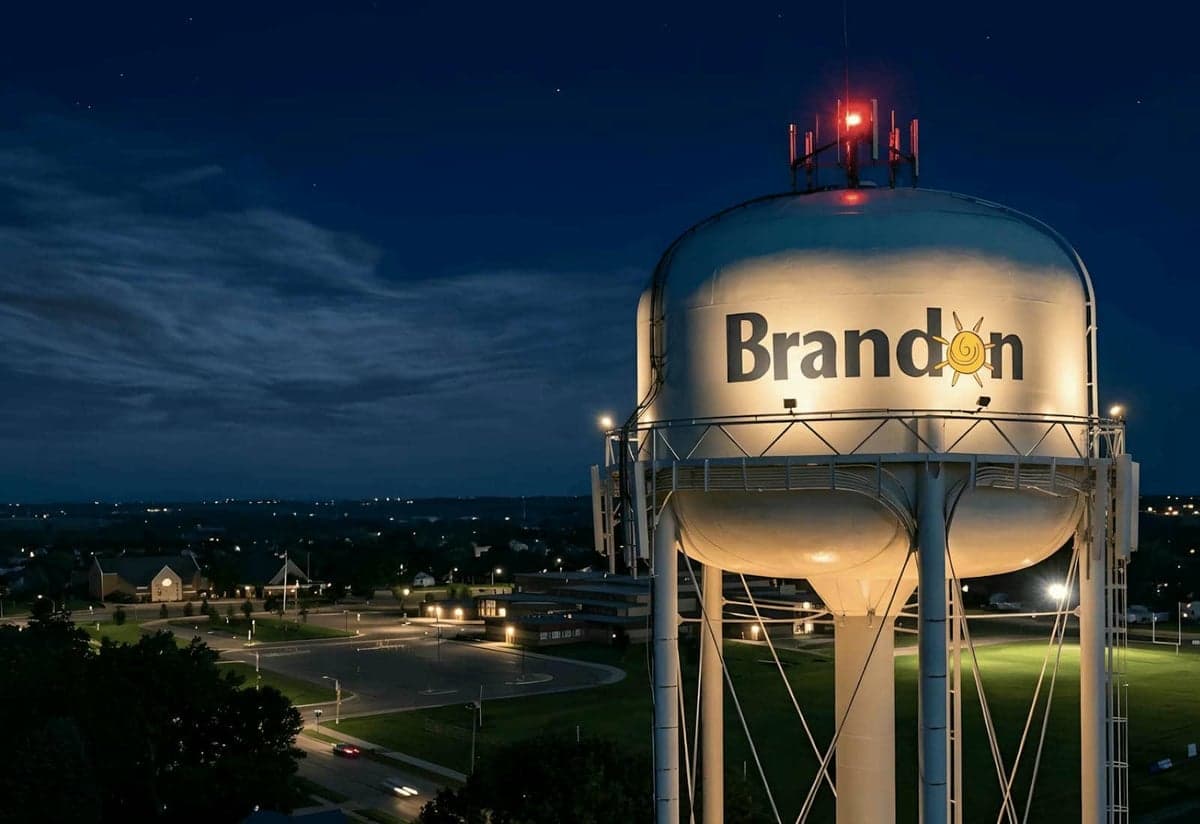
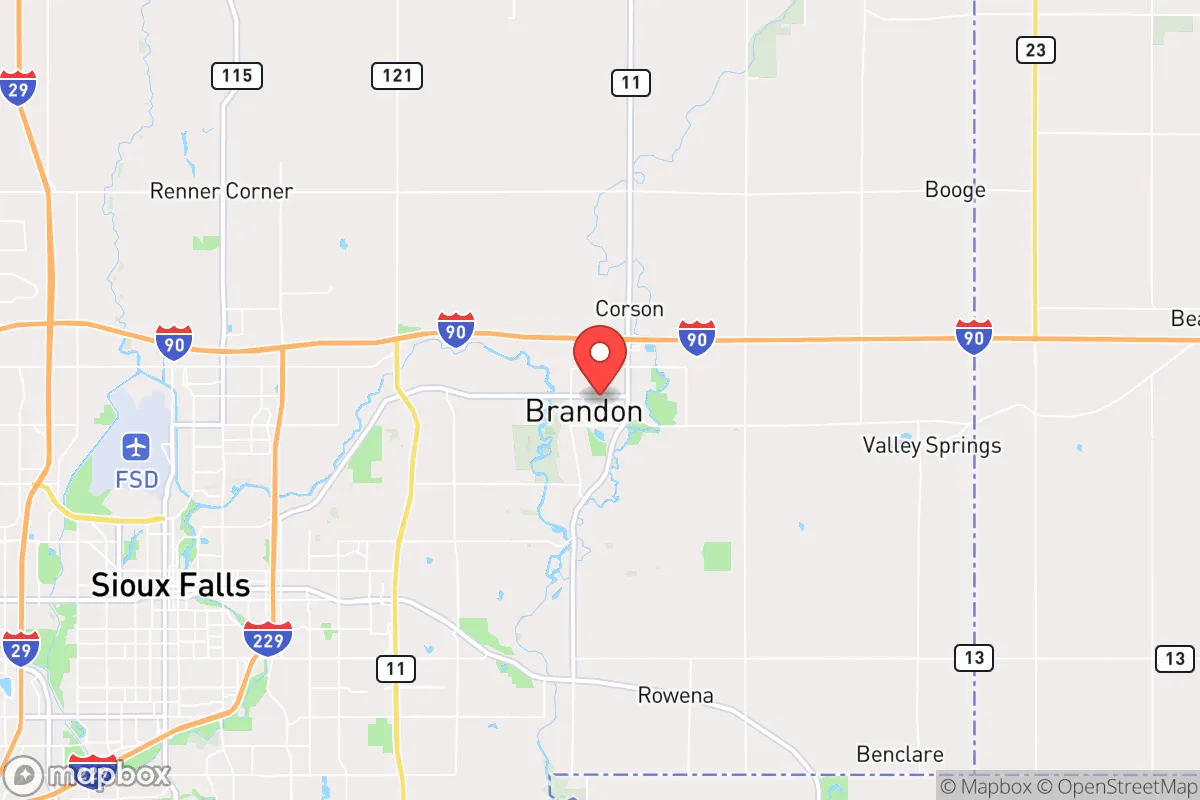
Strategic Assessment of Brandon, SD
Workable tactical position. Some exposure to population density or targets, but generally defensible in a crisis.
What does the Strategic Assessment tell us?
Our Strategic Assessment grades tactical survivability of an area. Major population centers, military targets, fallout zones, natural disasters, and border exposure all drive risk — lower exposure means a more defensible position in a crisis.
This is heavily inspired by Joel Skousen's Strategic Relocation book. Highly recommended you checkout the book ($)What does this tell us?
Our Strategic Assessment grades tactical survivability of an area. Major population centers, military targets, fallout zones, natural disasters, and border exposure all drive risk — lower exposure means a more defensible position in a crisis.
This is heavily inspired by Joel Skousen's Strategic Relocation book. Highly recommended you checkout the book ($)Strategic Pillars

Key Distances
Regional Safe Places
Below is our recommended "safe zones" in South Dakota and the surrounding area based on our strategic heuristics. For most people, it's unrealistic to live in a “safe zone” full-time due to work, family or other personal reasons. They tend to be more rural. However, many of these areas are perfect for second homes and retreat properties that double as a vacation home or even a short-term rental.
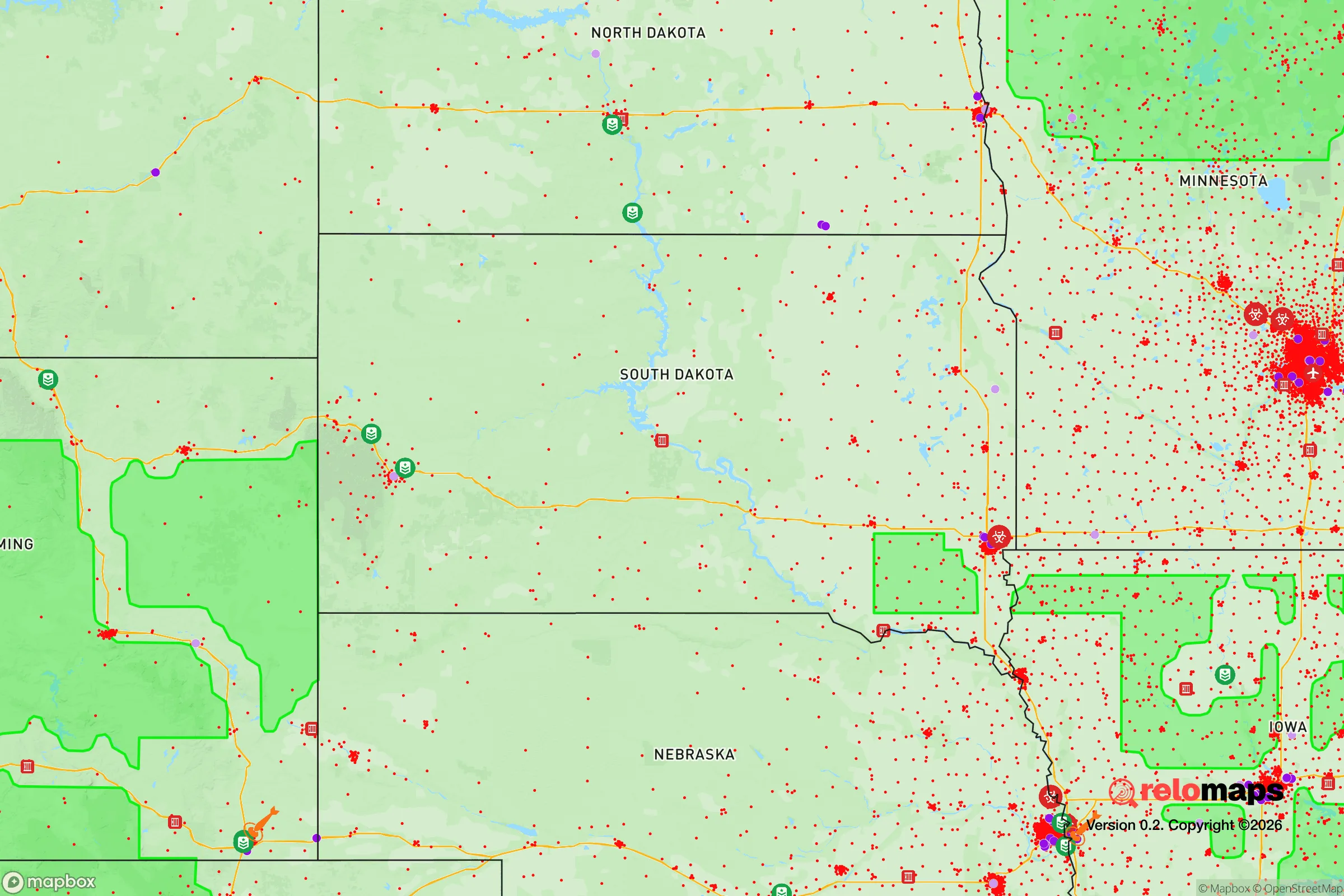


Important Note: For informational purposes only. This does not mean nothing bad ever happens in the green zones. Please use common sense. This is based on public data and modeled with AI. We tried to take a conservative approach but mistakes happen. We update this regularly as new information becomes available.
Solar Generator Recommendations
Backup power matters more here than in safer locations. We've picked three solar generators across budgets and capacity tiers — start with the budget unit if you only need a few essentials, or step up if you want to run a fridge and HVAC for days at a time.

Jackery Portable Power Station Explorer 300
Budget OptionPower on the Go: Weighing only 11 lbs, it's convenient to set up and store with book-sized foldable solar panels

BLUETTI Portable Power Station AC180
Designed for both indoor and outdoor scenarios, AC180 is highly capable as it has a robost capacity and continuous output power.

EF ECOFLOW DELTA Pro Ultra Power Station
Upgraded PickEcoFlow DELTA Pro Ultra is a whole-home energy system designed to grow with your family. Integrated with the Smart Home Panel 2, it scales to meet your evolving energy needs — keeping your home powered, intelligent, and secure through every stage of life.
We earn a commission, at no additional cost to you.
Strategic Assessment Analysis
Brandon, South Dakota, sits in a sweet spot that few preppers and survivalists fully appreciate: close enough to Sioux Falls for supply runs and employment, but far enough to avoid being caught in the blast radius of a major urban collapse. This town of roughly 12,000 residents, located just southwest of South Dakota's largest city, offers a rare combination of small-town defensibility and access to regional resources. For a conservative-leaning individual or family looking to ride out civic unrest, economic collapse, or a mass casualty event, Brandon's location along the Big Sioux River and its position on the eastern edge of the Great Plains provide natural buffers that many Midwestern towns simply lack.
Geographic position and natural advantages for long-term survival
Brandon's geography is its first and most underrated asset. The town sits on the eastern edge of the Coteau des Prairies, a plateau that rises gently above the surrounding plains, offering natural vantage points and slightly cooler summer temperatures. The Big Sioux River runs along the town's western edge, providing a reliable surface water source that can be filtered or treated for drinking, irrigation, and livestock. Unlike many Plains towns that rely entirely on deep aquifers, Brandon's proximity to the river means shallow wells are viable, and the water table is relatively high. The surrounding terrain is a mix of rolling hills, scattered woodlots, and agricultural fields—ideal for small-scale farming, hunting, and foraging. The area's moderate climate, with four distinct seasons but no extreme wildfire risk, hurricane threat, or earthquake hazard, makes it a low-maintenance base for a self-sufficient lifestyle. The nearest major fault line is hundreds of miles away, and tornadoes, while possible, are less frequent here than in the central Plains. For a relocator prioritizing natural resilience, Brandon offers a quiet, defensible pocket that is not on any obvious disaster map.
Risks, exposures, and proximity to fallout-relevant landmarks
No strategic assessment is complete without a hard look at vulnerabilities, and Brandon has a few that demand attention. The most obvious risk is its proximity to Sioux Falls, a city of over 200,000 people that sits just 12 miles to the northeast. In a scenario involving mass civil unrest, a major terrorist attack, or a grid-down event, Sioux Falls would become a chokepoint for refugees, looters, and desperate populations moving south and west along Interstate 29. Brandon lies directly in that path. The town is also within 50 miles of the Ellsworth Air Force Base near Rapid City, a potential target in a conflict involving strategic bombers. While Brandon is not in a primary blast zone, the fallout plume from a strike on Ellsworth could drift eastward depending on wind patterns. Additionally, the town is less than 100 miles from the Minnesota border, meaning any cascading failures in the Twin Cities metro area could send secondary waves of displaced people down the I-90 corridor. On the positive side, Brandon has no nuclear power plants within 200 miles, no major chemical storage facilities, and no large-scale military depots that would make it a primary target. The risks are real but manageable—provided a relocator plans for a layered defense and a bug-out route that heads west into the less populated ranchlands of central South Dakota.
Practical resilience for a relocator: food, water, energy, and defensibility
For a prepper or survivalist family, Brandon's practical resilience hinges on three factors: water access, agricultural potential, and community scale. The Big Sioux River is the backbone of any long-term water strategy. A simple hand pump or solar-powered well can draw from the shallow aquifer, and the river itself can be filtered with a Berkey or similar system. The surrounding farmland is some of the most productive in the state, with corn, soybeans, and alfalfa dominating the landscape. A family with a few acres can easily raise chickens, goats, or a milk cow, and the growing season—roughly 140 frost-free days—is long enough for a substantial garden. Local farmers' markets and co-ops in Brandon and nearby Valley Springs offer backup food sources during normal times, but the real value is in the land itself. Energy resilience is less straightforward. The grid is reliable but not hardened against EMP or cyberattack. Solar panels with battery storage are a wise investment, and the area's average of 210 sunny days per year makes solar a viable primary source. Wood heating is also practical, given the scattered woodlots and the availability of firewood from local tree services. Defensibility is where Brandon shines. The town's layout—a compact core with residential subdivisions spreading outward—means a small group can secure a perimeter around a single street or cul-de-sac. The surrounding fields offer clear sightlines, and the river provides a natural barrier to the west. The local police force is small but responsive, and the Minnehaha County Sheriff's Office has a substation in town. In a worst-case scenario, the community's conservative, self-reliant culture means neighbors are more likely to band together than to turn on each other.
The overall strategic picture for Brandon is one of cautious optimism. It is not a remote bunker in the mountains, nor is it a fortified compound in the desert. It is a working-class town with good soil, decent water, and a population that still values self-sufficiency and mutual aid. The proximity to Sioux Falls is a double-edged sword—it provides access to hospitals, hardware stores, and supply chains during normal times, but it also creates a vulnerability during a collapse. For a relocator who is willing to invest in a well, solar panels, and a few acres of land, Brandon offers a realistic path to long-term resilience without the isolation that drives many preppers to burnout. The key is to treat it as a base of operations, not a final redoubt. Have a plan for the first 72 hours of a crisis, know your neighbors, and keep a vehicle gassed up and pointed west. In a world that feels increasingly unstable, Brandon, South Dakota, is a solid bet for those who want to be prepared without disappearing from society entirely.

* Values derived from national, state, county, city and local statistics and may differ in a specific area. Last updated: 2026-05-02T14:13:26.000Z
Narrative content on this page is AI-generated and may contain mistakes. Verify any details that matter before acting on them.
ReloMaps may earn a commission from affiliate links at no extra cost to you.

