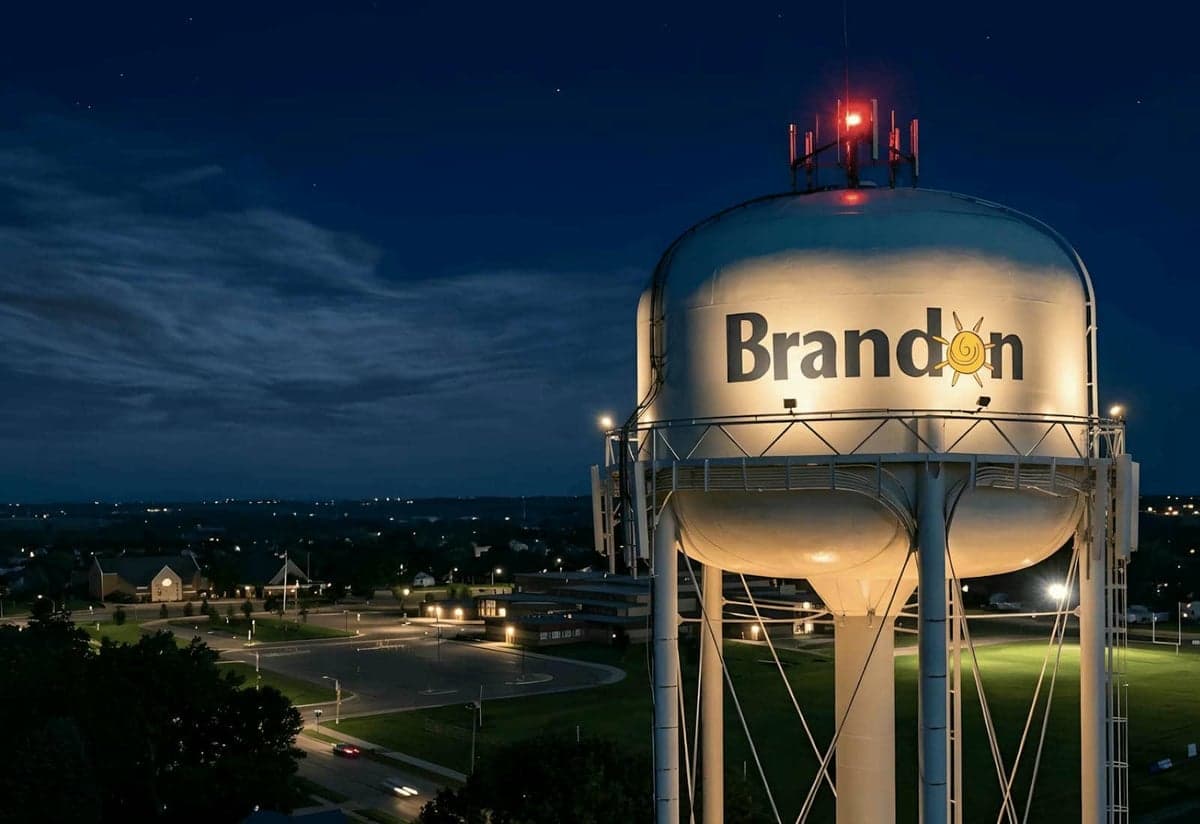
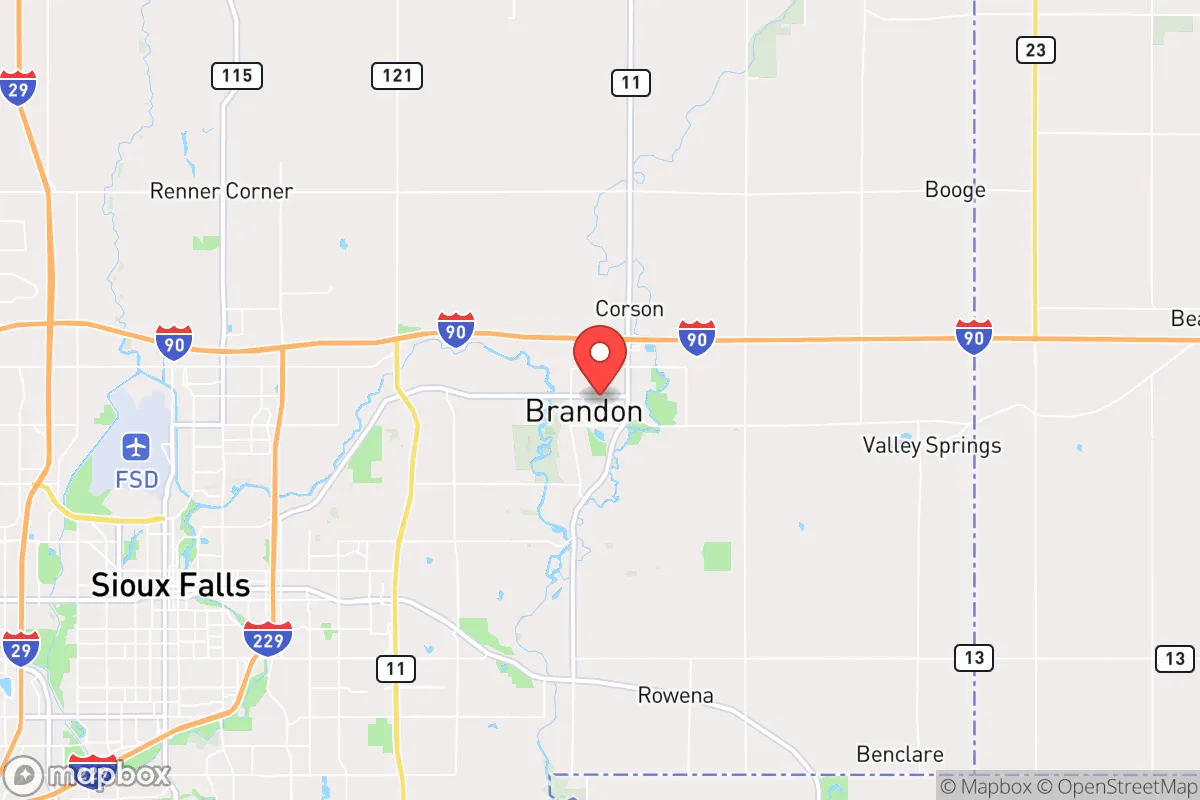
Demographics of Brandon, SD
Affluence Level in Brandon, SD
An upper-middle-class area. Household wealth, education levels, and homeownership run ahead of national benchmarks.
People of Brandon, SD
The people of Brandon, South Dakota, today form a predominantly white, family-oriented community of nearly 11,000 residents, characterized by a strong local identity rooted in its agricultural heritage and rapid suburban expansion. With a foreign-born population of just 1.0% and a 90.9% white demographic, Brandon is notably less diverse than the national average, yet it has seen modest growth in its Hispanic (4.5%) and Black (3.0%) populations. The city’s distinctive markers include a high college attainment rate of 40.6%, a robust local school system, and a reputation as a safe, affordable bedroom community for Sioux Falls workers. This is a place where generational stability meets new construction, with long-time residents living alongside recent arrivals drawn by jobs and lower taxes.
How the city was settled and grew
Brandon’s human history begins with the 1870s arrival of European-American settlers, primarily of Dutch and German descent, who were drawn by the Homestead Act and the promise of fertile farmland along the Big Sioux River. The original town plat was laid out in 1878, and the population grew slowly through the early 20th century as agriculture—especially corn and livestock—dominated the local economy. The historic Downtown Brandon district, centered on Main Street, was built by these early farming families and remains the city’s original commercial core. A second wave of settlement occurred during the post-World War II era, when returning veterans and their families moved into modest homes in the Brandon Heights neighborhood, a mid-century subdivision that still features ranch-style houses and tree-lined streets. By 1960, the population had reached just over 1,000, reflecting a stable, agrarian community with little outside migration.
Modern era (post-1965)
The 1965 Hart-Cellar Act had minimal direct impact on Brandon, as the city remained overwhelmingly white and native-born through the 1970s and 1980s. Instead, the major demographic shift came from domestic in-migration: the expansion of Sioux Falls’ economy—particularly in finance, healthcare, and manufacturing—drove a suburban boom that transformed Brandon from a farming hamlet into a commuter town. The Brandon Lakes subdivision, developed in the 1990s and 2000s, absorbed many of these new residents, mostly white families from other parts of South Dakota and the Midwest seeking larger lots and lower property taxes. The Prairie Hills neighborhood, built in the 2000s and 2010s, attracted a slightly more diverse mix, including some Hispanic and Black families drawn by construction and service jobs in the region. Today, the city’s 3.0% Black population and 4.5% Hispanic population are concentrated in these newer subdivisions, while older neighborhoods like Brandon Heights and Downtown Brandon remain nearly entirely white. The East/Southeast Asian population (0.1%) and Indian subcontinent population (0.0%) are negligible, reflecting the city’s limited draw for immigrant communities.
The future
Brandon’s population is projected to continue growing, driven by ongoing residential development and the city’s appeal as a lower-cost alternative to Sioux Falls. The Brandon Crossings development, a master-planned community under construction on the city’s eastern edge, is expected to add several hundred homes over the next decade, likely attracting more white, college-educated families from the region. The Hispanic and Black populations are growing slowly but remain small, and there is no evidence of tribalization into distinct ethnic enclaves—instead, these groups are dispersing across newer subdivisions. The foreign-born share is expected to remain below 2%, as Brandon lacks the industrial or service-sector jobs that typically draw immigrants. Over the next 10–20 years, the city will likely become more homogenously white and middle-class, with a slight increase in diversity driven by second-generation Hispanic and Black residents from the broader Sioux Falls metro.
For someone moving in now, Brandon is becoming a stable, family-centric suburb where demographic change is gradual and assimilation into the dominant culture is the norm. The city offers a predictable, low-crime environment with strong schools, but those seeking significant ethnic or cultural diversity will find it limited. The bottom line: Brandon is a place where the past and future align around traditional values, steady growth, and a quiet, community-focused lifestyle.

* Values derived from national, state, county, city and local statistics and may differ in a specific area. Last updated: 2026-05-02T14:13:26.000Z
Narrative content on this page is AI-generated and may contain mistakes. Verify any details that matter before acting on them.
ReloMaps may earn a commission from affiliate links at no extra cost to you.

