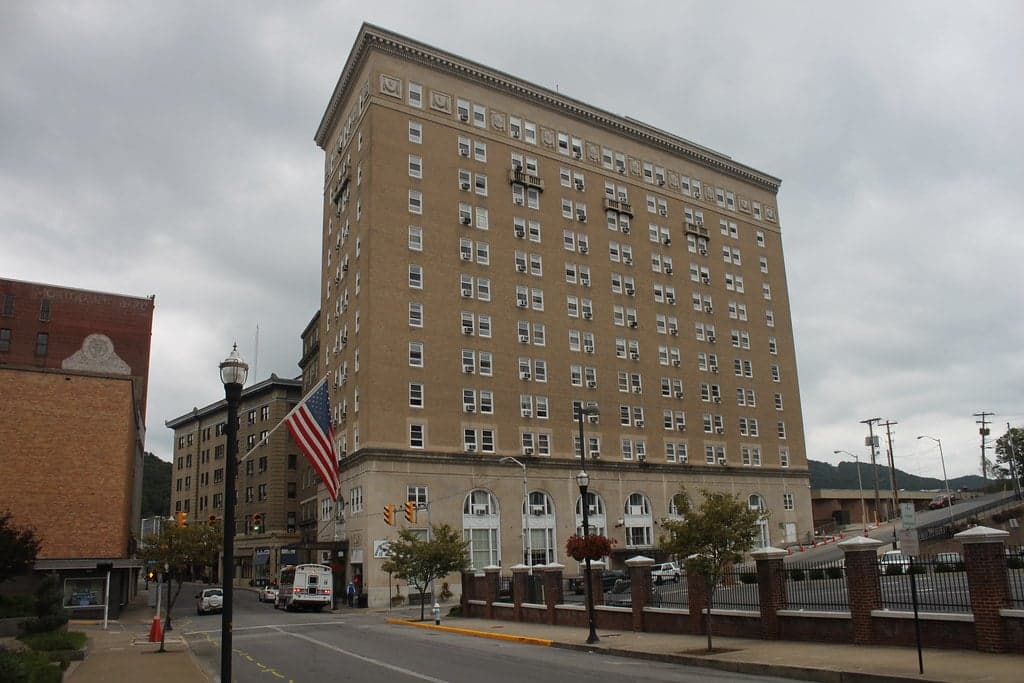
Photo: Wikipedia
Political ClimatePolitical Climate in Bluefield, WV
District shown is the primary district for this city’s centroid. Cities may span multiple districts.
Local Political AnalysisPolitical Analysis of Bluefield, WV
Bluefield, West Virginia, sits deep in reliably conservative territory, with a Cook PVI of R+22 that reflects generations of traditional values and a healthy skepticism of federal overreach. This isn’t a place that’s suddenly flipped—it’s been solidly red for as long as anyone can remember, and the voting patterns here are as steady as the coal seams under the mountains. You won’t find the kind of political whiplash you see in some other parts of the country; folks here vote their conscience, and that conscience leans hard toward limited government, personal responsibility, and keeping Washington out of local business.
How it compares
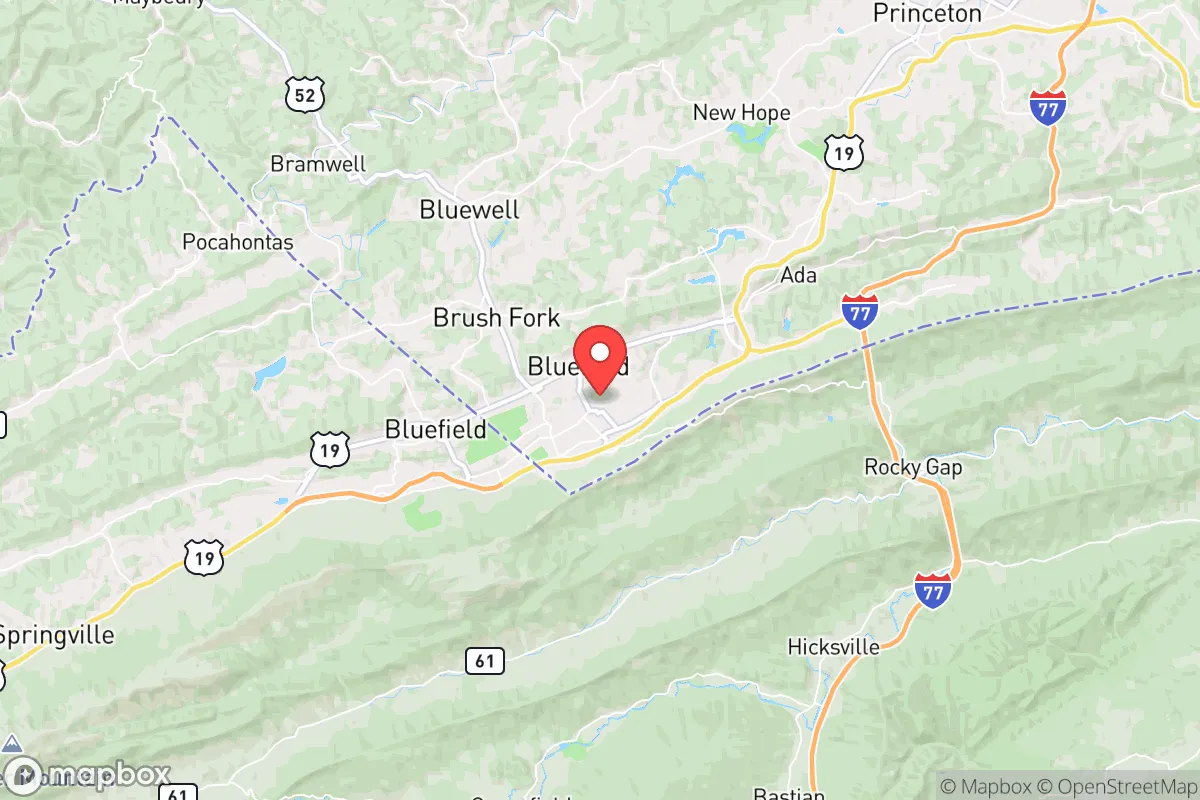
Drive just 30 miles north to Princeton, and you’ll find a similar conservative bent, though maybe a touch more moderate on economic issues. Head east toward Roanoke, Virginia, and you start seeing a real contrast—Roanoke’s got a more mixed political scene, with pockets of progressive activism that would feel out of place in Bluefield. Down in Bristol, Tennessee, you’re back in familiar territory, but even there, the politics feel a little less intense than what you get here in Mercer County. The real eye-opener is if you go west into Kentucky—places like Pikeville share our values, but the coal country up there has seen some surprising shifts toward Democratic candidates in local races, which is something we’ve largely avoided here. Bluefield’s political identity is more like a stubborn old oak than a willow bending in the wind.
What this means for residents
For the people who live here, this political climate means a lot of things you might take for granted if you’re from a blue state. Gun rights aren’t debated—they’re assumed, and the local sheriff’s office isn’t looking to enforce any new restrictions from Richmond or Charleston. Taxes stay low because the county commission knows that every extra dollar taken from a working family is a dollar that could have gone to fixing a truck or buying school supplies. You won’t see mask mandates or business shutdowns being enforced with any enthusiasm—people here remember the 2020 lockdowns as government overreach, not public health necessity. School choice is a live issue, with many families opting for private or homeschool options rather than trusting the public system to teach their kids the right values. The biggest concern among longtime residents is that outside money and influence—from national progressive groups or even just the state government in Charleston—could start chipping away at this way of life.
Culturally, Bluefield still holds onto distinctions that set it apart from the coastal cities. Churches are the social backbone, not government programs, and neighbors help neighbors without waiting for a grant or a nonprofit. There’s a strong sense that the Second Amendment isn’t just about hunting—it’s about the right to defend your home and your family without asking permission. The local paper still runs letters to the editor complaining about federal land grabs and EPA overreach, and those letters get plenty of nods at the diner. Looking ahead, the worry is that as younger folks move away for jobs and new people move in from more liberal areas, the political culture could soften. But for now, Bluefield remains a place where conservative values aren’t just tolerated—they’re the baseline. If you’re looking for a community that respects your freedom to live your life without a bureaucrat looking over your shoulder, this is still one of the best spots in Appalachia to plant your flag.

State Political ClimatePolitical Climate in West Virginia
State Political AnalysisPolitical Environment in the State
West Virginia has long been one of the most reliably Republican states in the nation, but that wasn't always the case. As recently as the 1990s, the Mountain State was a Democratic stronghold at the state and local level, voting for Bill Clinton twice. The shift began in earnest around 2000, accelerated by the national Democratic Party's leftward turn on energy, gun rights, and cultural issues. Today, West Virginia is a deep red state: Donald Trump won it by 39 points in 2020 and by over 40 points in 2024. The dominant coalition is a mix of rural conservatives, working-class voters who feel abandoned by the national Democratic Party, and a growing number of out-of-state transplants seeking lower taxes and fewer regulations. The state legislature is supermajority Republican, and the governor's mansion has been held by the GOP since 2017. The trajectory over the last 20 years has been a steady, decisive march rightward, with no signs of reversing.
Urban vs. rural divide
The political map of West Virginia is starkly divided between its few small cities and the vast rural expanse. The state's largest metro area, Charleston (Kanawha County), is the most politically competitive region. Kanawha County voted for Trump by about 12 points in 2024, down from 18 in 2020, but still solidly red. The city of Charleston itself leans more moderate, with a mix of state government workers, university faculty, and healthcare professionals who tend to vote more centrist. Morgantown, home to West Virginia University, is the state's most liberal enclave. Monongalia County voted for Trump by only 8 points in 2024, and the city itself often elects Democrats to local office. Huntington (Cabell County) is another swing area, voting for Trump by about 15 points, but with a noticeable Democratic presence tied to Marshall University and the healthcare sector. Outside these three metros, the rest of the state is overwhelmingly Republican. Counties like Mingo, Logan, and McDowell in the southern coalfields routinely vote 75-80% Republican. The Eastern Panhandle, including Martinsburg and Berkeley County, has seen an influx of former Maryland and Virginia residents, but those newcomers tend to be conservative-leaning, keeping the region deep red. The rural-urban divide here is less about ideology and more about intensity: rural voters are far more motivated by gun rights, energy policy, and cultural conservatism, while urban voters are slightly more moderate on social issues but still far to the right of national Democrats.
Policy environment
West Virginia's policy environment is aggressively conservative, especially compared to its neighbors. The state has no personal income tax on most wages (phased out in 2023), a flat corporate tax rate of 6.5%, and no estate or inheritance tax. Property taxes are among the lowest in the nation, capped by the state constitution at 1.5% of assessed value. The regulatory posture is business-friendly, with a right-to-work law (2016) and a tort reform system that caps non-economic damages. Education policy has been a flashpoint: the state passed a robust school choice law in 2021, creating Education Savings Accounts (ESAs) that allow parents to use public funds for private school tuition, homeschooling, or tutoring. This was a major victory for parental rights. Healthcare is a mixed bag: West Virginia expanded Medicaid under the Affordable Care Act in 2014, but the state has also passed laws restricting abortion (trigger ban in 2022, no exceptions for rape or incest) and protecting medical conscience rights for providers. Election laws have tightened: voter ID is required, early voting is limited to 10 days, and absentee voting requires an excuse. The state also purged inactive voters from rolls in 2024. Overall, the policy environment is designed to maximize personal freedom in economic and educational matters, while maintaining traditional social values.
Trajectory & freedom
West Virginia is becoming more free in several key areas, particularly economic liberty and parental rights. The elimination of the personal income tax in 2023 was a landmark move, making the state one of only nine with no wage tax. This has already attracted remote workers and retirees from high-tax states like New York and California. On gun rights, West Virginia is a constitutional carry state (permitless carry for adults 21+ since 2016) and has a "Stand Your Ground" law. The state also passed a Second Amendment Preservation Act in 2021, which prohibits state law enforcement from enforcing federal gun laws that violate the state constitution. On parental rights, the 2021 ESA law is a national model. However, there are concerning trends. The state's medical marijuana program (2017) is tightly controlled and does not allow home cultivation. Recreational cannabis remains illegal, and possession can still lead to jail time. On medical autonomy, the state's near-total abortion ban (2022) has no exceptions for rape or incest, which some conservatives see as too restrictive. There is also growing concern about government overreach in vaccine mandates: the state legislature passed a bill in 2023 banning employer vaccine mandates, but it was vetoed by Governor Jim Justice. A similar bill is expected in 2025. On property rights, the state has a strong "private property rights" law, but the Mountain Valley Pipeline controversy (2018-2024) showed that federal eminent domain can still override local control. Overall, the trajectory is toward more personal freedom in economics and education, but with some lingering restrictions on medical and drug policy.
Civil unrest & political movements
West Virginia has a history of labor activism, but in recent years, political movements have been dominated by conservative and libertarian groups. The 2018 teachers' strike was a rare moment of cross-ideological unity, with educators protesting low pay and rising healthcare costs. That strike was largely non-partisan, but it did reveal deep frustration with the state's underfunded public schools. On the right, the "Mountain State Patriots" and local chapters of the Oath Keepers have been active, particularly around Second Amendment rallies and election integrity events. In 2020, there were armed protests at the state capitol against COVID-19 lockdowns, which were among the most restrictive in the nation at the time. The state's immigration politics are minimal—West Virginia has one of the smallest foreign-born populations in the country (about 1.5%)—but there is strong support for border security and opposition to sanctuary cities. There have been no serious secession or nullification movements, though some rural counties have discussed "seceding" from the state over school consolidation and gun laws. Election integrity has been a hot topic: the state's 2020 election was secure, but the legislature passed a series of voting restrictions in 2021, including a ban on ballot drop boxes and stricter ID requirements. A new resident would notice a general sense of political calm, with occasional flare-ups around gun rights rallies and school board meetings. The most visible flashpoint is the ongoing debate over the Mountain Valley Pipeline, which has drawn both environmental activists and property rights advocates to protests.
Projection
Over the next 5-10 years, West Virginia is likely to become even more conservative, but with some important caveats. The state's population is aging and declining—it lost about 3% of its residents between 2020 and 2024—but the people moving in are disproportionately conservative retirees and remote workers from blue states. This in-migration will likely reinforce the state's red lean. The biggest demographic shift is the continued exodus of young people, particularly from the southern coalfields, which will make the state older and more conservative. The Eastern Panhandle will continue to grow, bringing in more Maryland and Virginia transplants who are fiscally conservative but may be more moderate on social issues. This could create a slight suburban moderation in Berkeley and Jefferson counties, but not enough to flip them blue. The biggest wildcard is the energy transition: if coal continues to decline, the state's economy will need to diversify. The state is betting on natural gas, tourism, and remote work. If those bets pay off, the tax base will grow, allowing for further tax cuts. If they fail, the state could face budget pressures that force a reconsideration of the income tax elimination. On personal freedom, expect more movement on school choice (expansion of ESAs), further gun rights protections (maybe a "Second Amendment Sanctuary" state law), and a push to legalize recreational cannabis. The biggest threat to freedom is likely to come from federal overreach, particularly on environmental regulations and energy policy. A new resident moving in now should expect a state that is deeply conservative, increasingly free in economic and educational matters, but still grappling with the legacy of its coal-dependent past.
For a conservative-leaning individual or family considering relocation, West Virginia offers a compelling package: no income tax, low property taxes, strong gun rights, school choice, and a culture that values self-reliance and traditional values. The trade-offs are a struggling economy in many rural areas, limited healthcare access in the southern part of the state, and a population that is aging and shrinking. If you're looking for a place where your tax dollars stay in your pocket and your children's education is your choice, West Virginia is hard to beat. Just be prepared for a slower pace of life, fewer amenities than a major metro, and a political environment that is unapologetically conservative. The state is not for everyone, but for those who value freedom over convenience, it's a solid bet.
* Values derived from national, state, county, city and local statistics and may differ in a specific area. Last updated: 2026-05-01T13:45:23.000Z
Narrative content on this page is AI-generated and may contain mistakes. Verify any details that matter before acting on them.
ReloMaps may earn a commission from affiliate links at no extra cost to you.

