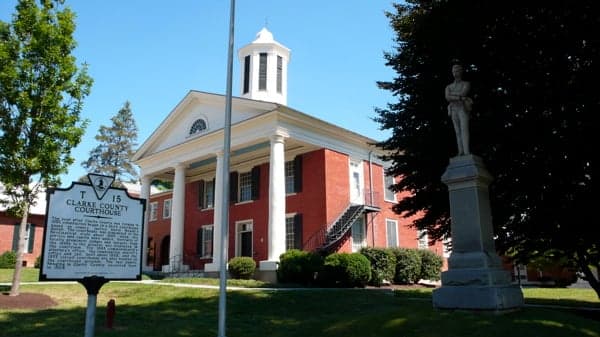
Photo: Wikipedia
Strategic Assessment of Berryville, VA
Meaningful friction. Expect exposure to either population pressure, blast zones, or natural disaster risk. Consider buying a retreat property.
What does the Strategic Assessment tell us?
Our Strategic Assessment grades tactical survivability of an area. Major population centers, military targets, fallout zones, natural disasters, and border exposure all drive risk — lower exposure means a more defensible position in a crisis.
This is heavily inspired by Joel Skousen's Strategic Relocation book. Highly recommended you checkout the book ($)What does this tell us?
Our Strategic Assessment grades tactical survivability of an area. Major population centers, military targets, fallout zones, natural disasters, and border exposure all drive risk — lower exposure means a more defensible position in a crisis.
This is heavily inspired by Joel Skousen's Strategic Relocation book. Highly recommended you checkout the book ($)Strategic Pillars
Key Distances
Regional Safe Places
Below is our recommended "safe zones" in Virginia and the surrounding area based on our strategic heuristics. For most people, it's unrealistic to live in a “safe zone” full-time due to work, family or other personal reasons. They tend to be more rural. However, many of these areas are perfect for second homes and retreat properties that double as a vacation home or even a short-term rental.
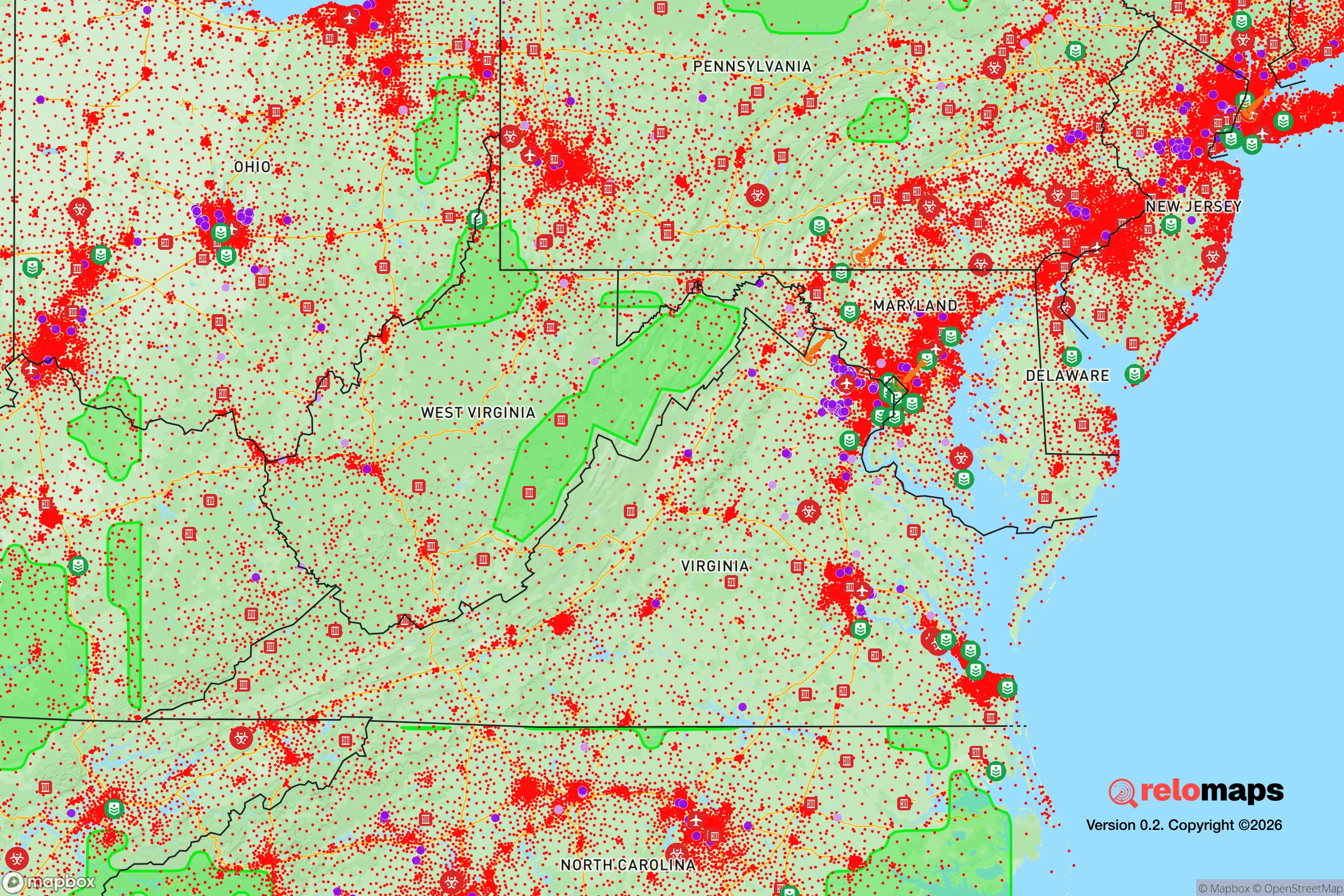
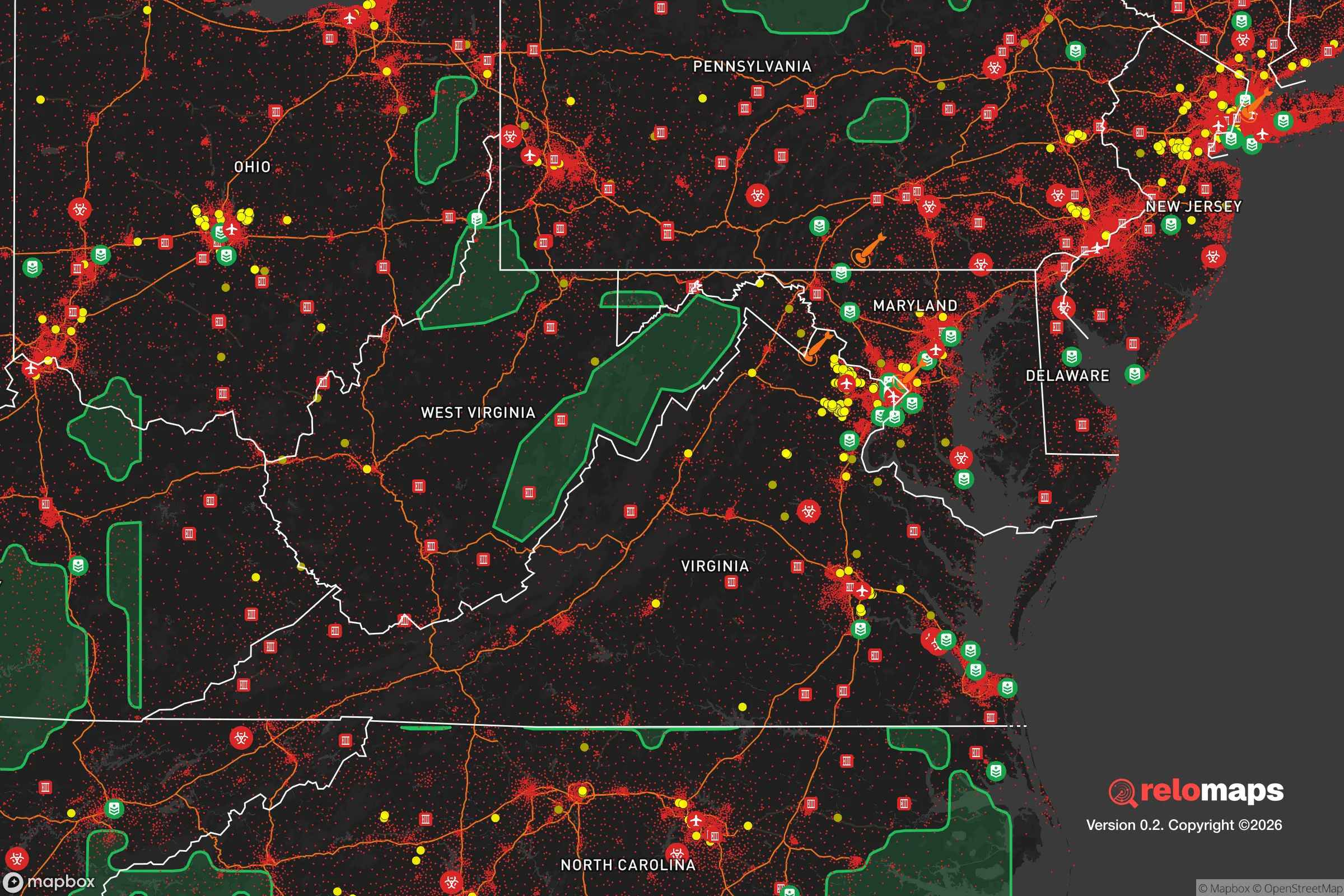


Important Note: For informational purposes only. This does not mean nothing bad ever happens in the green zones. Please use common sense. This is based on public data and modeled with AI. We tried to take a conservative approach but mistakes happen. We update this regularly as new information becomes available.
Solar Generator Recommendations
Backup power matters more here than in safer locations. We've picked three solar generators across budgets and capacity tiers — start with the budget unit if you only need a few essentials, or step up if you want to run a fridge and HVAC for days at a time.
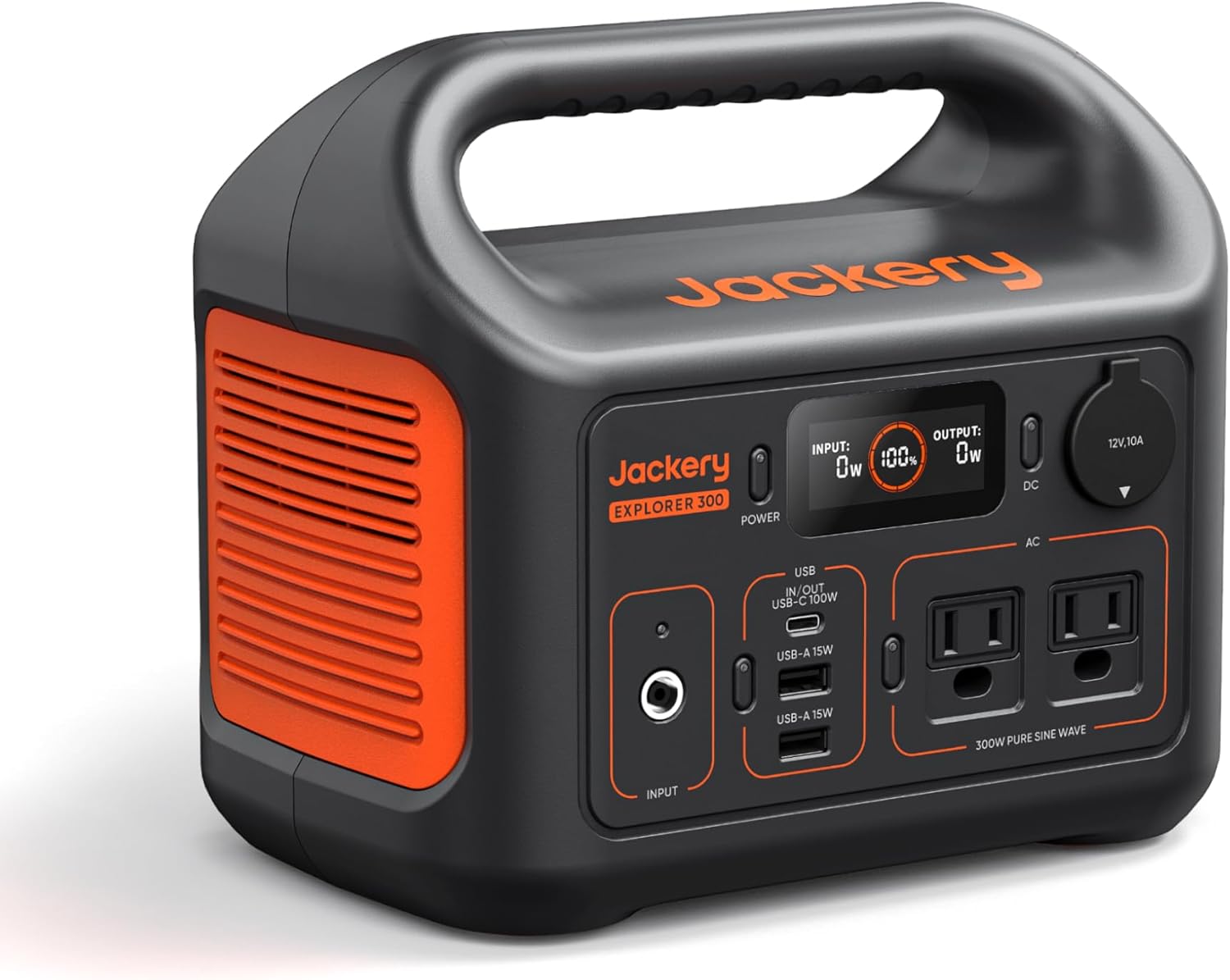
Jackery Portable Power Station Explorer 300
Budget OptionPower on the Go: Weighing only 11 lbs, it's convenient to set up and store with book-sized foldable solar panels

BLUETTI Portable Power Station AC180
Designed for both indoor and outdoor scenarios, AC180 is highly capable as it has a robost capacity and continuous output power.

EF ECOFLOW DELTA Pro Ultra Power Station
Upgraded PickEcoFlow DELTA Pro Ultra is a whole-home energy system designed to grow with your family. Integrated with the Smart Home Panel 2, it scales to meet your evolving energy needs — keeping your home powered, intelligent, and secure through every stage of life.
We earn a commission, at no additional cost to you.
Strategic Assessment Analysis
Berryville, Virginia, presents a mixed strategic picture for the relocation-minded reader focused on resilience and self-sufficiency. While its location in Clarke County offers genuine advantages in terms of agricultural land and distance from major metropolitan centers, its proximity to the Washington D.C. metroplex and the inherent vulnerabilities of the Shenandoah Valley corridor introduce significant risks that must be weighed carefully. This assessment breaks down the area's geographic position, its exposure to natural and man-made threats, and the practical realities of daily life for someone prioritizing preparedness.
Geographic position and natural advantages for long-term stability
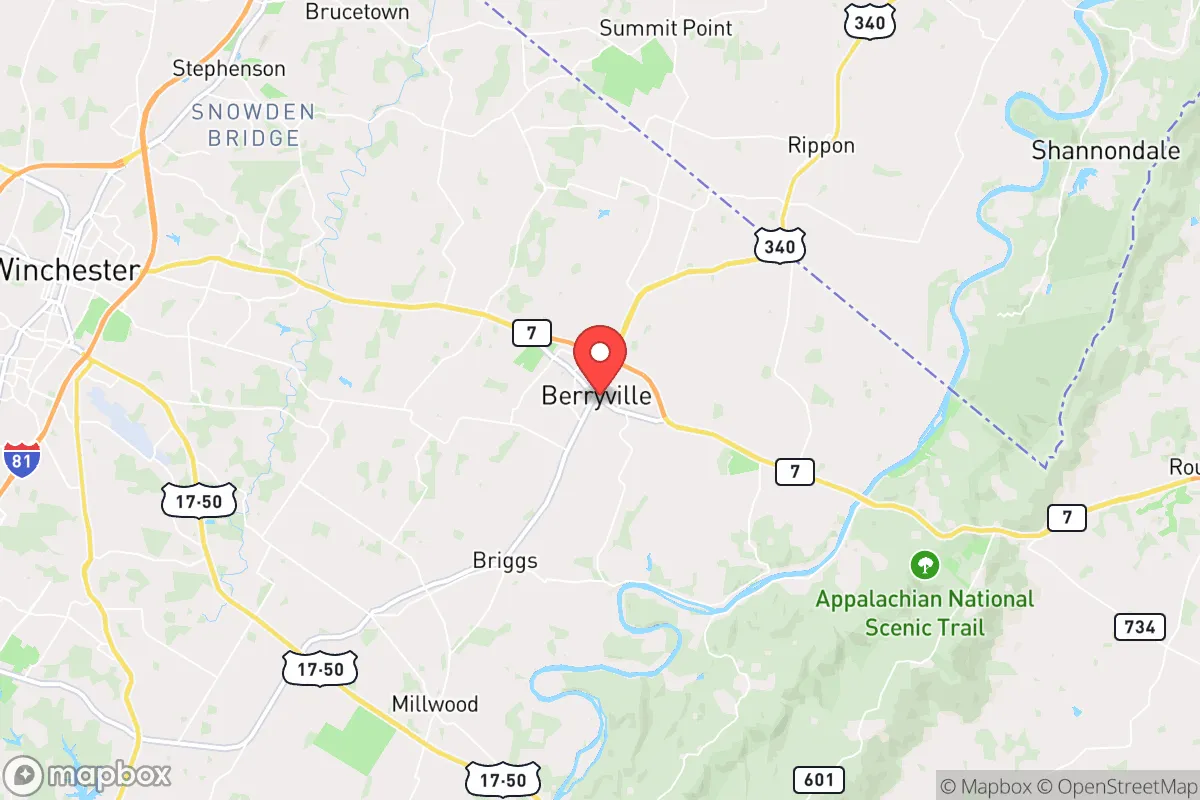
Berryville sits in the northern Shenandoah Valley, roughly 60 miles west of Washington D.C. and 15 miles south of the West Virginia line. This places it within the "blue ridge" rain shadow, which generally provides a more moderate climate than the eastern side of the mountains, with fewer extreme weather events like hurricanes or tornadoes. The area's elevation, around 600 feet, is low enough to avoid the harsh winters of higher elevations but high enough to be well above any floodplain concerns along the Shenandoah River. The surrounding terrain is a mix of rolling hills and fertile bottomland, which historically supported a robust agricultural economy. For a relocator, this means access to some of the most productive soils in the eastern United States, a critical asset for any long-term food security plan. The region's karst topography, with its limestone bedrock and underground aquifers, provides reliable groundwater sources, though it also means well water quality can vary and requires testing. The Blue Ridge Mountains to the east and the Massanutten range to the west create a natural bowl that offers some degree of physical isolation, but this same geography can also channel weather patterns and, more importantly, human movement along the I-81 corridor.
Risks, exposures, and proximity to fallout-relevant landmarks
The single greatest strategic liability for Berryville is its proximity to the Washington D.C. metropolitan area, a primary target for any large-scale conflict or terrorist event. While 60 miles provides a buffer, prevailing winds from the west and southwest would carry fallout from a nuclear event in D.C. directly over the Shenandoah Valley. The area is also within the 50-mile radius of the Loudoun County data center alley, a high-value infrastructure target, and is less than 30 miles from the Dulles International Airport and the Leesburg Executive Airport, both potential secondary targets. Furthermore, Berryville sits along the I-81 corridor, a major north-south logistics route that would become a choke point for evacuation and supply movement during any crisis. The area is also within the 100-mile zone of the North Anna Nuclear Generating Station in Louisa County, a facility that has experienced seismic events in the past. Natural disaster risks are comparatively lower, but the region is not immune. The Shenandoah River can flood after heavy rains, and the area lies in a moderate seismic zone, with the 2011 Mineral, Virginia earthquake (5.8 magnitude) being a recent reminder. Wildfire risk is low in the valley floor but increases in the surrounding forested hills. The combination of these man-made and natural risks means that a relocator must plan for a scenario where the area becomes a destination for refugees from the east, potentially overwhelming local resources.
Practical resilience for a relocator: food, water, energy, and defensibility
Berryville's agricultural heritage is its strongest card for self-sufficiency. The county is home to numerous working farms, orchards, and livestock operations, and the Clarke County Farmers Market operates seasonally. For a relocator, this means access to local food sources and the potential to establish a home garden or small farm. The soil is generally good, and the growing season is long enough for most staple crops. Water is a more nuanced issue. While the area has abundant groundwater, well drilling is the norm for rural properties, and the cost and depth of a well can vary significantly based on location. Municipal water is available in Berryville town limits but is vulnerable to system disruptions. For energy, the region is served by Dominion Energy, and grid reliability is average for a rural area, with outages common during winter storms. Solar potential is good, with the valley receiving ample sunlight, but homeowners should be aware of local zoning and HOA restrictions. Defensibility is a mixed bag. The town itself is compact and walkable, but the surrounding rural areas offer more space and natural barriers. However, the area's proximity to major highways and the D.C. exurbs means that any long-term crisis would likely see a significant influx of people, making true isolation difficult. The local law enforcement presence is limited, with the Clarke County Sheriff's Office covering a large area, so personal security planning is essential. The community itself is tight-knit and historically self-reliant, which can be a double-edged sword: newcomers may find it difficult to integrate into established networks, but those who do will find a strong support system.
The overall strategic picture for Berryville is one of calculated trade-offs. It offers genuine agricultural advantages, a moderate climate, and a buffer from the immediate blast zone of a major metropolitan target. However, its position along a critical transportation corridor and its proximity to high-value infrastructure mean that it would not be a safe haven in a widespread crisis. For a relocator who is serious about preparedness, Berryville can work as a base of operations, but only with a clear-eyed understanding of its vulnerabilities. The key is to secure a property with a reliable well, ample land for food production, and a defensible position away from main roads. The community's existing agricultural infrastructure and local knowledge are valuable assets, but they require time and effort to access. In short, Berryville is a viable option for the prepared individual or family who is willing to invest in self-sufficiency and accept the risks that come with living in the shadow of a major population center. It is not a retreat, but it can be a resilient home for those who plan accordingly.

* Values derived from national, state, county, city and local statistics and may differ in a specific area. Last updated: 2026-11-09T14:50:48.000Z
Narrative content on this page is AI-generated and may contain mistakes. Verify any details that matter before acting on them.
ReloMaps may earn a commission from affiliate links at no extra cost to you.

