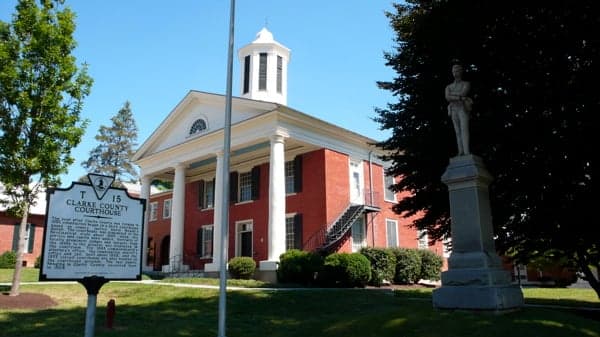
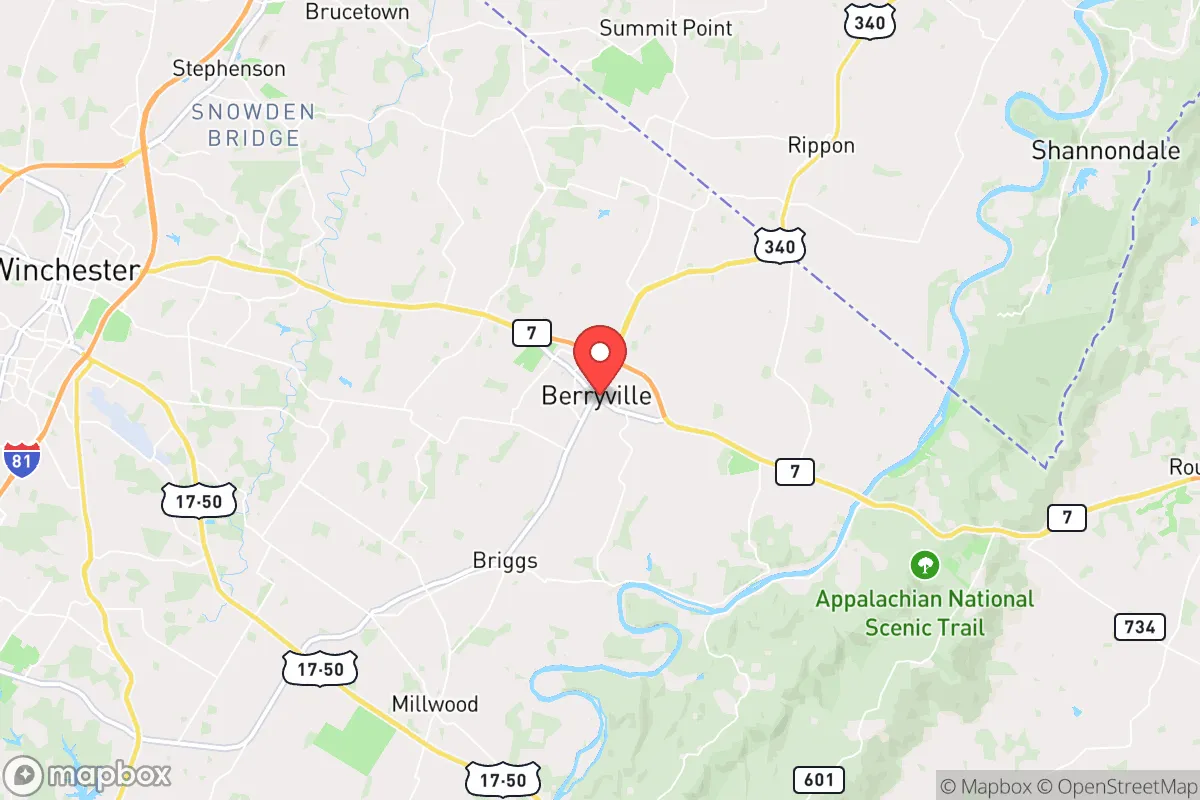
Photo: Wikipedia
Demographics of Berryville, VA
Affluence Level in Berryville, VA
An upper-middle-class area. Household wealth, education levels, and homeownership run ahead of national benchmarks.
People of Berryville, VA
The people of Berryville, Virginia, today form a small, predominantly white community of 4,667 residents, characterized by a strong sense of local heritage and a quiet, family-oriented pace of life. With a foreign-born population of just 2.4%, the city remains less diverse than the national average, though Hispanic and Black residents together make up 14% of the population. Distinctive markers include a high rate of homeownership and a deep connection to the town's agricultural and Civil War-era past, reflected in its well-preserved historic district. For those moving in now, Berryville offers a stable, close-knit environment where generational roots run deep.
How the city was settled and grew
Berryville's human history begins with the Shenandoah Valley's original inhabitants, the Shawnee and Iroquois peoples, who used the area as hunting grounds before European settlers arrived. The town's modern founding dates to the mid-18th century, when German and Scots-Irish farmers were drawn by the fertile limestone soil and land grants from Lord Fairfax. The town was officially laid out in 1798 by Benjamin Berry, a Quaker, and quickly became a market center for the surrounding agricultural region. The Historic District, centered around Main Street and Church Street, was built largely by these early German and Scots-Irish families, whose stone and brick homes still line the streets. A second wave arrived after the Civil War, when freedmen and their families established the Battletown area (now part of the town's eastern edge), forming a small but enduring Black community centered around the Asbury United Methodist Church. By 1900, Berryville's population was overwhelmingly native-born white, with a small Black minority, a pattern that held through the mid-20th century.
Modern era (post-1965)
The post-1965 era brought modest demographic shifts to Berryville, largely driven by domestic in-migration rather than international immigration. The 1970s and 1980s saw an influx of white-collar commuters from the Washington, D.C. metro area, drawn by lower housing costs and a rural lifestyle within driving distance of the capital. These newcomers settled primarily in newer subdivisions like Greenway Avenue and Bishop Meade Road, which expanded the town's footprint north and west of the historic core. The Hispanic population began to grow in the 1990s and 2000s, reaching 7.2% today, with many families working in the region's agricultural and landscaping sectors and settling in the West Main Street corridor and rental properties near the town's industrial park. The Black population, now 6.8%, has remained relatively stable, with many families still concentrated in the Battletown area and along Bishop Meade Road. The East/Southeast Asian share (0.2%) and Indian subcontinent share (1.2%) are very small, reflecting limited immigration to this inland Virginia town. The college-educated share stands at 32.3%, below the national average, indicating a workforce still rooted in trades, agriculture, and local services rather than the knowledge economy.
The future
Berryville's population is projected to grow slowly, with the 2020s and 2030s likely bringing continued domestic in-migration from the D.C. exurbs rather than a surge in international diversity. The Hispanic share may rise modestly as families already in the area grow, but the foreign-born percentage (2.4%) is unlikely to increase dramatically given the town's limited rental housing stock and lack of major employers. New residential development is concentrated in the Bishop Meade Road and Greenway Avenue corridors, where single-family homes on larger lots appeal to families seeking space and lower taxes than in Loudoun County. The town's cultural identity is evolving slowly: the historic district remains a point of pride, but newer residents are less tied to the area's agricultural roots and more likely to commute or work remotely. For the next 10-20 years, Berryville will likely remain a predominantly white, family-oriented community with a small but stable Hispanic and Black presence, and very limited Asian or Indian subcontinent populations.
For someone moving in now, Berryville is becoming a quiet, affordable exurb of the D.C. region, where the pace of change is slow and the community's identity is rooted in its historic past. The population is stable and homogenous by national standards, making it a good fit for families and individuals who value a small-town atmosphere, low crime, and a conservative-leaning social environment. Those seeking significant diversity or a rapidly growing, dynamic economy should look elsewhere, but for those wanting a settled, safe, and historically grounded place to raise a family, Berryville delivers.

* Values derived from national, state, county, city and local statistics and may differ in a specific area. Last updated: 2026-11-09T14:50:48.000Z
Narrative content on this page is AI-generated and may contain mistakes. Verify any details that matter before acting on them.
ReloMaps may earn a commission from affiliate links at no extra cost to you.

