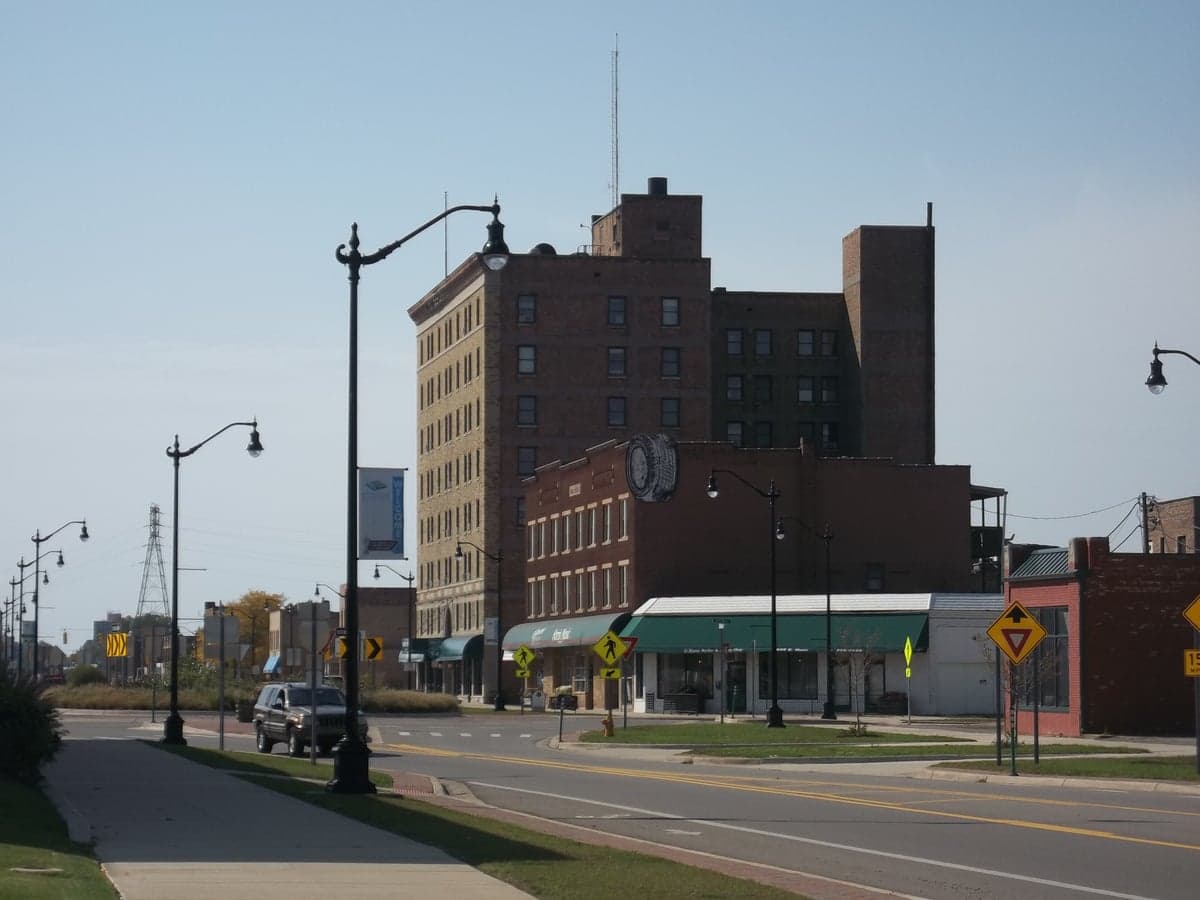
Photo: Wikipedia
Strategic Assessment of Benton Harbor, MI
Meaningful friction. Expect exposure to either population pressure, blast zones, or natural disaster risk. Consider buying a retreat property.
What does the Strategic Assessment tell us?
Our Strategic Assessment grades tactical survivability of an area. Major population centers, military targets, fallout zones, natural disasters, and border exposure all drive risk — lower exposure means a more defensible position in a crisis.
This is heavily inspired by Joel Skousen's Strategic Relocation book. Highly recommended you checkout the book ($)What does this tell us?
Our Strategic Assessment grades tactical survivability of an area. Major population centers, military targets, fallout zones, natural disasters, and border exposure all drive risk — lower exposure means a more defensible position in a crisis.
This is heavily inspired by Joel Skousen's Strategic Relocation book. Highly recommended you checkout the book ($)Strategic Pillars

Key Distances
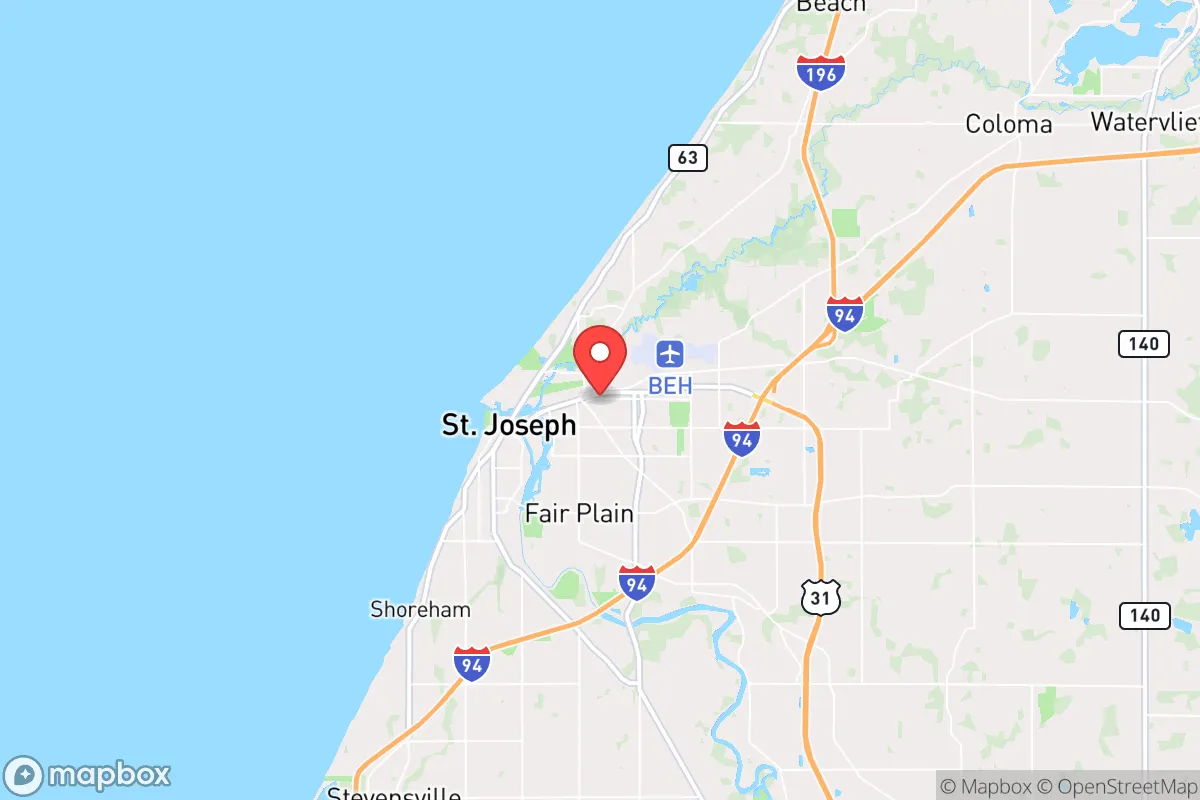
Regional Safe Places
Below is our recommended "safe zones" in Michigan and the surrounding area based on our strategic heuristics. For most people, it's unrealistic to live in a “safe zone” full-time due to work, family or other personal reasons. They tend to be more rural. However, many of these areas are perfect for second homes and retreat properties that double as a vacation home or even a short-term rental.


Important Note: For informational purposes only. This does not mean nothing bad ever happens in the green zones. Please use common sense. This is based on public data and modeled with AI. We tried to take a conservative approach but mistakes happen. We update this regularly as new information becomes available.
Solar Generator Recommendations
Backup power matters more here than in safer locations. We've picked three solar generators across budgets and capacity tiers — start with the budget unit if you only need a few essentials, or step up if you want to run a fridge and HVAC for days at a time.

Jackery Portable Power Station Explorer 300
Budget OptionPower on the Go: Weighing only 11 lbs, it's convenient to set up and store with book-sized foldable solar panels

BLUETTI Portable Power Station AC180
Designed for both indoor and outdoor scenarios, AC180 is highly capable as it has a robost capacity and continuous output power.

EF ECOFLOW DELTA Pro Ultra Power Station
Upgraded PickEcoFlow DELTA Pro Ultra is a whole-home energy system designed to grow with your family. Integrated with the Smart Home Panel 2, it scales to meet your evolving energy needs — keeping your home powered, intelligent, and secure through every stage of life.
We earn a commission, at no additional cost to you.
Strategic Assessment Analysis
Benton Harbor, Michigan, presents a complex strategic picture for the relocation-minded reader focused on resilience and self-sufficiency. Its location on the Lake Michigan shoreline offers genuine geographic advantages, but its proximity to major population centers and industrial infrastructure introduces significant risk factors that must be weighed carefully. For a conservative-leaning individual or family looking for a place that balances access to resources with a degree of separation from the most obvious fallout targets, Benton Harbor is a location that demands a clear-eyed, trade-off-based assessment rather than a simple thumbs-up or thumbs-down.
Geographic position and natural advantages for a self-sufficient lifestyle
Benton Harbor’s primary strategic asset is its position on the southeastern shore of Lake Michigan, one of the largest freshwater bodies on the planet. This provides a virtually inexhaustible water source, a critical factor for long-term resilience that few inland locations can match. The city sits at the mouth of the St. Joseph River, which offers a secondary water source and a natural corridor into the interior. The surrounding terrain is relatively flat and agricultural, part of the fertile southwestern Michigan fruit belt. This means local food production is a realistic possibility, with established farms, orchards, and vineyards within a short drive. The climate is moderated by the lake, leading to milder winters and cooler summers than inland areas at the same latitude, which can extend growing seasons for cold-hardy crops. For a relocator, the ability to tap into Lake Michigan for water and to source food from nearby agricultural land is a tangible, everyday advantage that many inland suburbs simply cannot offer.
The area’s population density is low compared to the nearby Chicago metro area, with Berrien County having roughly 150,000 residents spread across a mix of small towns and rural areas. This lower density means less competition for local resources in a crisis scenario. The city itself has a population under 10,000, which, while presenting its own challenges, also means a smaller, more manageable footprint for community-scale resilience efforts. The lake also provides a natural barrier to the west, limiting approach vectors from that direction and offering a potential evacuation route by water if necessary. For someone serious about self-sufficiency, the combination of abundant fresh water, fertile soil, and moderate climate is a strong foundation.
Risks, exposures, and proximity to fallout-relevant landmarks
The most significant downside to Benton Harbor’s location is its proximity to major strategic and industrial targets. The city lies roughly 90 miles east of Chicago, a massive population center and a likely high-priority target in any major conflict. While 90 miles provides some buffer, prevailing westerly winds could carry fallout from a Chicago-area detonation directly over the region. More immediately concerning is the Cook Nuclear Plant in Bridgman, Michigan, located just 15 miles north of Benton Harbor along the lakeshore. This is a single-point-of-failure risk of the highest order. A catastrophic event at the plant—whether from accident, sabotage, or a direct strike—would render the entire lakeshore corridor uninhabitable for an extended period. The plant’s proximity is a non-negotiable risk factor that any serious resilience assessment must flag as a major negative.
Beyond nuclear infrastructure, the area is within 30-40 miles of the Whirlpool Corporation headquarters in Benton Harbor itself, a major industrial employer, and the larger industrial complexes of the I-94 corridor, including automotive and manufacturing plants in St. Joseph and Niles. These are not primary strategic targets, but they are potential secondary targets or sources of hazardous material releases. The region also sits under the flight paths for Chicago’s O’Hare and Midway airports, meaning air traffic noise is a constant, and a crash or debris event is a low-probability but non-zero risk. Natural risks are comparatively mild: the area is not in a major earthquake zone, and tornadoes, while possible, are less frequent than in the Great Plains. Lake-effect snow can be heavy, but it is a manageable, predictable hazard. The man-made risks, particularly the nuclear plant and Chicago proximity, are the dominant concerns.
Practical resilience for a relocator: food, water, energy, and defensibility
For a relocator focused on day-to-day resilience, Benton Harbor offers a mixed bag. On the positive side, water is abundant and accessible. Lake Michigan is a massive, reliable source, and the St. Joseph River provides a secondary option. However, treating lake water for drinking requires filtration or boiling, and the lake’s shoreline is public, meaning access is not private. A well on a rural property would be the gold standard, but many homes in the city and immediate suburbs are on municipal water, which is vulnerable to infrastructure failure. Food resilience is strong due to the agricultural base. Local farmers’ markets, U-pick orchards, and community-supported agriculture (CSA) programs are common. For a family willing to garden, the growing season is long enough for tomatoes, peppers, squash, and greens. Hunting and fishing are viable: the river and lake offer perch, salmon, and trout, while deer and small game are available in the surrounding woodlands and farm fields.
Energy resilience is a weaker point. The local grid is served by Indiana Michigan Power, and outages from winter storms or summer storms are not uncommon. Solar potential is moderate—the region gets about 160 sunny days per year, less than the Southwest but enough for a well-sized off-grid system with battery storage. Natural gas is widely available in the area, which is a plus for heating and cooking, but it is a centralized system. Defensibility is a challenge. The terrain is flat and open, with few natural chokepoints. The city itself has areas of blight and vacancy, which can be both a security concern (higher crime, abandoned structures) and an opportunity (cheap land for a walled or fenced compound). A rural property outside the city, with a good well, solar panels, and a defensible perimeter, would be the ideal setup. The local community is a mixed bag for resilience-minded individuals: there is a strong church and family-oriented culture, but also significant poverty and social challenges that could lead to resource competition in a crisis. Building relationships with like-minded neighbors is essential.
The overall strategic picture for Benton Harbor is one of high potential paired with high risk. The natural advantages—abundant water, fertile land, moderate climate—are genuine and rare in the Midwest. For a relocator willing to invest in off-grid infrastructure (well, solar, water filtration) and to accept the proximity to the Cook Nuclear Plant and Chicago, the area offers a viable base for a self-sufficient lifestyle. The key is to avoid the city center and focus on rural or semi-rural properties north or east of the city, away from the lakeshore and the plant’s immediate shadow. The cost of land is low relative to the rest of the region, making it accessible for a family with a modest budget. However, the nuclear plant risk is a dealbreaker for many, and the area’s social and economic challenges require a realistic, non-romanticized view. Benton Harbor is not a hidden paradise; it is a gritty, practical location that rewards preparation and clear thinking. For the right person, it can be a solid strategic choice. For someone seeking a low-risk, turnkey resilience location, it is likely not the answer.

* Values derived from national, state, county, city and local statistics and may differ in a specific area. Last updated: 2026-10-07T06:18:50.000Z
Narrative content on this page is AI-generated and may contain mistakes. Verify any details that matter before acting on them.
ReloMaps may earn a commission from affiliate links at no extra cost to you.

