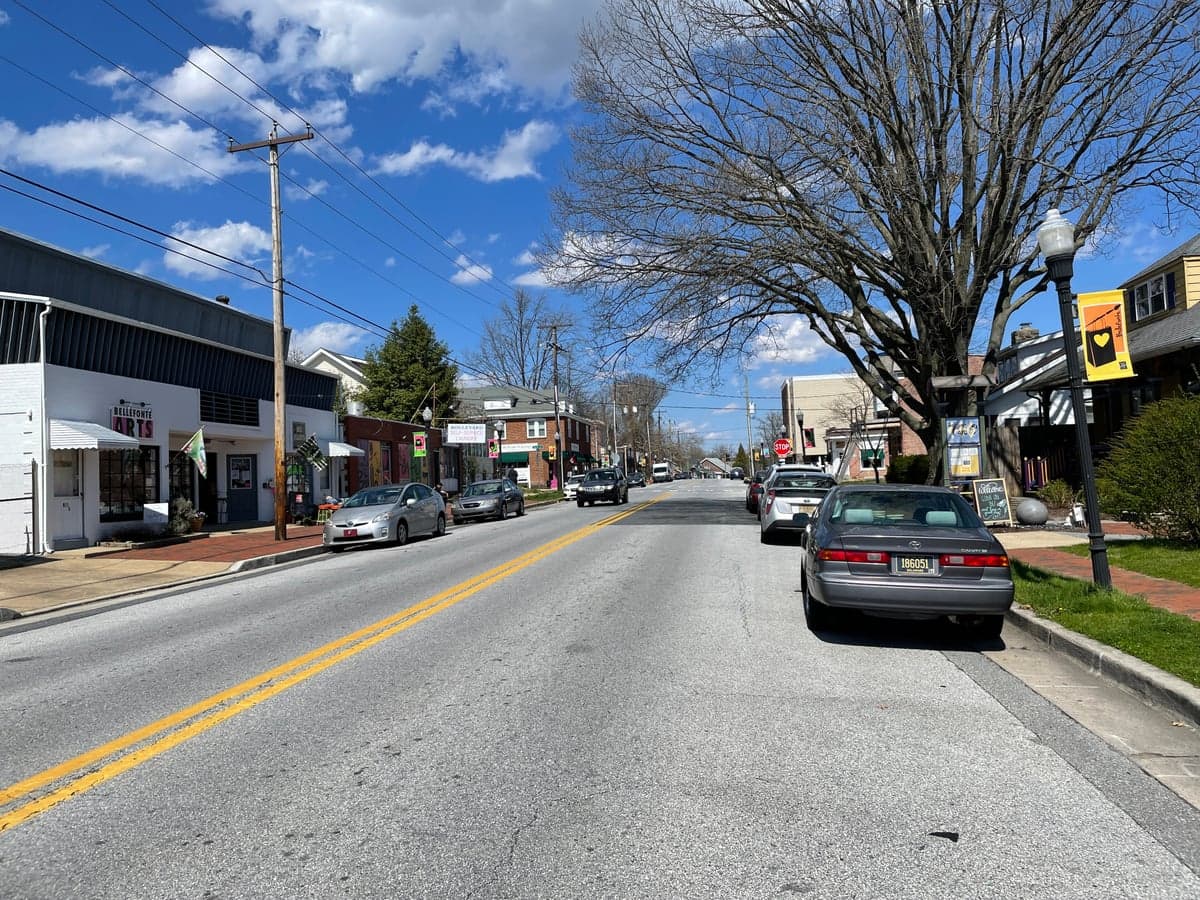
Photo: Wikipedia
Political ClimatePolitical Climate in Bellefonte, DE
District shown is the primary district for this city’s centroid. Cities may span multiple districts.
Inherited from parent state — no local data available.
Local Political AnalysisPolitical Analysis of Bellefonte, DE
Bellefonte, Delaware, leans solidly Democratic, with a Cook PVI of D+8 that places it firmly in the blue column. But if you’ve lived here as long as I have, you know that wasn’t always the case. This little town used to be a quiet, independent-minded place where folks kept to themselves and didn’t much care for outsiders telling them how to live. Over the last decade or so, though, the political winds have shifted hard left, driven by an influx of folks from up north and a growing progressive push in New Castle County. It’s not the same Bellefonte I grew up in, and the trajectory is concerning for anyone who values personal freedoms and limited government.
How it compares
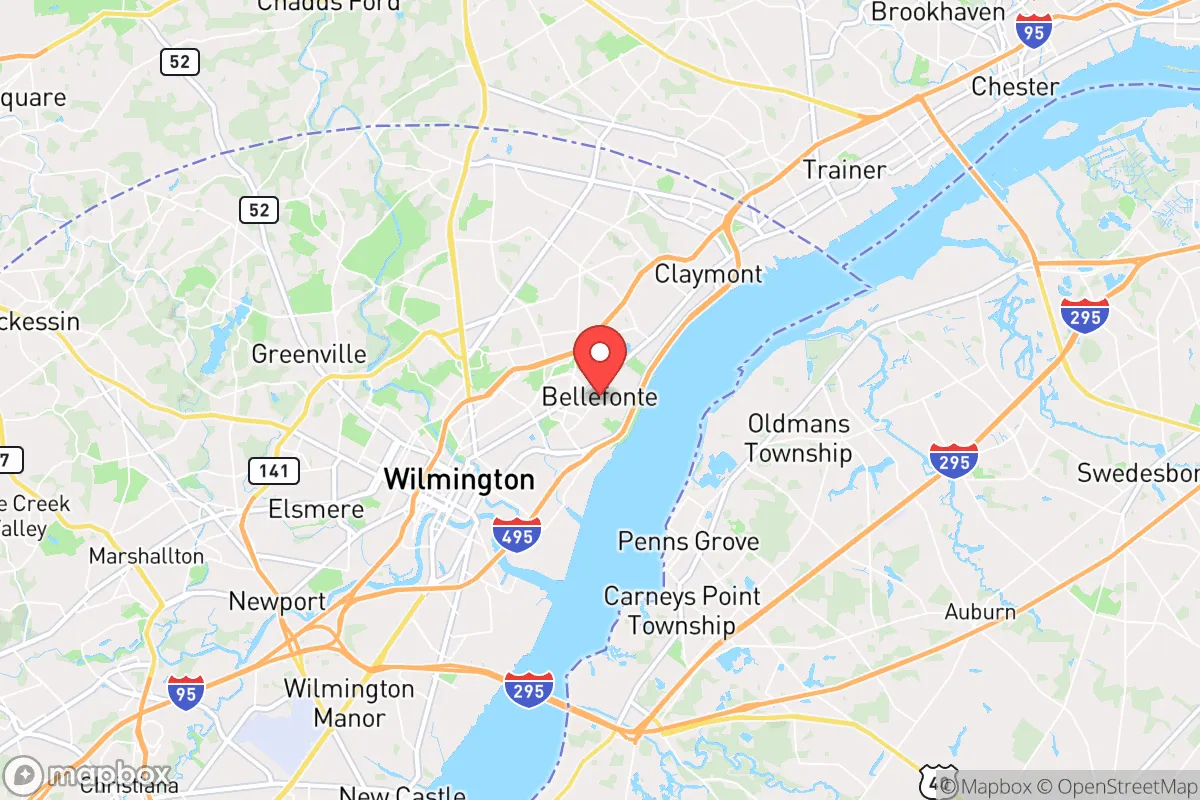
To understand Bellefonte’s politics, you have to look at the surrounding area. Just a few miles south, you’ve got Wilmington, which is a deep blue stronghold with a Cook PVI of D+25 or worse—a place where progressive policies on taxes, zoning, and public safety have taken hold. Bellefonte is essentially a bedroom community for Wilmington, and that proximity has dragged its politics leftward. Drive west to places like Hockessin or Greenville, and you’ll find a more mixed picture—some conservative leanings, especially on fiscal issues, but still heavily influenced by the same regional trends. Head north into Pennsylvania, and you hit places like Chadds Ford, which are more purple but still tilt blue. The real contrast is with rural Delaware, like Sussex County, where towns like Georgetown or Millsboro vote reliably red. That’s where you’ll find folks who still believe in low taxes, gun rights, and local control. Bellefonte used to feel more like that, but not anymore.
What this means for residents
For those of us who live here, the shift has real consequences. The local government has gotten more aggressive with regulations—think stricter building codes, higher property taxes to fund programs I don’t agree with, and a general attitude that the state knows better than the individual. There’s been a push for more “equity” initiatives in schools and local hiring, which sounds nice on paper but often means more bureaucracy and less freedom for parents and small business owners. The crime rate in nearby Wilmington has crept into conversations here too, with some residents pushing for more police oversight rather than more officers. If you value your Second Amendment rights, you’ve probably noticed the state legislature eyeing new restrictions every session. It’s a slow erosion, but it’s real.
On the cultural side, Bellefonte still has its charms—the historic homes, the tight-knit community feel, the local diner where everybody knows your name. But the politics are becoming a wedge. Neighbors who used to disagree over a fence line now argue about mask mandates and school board decisions. The progressive agenda is being pushed hard, and if you’re not on board, you can feel like an outsider in your own town. I’ve seen long-time residents sell up and move to more conservative areas in Kent or Sussex counties, just to get away from the overreach. It’s a shame, because Bellefonte could be a great place for everyone if the government would just get out of the way.

State Political ClimatePolitical Climate in Delaware
State Political AnalysisPolitical Environment in the State
Delaware has long been a political oddity—a small state with a big blue tilt, but one that’s far from monolithic. For decades, it was a classic swing state, but since the 2000s, it’s shifted steadily leftward, driven by the explosive growth of the northern suburbs and the Wilmington metro area. Today, the state leans reliably Democratic at the presidential level, with Joe Biden (a native son) carrying it by 19 points in 2020, but the picture is far more nuanced down-ballot. The real story is the widening chasm between the liberal, densely populated north and the conservative, rural south, a divide that’s only deepened with recent in-migration from the Northeast.
Urban vs. rural divide
The political map of Delaware is essentially a tale of three counties. New Castle County, home to Wilmington and its sprawling suburbs like Newark and Hockessin, is the Democratic stronghold. It casts roughly 60% of the state’s vote and delivers margins that make the statewide outcome a foregone conclusion. This area is dominated by government workers, university employees (University of Delaware), and professionals commuting to Philadelphia or working in the state’s massive financial services sector. Drive south of the Chesapeake & Delaware Canal, and the landscape—and the politics—change dramatically. Kent County (Dover, Milford) is a true swing county, often tipping Republican in state races, while Sussex County (Georgetown, Lewes, Rehoboth Beach) has become a fascinating battleground. Traditionally conservative and agricultural, Sussex has seen a massive influx of retirees from the mid-Atlantic, many of whom lean Republican, but also a growing number of younger, more liberal remote workers. In 2024, Sussex County voted for Trump by a narrow margin, but the county’s rapid growth—over 20% since 2010—is slowly diluting its red hue. The result is a state where the northern suburbs dictate statewide elections, while the southern counties feel increasingly alienated and underrepresented.
Policy environment
Delaware’s policy environment is a mixed bag that should give a conservative pause. On the plus side, there’s no state sales tax, which is a genuine boon for residents. Property taxes are also relatively low compared to neighboring states like Maryland and Pennsylvania. But the trade-offs are significant. The state income tax is progressive, topping out at 6.6% for high earners, and the corporate tax environment is friendly to the Delaware General Corporation Law (over 60% of Fortune 500 companies are incorporated here), but that doesn’t help the average family. The regulatory posture is decidedly progressive: the state has a strict renewable energy mandate (40% by 2035), a high minimum wage ($15.00 as of 2025), and a robust social safety net. Education policy is a flashpoint—the state’s school funding system was declared unconstitutional in 2024 for being inequitable, and the legislature is now grappling with a massive redistribution plan that could raise taxes in conservative Sussex County to fund schools in liberal New Castle. Election laws are among the most liberal in the nation: no-excuse absentee voting, same-day registration, and automatic voter registration are all in place. For a conservative, the environment feels like a slow, steady march toward a more European-style social democracy, with the state government taking an increasingly active role in daily life.
Trajectory & freedom
The trajectory over the past decade is unmistakably toward less personal freedom, particularly in areas conservatives care about most. Gun rights have been systematically eroded. In 2022, the legislature passed a ban on “assault weapons” and high-capacity magazines, followed by a permit-to-purchase law in 2023. The state also has a “red flag” law that allows for the temporary seizure of firearms without a criminal conviction. These laws have survived court challenges so far, and the political will to roll them back is nonexistent. Parental rights have taken a hit as well: in 2023, the state passed a law requiring schools to adopt policies that affirm a student’s “gender identity” without parental notification, effectively overriding parental authority in the classroom. Medical autonomy was a bright spot—Delaware legalized recreational marijuana in 2023, and the first dispensaries opened in 2024—but that’s a libertarian win, not a conservative one. Property rights are under pressure from aggressive land-use regulations in Sussex County, where environmental groups have pushed for stricter building moratoriums to protect the Inland Bays. The bottom line: if you value the Second Amendment, parental control over your kids’ education, or low taxes, Delaware is moving in the wrong direction, and the pace is accelerating.
Civil unrest & political movements
Delaware is not a hotbed of civil unrest, but the political temperature has risen noticeably. The most visible flashpoint has been the parental rights movement, which erupted in 2022-2023 over the gender identity notification law. School board meetings in Middletown and Dover became battlegrounds, with conservative parents organizing through groups like the Delaware Family Alliance. The movement has had some success—a few school board seats flipped in 2024—but the legislature remains firmly in Democratic hands. On the left, the Delaware Working Families Party has become a powerful force, pushing for rent control, universal healthcare, and defunding the police. They’ve been particularly active in Wilmington, where crime remains a serious issue. Immigration politics are relatively quiet—Delaware is not a border state, and the immigrant population is small—but the state does have a “sanctuary” policy in practice, with local law enforcement generally not cooperating with ICE detainers. Election integrity has been a persistent concern for conservatives, especially after the 2020 election saw widespread use of mail-in ballots. The state’s voter rolls have been criticized for being bloated, and a 2023 audit found over 100,000 inactive registrations still on the books. While there’s no evidence of widespread fraud, the lack of transparency and the state’s resistance to voter ID laws leave many feeling uneasy.
Projection
Looking ahead five to ten years, the trend lines are clear: Delaware will continue to get bluer, but the nature of that blue is shifting. The old-school, moderate Democratic machine—think Joe Biden and Tom Carper—is being replaced by a younger, more progressive wing. The retirement of long-serving centrists will likely accelerate this shift. Demographic changes are the key driver. The northern suburbs are filling up with young professionals and remote workers from New York and D.C., who bring progressive politics with them. Meanwhile, the conservative southern counties are growing too, but not fast enough to offset the north. The wild card is Sussex County: if the retiree influx continues, it could become a purple county that occasionally elects Republicans, but it won’t be enough to flip the state. Expect more gun control, more progressive education mandates, and higher taxes to fund the state’s growing social programs. The state’s reliance on corporate franchise fees (about 30% of the budget) gives it a buffer, but that revenue is volatile. A conservative moving here now should expect to be a permanent minority, with limited ability to change the state’s direction.
For a new resident, the bottom line is this: Delaware offers a low-tax, no-sales-tax environment that’s appealing, but you’ll pay for it in other ways—through a progressive income tax, a regulatory state that’s increasingly intrusive, and a political culture that’s hostile to traditional conservative values. If you’re a single person or a parent who values gun rights, parental control in education, and a hands-off government, you’ll find yourself swimming against a strong current. The best bet for a conservative is to settle in Sussex County, where you’ll find like-minded neighbors and a slower pace of life, but even there, the political winds are shifting. Delaware is a nice place to live, but it’s no longer a place where conservatives can feel truly at home.
* Values derived from national, state, county, city and local statistics and may differ in a specific area. Last updated: 2026-04-30T07:29:22.000Z
Narrative content on this page is AI-generated and may contain mistakes. Verify any details that matter before acting on them.
ReloMaps may earn a commission from affiliate links at no extra cost to you.

