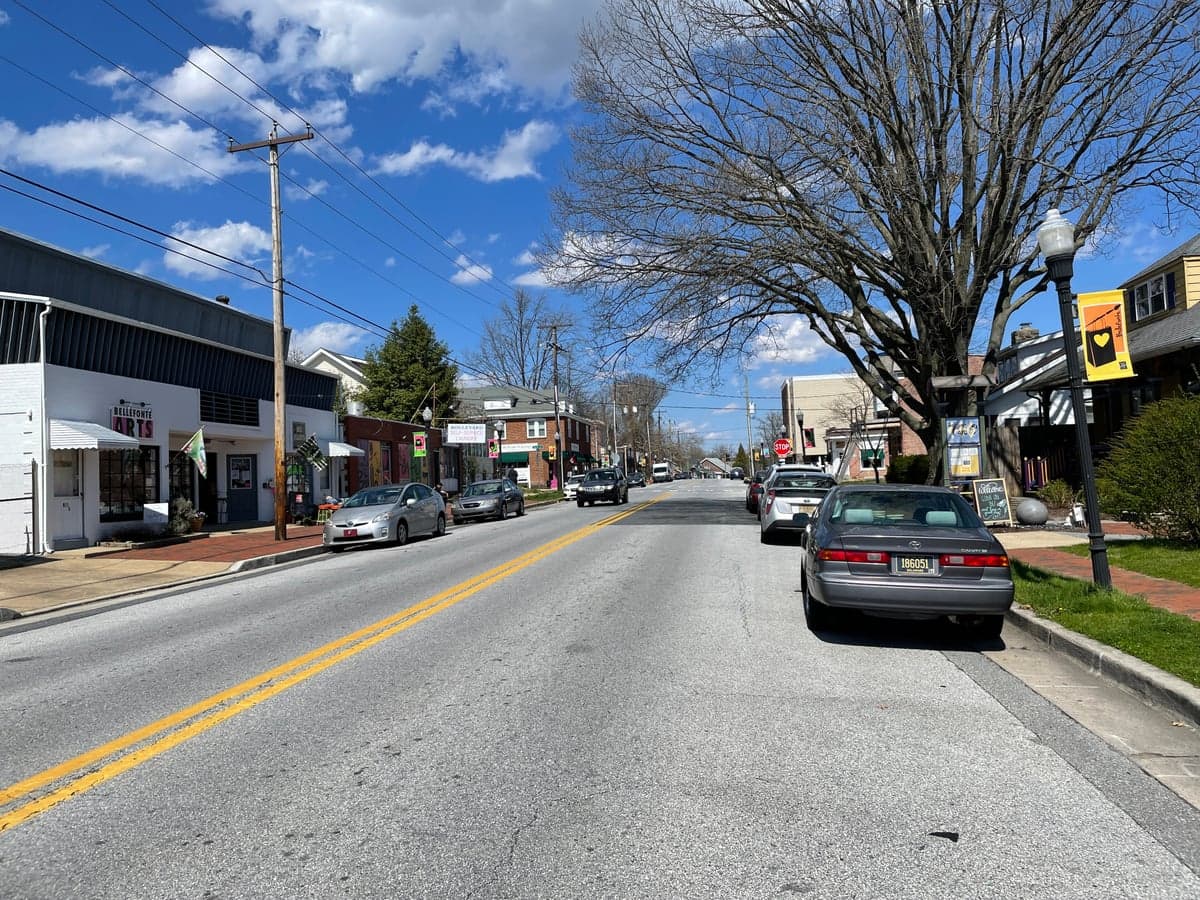
Photo: Wikipedia
Personal Sovereignty in Bellefonte, DE
Viable for self-reliance. Generally workable, though some barriers may limit total independence.
What does Personal Sovereignty tell us?
Personal Sovereignty measures your capacity for self-reliance and independence with minimal government friction. Higher scores mean fewer barriers between you and the way you want to live... but it assumes you have the space you need and good neighbors.
What does this tell us?
Personal Sovereignty measures your capacity for self-reliance and independence with minimal government friction. Higher scores mean fewer barriers between you and the way you want to live... but it assumes you have the space you need and good neighbors.
State Policy
Energy independence: Importer (2% of energy produced in-state)
Personal Liberty
Homesteading

Personal Liberty Analysis
Bellefonte, Delaware, offers a notably high degree of personal sovereignty compared to many mid-Atlantic locales, largely due to Delaware’s historically light regulatory touch and low tax burden. For those prioritizing autonomy—whether from government overreach, economic instability, or cultural drift—this small New Castle County town provides a strategic foothold. While Delaware is not a libertarian paradise, its lack of a sales tax, minimal business regulations, and permissive gun laws create an environment where self-reliant individuals can operate with fewer encumbrances than in neighboring states like Maryland or New Jersey.
Tax burden and regulatory posture: how Delaware’s policies affect your autonomy
Delaware’s tax structure is a major draw for those seeking to keep more of their earnings and reduce government entanglement. The state has no sales tax, meaning every purchase—from groceries to firearms—is free of that layer of state control. Property taxes in New Castle County are moderate, with Bellefonte’s effective rate typically around 0.8–1.0% of assessed value, far below the national average. Income taxes are progressive but capped at 6.6% for top earners, and the state offers generous deductions for retirement income. For preppers and survivalists, this low-tax environment means more capital for land, supplies, and self-sufficiency projects. However, Delaware’s regulatory posture is a mixed bag: the state is famously business-friendly (home to over 60% of Fortune 500 companies due to its Court of Chancery), but it also imposes strict environmental regulations on land use, particularly in coastal zones. Bellefonte, being inland and small (just over 1,200 residents), avoids many of the coastal restrictions, but zoning is still municipal—so check local codes before building a bunker or installing a large solar array. The state’s lack of a sales tax and relatively low property taxes are a clear win for personal sovereignty, but the regulatory framework for construction and land use requires careful navigation.
Self-defense and gun law specifics: what you can own and where you can carry
Delaware is a shall-issue state for concealed carry, meaning permits are granted to law-abiding residents who complete a training course and background check. As of 2026, open carry is legal without a permit for anyone 18 or older who can legally possess a firearm, though local ordinances may restrict it in certain public spaces. Bellefonte itself has no additional gun laws beyond state statutes, so residents enjoy the full scope of Delaware’s permissive framework. The state does not ban any specific firearms or magazines—so AR-15s, standard-capacity magazines, and suppressors are all legal. There is no waiting period for long guns, and private sales between individuals are allowed without a background check (though federal law requires FFL transfers for interstate sales). However, Delaware does have a red flag law (enacted in 2018) that allows courts to temporarily seize firearms from individuals deemed a risk—a point of concern for those wary of government overreach. For preppers, the key takeaway is that Bellefonte offers strong self-defense rights, but the red flag law means maintaining a low profile and avoiding any behavior that could trigger a complaint. The state’s castle doctrine is robust: there is no duty to retreat in your home or vehicle, and deadly force is justified if you reasonably believe it’s necessary to prevent imminent death or great bodily harm.
Self-reliance and homesteading viability: lot sizes, zoning, and off-grid feasibility
Bellefonte is a compact, historic town with mostly small lots—typically 0.1 to 0.25 acres—which limits large-scale homesteading. Most homes are single-family detached, but the town’s zoning is residential, with no agricultural allowances. For serious self-reliance, you’ll likely need to look outside town limits into unincorporated New Castle County, where lots of 1–5 acres are common and zoning is more flexible. In those areas, you can keep chickens, goats, and even small livestock, though pigs and cattle require larger parcels (typically 5+ acres). Off-grid feasibility is moderate: Delaware has net metering for solar, so you can generate your own power and sell excess back to the grid, but the state requires interconnection agreements and permits. Rainwater harvesting is legal for non-potable uses, but well drilling is regulated by the Delaware Department of Natural Resources. Composting toilets are allowed if they meet state standards, but full off-grid living (no utility connections) is difficult due to building codes that mandate minimum square footage and habitability standards. For preppers, the best strategy is to buy a property just outside Bellefonte’s town limits—where you get the town’s low taxes and proximity to Wilmington (for supplies) but the freedom to install a backup generator, build a root cellar, and keep a few animals without municipal interference.
Personal liberties: parental rights, medical autonomy, speech, and property
Delaware generally respects parental rights, but there are areas of concern for conservative families. The state has mandatory vaccination laws for school attendance (with medical and religious exemptions available), and it does not have a robust school choice system—charter schools are limited, and vouchers are not offered. Parental rights in education are under pressure: Delaware’s Department of Education has adopted policies that some view as undermining parental authority, such as allowing students to change their gender identity at school without parental consent. For medical autonomy, Delaware has no state-level restrictions on COVID-19 mandates (though they are no longer enforced), and it does not have a right-to-try law for experimental treatments. However, the state does have a strong property rights framework: eminent domain is rarely used for private development, and zoning disputes are handled at the local level. Free speech is protected under the First Amendment, but Delaware has hate crime laws that enhance penalties for speech or actions deemed to target protected classes—a potential chill for those who speak bluntly about cultural issues. For preppers, the biggest liberty concern is the state’s emergency powers: during declared emergencies, the governor can restrict movement, close businesses, and mandate medical procedures. This makes Bellefonte a decent base for autonomy, but not a sanctuary from all government overreach.
Overall, Bellefonte offers a solid foundation for personal sovereignty relative to the surrounding region. It beats Maryland and New Jersey on taxes, gun rights, and regulatory freedom, but it falls short of true libertarian havens like New Hampshire or Idaho. For a single individual or family with a prepper mindset, Bellefonte provides a low-tax, gun-friendly environment with decent self-reliance potential if you choose the right property. The key is to stay outside town limits for homesteading, keep a low profile to avoid red flag laws, and be prepared for the possibility of state-level emergency overreach. It’s a strategic choice for those who want to be near the East Coast’s infrastructure while maintaining a high degree of personal control over their lives—but it’s not a place to let your guard down.

* Values derived from national, state, county, city and local statistics and may differ in a specific area. Last updated: 2026-04-30T07:29:22.000Z
Narrative content on this page is AI-generated and may contain mistakes. Verify any details that matter before acting on them.
ReloMaps may earn a commission from affiliate links at no extra cost to you.

