Photo: Wikipedia
Demographics of Bellefonte, DE
Affluence Level in Bellefonte, DE
A middle-class area roughly in line with national averages across income, home values, education, and employment.
People of Bellefonte, DE
The people of Bellefonte, Delaware, today form a small, predominantly white community of 1,507 residents, characterized by a notably high homeownership rate and a quiet, suburban character. The town’s population is 72.5% white and 17.9% black, with a very small foreign-born share of just 1.9% and a Hispanic population of 2.5%. Despite its tiny size, Bellefonte possesses a distinct identity as an early-20th-century planned community, a legacy that continues to shape its tight-knit, family-oriented atmosphere and its appeal to those seeking a stable, affordable enclave within the Wilmington metropolitan area.
How the city was settled and grew
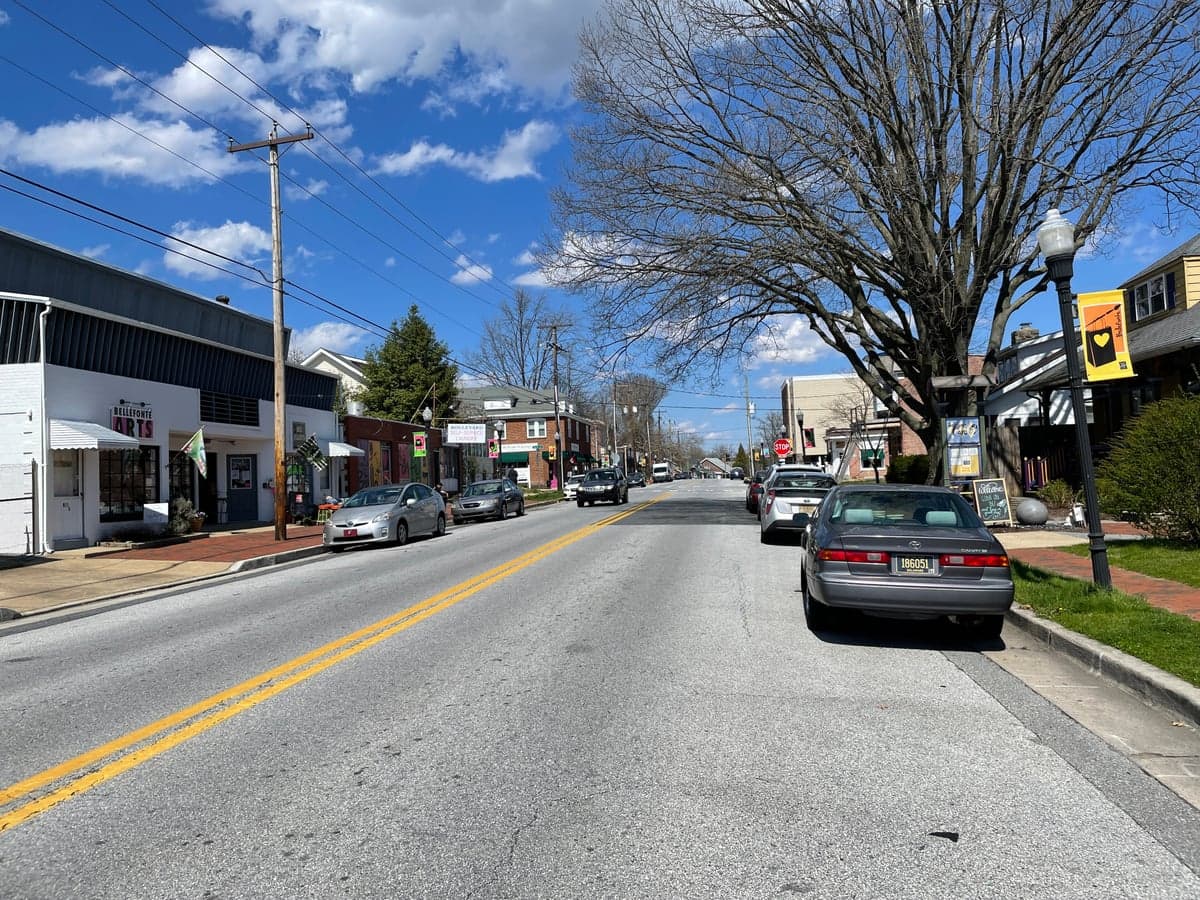
Unlike many Delaware towns with colonial roots, Bellefonte is a product of the early 20th century. It was founded in 1905 as a planned streetcar suburb, designed to attract middle-class workers from Wilmington and the nearby industrial centers along the Brandywine River. The original population was overwhelmingly white and of European descent, drawn by the promise of affordable single-family homes on tree-lined streets. The town’s original core, now known as the Bellefonte Historic District, was laid out with a grid of streets and a central park, and it remains the heart of the community. The early residents were largely skilled tradesmen, factory workers, and clerks, many of whom worked at the nearby DuPont powder mills and other manufacturing plants. This initial wave of settlement established Bellefonte as a stable, working-to-middle-class white enclave, a character it maintained for much of the 20th century. The town incorporated in 1915, and its population grew steadily through the 1920s and 1930s, filling out the historic district and the adjacent Bellefonte Gardens area with similar single-family homes.
Modern era (post-1965)
The post-1965 period saw Bellefonte’s demographic profile shift modestly, reflecting broader regional trends of suburbanization and gradual diversification. The town’s population peaked around 1,600 in the 1970s and has since stabilized. The most significant change has been the growth of the black population, which now stands at 17.9%. This increase is largely attributed to domestic migration from Wilmington and other parts of New Castle County, as black families sought affordable homeownership in a quiet, suburban setting. These new residents have settled throughout the town, with notable concentrations in the Bellefonte Gardens and the Bellefonte Manor sections, areas that feature slightly larger homes and more varied housing stock. The white population, while still the majority at 72.5%, has aged in place, with younger families often moving to newer suburbs. The foreign-born population remains very low at 1.9%, and there are no recorded East/Southeast Asian or Indian subcontinent residents, indicating that Bellefonte has not been a destination for recent international immigration. The Hispanic population, at 2.5%, is small but has grown slightly since 2000, primarily through domestic moves from other parts of the region. The town’s character remains predominantly family-oriented and owner-occupied, with a strong sense of local identity centered on the Bellefonte Community Center and the annual Bellefonte Day festival.
The future
Bellefonte’s population is likely to remain stable in size, with gradual demographic change rather than rapid transformation. The town is essentially built out, with little vacant land for new development, so future growth will come from infill and turnover of existing homes. The white population is expected to continue its slow decline as older residents pass away or move, while the black population may increase modestly as the town remains an affordable option for families priced out of more expensive Wilmington suburbs. The Hispanic population could grow slightly, but the very low foreign-born share suggests that international migration will not be a major driver. The town is not homogenizing into a single demographic bloc, but it is also not tribalizing into distinct ethnic enclaves; instead, it is becoming a more integrated, if still predominantly white, community. The Bellefonte Historic District will likely retain its character as the most desirable and stable area, while the Bellefonte Manor section may see more turnover and a slightly younger demographic. The next 10-20 years will likely see Bellefonte remain a small, stable, owner-occupied suburb, attractive to those who value a walkable, historic setting and a strong sense of community over new construction or rapid growth.
For someone moving in now, Bellefonte offers a rare combination: an affordable, historic, and stable community within commuting distance of Wilmington and Philadelphia, with a population that is slowly diversifying but remains overwhelmingly American-born and family-focused. It is a place where the past is still visible in the architecture and the street layout, and where the future looks to be more of the same—steady, quiet, and rooted in the values of homeownership and neighborly connection.

* Values derived from national, state, county, city and local statistics and may differ in a specific area. Last updated: 2026-04-30T07:29:22.000Z
Narrative content on this page is AI-generated and may contain mistakes. Verify any details that matter before acting on them.
ReloMaps may earn a commission from affiliate links at no extra cost to you.

