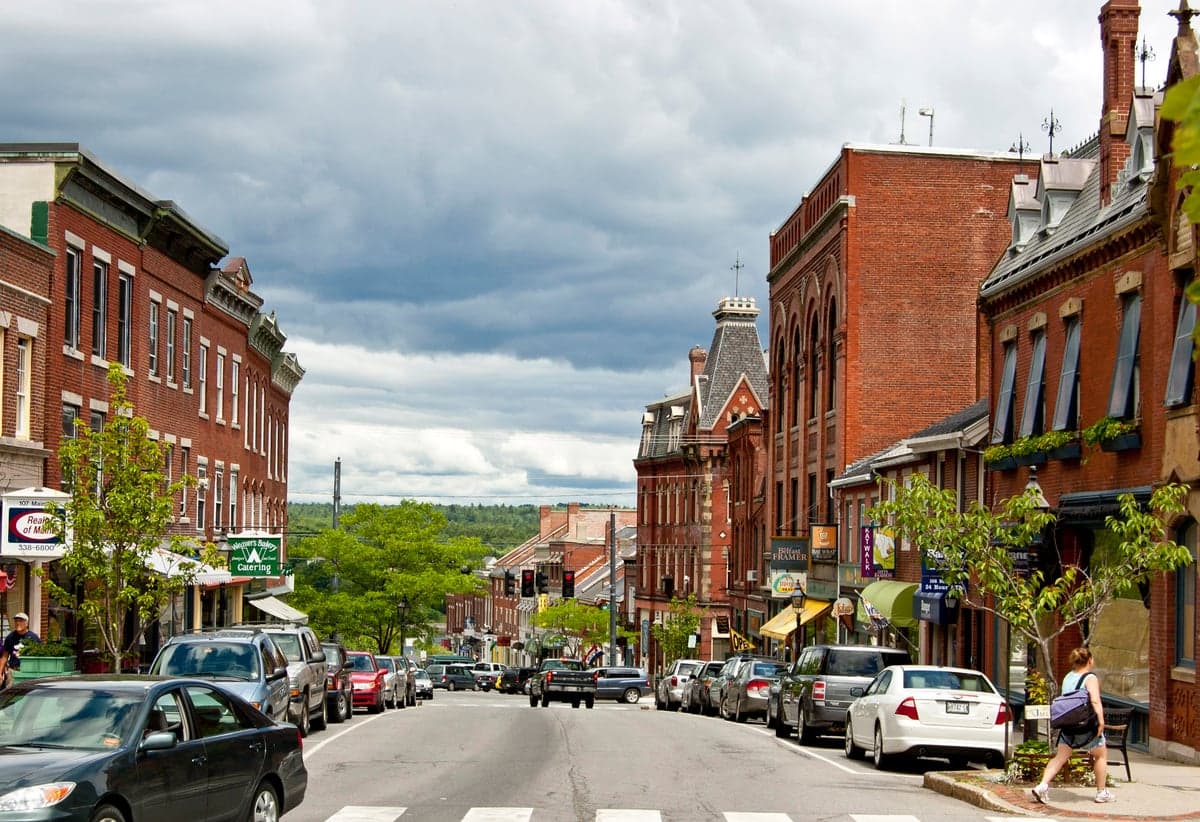
Photo: Wikipedia
Strategic Assessment of Belfast, ME
Meaningful friction. Expect exposure to either population pressure, blast zones, or natural disaster risk. Consider buying a retreat property.
What does the Strategic Assessment tell us?
Our Strategic Assessment grades tactical survivability of an area. Major population centers, military targets, fallout zones, natural disasters, and border exposure all drive risk — lower exposure means a more defensible position in a crisis.
This is heavily inspired by Joel Skousen's Strategic Relocation book. Highly recommended you checkout the book ($)What does this tell us?
Our Strategic Assessment grades tactical survivability of an area. Major population centers, military targets, fallout zones, natural disasters, and border exposure all drive risk — lower exposure means a more defensible position in a crisis.
This is heavily inspired by Joel Skousen's Strategic Relocation book. Highly recommended you checkout the book ($)Strategic Pillars

Key Distances
Regional Safe Places
Below is our recommended "safe zones" in Maine and the surrounding area based on our strategic heuristics. For most people, it's unrealistic to live in a “safe zone” full-time due to work, family or other personal reasons. They tend to be more rural. However, many of these areas are perfect for second homes and retreat properties that double as a vacation home or even a short-term rental.
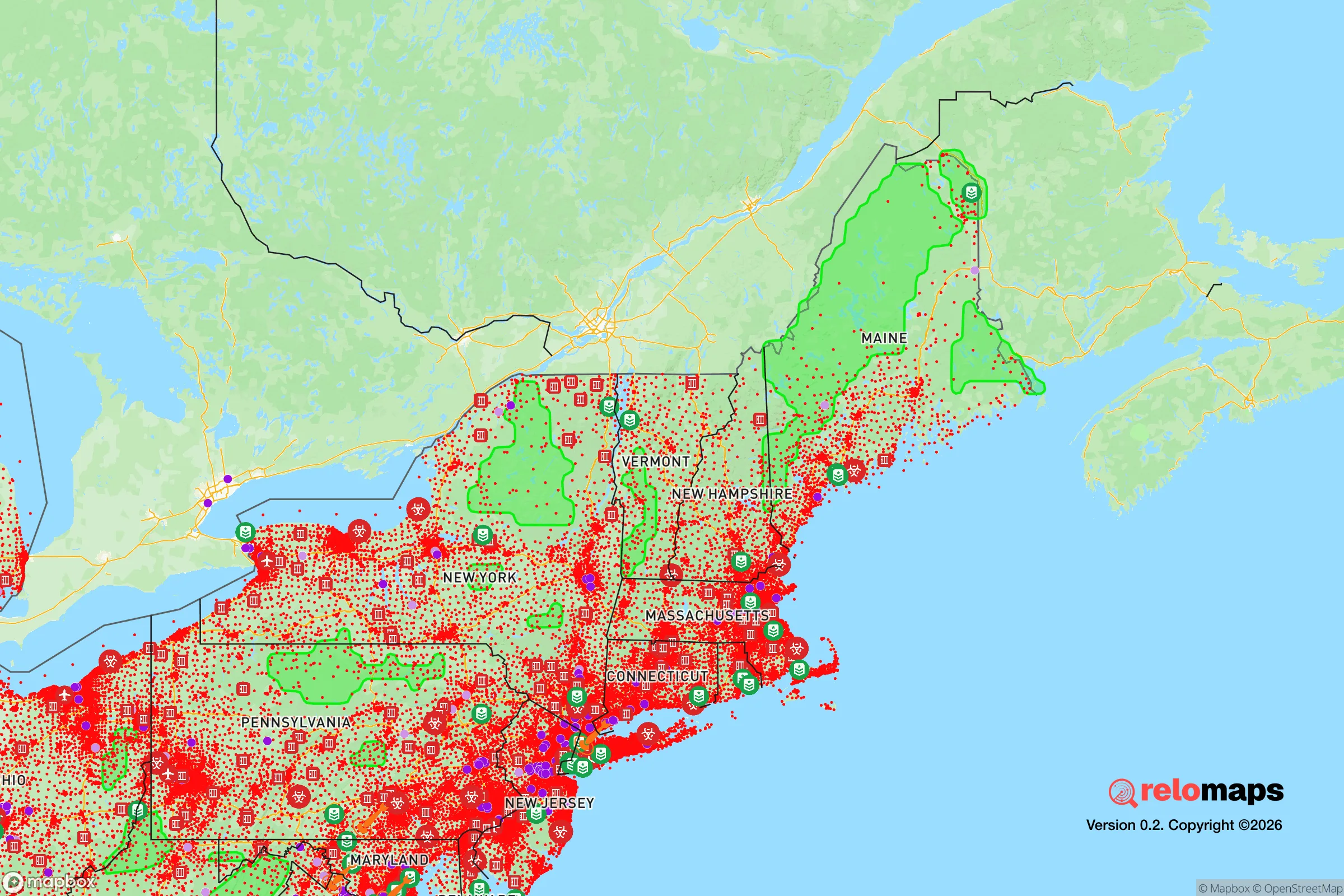
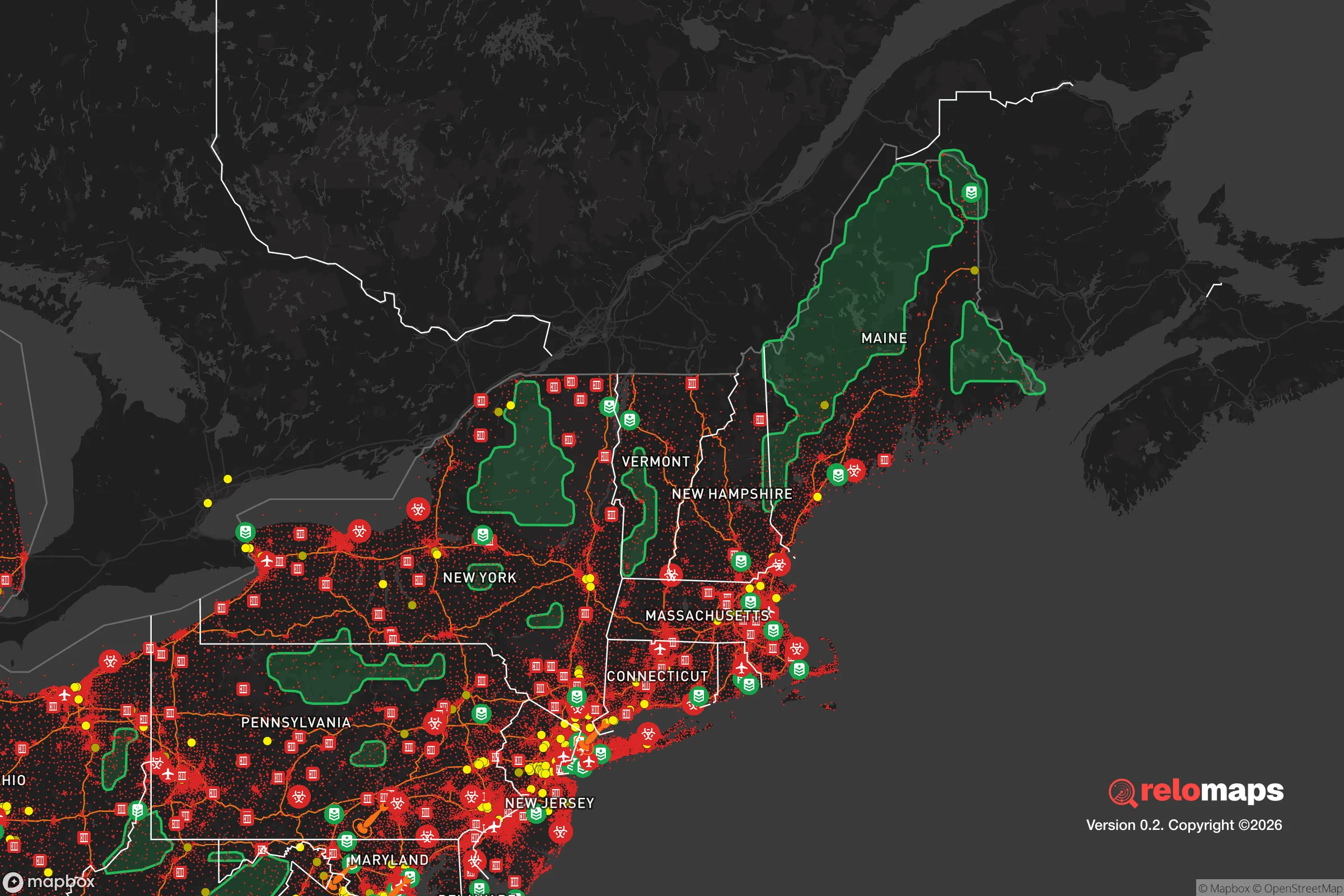


Important Note: For informational purposes only. This does not mean nothing bad ever happens in the green zones. Please use common sense. This is based on public data and modeled with AI. We tried to take a conservative approach but mistakes happen. We update this regularly as new information becomes available.
Solar Generator Recommendations
Backup power matters more here than in safer locations. We've picked three solar generators across budgets and capacity tiers — start with the budget unit if you only need a few essentials, or step up if you want to run a fridge and HVAC for days at a time.

Jackery Portable Power Station Explorer 300
Budget OptionPower on the Go: Weighing only 11 lbs, it's convenient to set up and store with book-sized foldable solar panels

BLUETTI Portable Power Station AC180
Designed for both indoor and outdoor scenarios, AC180 is highly capable as it has a robost capacity and continuous output power.

EF ECOFLOW DELTA Pro Ultra Power Station
Upgraded PickEcoFlow DELTA Pro Ultra is a whole-home energy system designed to grow with your family. Integrated with the Smart Home Panel 2, it scales to meet your evolving energy needs — keeping your home powered, intelligent, and secure through every stage of life.
We earn a commission, at no additional cost to you.
Strategic Assessment Analysis
Belfast, Maine, offers a compelling strategic position for those prioritizing resilience and self-sufficiency, sitting roughly 40 miles from Bangor and 170 miles from Boston—close enough for supply runs but far enough to avoid the immediate fallout of urban collapse. Its location on Penobscot Bay provides access to marine resources, while the surrounding Waldo County offers a mix of forest, farmland, and small communities that can support a decentralized lifestyle. For a conservative-leaning relocator concerned with civic unrest, mass casualty events, or systemic disruptions, Belfast presents a balanced option: not a hardened bunker, but a defensible, resource-rich zone with a history of independence and a growing network of like-minded individuals.
Geographic position and natural advantages for long-term security
Belfast sits at the head of Penobscot Bay, giving it a natural buffer against the denser population centers of southern Maine and New England. The city itself is a small coastal hub of roughly 7,000 residents, with Waldo County adding another 40,000 spread across rural towns and unorganized territories. This low population density is a major asset for anyone planning to avoid the chaos of urban evacuation routes or supply chain failures. The area is ringed by working forests and farmland, with the St. George River and numerous smaller streams providing fresh water sources that are less likely to be contested than municipal systems. The coast offers access to shellfish, finfish, and seaweed, which can supplement food stores indefinitely if marine ecosystems remain intact. The region's cold winters also serve as a natural deterrent to large-scale migration from southern states during a crisis, as unprepared populations will struggle with the climate. For a prepper, the key advantage here is the ability to live off the land without relying on fragile infrastructure—the soil is rocky but workable, the forests are thick with game like deer and moose, and the bay is a reliable protein source.
Risks, exposures, and proximity to fallout-relevant landmarks
No location is without vulnerabilities, and Belfast has several that a strategic relocator must weigh. The most obvious risk is its proximity to the Maine Yankee nuclear site in Wiscasset, roughly 30 miles southwest, which is now a decommissioned facility but still stores spent fuel in dry casks. While the risk of a catastrophic release is low, a targeted attack or major earthquake could create a fallout zone that would affect downwind areas, including Belfast depending on wind patterns. More pressing is the city's reliance on Route 1 and Route 3 as primary evacuation and supply corridors—both are two-lane roads that can become impassable with a single accident or bridge failure. Belfast is also within 50 miles of the Portsmouth Naval Shipyard in Kittery, a potential target for state-level adversaries, and within 100 miles of Boston's Logan Airport and the region's major rail hubs. In a mass casualty event or civil unrest scenario, Belfast could see an influx of refugees from Portland (50 miles south) or Bangor (40 miles north), straining local resources. The city's own infrastructure—a single hospital (Waldo County General Hospital), a municipal water system drawing from the St. George River, and a power grid that is prone to winter outages—means that self-reliance is not optional but mandatory for anyone serious about long-term survival. The local government is generally competent but leans progressive, which may clash with a conservative prepper's preference for minimal oversight and private property rights.
Practical resilience for a relocator: food, water, energy, and defensibility
For a single individual or family planning to weather disruptions, Belfast offers a mix of advantages and gaps that require proactive filling. Food security is strong: the area has a robust network of small farms, farmers' markets, and CSAs, plus the ability to hunt, fish, and forage. The University of Maine Cooperative Extension in Waldo County provides workshops on canning, gardening, and livestock management, which can accelerate learning for newcomers. Water is generally accessible via wells on private property, but municipal water users should have a backup plan—the city's treatment plant is old and vulnerable to power loss. Energy is the weak link: the grid is unreliable in winter storms, and natural gas is not widely available. Most homes rely on oil, propane, or wood heat, so investing in a wood stove, solar panels with battery storage, and a backup generator is essential. Defensibility is moderate: Belfast is a compact city with a walkable downtown, but the surrounding rural areas offer better options for a retreat-style property with good sightlines and limited access points. The local gun culture is present but not as pronounced as in northern Maine or the Midwest; Waldo County has a mix of hunters and sport shooters, and the sheriff's office is generally supportive of Second Amendment rights. For a relocator, the best strategy is to buy land outside city limits—ideally 10-20 acres with a well, septic, and a southern slope for passive solar—while maintaining a small base in town for supplies and community connections. The local population is aging and not particularly survivalist, but there is a growing contingent of younger families and remote workers who value self-sufficiency, which can form a mutual aid network.
The overall strategic picture for Belfast is one of cautious optimism for a prepared relocator. It is not a hardened redoubt—it lacks the extreme isolation of Alaska or the deep bunker culture of the rural West—but it offers a realistic balance of resources, access, and community that can sustain a family through most disruptions short of a full societal collapse. The key is to arrive with a plan: secure a property with independent water and heat, build a year's worth of food stores, and establish relationships with local farmers and tradespeople before any crisis hits. Belfast's coastal location is both a blessing and a liability—it provides food and trade routes but also attracts attention in a disaster. For a conservative individual or family who values freedom, preparedness, and a slower pace of life, this is a solid B+ option that requires work but rewards effort with genuine resilience. The city's biggest weakness is its proximity to larger population centers, but for those willing to invest in the right property and mindset, that weakness can be managed. In a world where urban centers are increasingly fragile, Belfast stands as a viable, if not perfect, strategic relocation target.

* Values derived from national, state, county, city and local statistics and may differ in a specific area. Last updated: 2026-04-22T22:11:04.000Z
Narrative content on this page is AI-generated and may contain mistakes. Verify any details that matter before acting on them.
ReloMaps may earn a commission from affiliate links at no extra cost to you.

