Photo: Wikipedia
Political ClimatePolitical Climate in Belfast, ME
District shown is the primary district for this city’s centroid. Cities may span multiple districts.
Local Political AnalysisPolitical Analysis of Belfast, ME
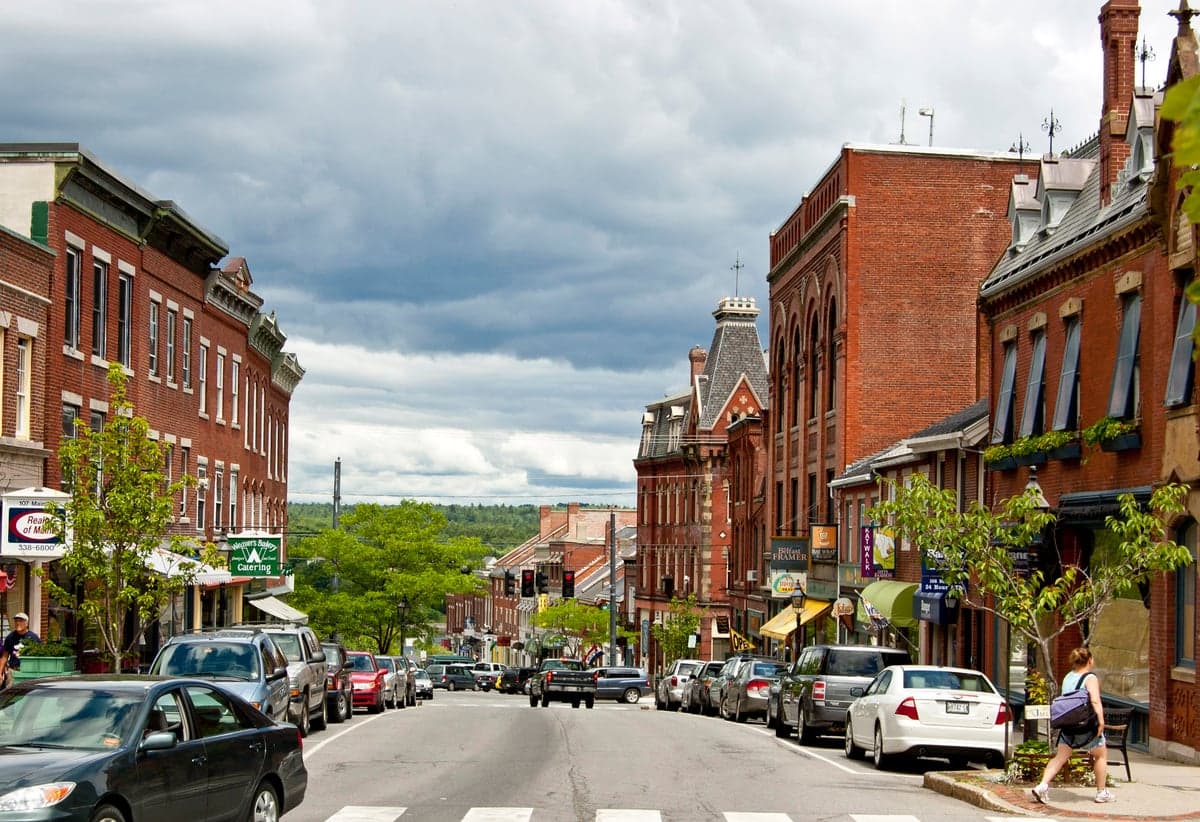
Belfast, Maine, sits in a bit of a political tug-of-war. The area’s Cook PVI is R+4, which tells you the surrounding Waldo County leans Republican overall, but the city itself has drifted noticeably leftward in recent years. If you’d asked me fifteen years ago, I’d have said Belfast was a reliably conservative, blue-collar town where folks minded their own business and didn’t want the government poking into their lives. Now? You’ll see as many “Coexist” bumper stickers as “Don’t Tread on Me” ones, and the local city council has taken up issues that would have been unthinkable a generation ago—like pushing symbolic resolutions on national politics and entertaining zoning changes that feel more like social engineering than common-sense planning.
How it compares
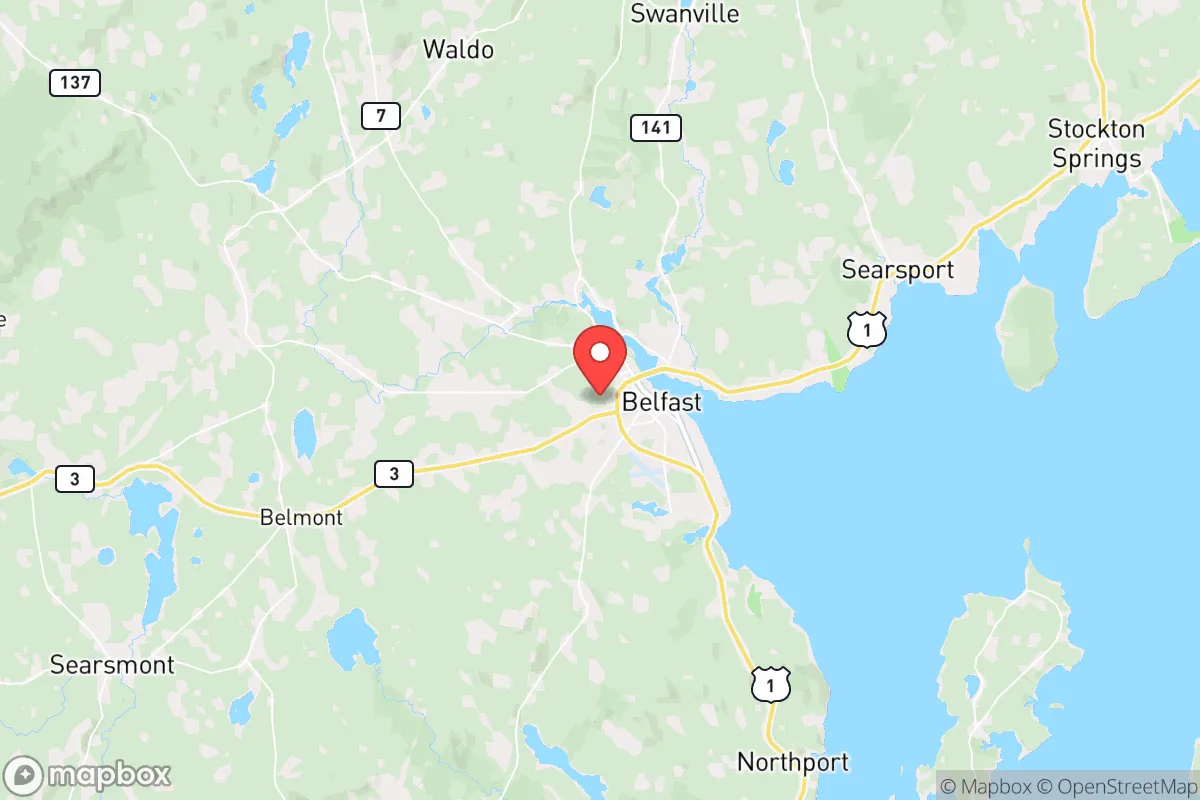
Drive ten miles in almost any direction and you’ll feel the political shift. Towns like Searsport and Stockton Springs to the south still vote solidly red, with the kind of independent, live-and-let-live attitude that’s long defined coastal Maine. Head north to Winterport or Frankfort, and you’re in deep Republican territory—folks there are suspicious of Augusta’s reach and don’t hide it. But Belfast itself has become a magnet for out-of-state transplants, many from Massachusetts or New York, who bring a different set of priorities. They tend to support higher taxes for public projects, stricter environmental regulations that can hamper small businesses, and a general expansion of government services. The contrast is stark: you can stand on Main Street and see a shop flying a Trump flag, then walk two blocks and find a café hosting a progressive town hall. It’s a split that’s only gotten sharper since 2020.
What this means for residents
For a long-time resident who values personal freedom and limited government, the trend in Belfast is concerning. The city council has debated things like banning plastic bags and imposing rental registration fees—small steps, sure, but they add up to a creeping sense that bureaucrats think they know better than you do about how to run your life. Property taxes have climbed as the city takes on more programs, and some longtime families I know have quietly started looking at land in Liberty or Montville, where the tax burden is lighter and the county commissioners are less likely to meddle. The school board has also seen its share of fights over curriculum transparency, with some parents worried that progressive social agendas are being pushed without their input. If you’re the kind of person who believes the government’s job is to protect your rights, not manage your choices, you’ll want to keep a close eye on local elections here.
One cultural distinction that still holds: Belfast has a strong libertarian streak beneath the surface. The Belfast Flying Shoes festival and the Maine Organic Farmers and Gardeners Association draw a crowd that’s more about self-reliance than party loyalty. You’ll find plenty of folks who vote Republican but also hunt, fish, and homeschool—and they’re not shy about telling you that the government should stay out of their woods and their wallets. The challenge is that the new arrivals often don’t share that instinct. If the current trajectory holds, I’d expect Belfast to become a blue island in a red county within another decade, and that’s a real loss for anyone who moved here to escape the very kind of overreach they’re now seeing creep in.

State Political ClimatePolitical Climate in Maine
State Political AnalysisPolitical Environment in the State
Maine has long been known as a politically independent state, but over the past two decades, it has shifted noticeably to the left, particularly at the state level. While the state still elects centrist governors like Janet Mills (a Democrat who often tacks to the middle), the legislature and key policy levers are firmly controlled by progressive Democrats. The 2020 and 2024 presidential elections saw Maine’s 2nd Congressional District (the vast, rural northern and eastern portion) vote for Donald Trump, while the 1st District (the southern coast and Portland metro) went heavily for Joe Biden and Kamala Harris. This split makes Maine one of only two states (along with Nebraska) that allocates electoral votes by congressional district, a quirk that reflects its deep urban-rural divide. For a conservative considering relocation, the key takeaway is that Maine offers a mixed bag: low crime and beautiful landscapes in the north, but a growing progressive policy machine in Augusta that is pushing taxes, regulations, and social policies that may feel intrusive.
Urban vs. rural divide
The political map of Maine is essentially a story of two states. The southern coastal corridor—from Kittery up through Portland, Brunswick, and Augusta—is the engine of Democratic power. Portland itself is a deep-blue city, with a vibrant progressive activist scene, high housing costs, and a culture that mirrors Boston or Burlington. The surrounding suburbs like Scarborough and Falmouth lean left but are more moderate, often voting for centrist Democrats. In contrast, the vast interior and northern regions—places like Bangor, Presque Isle, Caribou, and Fort Kent—are reliably Republican. Bangor, the largest city in the 2nd District, is a conservative stronghold with a strong blue-collar and veteran presence. The rural counties of Aroostook, Piscataquis, and Somerset voted for Trump by double digits in 2024. The divide is stark: you can drive 30 minutes north of Portland and feel like you’ve entered a different country, with pickup trucks, gun racks, and “Don’t Tread on Me” flags replacing Priuses and “Coexist” bumper stickers. This split is not new, but it has widened as Portland’s population has grown with out-of-state transplants from Massachusetts and New York, who bring their politics with them.
Policy environment
Maine’s state-level policy environment has become increasingly progressive, and it’s worth understanding the specifics before moving. The state has a graduated income tax with a top rate of 7.15%, one of the highest in the nation. Property taxes are also high, especially in southern counties like Cumberland and York. In 2023, the legislature passed a paid family and medical leave program funded by a new payroll tax, which many conservatives see as an overreach into personal finances. On education, Maine has a strong public school system, but parents have faced growing frustration with curriculum transparency. In 2024, the state rejected a bill that would have required schools to notify parents if their child requested a name or pronoun change—a major flashpoint for parental rights advocates. On healthcare, Maine expanded Medicaid under the Affordable Care Act in 2019, and the state runs its own exchange. Election laws are relatively open: same-day voter registration is allowed, and no-excuse absentee voting is permanent. The state also uses ranked-choice voting for federal and state primaries, a system that some conservatives argue dilutes traditional voting power. For a freedom-minded individual, the tax burden and the lack of parental rights protections in schools are the biggest red flags.
Trajectory & freedom
Over the past five years, Maine has moved in a direction that many conservatives would describe as less free. The most concerning trend is the erosion of Second Amendment rights. In 2023, after a mass shooting in Lewiston, Governor Mills signed a package of gun control laws that included a 72-hour waiting period for firearm purchases, expanded background checks for private sales, and a ban on bump stocks. While these laws were framed as public safety measures, they represent a significant expansion of state power over gun ownership. On the medical freedom front, Maine was one of the first states to mandate COVID-19 vaccines for healthcare workers and school staff, and it has not repealed those mandates. The state also has a strict vaccine exemption policy for schoolchildren, with only medical exemptions allowed—no religious or philosophical exemptions. On property rights, Maine has a strong “right to farm” law, but local zoning boards in coastal towns have become increasingly restrictive on new development, particularly in Portland and Camden. The state’s energy policy is also aggressive: Maine has a goal of 100% renewable electricity by 2040, and it has banned new large-scale wind and solar projects in certain areas, but the overall regulatory environment for energy development is cumbersome. For a conservative, the trajectory is clear: more taxes, more mandates, and less individual autonomy.
Civil unrest & political movements
Maine is not known for widespread civil unrest, but there have been notable flashpoints. The 2023 Lewiston shooting, which left 18 dead, sparked intense debate over gun control, with large rallies both for and against new restrictions. The state has a small but vocal “Maine 2nd Amendment” movement, with groups like the Maine Gun Owners Association actively fighting new laws. On the left, the Portland chapter of the Democratic Socialists of America is active, organizing around housing and rent control. Immigration politics are relatively quiet compared to border states, but Maine has a sanctuary state law (enacted in 2021) that limits local law enforcement cooperation with federal immigration authorities. This has caused friction in smaller towns like Sanford and Biddeford, where some residents feel the policy strains local resources. There have also been protests over the state’s vaccine mandates, particularly in the northern counties, where a “Maine Freedom” rally in Augusta drew several thousand people in 2022. Election integrity has been a recurring issue: in 2020, Maine was one of the few states that allowed ballot harvesting (third-party collection of absentee ballots), and while no widespread fraud was proven, the practice remains controversial among conservatives. The overall atmosphere is one of simmering tension rather than open conflict, but the cultural divide is real and visible.
Projection
Looking ahead five to ten years, Maine’s political trajectory is likely to continue its leftward drift, but with important caveats. The southern coast will keep growing as remote workers and retirees from Massachusetts and New York move in, further solidifying Democratic control in the 1st District. However, the 2nd District is likely to remain Republican, as its population is older, whiter, and more rural, and it is not experiencing the same in-migration. The state’s overall population is stagnant, and the northern counties are actually shrinking. This means that the political balance in Augusta could become more polarized, with the governor’s office potentially flipping back to a Republican if a moderate like former Governor Paul LePage (who served 2011-2019) were to run again. But the legislature is likely to stay Democratic for the foreseeable future. The biggest wildcard is the state’s fiscal health: Maine has a large unfunded pension liability and an aging population, which could force tax increases or service cuts. For a conservative moving in, the best bet is to settle in a rural or small-town area in the 2nd District, where local politics are more aligned with traditional values, and to be prepared for continued battles over gun rights, parental rights, and taxes.
For a new resident, the bottom line is that Maine offers a beautiful, safe, and quiet place to live, but it is not a conservative haven. The state government in Augusta is actively expanding its reach into your personal life, from your healthcare choices to your children’s education to your right to own a firearm. If you value low taxes, minimal regulation, and strong parental rights, you will need to be politically engaged and prepared to fight for those values. The northern and eastern parts of the state—places like Bangor, Ellsworth, and Houlton—offer a more conservative lifestyle, but you will still be subject to state-level laws that may chafe. Maine is a place where you can find freedom in the woods and on the coast, but not necessarily in the ballot box. If you’re willing to accept that trade-off, it can be a wonderful home. If not, you may want to look further west.
* Values derived from national, state, county, city and local statistics and may differ in a specific area. Last updated: 2026-04-22T22:11:04.000Z
Narrative content on this page is AI-generated and may contain mistakes. Verify any details that matter before acting on them.
ReloMaps may earn a commission from affiliate links at no extra cost to you.

