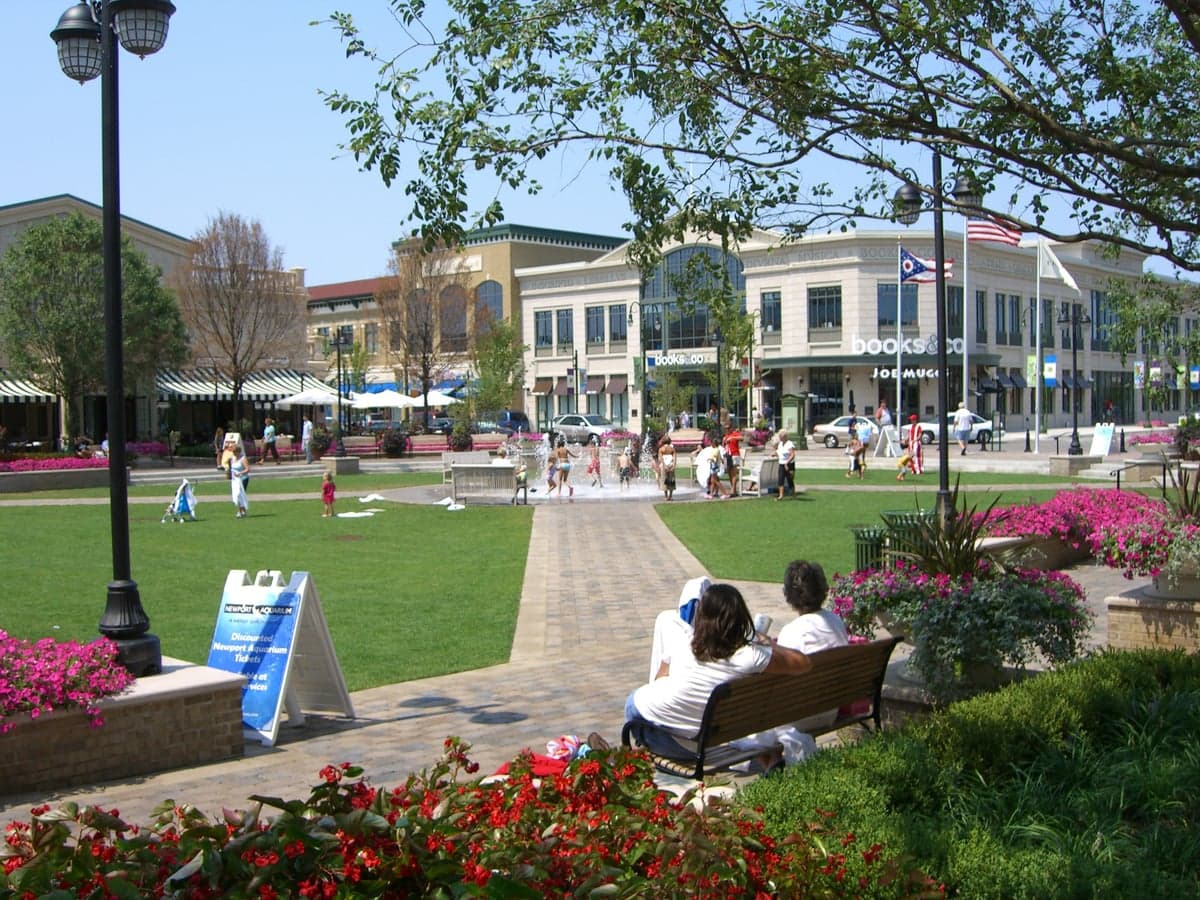
Photo: Wikipedia
Political ClimatePolitical Climate in Beavercreek, OH
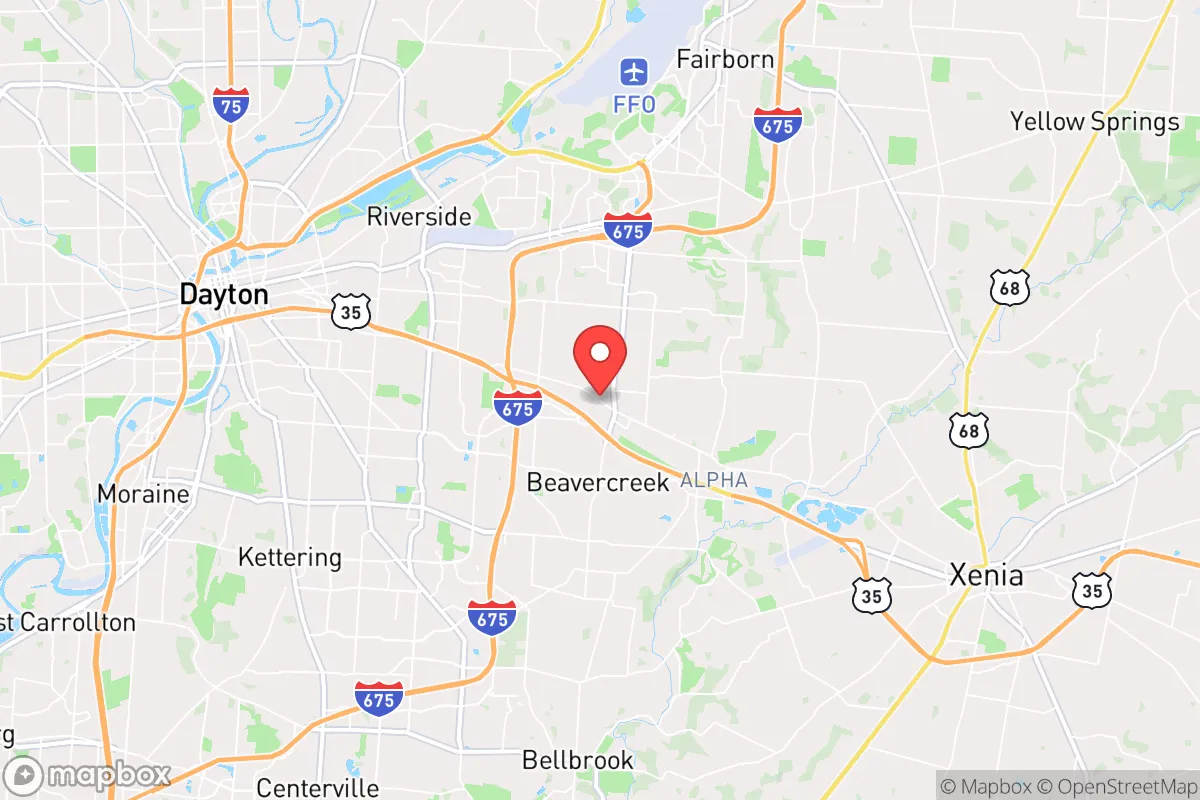
District shown is the primary district for this city’s centroid. Cities may span multiple districts.
Local Political AnalysisPolitical Analysis of Beavercreek, OH
Beavercreek, Ohio, has long been a reliably conservative community, and that hasn't changed much despite the national shifts you see in places like Dayton or Columbus. The Cook PVI rating of R+3 tells the story pretty well—this is a place where Republican candidates can usually count on winning, but it's not a deep-red stronghold like some of the more rural counties to the east. The political lean here is solidly center-right, with a strong emphasis on fiscal responsibility, local control, and a general skepticism of government overreach. You'll find most folks around here vote for the candidate they trust to keep their taxes low and their freedoms intact, not just the party label.
How it compares
Drive ten minutes west into Dayton, and you're in a completely different political universe—a blue city with a very different set of priorities. The contrast is stark. Beavercreek residents often see Dayton's progressive policies as a cautionary tale of what happens when government gets too involved in personal lives and local businesses. To the south, places like Centerville and Kettering are more purple, with a noticeable shift toward moderate or even left-leaning positions in recent years. Beavercreek, by contrast, has held its ground. The city council and school board elections here still tend to favor candidates who talk about limiting government growth, protecting property rights, and keeping the community's character intact. It's not a place where you'll see a lot of enthusiasm for the kind of social engineering experiments you hear about in bigger cities.
What this means for residents
For people living here, the political climate translates into a pretty straightforward daily experience. You're not going to see the city council trying to mandate how you run your small business or what kind of light bulbs you can buy. The local government generally takes a hands-off approach, which is exactly how most residents want it. Property taxes are reasonable, zoning is sensible, and there's a strong sense that the community is run by people who understand that government's job is to keep the roads paved and the cops funded, not to micromanage your life. That said, there's a growing unease among long-time residents about the creeping influence of state-level policies that sometimes feel like they're testing the limits of local autonomy. The concern is that if the state government in Columbus gets too comfortable with overreach, it's only a matter of time before it trickles down to places like Beavercreek.
One thing that sets Beavercreek apart from some of its neighbors is the cultural emphasis on personal responsibility and community self-reliance. You don't see a lot of hand-wringing about national politics here; people are more focused on what's happening in their own backyards. The local schools are a big deal, and the community tends to rally around issues that affect families directly—like keeping school curricula focused on fundamentals rather than ideological experiments. There's a quiet but firm resistance to any policy that feels like it's coming from a distant bureaucracy, whether that's in Washington or Columbus. The trajectory, as I see it, is that Beavercreek will remain a conservative anchor in a region that's slowly shifting left. The challenge will be holding the line against the kind of top-down mandates that erode local control and personal freedoms. If you're looking for a place where you can live your life without the government breathing down your neck, this is still one of the better spots in Ohio.

State Political ClimatePolitical Climate in Ohio
State Political AnalysisPolitical Environment in the State
Ohio has long been the quintessential bellwether state, but its political center of gravity has shifted noticeably over the past 20 years. Once a classic purple state that could swing either way, Ohio has trended reliably Republican at the state level since 2016, with Donald Trump carrying it by 8 points in both 2016 and 2020 and by a similar margin in 2024. The dominant coalition is now a mix of working-class voters in small cities and rural areas, combined with a growing conservative exurban base around Cincinnati and Columbus. However, the state is far from monolithic—Cleveland, Columbus, and Toledo remain Democratic strongholds, and the suburbs are increasingly competitive. The 10-20 year arc shows a state that has become more culturally conservative on social issues while maintaining a pragmatic, business-friendly posture on economics.
Urban vs. rural divide
The political map of Ohio is a study in contrasts. The three major metros—Cleveland (Cuyahoga County), Columbus (Franklin County), and Cincinnati (Hamilton County)—anchor the Democratic vote. Cuyahoga County alone delivered nearly 300,000 votes for Biden in 2020, offsetting huge margins from rural counties. But the real story is the exurban and rural shift. Counties like Delaware (north of Columbus), Warren (north of Cincinnati), and Medina (southwest of Cleveland) have flipped from swing to solid red over the past decade. Meanwhile, the Appalachian southeast—counties like Belmont, Monroe, and Washington—have become deeply Republican as union Democrats aged out and cultural issues took over. The Mahoning Valley (Youngstown area) is a microcosm: once a Democratic stronghold, it now votes Republican by double digits, driven by blue-collar voters who feel abandoned by the national party on trade and social issues. The divide isn't just urban vs. rural—it's also about education and income, with college-educated suburbs like Bexley (Columbus) and Shaker Heights (Cleveland) trending left while working-class exurbs go right.
Policy environment
Ohio's policy environment is broadly conservative but with some notable exceptions. The state has a flat income tax rate of 3.5% (down from 4.8% in 2020), and the legislature has been gradually phasing it out—a clear win for fiscal conservatives. Property taxes are moderate, and there is no estate tax. On regulation, Ohio is a right-to-work state in practice (though not by law), and the state has preempted local governments from enacting their own minimum wage or paid leave mandates—a key protection against progressive city councils. Education policy is a battleground: the state has a robust school choice program, including the EdChoice voucher system, which has expanded significantly under Governor Mike DeWine. However, the state board of education has been embroiled in fights over curriculum and parental rights, with conservatives pushing for transparency in classroom materials. On healthcare, Ohio expanded Medicaid under the Affordable Care Act, a decision that remains controversial among conservatives. Election laws have been tightened: voter ID requirements were strengthened in 2023, and drop boxes are now limited to one per county. The state also passed a 2023 law banning gender-affirming care for minors and restricting transgender athletes in school sports—a clear signal of the cultural direction.
Trajectory & freedom
On the freedom front, Ohio is a mixed bag but trending in the right direction on several key issues. Gun rights are strong: Ohio became a permitless carry state in 2022 (SB 215), and the "stand your ground" law was expanded in 2021. The state also preempts local gun ordinances, so cities like Columbus and Cleveland cannot enact their own bans. Parental rights have been a major focus: the 2023 "Parents' Bill of Rights" (HB 8) requires schools to notify parents of any changes to a student's health or well-being and gives parents access to curriculum materials. On medical freedom, Ohio was one of the first states to ban COVID-19 vaccine mandates for state employees and contractors, and the legislature has considered bills to prohibit vaccine passports. However, there are concerning trends. The 2023 constitutional amendment enshrining abortion access (Issue 1) passed with 57% of the vote, a reminder that Ohio's electorate is more libertarian on bodily autonomy than its legislature. Marijuana legalization also passed via ballot initiative in 2023, though the legislature has since moved to regulate it heavily. Property rights remain strong, with no statewide rent control and limited eminent domain abuse. The biggest red flag for conservatives is the growing influence of the state's Supreme Court, which has issued several rulings upholding local zoning and environmental regulations that some see as overreach.
Civil unrest & political movements
Ohio has seen its share of political flashpoints. The 2020 protests in Columbus and Cleveland over George Floyd's death were large but largely peaceful, though there were isolated incidents of property damage. The state has been a hotspot for election integrity debates: the 2020 election in Ohio was widely considered clean, but activists on both sides have pushed for reforms. The "Stop the Steal" movement had a strong presence in rural counties, while progressive groups have focused on expanding mail-in voting. Immigration politics are less heated than in border states, but the arrival of Haitian migrants in Springfield (Clark County) in 2023-2024 sparked local tensions and national attention, with the city's mayor publicly struggling to manage the influx. Sanctuary city policies are virtually nonexistent—no major Ohio city has declared itself a sanctuary, though Columbus has a "welcoming city" ordinance that limits cooperation with ICE. The most visible political movement in recent years has been the grassroots pushback against COVID-19 mandates, which galvanized conservative activists in rural counties and led to the formation of several local liberty groups. The 2023 Issue 1 campaign (the abortion amendment) saw massive spending from both sides, with out-of-state money flooding in. A new resident would notice the prevalence of yard signs and bumper stickers—politics is a common topic of conversation, especially in small towns.
Projection
Over the next 5-10 years, Ohio is likely to become more Republican at the state level, but the margin of victory may narrow as the suburbs of Columbus and Cincinnati continue to trend left. The key demographic shift is the influx of remote workers and retirees from high-tax states like California and New York, who are drawn to Ohio's lower cost of living and conservative tax policies. These newcomers tend to be more culturally moderate, which could soften the state's edge on social issues. However, the rural and exurban base is growing faster than the urban core, thanks to domestic migration patterns. The state's electoral map will likely continue to look like a deeper shade of red, with the exception of Franklin County (Columbus), which is becoming a Democratic fortress. The biggest wildcard is the state's education system: if school choice continues to expand, it could accelerate the exodus from urban districts and further entrench conservative values in the suburbs. On the freedom front, expect continued battles over medical autonomy (vaccine mandates, gender care) and parental rights, with the legislature likely to pass more preemption laws to override local progressive ordinances. The state's Supreme Court will remain a battleground, with appointments shaping property rights and regulatory policy for a generation.
For a new resident, the bottom line is this: Ohio offers a solidly conservative policy environment with low taxes, strong gun rights, and a legislature that is actively pushing back against federal overreach. The trade-off is that you'll be living in a state where the cultural wars are fought in real time—school board meetings, local elections, and ballot initiatives are where the action is. If you value personal freedom, limited government, and a community that takes its politics seriously, Ohio is a good bet. Just be prepared for the winters—both the weather and the political ones.
* Values derived from national, state, county, city and local statistics and may differ in a specific area. Last updated: 2026-04-21T20:39:43.000Z
Narrative content on this page is AI-generated and may contain mistakes. Verify any details that matter before acting on them.
ReloMaps may earn a commission from affiliate links at no extra cost to you.

