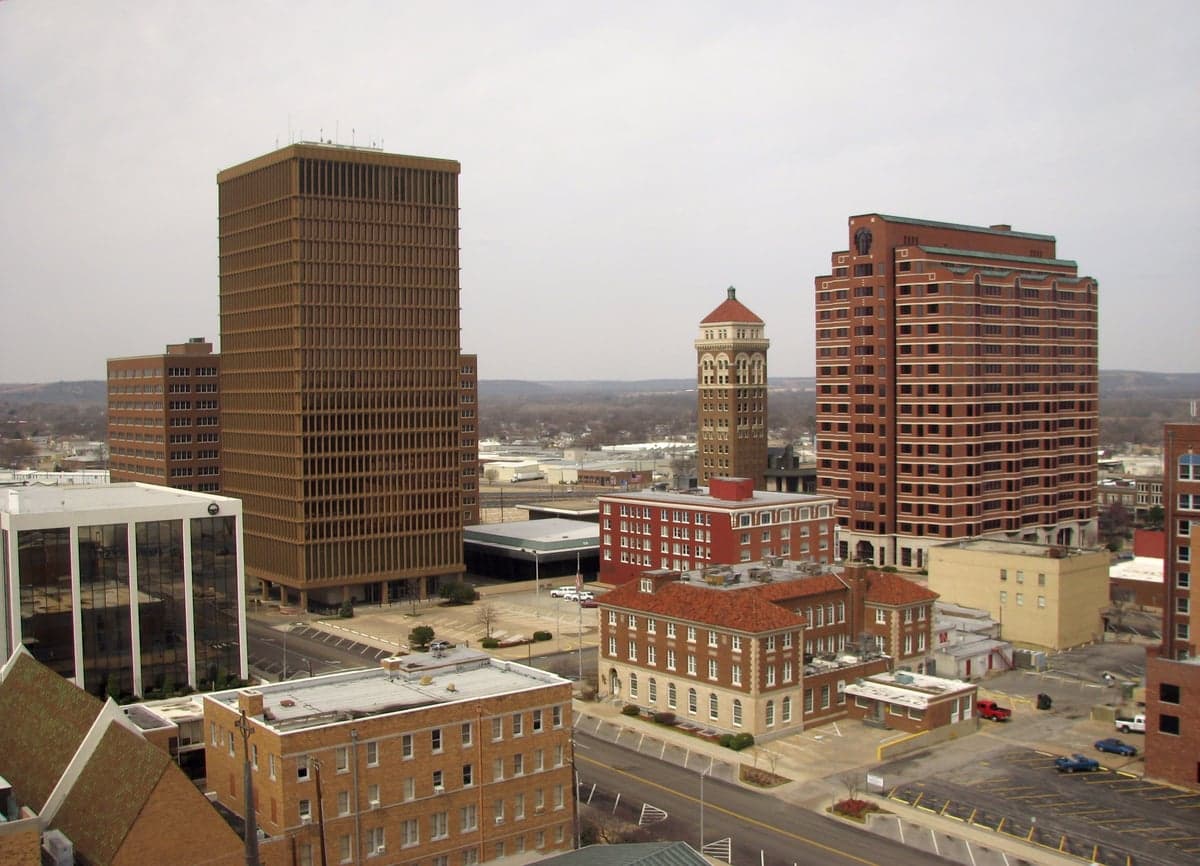
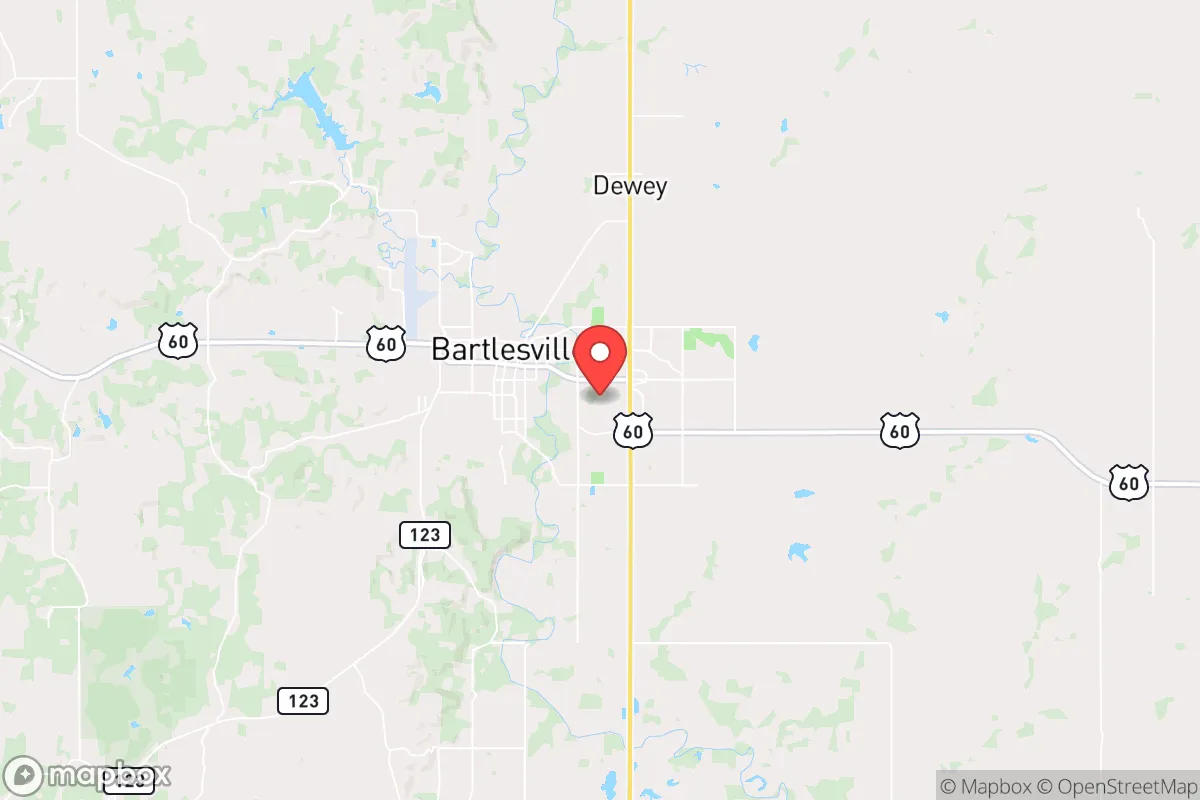
Photo: Wikipedia
Political ClimatePolitical Climate in Bartlesville, OK
District shown is the primary district for this city’s centroid. Cities may span multiple districts.
Local Political AnalysisPolitical Analysis of Bartlesville, OK
Bartlesville is about as rock-ribbed conservative as it gets in Oklahoma, and that's saying something for a state that hasn't gone blue in a presidential race since 1964. The Cook PVI here is a solid R+28, meaning the district votes nearly thirty points more Republican than the national average. That's not just a number—it's a way of life. You see it in the local school board meetings, the church parking lots full on Sunday, and the way folks around here still wave at each other on the street. But I've been here long enough to notice the winds shifting, and not always for the better.
How it compares
Drive thirty minutes south to Tulsa, and you're in a different world politically. Tulsa County has been trending purple for years, with pockets of deep blue around downtown and the university areas. Bartlesville, by contrast, is still a place where the local Republican Party headquarters gets more foot traffic than the Democratic one. The surrounding towns—Dewey, Copan, and Nowata—are even more conservative, if you can believe it. But the real contrast is with places like Norman or Oklahoma City, where progressive ideas have started to creep into city council races and school curriculum debates. Here in Bartlesville, we've held the line, but I've seen a few younger families moving in from out of state, and they bring different ideas about taxes, zoning, and what "community" means. It's subtle, but it's there.
What this means for residents
For the most part, it means you can live your life without the government breathing down your neck. The Second Amendment is respected—you can carry without a permit in Oklahoma, and nobody blinks an eye at a gun rack in a pickup truck. Property taxes are low, and the city council tends to stay out of your business unless you're burning leaves after dark. But I'd be lying if I said I wasn't watching the horizon. The push for more "equity" initiatives in schools, the talk of "sustainable development" that often means higher fees and more regulations—these are the early warning signs. If you're moving here from a blue state, you'll find it refreshingly free. But if you're a native like me, you keep an eye on the local elections, because that's where the real fights happen. A single school board seat can change the direction of a generation.
One thing that sets Bartlesville apart is its strong sense of local identity, rooted in the oil and gas industry and the legacy of Frank Phillips. The Phillips 66 company still anchors the economy, and that blue-collar, entrepreneurial spirit means people here are skeptical of big government solutions. You won't find a lot of support for statewide mask mandates or vaccine passports here—folks prefer to make their own choices. The cultural vibe is church suppers, Friday night football, and a general distrust of anyone who tells you they know what's best for your family. That's the Bartlesville I know, and I hope it stays that way. But the only way it does is if people stay engaged and vote like their freedoms depend on it—because they do.

State Political ClimatePolitical Climate in Oklahoma
State Political AnalysisPolitical Environment in the State
Oklahoma has been a reliably red state for decades, but the political climate here is more nuanced than a simple party label suggests. The state leans solidly Republican, with every statewide office held by the GOP and a 65% Trump vote in 2020, but the real story is the growing tension between the deeply conservative rural and suburban base and the increasingly progressive urban cores of Oklahoma City and Tulsa. Over the last 10-20 years, the state has shifted from a moderate, pragmatic conservatism to a more hardline, freedom-focused posture, driven by grassroots activism and a reaction against federal overreach.
Urban vs. rural divide
The political map of Oklahoma is a classic tale of two worlds. The vast rural expanse—places like Enid, Ponca City, and the Panhandle around Guymon—votes overwhelmingly Republican, often by margins of 70-80%. These areas are the engine of the state’s conservative identity, driven by agriculture, oil and gas, and a strong sense of local autonomy. In contrast, the two major metros tell a different story. Oklahoma City is a purple-to-red city, with its suburban rings like Edmond and Yukon voting heavily Republican, while the urban core has trended blue in recent cycles. Tulsa is more polarized: the city itself has a growing progressive movement, especially in districts like House District 98, but the surrounding suburbs—Broken Arrow, Jenks, Bixby—are some of the most reliably conservative areas in the state. The divide is stark: in 2024, Oklahoma County (OKC) voted for Trump by just 8 points, while Tulsa County went +15 for Trump, but rural counties like Texas County (Guymon) hit +70. This urban-rural split is the key to understanding Oklahoma’s politics—the rural vote dominates state-level elections, but the cities are where the cultural and policy battles are fought.
Policy environment
Oklahoma’s policy environment is aggressively conservative, with a strong emphasis on low taxes and limited government. The state has a flat income tax of 4.75% (down from 5% in 2022), and there’s a serious push to eliminate it entirely—a move that would make Oklahoma a true tax-free haven. Property taxes are among the lowest in the nation, thanks to a constitutional cap. On education, the state passed the Oklahoma Parental Choice Tax Credit Act in 2023, which provides up to $7,500 per child for private school or homeschooling expenses—a huge win for school choice advocates. Healthcare is a mixed bag: the state rejected Medicaid expansion until a 2020 ballot initiative forced it through, but the legislature has since added work requirements. Election laws are strict: voter ID is required, and the state passed a 2022 law banning private funding of election administration (a response to Zuckerberg-style grants). The regulatory posture is business-friendly, with no state-level minimum wage above the federal $7.25 and a right-to-work law. However, there’s a growing concern about government overreach in areas like medical marijuana—the state has a robust MMJ program, but the legislature has repeatedly tried to rein it in, including a 2023 bill that banned out-of-state ownership of dispensaries. For a conservative, the policy environment is largely positive, but the constant tinkering from the capitol can feel like a double-edged sword.
Trajectory & freedom
Oklahoma is trending more free in many areas, but not without some worrying backsliding. On the plus side, the state has become a national leader in gun rights: in 2019, it passed constitutional carry (permitless carry), and in 2023, it enacted a law prohibiting state enforcement of federal gun bans. Parental rights have been strengthened with the Parents’ Bill of Rights (2022), which gives parents explicit authority over their children’s education and medical decisions. On medical autonomy, the state has a strong medical marijuana program, but the legislature’s hostility to it—including a 2023 attempt to ban smokable flower—raises red flags about personal freedom. Property rights are solid, with a 2022 law limiting eminent domain for carbon pipelines. The biggest freedom concern is taxation: while the flat tax is low, the state still has one of the highest combined state and local sales tax rates in the nation (around 8.9% in many areas). The push to eliminate the income tax is the key battle—if it passes, Oklahoma would be a true freedom haven; if it stalls, the state risks losing its competitive edge. The trajectory is positive, but it’s a fragile one, dependent on continued conservative governance.
Civil unrest & political movements
Oklahoma has seen its share of political flashpoints, but they’re more localized than national. The most visible movement is the “Okie for Freedom” network, a grassroots coalition that has organized against COVID mandates, school closures, and vaccine passports—these folks were a major force in the 2022 elections, helping to oust several moderate Republicans. On the left, the Tulsa Race Massacre centennial in 2021 sparked a renewed push for racial justice, but it hasn’t translated into major electoral gains. Immigration politics are relatively quiet, but the state passed a 2024 law requiring local law enforcement to cooperate with ICE, and there’s a growing concern about illegal immigration in the Panhandle and southwest Oklahoma. Election integrity has been a hot topic: the 2020 election saw no major fraud, but the legislature passed a 2021 law restricting absentee ballot drop boxes and requiring stricter ID for mail-in voting. The most visible protest in recent memory was the 2022 “Save Our State” rally at the state capitol, where thousands protested federal overreach on energy policy. For a new resident, the political climate is generally calm, but you’ll notice a strong undercurrent of distrust toward the federal government—especially in rural areas.
Projection
Over the next 5-10 years, Oklahoma is likely to become even more conservative, driven by two trends: in-migration from blue states (especially California and Colorado) and the continued exodus of younger, more liberal residents from the urban cores to places like Texas or Colorado. The rural population is aging but remains politically dominant, and the suburbs are growing fast—places like Mustang and Piedmont (outside OKC) are seeing explosive growth, and they vote heavily Republican. The biggest wildcard is the income tax elimination: if it passes, Oklahoma could become a magnet for conservative migrants; if it fails, the state may struggle to compete with Texas and Florida. The urban cores will continue to trend blue, but they won’t flip the state anytime soon—the rural vote is too strong. Expect more fights over education (school choice expansion), energy policy (wind and solar vs. oil and gas), and medical freedom. For someone moving in now, the Oklahoma of 2035 will likely look very similar to today, but with a sharper edge on cultural issues and a stronger emphasis on local control.
For a conservative individual or family, Oklahoma offers a solid foundation: low taxes, strong gun rights, school choice, and a government that generally respects personal liberty. The trade-offs are a slower pace of life, a less diverse economy, and a political climate that can feel insular. If you value freedom from federal overreach and want a state where your vote actually counts, Oklahoma is a safe bet. Just be prepared for the summer heat and the occasional legislative overreach—it’s not perfect, but it’s one of the few places where the trajectory is still pointing in the right direction.
* Values derived from national, state, county, city and local statistics and may differ in a specific area. Last updated: 2026-04-21T08:50:46.000Z
Narrative content on this page is AI-generated and may contain mistakes. Verify any details that matter before acting on them.
ReloMaps may earn a commission from affiliate links at no extra cost to you.

