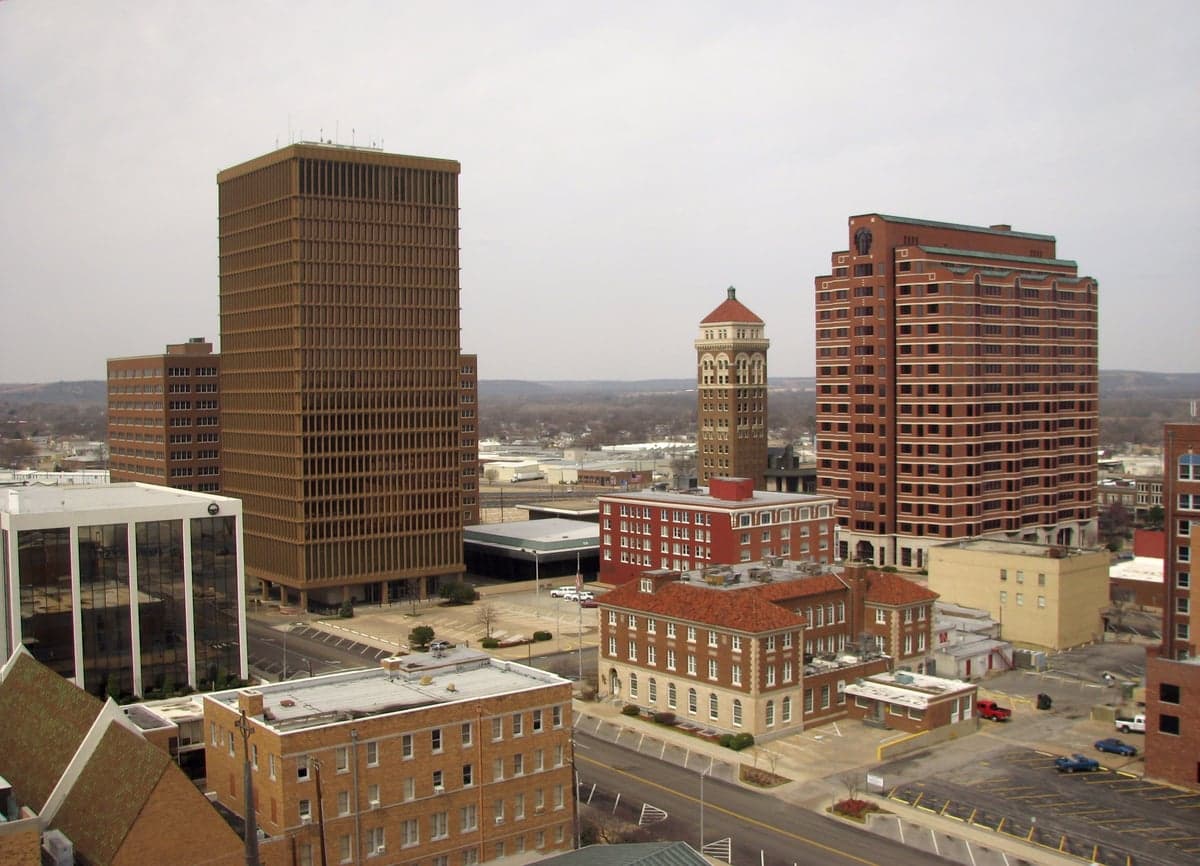
Photo: Wikipedia
Strategic Assessment of Bartlesville, OK
Workable tactical position. Some exposure to population density or targets, but generally defensible in a crisis.
What does the Strategic Assessment tell us?
Our Strategic Assessment grades tactical survivability of an area. Major population centers, military targets, fallout zones, natural disasters, and border exposure all drive risk — lower exposure means a more defensible position in a crisis.
This is heavily inspired by Joel Skousen's Strategic Relocation book. Highly recommended you checkout the book ($)What does this tell us?
Our Strategic Assessment grades tactical survivability of an area. Major population centers, military targets, fallout zones, natural disasters, and border exposure all drive risk — lower exposure means a more defensible position in a crisis.
This is heavily inspired by Joel Skousen's Strategic Relocation book. Highly recommended you checkout the book ($)Strategic Pillars

Key Distances
Regional Safe Places
Below is our recommended "safe zones" in Oklahoma and the surrounding area based on our strategic heuristics. For most people, it's unrealistic to live in a “safe zone” full-time due to work, family or other personal reasons. They tend to be more rural. However, many of these areas are perfect for second homes and retreat properties that double as a vacation home or even a short-term rental.
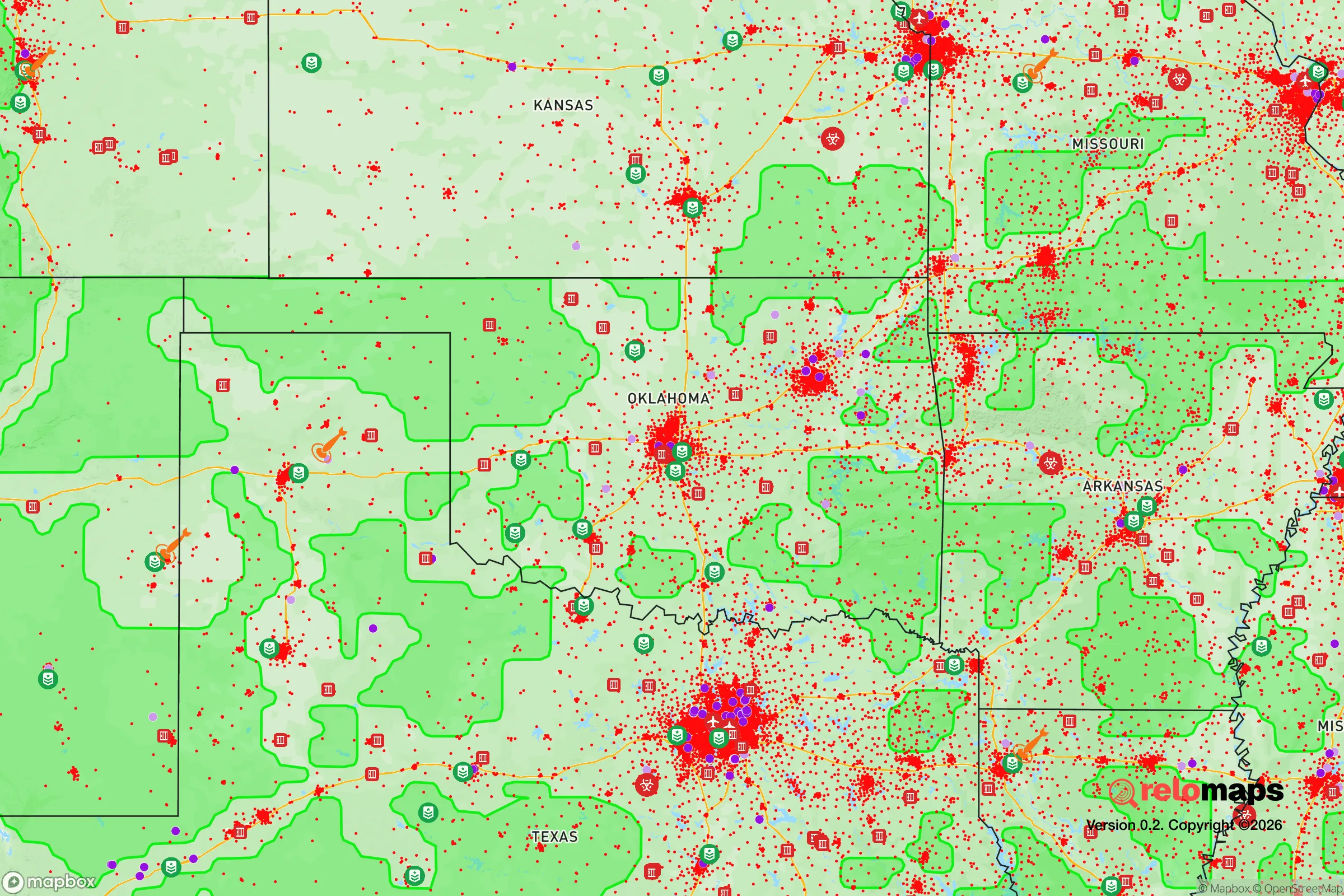
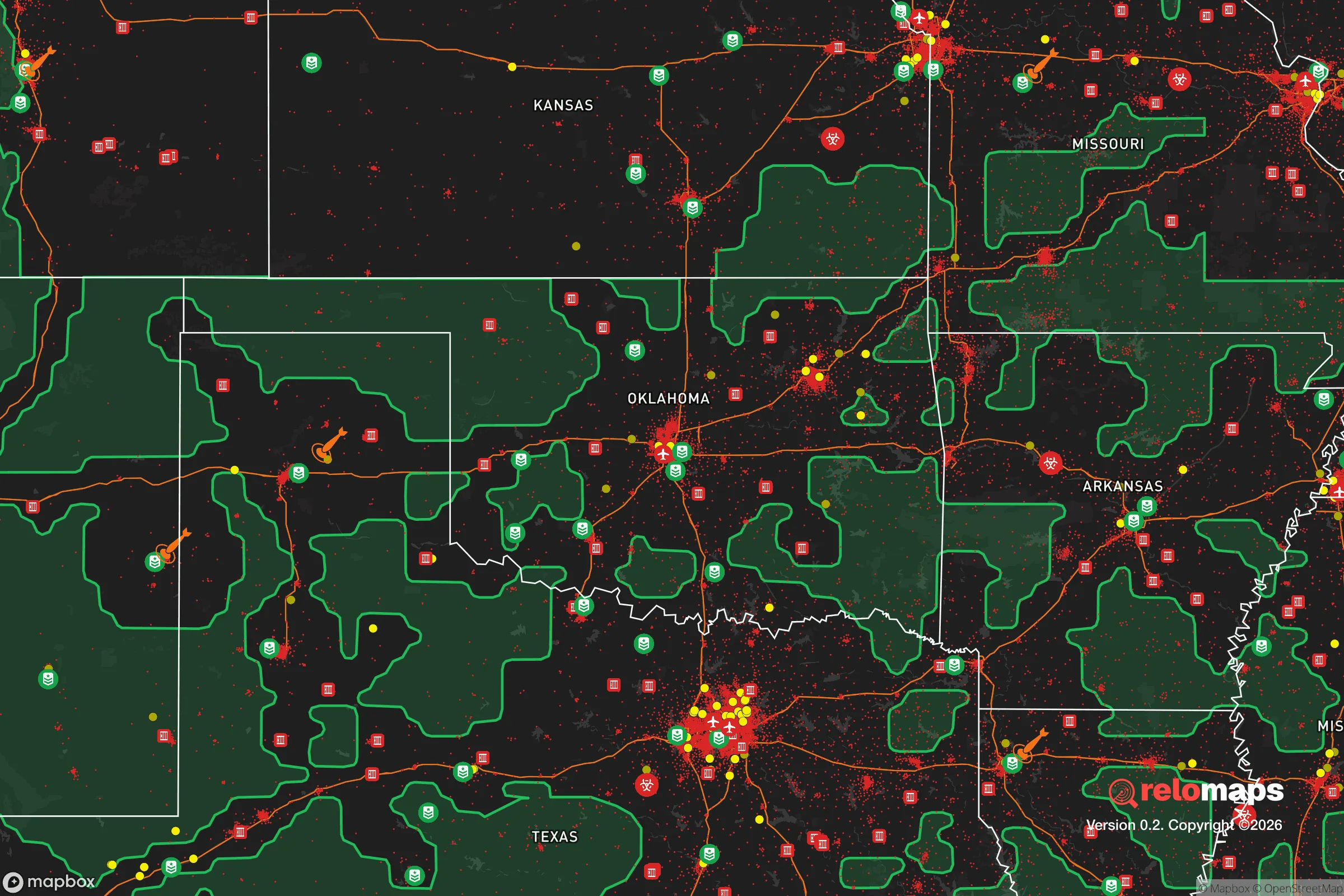


Important Note: For informational purposes only. This does not mean nothing bad ever happens in the green zones. Please use common sense. This is based on public data and modeled with AI. We tried to take a conservative approach but mistakes happen. We update this regularly as new information becomes available.
Solar Generator Recommendations
Backup power matters more here than in safer locations. We've picked three solar generators across budgets and capacity tiers — start with the budget unit if you only need a few essentials, or step up if you want to run a fridge and HVAC for days at a time.

Jackery Portable Power Station Explorer 300
Budget OptionPower on the Go: Weighing only 11 lbs, it's convenient to set up and store with book-sized foldable solar panels

BLUETTI Portable Power Station AC180
Designed for both indoor and outdoor scenarios, AC180 is highly capable as it has a robost capacity and continuous output power.

EF ECOFLOW DELTA Pro Ultra Power Station
Upgraded PickEcoFlow DELTA Pro Ultra is a whole-home energy system designed to grow with your family. Integrated with the Smart Home Panel 2, it scales to meet your evolving energy needs — keeping your home powered, intelligent, and secure through every stage of life.
We earn a commission, at no additional cost to you.
Strategic Assessment Analysis
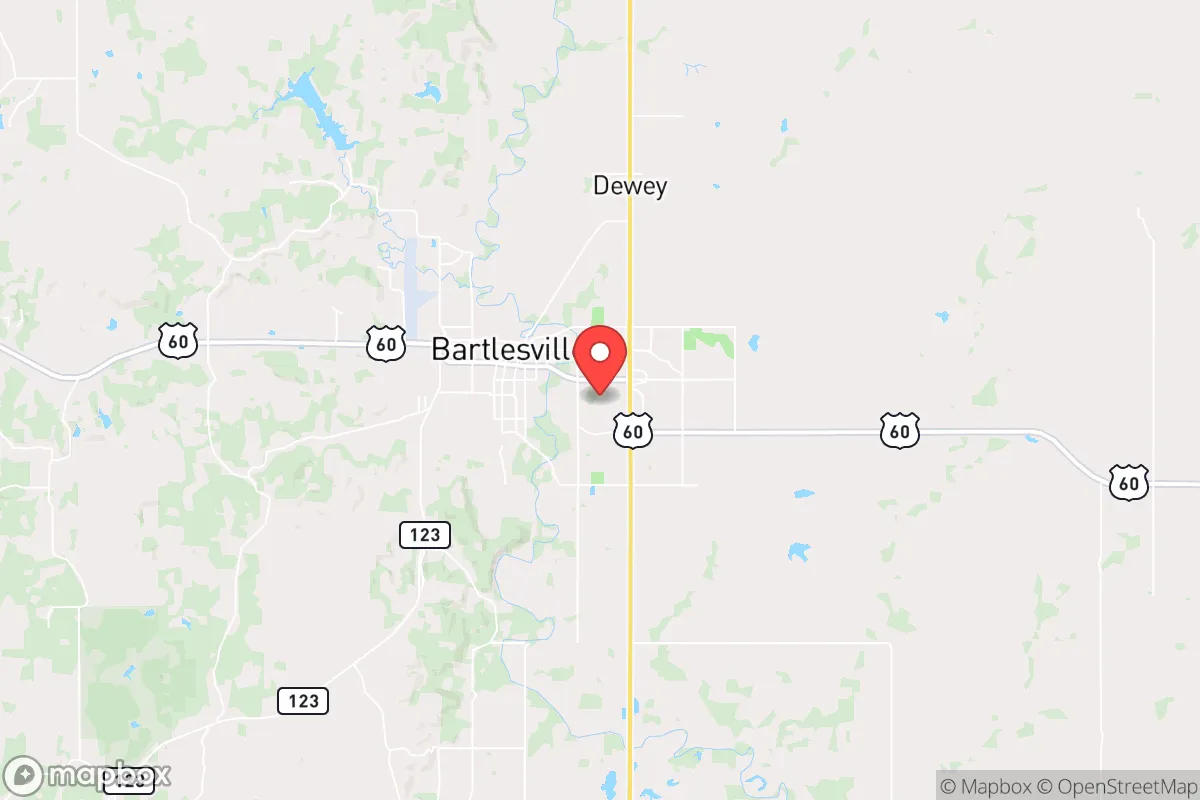
Bartlesville, Oklahoma, offers a compelling strategic position for those prioritizing resilience and self-sufficiency, sitting roughly 45 miles north of Tulsa and 30 miles south of the Kansas line. Its location in the Osage Hills provides a natural buffer from major metropolitan chaos while still granting access to regional supply chains and medical facilities when needed. The city’s population of roughly 36,000, combined with a county-wide density of about 40 people per square mile, means you’re not dealing with the congestion and vulnerability of a major urban center. For a relocator with a prepper mindset, Bartlesville’s key advantage is its blend of industrial infrastructure—rooted in the energy sector—and rural isolation, making it a place where you can quietly build a life without being on anyone’s radar.
Geographic position and natural advantages for long-term security
Bartlesville sits in Washington County, which is part of the Osage Prairie region—rolling hills, limestone bluffs, and ample hardwood forests that offer both cover and resources. The area is not prone to major natural disasters: tornadoes are a risk, as they are across all of Oklahoma, but the hilly terrain reduces the likelihood of direct hits compared to flatter parts of the state. The Caney River runs through town, providing a surface water source that can be tapped with proper filtration, and the nearby Hulah Lake and Oologah Lake offer additional water reserves and fishing opportunities. The region’s limestone bedrock means decent groundwater availability for wells, though you’ll want to test for mineral content. From a defensive standpoint, the Osage Hills provide natural chokepoints and observation points along the few main roads—US-75 and OK-123—that lead into town. This makes it easier to monitor movement and control access if things go sideways. The area’s agricultural history also means there are established networks of small farms and ranches within a 20-mile radius, which could be leveraged for barter or mutual aid in a prolonged crisis.
Risks, exposures, and proximity to fallout-relevant landmarks
The primary strategic concern for Bartlesville is its proximity to Tulsa, a city of roughly 400,000 that sits about 45 minutes south. In a mass casualty event, civil unrest, or grid-down scenario, Tulsa would likely become a source of refugees, looters, and resource competition. The Phillips 66 refinery in Bartlesville—one of the largest in the region—is both an asset and a liability. It provides local fuel production and jobs, but it’s also a potential target for sabotage, protest, or accidental disaster. The city’s industrial base, including ConocoPhillips’ former headquarters and several chemical plants, means there’s a non-zero risk of hazardous material incidents. On the plus side, Bartlesville is far from any major military installations, nuclear power plants, or strategic bombing targets. The nearest significant fallout risk would be from a strike on Tulsa’s infrastructure or the Keystone Pipeline system, but prevailing winds typically blow from the south-southwest, which would carry fallout away from Bartlesville in most scenarios. The area’s distance from the I-35 corridor (the main north-south route through Oklahoma) also reduces the likelihood of being caught in mass evacuation traffic or refugee flows from the south.
Practical resilience for a relocator: food, water, energy, and defensibility
For a relocator looking to establish a sustainable homestead, Bartlesville offers solid fundamentals. The growing season runs from April to October, with average rainfall around 40 inches per year—enough for dryland farming of corn, beans, squash, and hardy vegetables. Soil quality varies, with clay-heavy patches near the river and loamier ground on the hillsides, but raised beds and contour farming can mitigate this. Local farmers’ markets and co-ops exist, but you’ll want to build relationships early—prepper networks are tight-knit here, and trust is earned slowly. Water is the biggest variable: municipal supply comes from the Caney River and Hulah Lake, but in a prolonged grid-down event, those systems could fail. A well is the gold standard, and drilling costs in the area run $15–$25 per foot, with typical depths of 200–400 feet. Solar potential is good, with about 220 sunny days per year, and the state offers net metering for grid-tied systems. For off-grid energy, wind is less reliable here than in western Oklahoma, but small-scale hydro on the Caney River is possible with the right permits. Defensibility is moderate: the town’s layout is a mix of older neighborhoods with narrow streets and newer subdivisions with cul-de-sacs, which can be bottlenecked. The surrounding countryside offers better options—look for properties with a single access road, good sightlines, and natural barriers like creeks or ridges. The local sheriff’s office is professional but small, so in a crisis, you’re largely on your own. Gun laws in Oklahoma are favorable: constitutional carry is in effect, and there are no state-level magazine or firearm restrictions, which is a plus for those building a serious armory.
Overall, Bartlesville presents a balanced strategic picture for the conservative prepper: it’s not a fortress, but it’s not a deathtrap either. The city’s energy infrastructure and industrial base give it economic staying power that many small towns lack, while its rural setting and low population density reduce the chaos factor. The main vulnerabilities are its proximity to Tulsa and the refinery, but these are manageable with good planning—maintain a low profile, stockpile supplies for at least 90 days, and build a network of trusted locals before things get hot. If you’re looking for a place that’s off the beaten path but not completely disconnected from modern amenities, Bartlesville is a solid candidate for a long-term relocation strategy focused on resilience and self-reliance.

* Values derived from national, state, county, city and local statistics and may differ in a specific area. Last updated: 2026-04-21T08:50:46.000Z
Narrative content on this page is AI-generated and may contain mistakes. Verify any details that matter before acting on them.
ReloMaps may earn a commission from affiliate links at no extra cost to you.

