Photo: Wikipedia
Demographics of Auburn, CA
Affluence Level in Auburn, CA
An upper-middle-class area. Household wealth, education levels, and homeownership run ahead of national benchmarks.
People of Auburn, CA
The people of Auburn, California today form a predominantly white (73.8%) community of 13,758 residents, characterized by a higher-than-average college attainment rate of 38.2% and a notably low foreign-born population of just 6.0%. The city retains a distinctly historic, small-town character, with a strong sense of local identity rooted in the Gold Rush era and a demographic profile that is slowly diversifying, primarily through a growing Hispanic population (14.7%) and small but present East/Southeast Asian (2.0%) and Indian subcontinent (0.3%) communities. For a relocating family or individual, Auburn offers a stable, established population with a conservative-leaning cultural foundation, where newcomers are often drawn by the area's safety, outdoor recreation, and proximity to Sacramento without the urban density.
How the city was settled and grew
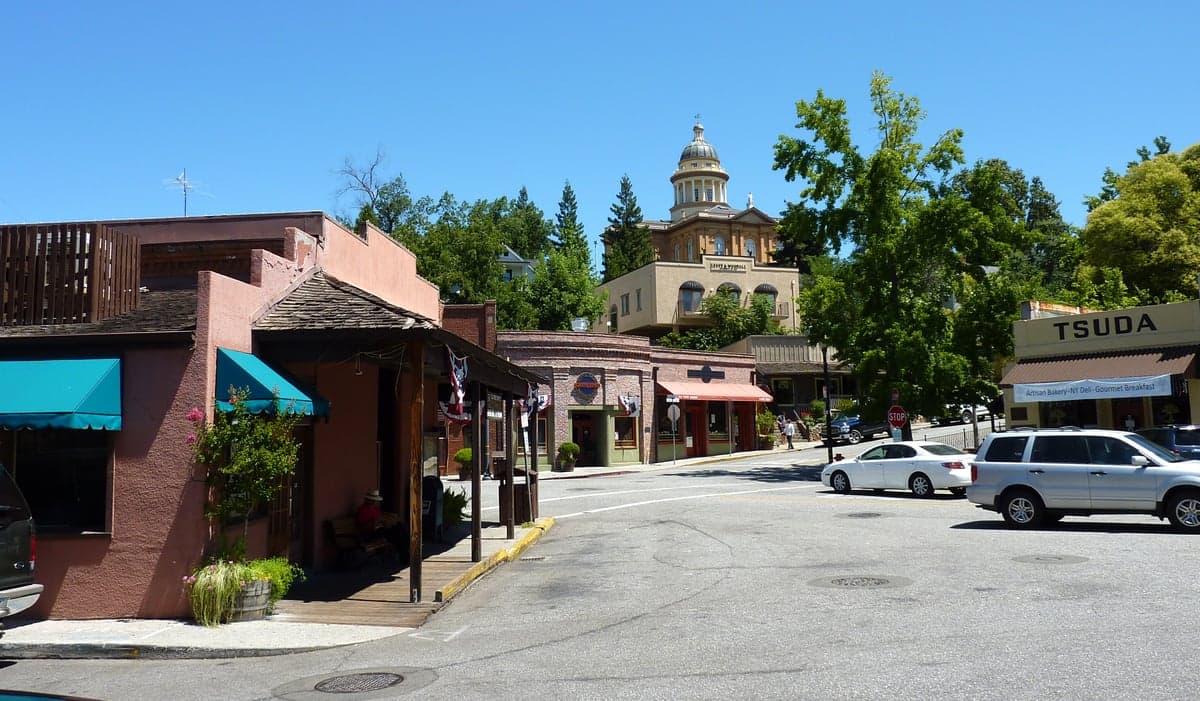
Auburn's human history begins with the Nisenan Maidu people, who inhabited the American River canyon and foothills for centuries before European contact. The city's modern population story starts with the 1848 California Gold Rush, which drew a massive, overwhelmingly male wave of Anglo-American and European miners to the Sierra Nevada foothills. The discovery of gold at nearby Woodcreek and the establishment of the Auburn Ravine as a rich mining district led to the rapid founding of the town in 1849. The original settlement, now known as Old Town Auburn, was built by these early miners and merchants, with its historic brick buildings and narrow streets still forming the city's core. A second significant wave arrived with the completion of the Central Pacific Railroad through Auburn in 1865, which transformed the town into a supply and transportation hub. This brought a more settled population of railroad workers, shopkeepers, and farmers, many of whom built homes in the Downtown Auburn and Railroad Hill neighborhoods, areas that still contain Victorian-era houses from this period. The Chinese immigrant population, who had been instrumental in building the railroad, established a small but vital community in Auburn, though discriminatory laws and social pressures limited their numbers and concentrated them in specific areas near the rail yards. By the early 20th century, Auburn's population had stabilized as a regional agricultural and commercial center, with a largely white, native-born population of Northern and Western European descent.
Modern era (post-1965)
The post-1965 era brought gradual demographic change to Auburn, driven less by international immigration and more by domestic in-migration from California's coastal metropolitan areas. The construction of Interstate 80 through the city in the 1960s and 1970s made Auburn a viable commuter town for Sacramento and the Bay Area, attracting families and professionals seeking affordable housing and a slower pace of life. This wave settled primarily in newer subdivisions like North Auburn and Lake of the Pines (a gated community just outside city limits), which offered larger lots and modern homes compared to the older, denser neighborhoods. The Hispanic population began to grow more noticeably during this period, rising from a negligible share to the current 14.7%, with families often settling in the North Auburn area and along the Highway 49 corridor, drawn by work in construction, agriculture, and service industries. The East/Southeast Asian population, now at 2.0%, includes families who moved from the Bay Area and Sacramento for professional opportunities or retirement, with a small concentration in the Lake of the Pines area. The Indian subcontinent population (0.3%) remains very small, typically professionals in healthcare or technology who commute to Sacramento or Roseville. The Black population (0.7%) has remained consistently low, reflecting Auburn's historical demographics and the broader pattern of racial segregation in Placer County. Overall, the city's foreign-born share (6.0%) is well below the California average of 27%, indicating that Auburn's population growth has been overwhelmingly driven by domestic migration rather than international immigration.
The future
Auburn's population is projected to grow slowly, with the city's built-out geography and strict zoning limiting large-scale new development. The population is becoming slightly more diverse, primarily through the continued growth of the Hispanic community, which is expected to rise toward 18-20% over the next decade, and a modest increase in East/Southeast Asian residents as remote work allows more professionals to relocate from the Bay Area. New residential construction is concentrated in infill projects and a few planned communities on the city's periphery, such as the Clover Valley area, which is attracting younger families and some retirees. The city's cultural identity is likely to remain predominantly white and conservative, but with a growing Hispanic influence visible in local businesses, churches, and community events. For a relocating family or individual, Auburn offers a stable, safe, and increasingly diverse community where the population is aging slightly but remains family-oriented, with a strong emphasis on outdoor recreation, local history, and civic engagement.
For someone moving in now, Auburn is becoming a more balanced community—less a Gold Rush relic and more a modern foothills hub—where the population is slowly diversifying while retaining its core character as a safe, educated, and politically conservative small city with deep historical roots.

* Values derived from national, state, county, city and local statistics and may differ in a specific area. Last updated: 2026-11-21T22:14:00.000Z
Narrative content on this page is AI-generated and may contain mistakes. Verify any details that matter before acting on them.
ReloMaps may earn a commission from affiliate links at no extra cost to you.

