 Popular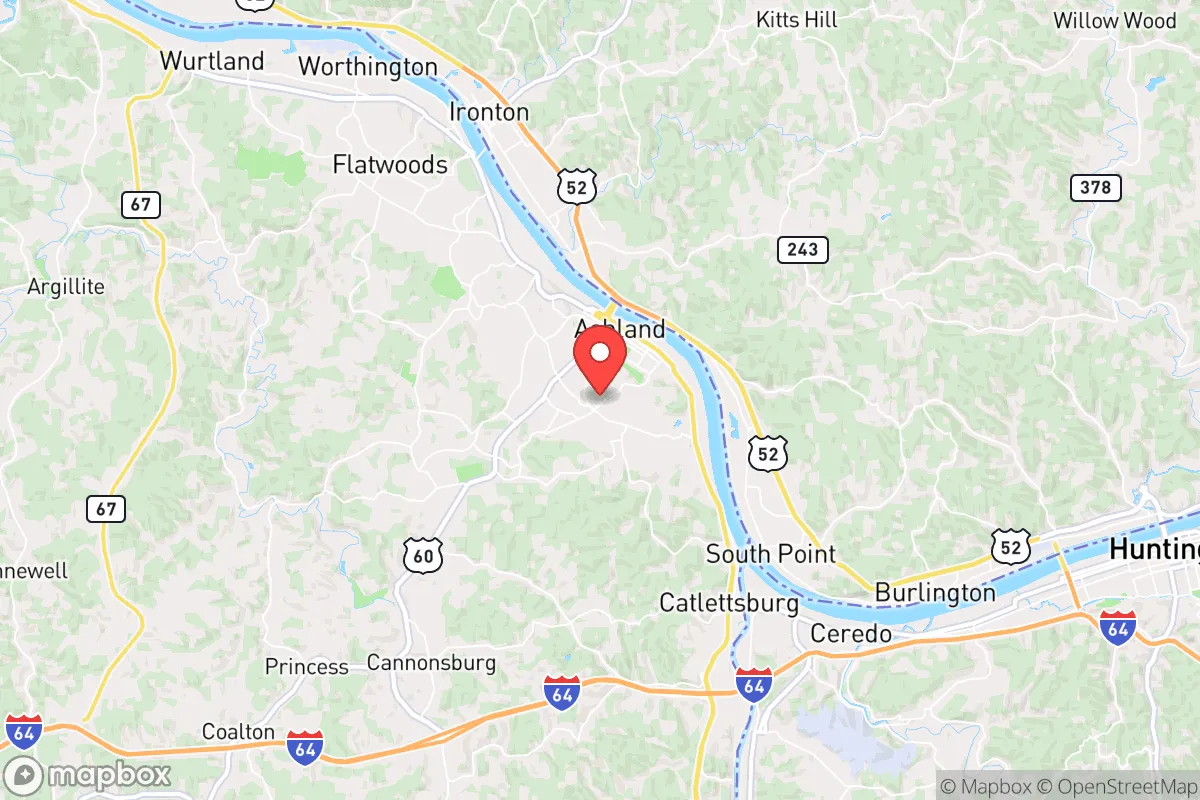

Photo: Wikipedia
Political ClimatePolitical Climate in Ashland, KY
District shown is the primary district for this city’s centroid. Cities may span multiple districts.
Local Political AnalysisPolitical Analysis of Ashland, KY
Ashland, Kentucky, is about as solidly conservative as it gets in the Bluegrass State, and that’s not changing anytime soon. With a Cook Partisan Voting Index of R+32, this town votes Republican by a wider margin than almost any other place in the country — think of it as the political opposite of a deep-blue city like San Francisco. The local lean is deeply rooted in traditional values, a strong sense of personal responsibility, and a healthy skepticism of government overreach. If you’re looking for a place where folks still believe in minding their own business and keeping the government out of your backyard, Ashland is it.
How it compares
Drive 20 minutes west to Huntington, West Virginia, and you’ll find a similar conservative tilt, though not quite as pronounced — Huntington’s Cook PVI is around R+20, reflecting a more mixed industrial base. Head east about an hour to Morehead, Kentucky, and the political vibe shifts noticeably; Morehead is a college town with a younger, more progressive-leaning population, and it votes more moderately, sometimes even flirting with Democratic candidates in local races. Ashland, by contrast, is a working-class community that has watched the federal government’s footprint grow over the decades — from EPA coal regulations that hammered the local economy to COVID-era mandates that felt like a direct assault on personal choice. That history has only hardened the resolve here. People remember when the government told businesses to close and churches to stay empty, and they haven’t forgotten. The contrast with Lexington, two hours east, is stark — Lexington’s Cook PVI is D+8, a world away in both politics and culture.
What this means for residents
For the people who live here, Ashland’s political climate means a daily life that’s largely free from the kind of progressive policy experiments you see in bigger cities. There’s no talk of defunding the police, no push for radical zoning changes that disrupt neighborhoods, and no pressure to adopt woke curriculum in the schools. The local government tends to stay out of the way — property taxes are low, business regulations are minimal, and the Second Amendment is respected without a lot of hoop-jumping. That said, there’s a growing concern among longtime residents about the direction of the state and country. The opioid crisis hit this region hard, and while the community has rallied, there’s a sense that outside forces — whether it’s federal drug policy or state-level mandates on things like vaccine passports — are always trying to chip away at local control. The near-term outlook is stable, but the long-term worry is that as the national Democratic Party pushes harder on issues like gun control and energy restrictions, Ashland could find itself fighting to preserve the way of life that’s made it a good place to raise a family.
Culturally, Ashland stands apart from its neighbors in a few key ways. Unlike the college-town vibe of Morehead or the transient feel of Huntington, Ashland has a deep sense of permanence — families have been here for generations, and that continuity breeds a certain resistance to change. You won’t find many pride flags flying downtown, and the local churches are still the social backbone of the community. Policy-wise, the city has resisted the kind of “sanctuary city” nonsense you see on the coasts, and there’s a quiet pride in that. The biggest distinction, though, is the attitude toward personal freedom: here, the default assumption is that you should be left alone to live your life, work your job, and raise your kids without a bureaucrat telling you how to do it. That’s the Ashland way, and it’s not going anywhere — at least not without a fight.

State Political ClimatePolitical Climate in Kentucky
State Political AnalysisPolitical Environment in the State
Kentucky has been a reliably red state for decades, but it’s not the deep-red monolith outsiders often assume. The state leans Republican by about 15-20 points in presidential elections, with Donald Trump winning by 26 points in 2020 and 30 points in 2024. However, that top-line number masks a complex picture: the state has been shifting rightward in rural areas and exurbs while Louisville and Lexington have moved sharply left, creating a widening urban-rural chasm. Over the past 20 years, the GOP has consolidated control of the state legislature, governor’s mansion (with a brief Democratic interruption under Andy Beshear), and all but one congressional seat. The real story is that Kentucky’s conservative majority is growing more culturally and economically conservative, not moderating.
Urban vs. rural divide
The political map of Kentucky is a study in contrasts. Louisville (Jefferson County) and Lexington (Fayette County) are the two blue anchors, each voting Democratic by 15-20 points in recent cycles. These metros drive the state’s progressive energy, with Louisville’s urban core and Lexington’s university population pushing left on social issues. But drive 20 minutes outside either city, and you hit deep-red territory. The suburbs of Louisville—places like Shelbyville, Mount Washington, and La Grange—have been flipping Republican as families flee the city. Meanwhile, the eastern coal fields (Pikeville, Hazard, Prestonsburg) are among the most Republican areas in the nation, often voting 80%+ GOP. The western part of the state, including Owensboro and Paducah, leans red but with a more moderate, old-school Southern Democrat streak that’s fading. The I-75 corridor from Lexington south to Richmond and London is a solid conservative stronghold. The key takeaway: if you’re moving to Kentucky, your political experience will depend almost entirely on whether you land in a blue city, a red suburb, or a deep-red rural county.
Policy environment
Kentucky’s policy environment is broadly conservative, but with some notable wrinkles. The state has a flat income tax that’s been cut from 5% to 4% in recent years, with a path to elimination by 2029 if revenue targets are met. Property taxes are low, and there’s no tax on Social Security benefits—a big draw for retirees. The regulatory climate is business-friendly, with right-to-work laws and tort reform in place. On education, the state passed a school choice program in 2022 (HB 563) that created education opportunity accounts, though it was struck down by the state Supreme Court in 2023 on procedural grounds. The legislature is expected to try again. Healthcare is a mixed bag: Kentucky expanded Medicaid under the ACA, but the state has imposed work requirements (currently tied up in court). Election laws tightened in 2021 with SB 1, which shortened early voting windows and added voter ID requirements. The state also passed a near-total abortion ban in 2019 (trigger law) with no exceptions for rape or incest, which remains in effect. For a conservative family, the policy environment is generally favorable, but the Medicaid expansion and lingering school choice fight show that the state isn’t a pure libertarian paradise.
Trajectory & freedom
On balance, Kentucky is becoming more free in several key areas, but the trajectory is uneven. The biggest win for personal liberty was the 2019 passage of constitutional carry (permitless concealed carry), which went into effect immediately. The state also passed a Second Amendment Sanctuary resolution in 2021, though it’s symbolic. On parental rights, Kentucky passed a 2023 law (SB 150) that bans gender transition procedures for minors, restricts classroom instruction on sexual orientation, and requires schools to notify parents of any changes in a child’s services. This was a major victory for parental authority. On the downside, the state’s medical marijuana program (legalized in 2023) is heavily regulated and won’t be operational until 2025 at the earliest—a slow rollout that frustrates advocates. Property rights are generally strong, with no statewide rent control and limited eminent domain abuse. The biggest freedom concern is the state’s tax burden: while income taxes are falling, the state’s sales tax is 6% and local taxes can push it higher. Overall, Kentucky is trending in a liberty-friendly direction, but the pace is slower than some would like.
Civil unrest & political movements
Kentucky has seen its share of political flashpoints, but nothing approaching the chaos of Portland or Seattle. The 2020 Breonna Taylor protests in Louisville were the most significant, with months of demonstrations, property damage, and a state of emergency. That event radicalized both sides: it energized progressive activism in Louisville while pushing suburban and rural voters further right. The state has seen organized conservative movements around school board meetings, particularly in suburban counties like Oldham and Boone, where parents pushed back against COVID-era mandates and critical race theory. Immigration politics are less heated here than in border states, but there’s a growing concern about illegal immigration in agricultural areas and along I-75. There’s no serious secession or nullification movement, though some rural counties have passed symbolic Second Amendment sanctuary resolutions. Election integrity was a major issue after 2020, with the state GOP pushing for and passing SB 1. Overall, the political temperature is elevated but not boiling—most of the state is calm, with the exception of Louisville’s ongoing tensions.
Projection
Looking ahead 5-10 years, Kentucky is likely to become more Republican and more conservative, not less. The key demographic driver is in-migration: people are moving to Kentucky from blue states like California, Illinois, and New York, drawn by lower taxes and housing costs. These newcomers tend to be conservative-leaning, often fleeing progressive policies in their home states. The urban-rural divide will widen, with Louisville and Lexington becoming more progressive while the rest of the state hardens its red hue. The state’s flat tax will likely be eliminated, making Kentucky even more attractive to retirees and remote workers. The school choice fight will eventually succeed, either through a constitutional amendment or a new legislative approach. The biggest wildcard is the state’s opioid and meth crisis, which could strain budgets and social services. For a conservative family moving in now, expect to find a state that’s increasingly aligned with your values, with a growing economy and a political culture that respects personal freedom—but with the understanding that the blue cities will remain ideological islands.
Bottom line for a new resident: If you’re a conservative looking for a state that respects your rights, keeps taxes low, and lets you live your life without government interference, Kentucky is a solid bet. Just know that if you move to Louisville or Lexington, you’ll be living in a blue bubble where your values may be in the minority. The suburbs and rural areas are where the state’s conservative heart beats strongest. Pick your county carefully, and you’ll find a welcoming community that shares your priorities.
* Values derived from national, state, county, city and local statistics and may differ in a specific area. Last updated: 2026-04-21T09:16:49.000Z
Narrative content on this page is AI-generated and may contain mistakes. Verify any details that matter before acting on them.
ReloMaps may earn a commission from affiliate links at no extra cost to you.

