
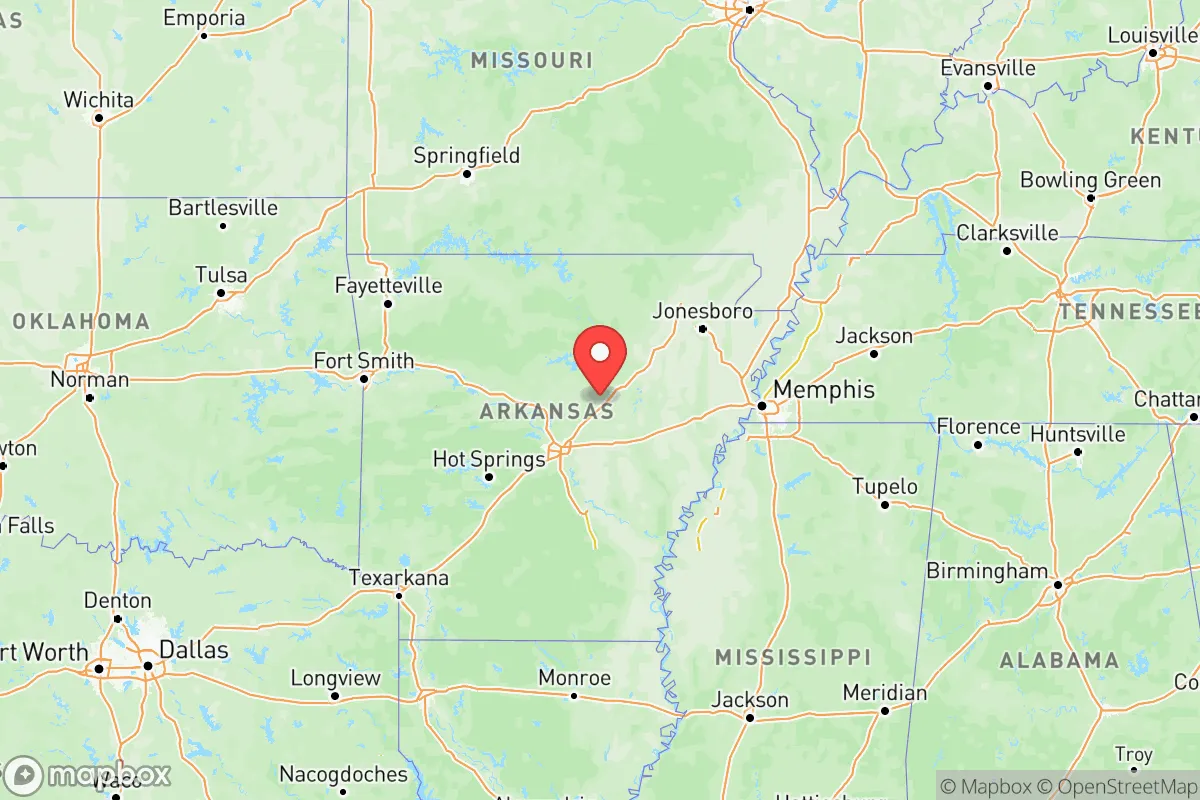
Photo: Wikipedia
Strategic Assessment of Arkansas
Workable tactical position. Some exposure to population density or targets, but generally defensible in a crisis.
What does the Strategic Assessment tell us?
Our Strategic Assessment grades tactical survivability of an area. Major population centers, military targets, fallout zones, natural disasters, and border exposure all drive risk — lower exposure means a more defensible position in a crisis.
This is heavily inspired by Joel Skousen's Strategic Relocation book. Highly recommended you checkout the book ($)What does this tell us?
Our Strategic Assessment grades tactical survivability of an area. Major population centers, military targets, fallout zones, natural disasters, and border exposure all drive risk — lower exposure means a more defensible position in a crisis.
This is heavily inspired by Joel Skousen's Strategic Relocation book. Highly recommended you checkout the book ($)Regional Safe Places
Below is our recommended "safe zones" in Arkansas and the surrounding area based on our strategic heuristics. For most people, it's unrealistic to live in a “safe zone” full-time due to work, family or other personal reasons. They tend to be more rural. However, many of these areas are perfect for second homes and retreat properties that double as a vacation home or even a short-term rental.
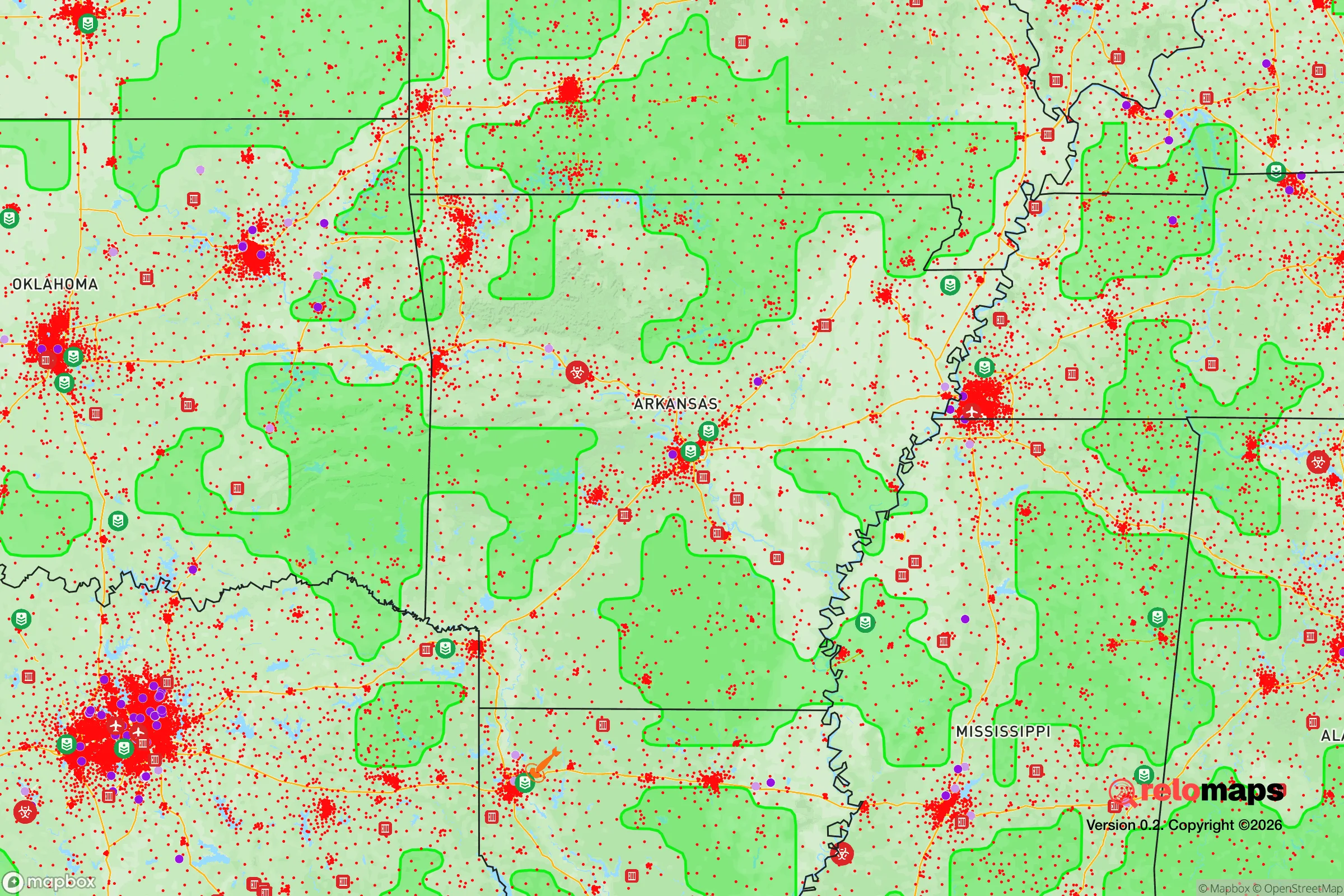
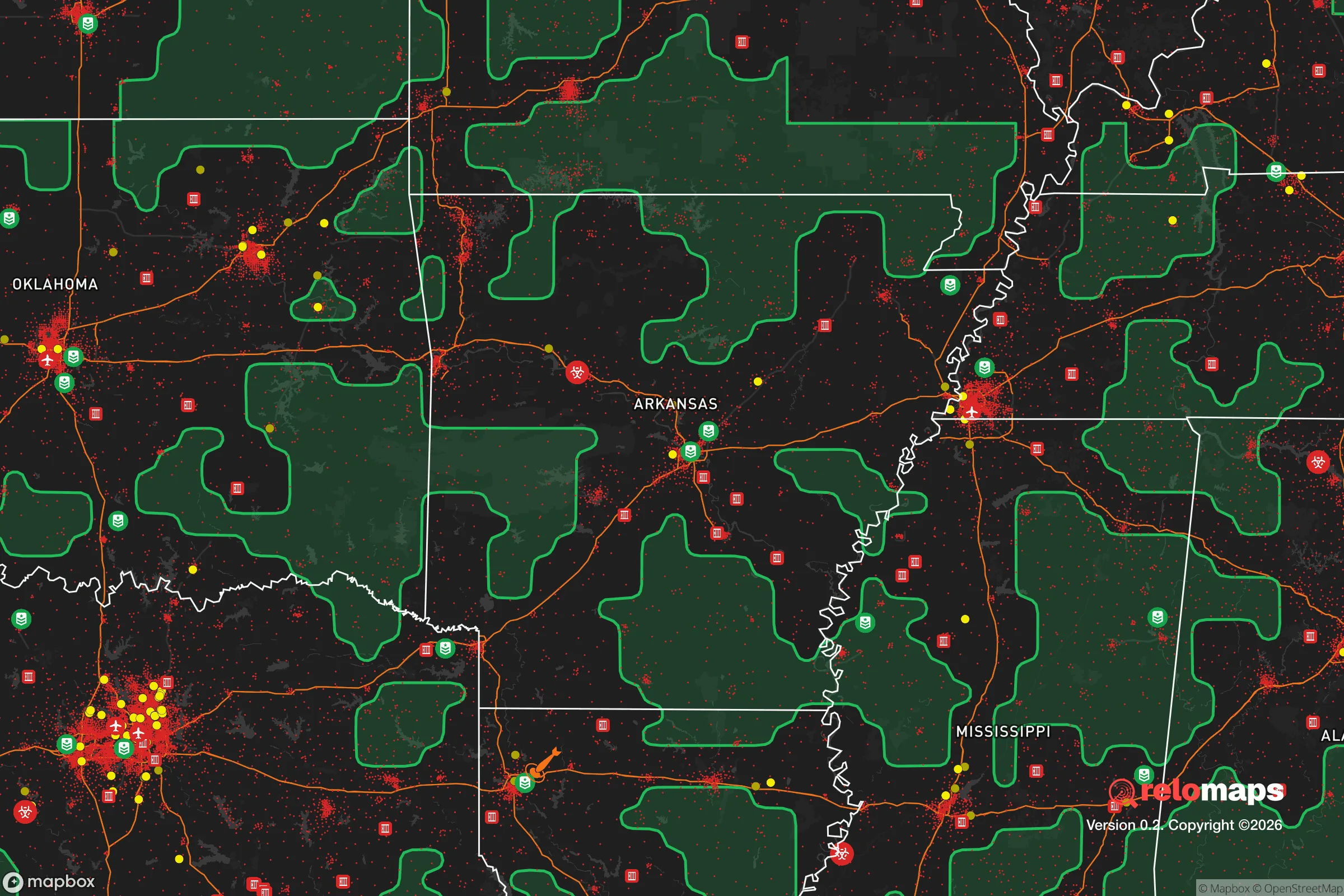


Important Note: For informational purposes only. This does not mean nothing bad ever happens in the green zones. Please use common sense. This is based on public data and modeled with AI. We tried to take a conservative approach but mistakes happen. We update this regularly as new information becomes available.
Solar Generator Recommendations
Backup power matters more here than in safer locations. We've picked three solar generators across budgets and capacity tiers — start with the budget unit if you only need a few essentials, or step up if you want to run a fridge and HVAC for days at a time.

Jackery Portable Power Station Explorer 300
Budget OptionPower on the Go: Weighing only 11 lbs, it's convenient to set up and store with book-sized foldable solar panels

BLUETTI Portable Power Station AC180
Designed for both indoor and outdoor scenarios, AC180 is highly capable as it has a robost capacity and continuous output power.

EF ECOFLOW DELTA Pro Ultra Power Station
Upgraded PickEcoFlow DELTA Pro Ultra is a whole-home energy system designed to grow with your family. Integrated with the Smart Home Panel 2, it scales to meet your evolving energy needs — keeping your home powered, intelligent, and secure through every stage of life.
We earn a commission, at no additional cost to you.
Strategic Assessment Analysis
Arkansas offers a compelling mix of geographic isolation, resource abundance, and low population density that makes it a serious contender for those prioritizing long-term resilience and self-sufficiency. While not immune to national trends, the state’s position in the Ozark and Ouachita mountain ranges, combined with its distance from major coastal targets and primary industrial corridors, provides a natural buffer against the cascading effects of civil unrest, supply chain collapse, or mass casualty events. For a conservative-leaning relocator—whether a single individual or a family—Arkansas represents a strategic fallback zone where the fundamentals of survival are more accessible than in most of the country.
Geographic position and natural advantages for strategic relocation
Arkansas sits in a sweet spot: far enough from the East and West Coast population centers to avoid the immediate fallout of a coastal disaster, yet close enough to the central U.S. food and energy belt to maintain supply links. The state is bordered by Missouri to the north, Tennessee and Mississippi to the east, Louisiana to the south, and Oklahoma and Texas to the west. This positioning places it outside the blast radius of major strategic targets like Fort Hood (Texas), the Houston refinery corridor, or the Memphis transportation hub, while still being within a day’s drive of those areas for pre-event supply runs. The Ozark and Ouachita Mountains provide rugged terrain that naturally limits large-scale movement, making it harder for roving groups or military convoys to sweep through. The Arkansas River Valley cuts through the center, offering fertile bottomland for agriculture, while the Boston Mountains in the northwest offer elevation and defensible ridgelines. Key towns like Fayetteville, Fort Smith, and Hot Springs serve as regional hubs, but the real strategic value lies in the rural counties—Newton County, Stone County, and Montgomery County—where population density drops below 20 people per square mile. The state’s lack of a major deepwater port or international airport also reduces its attractiveness as a target for foreign adversaries or domestic sabotage.
Risks, exposures, and proximity to fallout-relevant landmarks
No location is without risk, and Arkansas has its share of vulnerabilities. The state is home to the Arkansas Nuclear One power plant near Russellville, a potential target for sabotage or a source of radiological release in a crisis. The Pine Bluff Arsenal, a U.S. Army chemical weapons storage and disposal facility, sits about 40 miles southeast of Little Rock and represents a significant hazard if compromised. The Little Rock Air Force Base near Jacksonville is a strategic airlift hub, which could draw attention in a conflict scenario. Interstate 40 and Interstate 30 cut through the state, creating natural corridors for refugee flow from Memphis and Dallas in a collapse scenario—meaning areas within 20 miles of these highways could see heavy traffic and potential conflict. The Mississippi River floodplain in eastern Arkansas is prone to catastrophic flooding, which could disrupt food production and transportation for months. Tornado risk is real, with the state averaging over 30 tornadoes per year, and the I-40 corridor from Fort Smith to Memphis is part of the Dixie Alley. For a relocator, the key is to avoid the eastern flatlands and the immediate vicinity of these landmarks. The safest zones are the Ozark highlands west of the Buffalo National River and the Ouachita National Forest south of Hot Springs, where terrain and distance from infrastructure reduce exposure.
Practical resilience for a relocator: food, water, energy, and defensibility
Arkansas excels in the basics of long-term survival. Water is abundant: the state has over 600,000 acres of lakes and reservoirs, including Beaver Lake near the Missouri border, Lake Ouachita near Hot Springs, and Bull Shoals Lake in the north. These are fed by reliable rainfall—averaging 45 to 55 inches per year—and are far enough from industrial runoff to remain potable with basic filtration. The Ozark aquifer system provides clean groundwater at shallow depths, making well drilling feasible for most rural properties. Food production is strong: Arkansas is the nation’s top rice producer and ranks in the top five for poultry and soybeans. Small-scale farming is viable in the river valleys and mountain hollows, with deer, turkey, and wild hog populations providing protein. The state’s energy grid is less centralized than coastal states, with a mix of hydroelectric dams on the White and Arkansas Rivers, natural gas from the Fayetteville Shale play, and growing solar capacity. For defensibility, the Ozarks offer natural chokepoints: narrow valleys, steep ridges, and dense forest make it difficult for large groups to approach undetected. Rural counties like Newton County have no stoplights and minimal law enforcement presence, meaning communities must be self-reliant—a feature, not a bug, for those prepared to organize. The state’s gun-friendly culture and lack of restrictive firearm laws mean that a well-armed household is the norm, not an outlier. Property prices remain low: a 40-acre parcel with a creek and timber can be had for under $100,000 in the Ozarks, and many counties have no building codes, allowing for off-grid construction without bureaucratic interference.
The overall strategic picture for Arkansas is one of high potential with manageable trade-offs. It is not a fortress—the Pine Bluff Arsenal and nuclear plant are real concerns, and the refugee corridors along I-40 and I-30 require careful property selection. But for a relocator willing to put in the work—digging a well, planting a garden, building a root cellar, and getting to know neighbors—Arkansas offers a rare combination of isolation, resources, and cultural alignment. The state’s political climate is reliably conservative, with a strong Second Amendment culture and local governments that tend to resist federal overreach. In a worst-case scenario, the Ozarks function as a natural redoubt, where small, prepared communities can weather the storm while the coasts burn. For the single individual or family looking to step off the grid without stepping off the continent, Arkansas is a solid bet—just don’t buy land within 30 miles of Russellville or Pine Bluff, and keep a bug-out route to the west open.

Top 10 Cities by Strategic Assessment in Arkansas
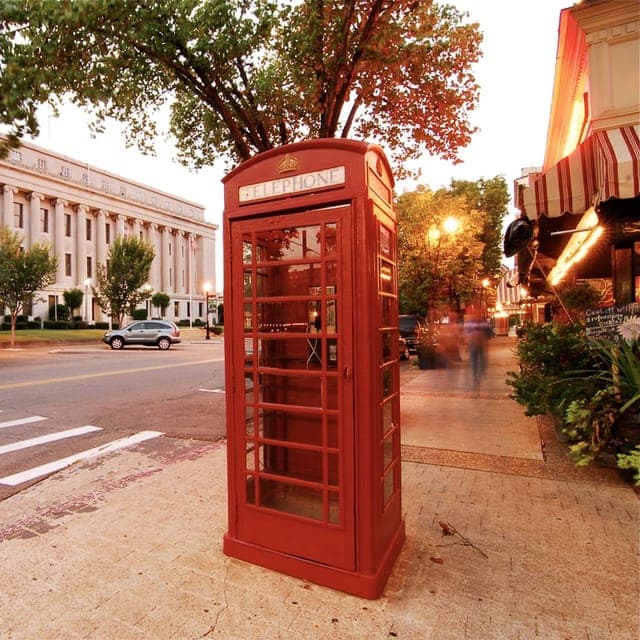
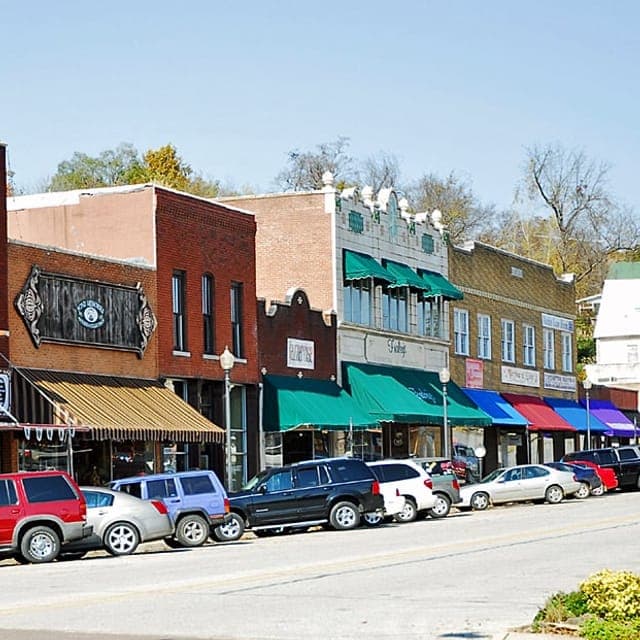
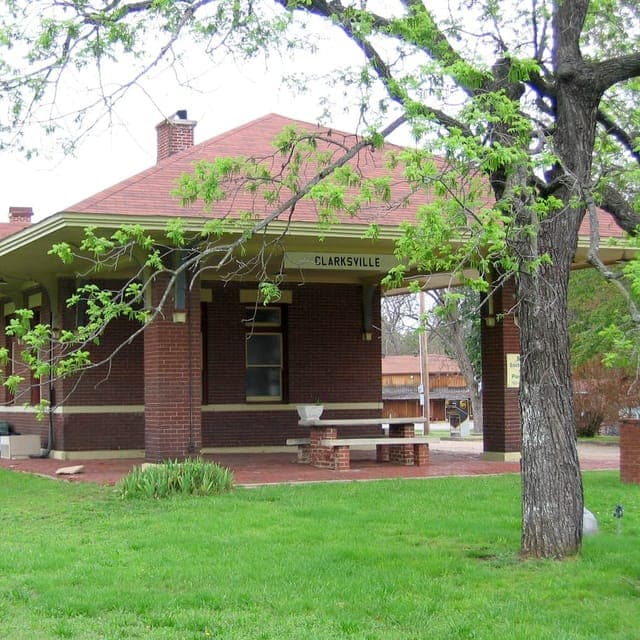
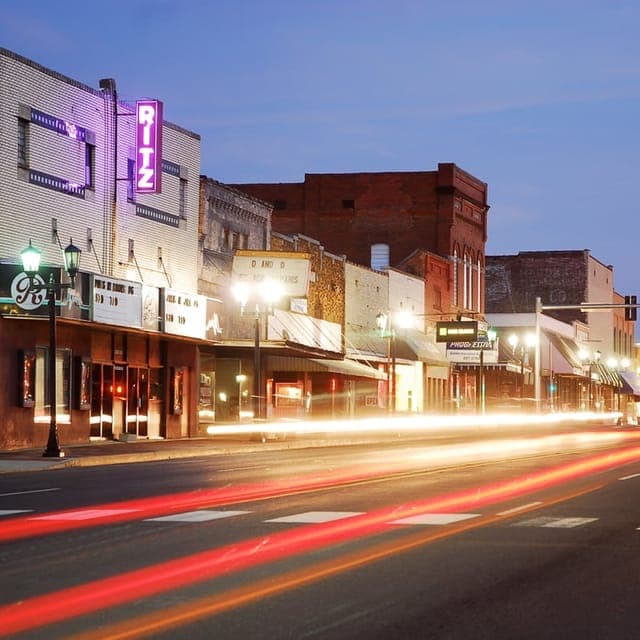
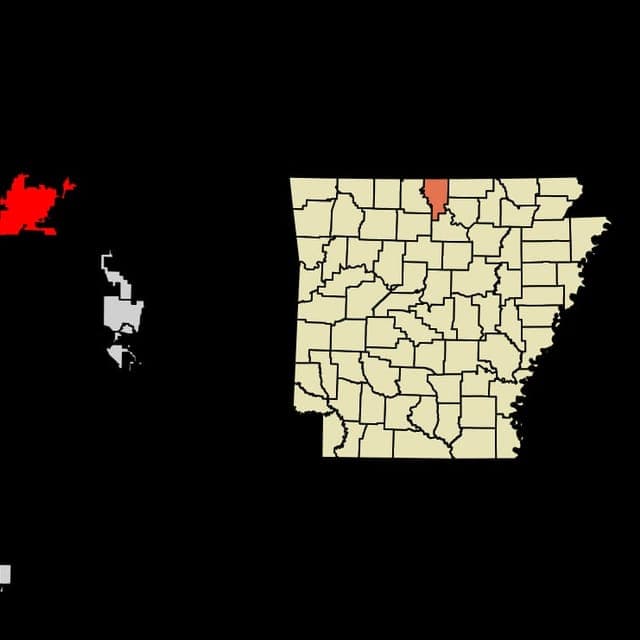
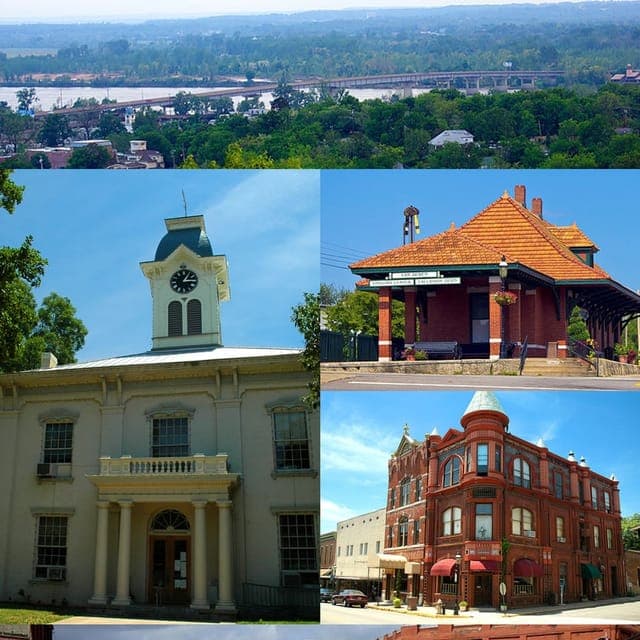
* Values derived from national, state, county, city and local statistics and may differ in a specific area. Last updated: 2026-04-14T06:33:14.000Z
Narrative content on this page is AI-generated and may contain mistakes. Verify any details that matter before acting on them.
ReloMaps may earn a commission from affiliate links at no extra cost to you.

