Photo: Wikipedia
Demographics of Newton County
Affluence Level in Newton County
A below-average socioeconomic profile. Incomes, home values, and educational attainment trail the U.S., with higher poverty and unemployment.
People of Newton County
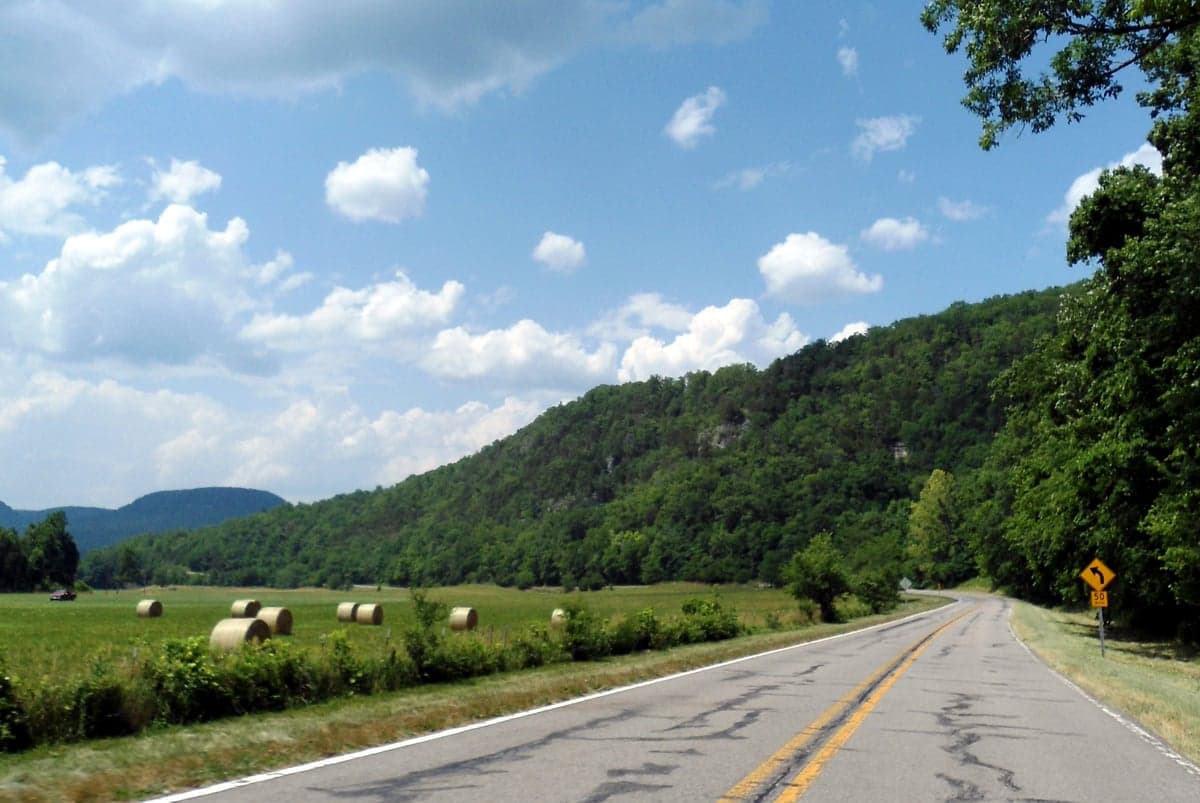
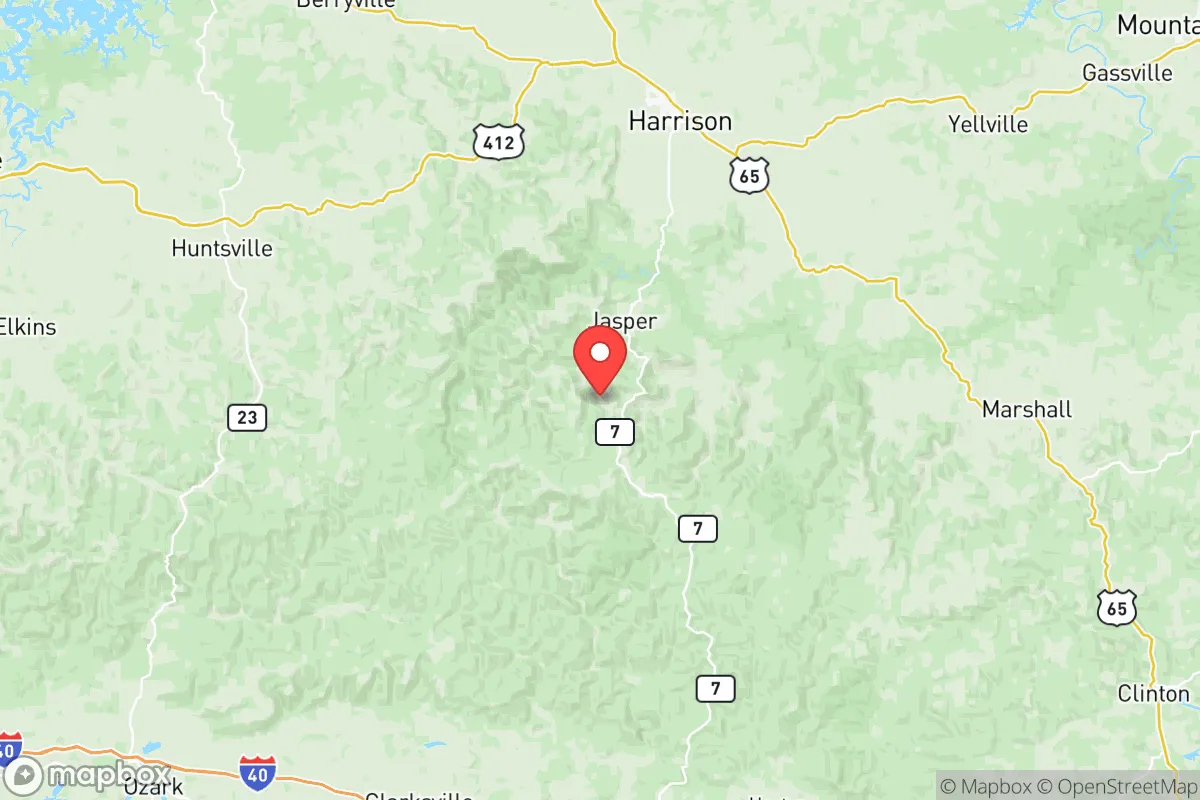
Newton County, Arkansas, is one of the most homogenous and sparsely populated counties in the state, with just 7,175 residents spread across the rugged Boston Mountains. The population is overwhelmingly White (92.6%), with a foreign-born share of just 0.1% and a Hispanic population of 1.7%, making it a demographic outlier in a nation reshaped by post-1965 immigration. This is a place where the human story is one of deep-rooted Appalachian-style settlement, geographic isolation, and a slow, steady outmigration of young people that has left a distinctly older, locally born population in place.
Settlement & growth (pre-1960)
Long before European settlers arrived, the area that is now Newton County was a hunting and transit ground for the Osage and, later, the Cherokee, who were forcibly relocated through the region on the Trail of Tears in the 1830s. There was no permanent Native American village of note within the county's current borders; the steep, rocky terrain was used seasonally rather than as a home base. The first permanent American settlers were largely Scots-Irish and English frontiersmen who arrived in the 1820s and 1830s, pushing up the Buffalo River and its tributaries from the south and east. These families—names like the Villines, the Hinkleys, and the Bolings—came from Tennessee, Kentucky, and the Carolina backcountry, seeking cheap land and isolation rather than commercial opportunity.
The county was formally created in 1842, carved out of Carroll County, and named for a local Cherokee leader, John Newton. Settlement clustered in the few flat, arable valleys: Jasper, the county seat, was established in the 1840s as a trading post and remains the largest community today. Other early hamlets like Boxley, Ponca, and Parthenon grew up around grist mills and small farms, but the steep terrain meant that large-scale plantation agriculture never took hold. The Civil War was devastating and divisive; the county sent men to both the Confederate and Union armies, and the post-war period saw a wave of bushwhacker violence that depopulated some hollows entirely.
Unlike much of Arkansas, Newton County did not experience a cotton boom or a wave of freed-slave settlement after 1865. The Black population today is just 0.2%, and it has never been higher than a fraction of a percent in the county's modern history. Instead, the late 19th and early 20th centuries brought a trickle of hardscrabble homesteaders, many of them second- and third-generation Scots-Irish moving west from the Ozark Plateau. The arrival of the railroad in nearby Harrison (Boone County) in the 1880s created a modest timber boom, and small sawmill towns like Mount Judea and Marble Falls sprang up to process the virgin oak and pine. But the boom was short-lived; by 1920, the timber was largely cut over, and the county settled into a long agricultural depression.
The Dust Bowl and the Great Depression pushed some additional families into the county's remote hollows, but the dominant demographic trend from 1930 through 1960 was outmigration. The population peaked at around 12,000 in 1900 and has declined almost continuously since. The creation of the Buffalo National River in 1972 and the construction of paved highways (notably Arkansas Highway 7) in the 1950s began to shift the economy from subsistence farming toward tourism, but the people themselves remained overwhelmingly the descendants of the original 19th-century settlers.
Modern era (post-1965)
The 1965 Hart-Cellar Act, which transformed U.S. immigration policy, had essentially no direct impact on Newton County. The foreign-born population today is 0.1%—a handful of individuals out of 7,175 residents. There are no immigrant enclaves, no ethnic grocery stores, and no new-American community centers in any of the county's towns. The demographic story of the last sixty years is not one of new arrivals but of selective departure and modest retirement in-migration.
Since the 1970s, the county has seen a slow but steady influx of retirees and remote workers drawn to the scenic beauty of the Buffalo National River and the Ozark National Forest. These newcomers—often from Texas, Oklahoma, and the Midwest—have concentrated in the more accessible areas around Jasper and along the Highway 7 corridor, where vacation cabins and bed-and-breakfasts have replaced family farms. However, this in-migration has not been large enough to offset the loss of young adults. The college-educated share of the population is just 14.3%, well below the state average of roughly 25%, reflecting the fact that most high school graduates leave for college or jobs in Fayetteville, Springdale, or Harrison and do not return.
Suburbanization has largely passed Newton County by. There are no subdivisions, no strip malls, and no commuter belt communities. The county remains 100% rural by U.S. Census definition, and the largest town, Jasper, has a population of just over 400. The Hispanic population, at 1.7%, is the only non-White group showing any measurable presence, and it is concentrated among a small number of families working in the poultry industry in neighboring Washington and Benton counties who have chosen to live in the cheaper, quieter Newton County hollows. The East/Southeast Asian population (0.1%) and the Indian-subcontinent population (0.0%) are statistically negligible, representing at most a handful of individuals, likely connected to the University of Arkansas in Fayetteville or seasonal work.
The future
Demographic projections for Newton County point toward continued shrinkage and continued homogeneity. The county's population has declined by roughly 5% since 2010, and the median age (around 50) is among the highest in Arkansas. The children of current residents are leaving at a high rate, and there is no industry—beyond tourism, healthcare, and education—to pull new families in. The county is not becoming more diverse; if anything, the small Hispanic population is the only segment showing any growth, and it is growing from an extremely small base.
Over the next 10 to 20 years, the county will likely see a continued increase in the share of retirees and second-home owners, particularly around the Buffalo River corridor and the Boxley Valley, which has become a destination for nature photographers and conservation-minded buyers. The cultural identity of the county is likely to remain strongly rooted in its Ozark heritage—hunting, fishing, church attendance, and a fierce independence—even as the economic base shifts further from agriculture to recreation. New residents will find a place where the population is older, whiter, and more locally born than almost anywhere else in the United States.
For someone moving to Newton County today, the bottom line is this: you are not joining a growing, diversifying community but a stable, shrinking, and deeply traditional one. The people you will meet are overwhelmingly the descendants of 19th-century Scots-Irish settlers, and the social fabric is built around church, family, and the land. If you are seeking a low-cost, low-crime, nature-rich environment and are comfortable being a visible newcomer in a place where everyone knows everyone, the county offers a genuine, if isolated, slice of the Ozarks. If you are looking for demographic diversity, a vibrant job market, or a fast-growing community, this is not the place—the numbers are clear that Newton County is heading toward a smaller, older, and even more homogenous future.

* Values derived from national, state, county, city and local statistics and may differ in a specific area. Last updated: 2026-10-26T00:53:43.000Z
Narrative content on this page is AI-generated and may contain mistakes. Verify any details that matter before acting on them.
ReloMaps may earn a commission from affiliate links at no extra cost to you.

