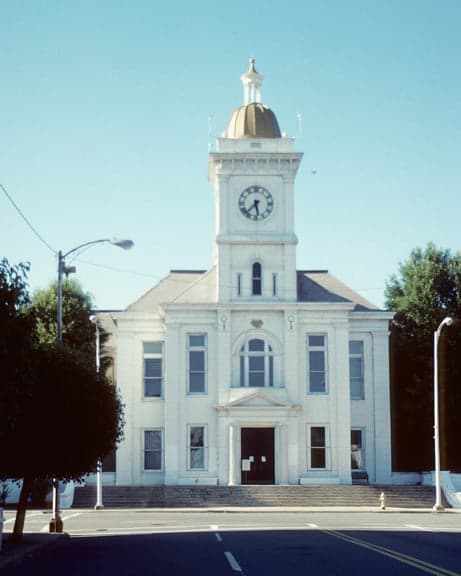
Photo: Wikipedia
Strategic Assessment of Jefferson County
Workable tactical position. Some exposure to population density or targets, but generally defensible in a crisis.
What does the Strategic Assessment tell us?
Our Strategic Assessment grades tactical survivability of an area. Major population centers, military targets, fallout zones, natural disasters, and border exposure all drive risk — lower exposure means a more defensible position in a crisis.
This is heavily inspired by Joel Skousen's Strategic Relocation book. Highly recommended you checkout the book ($)What does this tell us?
Our Strategic Assessment grades tactical survivability of an area. Major population centers, military targets, fallout zones, natural disasters, and border exposure all drive risk — lower exposure means a more defensible position in a crisis.
This is heavily inspired by Joel Skousen's Strategic Relocation book. Highly recommended you checkout the book ($)Strategic Pillars

Key Distances
Strategic Assessment Analysis
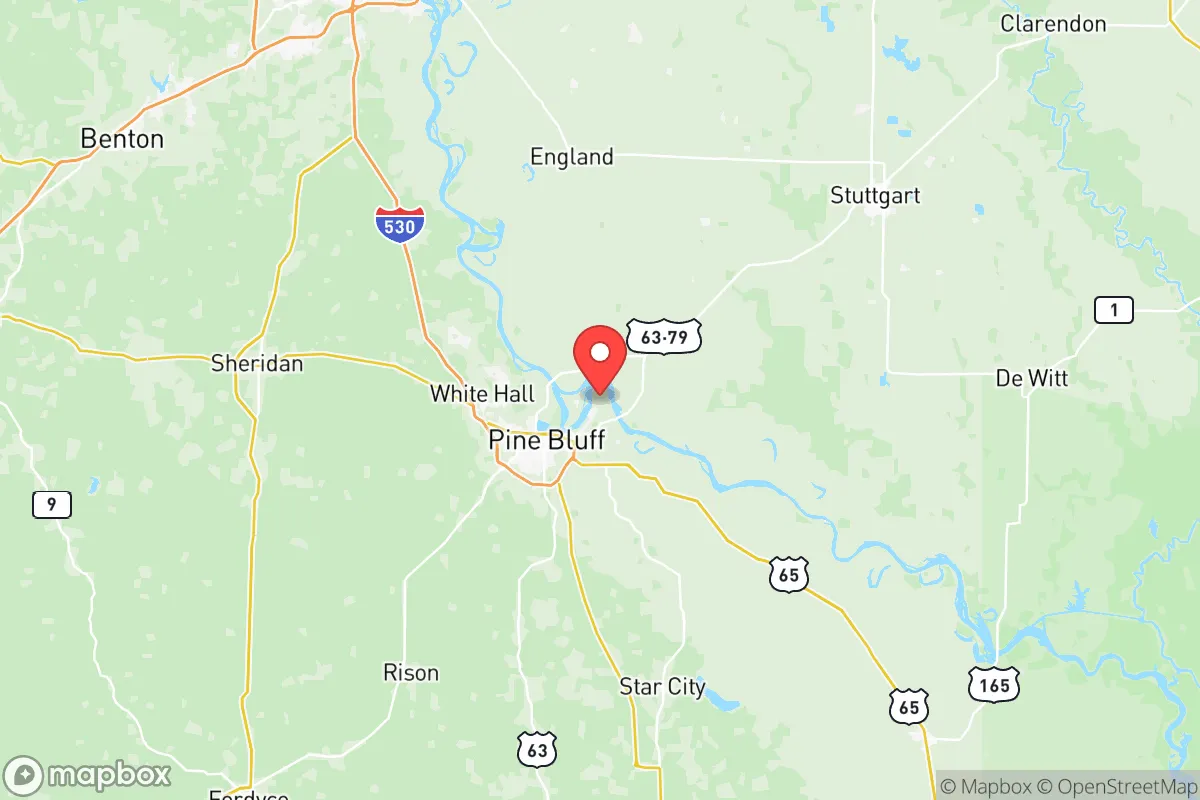
Jefferson County, Arkansas, offers a surprisingly resilient strategic position for those prioritizing self-reasonable proximity to critical infrastructure while maintaining meaningful distance from the most dangerous fallout zones and population centers. Anchored by the city of Pine Bluff, the county sits roughly 40 miles southeast of Little Rock, placing it outside the immediate blast and fallout radius of a major metropolitan target, yet close enough to access medical and supply networks if they remain functional. The county's location along the Arkansas River and its intersection with major rail and highway corridors (Interstate 530 and U.S. Highway 65) provide redundant transportation options, a key factor for any serious relocation assessment.
Geographic position and natural advantages for long-term security
Jefferson County's geography works in its favor for a prepper or survivalist mindset. The Arkansas River forms the county's northern boundary, providing a reliable freshwater source and a natural barrier that complicates approach vectors from the north. The region sits within the Mississippi Alluvial Plain, meaning the terrain is generally flat to gently rolling, which is practical for agriculture and construction but less ideal for defensible high-ground positions. However, the county includes significant timberland and bottomland hardwood forests, particularly around the Bayou Bartholomew area south of Pine Bluff, offering cover and resources for those who know how to use them. The county's position relative to the Gulf Coast is also notable: it lies roughly 250 miles inland, far enough to avoid direct hurricane storm surge and the worst of coastal refugee flows, but close enough to the Gulf Intracoastal Waterway system to theoretically receive barge-borne supplies if river transport remains viable. The nearby city of Stuttgart, just east in Arkansas County, is a major rice-producing hub, which could be a critical food security asset in a regional collapse scenario.
Risks, exposures, and proximity to fallout-relevant landmarks
No strategic assessment is honest without naming the liabilities. Jefferson County's most significant risk is its proximity to the Pine Bluff Arsenal, a U.S. Army chemical weapons storage and demilitarization facility located just north of the city. This is a double-edged reality: the arsenal is a potential target for sabotage or accident, and its presence means the area could see significant military or federal security activity during a crisis. The arsenal's stockpile of chemical agents, while largely destroyed, still represents a non-zero risk of contamination in a worst-case event. Additionally, the county sits within roughly 100 miles of the Entergy nuclear power plant at Arkansas Nuclear One in Russellville (to the northwest) and the Grand Gulf Nuclear Station in Port Gibson, Mississippi (to the southeast). While neither is close enough to pose a direct blast threat, prevailing wind patterns from the southwest could carry fallout from a Gulf Coast nuclear incident—say, from the Waterford plant near New Orleans or the River Bend plant near Baton Rouge—into the region. The county's industrial corridor along the Arkansas River includes several chemical and fertilizer facilities, particularly around the Port of Pine Bluff, which could become secondary hazard sites if damaged or abandoned. On the social risk side, Pine Bluff has struggled with population decline and economic contraction for decades, which means existing infrastructure is underutilized but also that local governance and emergency services may be less robust than in growing areas. The city's violent crime rate has historically been high relative to national averages, a factor that could worsen during societal stress.
Practical resilience for a relocator: food, water, energy, and defensibility
For a relocator looking to establish a sustainable homestead or retreat, Jefferson County offers a mixed but workable conditions. Water is not a concern: the Arkansas River is a massive, perennial source, and the county's alluvial aquifer is shallow and productive for wells. Most rural properties can access groundwater at depths of 50 to 150 feet, and surface water is abundant in the form of bayous, oxbow lakes, and drainage ditches. Food production is viable, with the county's prime farmland supporting soybeans, rice, corn, and cotton. Small-scale livestock operations are common, and the local hunting pressure is moderate, with white-tailed deer, wild hog, and waterfowl available. The county's energy infrastructure is a mixed bag: the Entergy grid is reasonably reliable in normal times, but rural areas are vulnerable to extended outages after storms. Solar potential is decent, with roughly 215 sunny days per year, though summer cloud cover from Gulf moisture can reduce yield. Natural gas is available in the Pine Bluff metro area, but rural properties may need to rely on propane or wood. Defensibility is the weak point. The flat terrain offers few natural chokepoints, and the county's extensive road network—including U.S. 79, U.S. 65B, and numerous county roads—means multiple approach routes for any potential threat. A relocator would need to prioritize a property with good visibility, limited access points, and perhaps a creek or river on one side to reduce approach defensibility. The county's low population density outside Pine Bluff (roughly 67,000 total residents in 2024, down from 85,000 in 2000) means fewer neighbors to contend with, but also fewer mutual-aid opportunities. The local economy is weak, anchored by the University of Arkansas at Pine Bluff, the arsenal, and a handful of manufacturing plants (including a large Georgia-Pacific paper mill). This economic fragility means that in a prolonged crisis, the local population may become desperate faster than in more prosperous areas, increasing the risk of property crime or foraging incursions.
The overall strategic picture for Jefferson County is one of calculated trade-offs. It is not a pristine, off-grid paradise, nor is it a high-risk target zone. It is a middle-ground location that offers abundant water, decent agricultural potential, and a position outside the immediate shadow of major cities and strategic targets, but it carries real liabilities in the form of the Pine Bluff Arsenal, industrial hazards along the river, and a struggling local economy that could turn volatile under pressure. For a relocator who is willing to invest in a well-fortified rural property, establish good relations with the remaining local population, and maintain a low profile, Jefferson County could serve as a viable base of operations for weathering a period of national instability. The key is to avoid the Pine Bluff city limits, secure a property with a reliable well and defensible sight lines, and stockpile supplies for the first 90 days, after which the county's natural resources can sustain a disciplined household. It is not a bug-out location for the unprepared, but for the serious strategist, it offers a realistic foundation for long-term resilience.

* Values derived from national, state, county, city and local statistics and may differ in a specific area. Last updated: 2026-05-17T23:35:16.000Z
Narrative content on this page is AI-generated and may contain mistakes. Verify any details that matter before acting on them.
ReloMaps may earn a commission from affiliate links at no extra cost to you.

