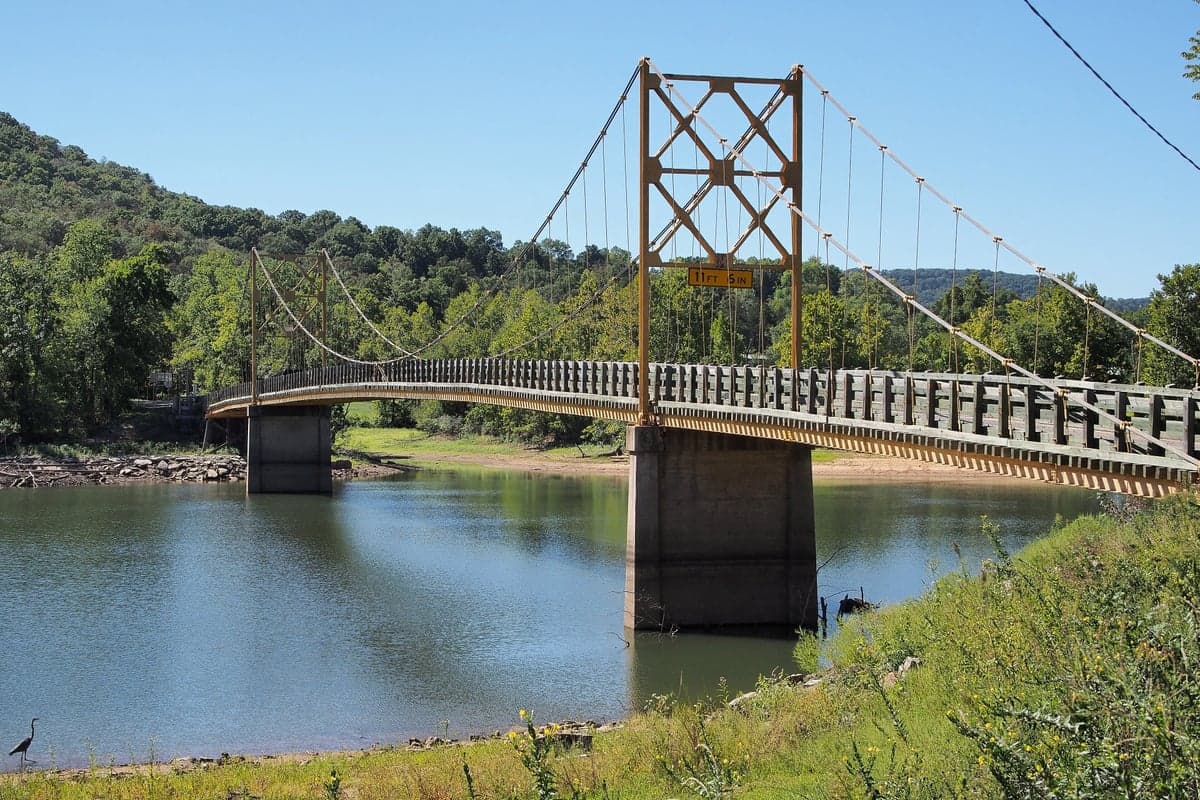
Photo: Wikipedia
Political ClimatePolitical Climate in Carroll County
Showing county-level results — no local-only data available.
Lean and PVI are calculated from this county’s 2020 and 2024 presidential results, Cook-style.
Political rankings in Arkansas
- Most Conservative Cities in Arkansas
- Most Liberal Cities in Arkansas
- Best Liberal-Leaning Towns in the South
- Safest Liberal-Leaning Towns in the South
- Safest Conservative-Leaning Towns in the South
- Affordable Small Towns for Conservatives
- Most Affordable Liberal-Leaning Small Towns in the U.S.
- Safest Conservative-Leaning Cities in the U.S.
- Most Conservative Counties in Arkansas
- Most Liberal Counties in Arkansas
Local Political AnalysisPolitical Analysis of Carroll County
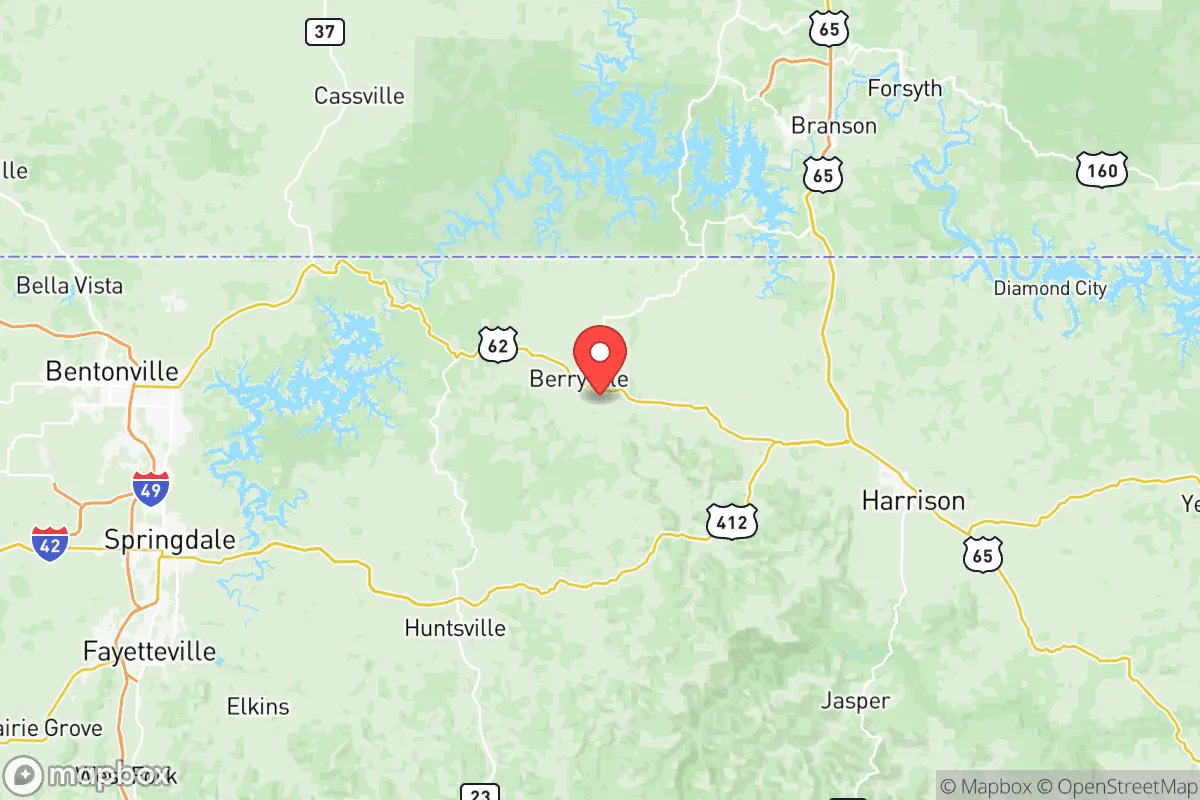
Carroll County, Arkansas, sits in a unique political pocket of the Ozarks. While the county as a whole leans reliably Republican with a Cook PVI of R+13, that number masks a fascinating internal split that has only grown more pronounced over the last decade. The county is essentially a tale of two valleys: the more conservative, rural eastern half anchored by Green Forest and Berryville, and the more moderate-to-liberal western half centered on Eureka Springs and Holiday Island. This isn't a county that's flipping blue anytime soon, but the trajectory is toward a narrower Republican margin, driven almost entirely by the influx of retirees and second-home owners in the Eureka Springs area.
How it compares
At first glance, Carroll County's R+13 looks slightly less red than Arkansas's statewide R+16. That two-point difference is real and meaningful. The state as a whole has been trending deeper red for decades, powered by the Memphis-adjacent Delta counties and the fast-growing northwest corridor around Bentonville and Rogers. Carroll County, by contrast, has a built-in counterweight: Eureka Springs, a historic Victorian resort town that has long been a haven for artists, LGBTQ+ residents, and progressive-leaning retirees. In the 2020 presidential election, Eureka Springs precincts voted for Joe Biden by margins of 20 to 30 points, while precincts in Green Forest and Berryville went for Donald Trump by 40 to 50 points. Holiday Island, a retirement community just west of Eureka Springs, is the swing zone — it voted for Trump in 2020, but by a much narrower 8-point margin, and local school board races there are often decided by a few dozen votes.
What this means for residents
For conservative residents, especially in the eastern part of the county, life is straightforward. The county commission, sheriff's office, and most local school boards are held by Republicans. The local Republican Party in Berryville is active and well-organized. For liberal residents, the reality is more nuanced. Eureka Springs functions as a practical blue island — the city council has a progressive majority, the city passed a non-discrimination ordinance in 2015, and the local chamber of commerce is openly inclusive. But that protection stops at the city limits. County-level offices, like the circuit clerk and tax collector, are held by Republicans, and state-level representation is solidly conservative. A liberal resident living in Eureka Springs can feel politically at home within city limits but will encounter a very different atmosphere driving 15 minutes east to Berryville for groceries or a doctor's appointment.
The cultural and policy distinctions are sharpest around land use and tourism. Carroll County is one of the fastest-growing counties in Arkansas by percentage, driven by the Buffalo National River and the Eureka Springs tourism economy. Conservatives in Green Forest tend to favor minimal zoning and low property taxes, while Eureka Springs residents have pushed for historic preservation ordinances and short-term rental regulations. The county's Quorum Court (the legislative body) has repeatedly deadlocked on zoning issues, with the Eureka Springs and Holiday Island representatives voting as a bloc against the eastern precincts. Looking ahead, the county's political future hinges on growth patterns. If Holiday Island continues to attract moderate retirees from the Midwest, the county could drift toward R+10 or even R+8 by 2030. But if the eastern towns keep pace with the industrial expansion of the poultry and manufacturing sectors, the Republican base will hold firm. For now, Carroll County remains a place where both sides can find a foothold — but they have to know which town to call home.

State Political ClimatePolitical Climate in Arkansas
State Political AnalysisPolitical Environment in the State
Arkansas is a deeply conservative state with a Cook PVI of R+16, meaning it votes about 16 points more Republican than the national average in presidential elections. Over the past 20 years, the state has shifted from a competitive, Democrat-leaning Southern state to a solidly red stronghold, driven by the realignment of rural white voters and the collapse of the old Democratic "Dixiecrat" coalition. Today, Republicans control every statewide office, both chambers of the legislature, and all four U.S. House seats, making it one of the most reliably Republican states in the country.
Urban vs. rural divide
The political map of Arkansas is a textbook case of the urban-rural split. The state's two major metro areas—Little Rock (Pulaski County) and Fayetteville (Washington County)—are the only significant blue dots in a sea of red. Pulaski County, home to the capital, voted for Joe Biden in 2020 by about 10 points, driven by a diverse population and a concentration of government workers and professionals. Washington County, anchored by the University of Arkansas, has been trending blue for a decade and now leans narrowly Democratic, thanks to an influx of younger, college-educated residents and a growing Hispanic population. Meanwhile, the rest of the state is overwhelmingly Republican. Benton County, home to Walmart's headquarters in Bentonville, is a fascinating exception: it's deeply red but has a libertarian streak, with a business-friendly ethos that sometimes clashes with social conservatism. The Arkansas Delta, once a Democratic stronghold due to its large Black population, has seen its political influence wane as its population declines, though counties like Phillips County and Lee County still vote reliably Democratic. The Ozarks and the River Valley—places like Fort Smith, Harrison, and Mountain Home—are among the most conservative areas in the country, often voting 80%+ Republican.
Policy environment
Arkansas's policy environment is a reflection of its conservative lean. The state has a flat income tax rate of 4.4% (down from 7% in 2015), with a goal of phasing it out entirely. Sales tax is high—a state rate of 6.5%, plus local add-ons that can push it over 10% in some cities like Little Rock and Springdale. Property taxes are low, averaging about 0.6% of assessed value. The state is a right-to-work state with minimal labor protections, and it has some of the weakest environmental regulations in the country. Education policy is a hot-button issue: the state has a robust school choice program, including the Succeed Scholarship for students with disabilities and the new Education Freedom Accounts, which allow public funds to follow students to private schools. The state also passed the LEARNS Act in 2023, which raised teacher salaries, banned "critical race theory" in classrooms, and prohibited instruction on gender identity and sexual orientation in K-3. Healthcare is a mixed bag: Arkansas expanded Medicaid under the private option model, but the state has some of the strictest abortion laws in the nation, banning the procedure at conception with no exceptions for rape or incest. Election laws are restrictive: voter ID is required, absentee voting requires an excuse, and early voting is limited to 15 days. The state also passed a law in 2021 that made it a felony for election officials to send unsolicited absentee ballot applications.
Recent policy direction
Arkansas's recent policy direction is a sprint to the right, with a focus on cultural issues and tax cuts. In 2023, the legislature passed Act 237, which allows concealed carry of firearms without a permit, making Arkansas one of the most permissive states for gun rights. The same year, the state passed the "Save Adolescents From Experimentation (SAFE) Act," which bans gender-affirming care for minors and allows doctors to refuse treatment based on religious or moral objections. On education, the LEARNS Act (2023) is the most significant overhaul in decades: it bans "indoctrination" in public schools, prohibits transgender students from using bathrooms matching their gender identity, and creates a school voucher program. On property rights, the state passed a law in 2021 that prohibits local governments from banning short-term rentals like Airbnb. On privacy and surveillance, Arkansas passed a law in 2023 that requires age verification for adult websites, a move that has drawn First Amendment challenges. On voting, the state has tightened ballot access: in 2021, it shortened the absentee ballot request window and banned ballot drop boxes. On taxes, the state has cut the top income tax rate from 6.9% to 4.4% since 2019, with a goal of reaching 3.9% by 2027. The overall direction is clear: Arkansas is betting on low taxes, deregulation, and cultural conservatism to attract new residents.
Civil unrest & political movements
Arkansas has not seen the kind of large-scale civil unrest seen in larger states, but there have been notable flashpoints. In 2020, Black Lives Matter protests in Little Rock and Fayetteville were largely peaceful, though there were isolated incidents of property damage. The state's response was to pass a law in 2021 that increased penalties for blocking highways during protests, a direct response to the George Floyd demonstrations. On the right, the "Arkansas Freedom Fund" and local Moms for Liberty chapters have been active in school board races, particularly in Bentonville and Rogers, pushing for book bans and curriculum restrictions. Immigration politics are less visible here than in border states, but Springdale and Rogers have large Marshallese and Hispanic communities, and local law enforcement generally does not cooperate with federal immigration enforcement, despite state-level rhetoric. There is no serious secessionist movement, but "nullification" rhetoric occasionally surfaces in the legislature, particularly around federal gun laws. Election integrity controversies have been minimal compared to states like Georgia or Arizona, though the 2020 election saw a brief controversy over ballot counting in Pulaski County, which was resolved without major incident.
Projection
Over the next 5-10 years, Arkansas is likely to become even more conservative, but with a growing libertarian streak. The state's population is growing slowly (about 0.5% annually), driven by in-migration from California and the Midwest, particularly to Northwest Arkansas. These newcomers tend to be younger, more educated, and more moderate, which could slowly shift the balance in places like Fayetteville and Bentonville. However, the rural areas are depopulating, and the Delta's Democratic base is shrinking. The state's Republican supermajority is likely to persist, but internal fights between the establishment wing (pro-business, pro-Walmart) and the populist wing (anti-establishment, culturally conservative) will intensify. Expect further tax cuts, continued expansion of school choice, and more restrictions on abortion and transgender rights. The state's economy is strong, driven by Walmart, Tyson Foods, and JB Hunt, but it remains heavily reliant on low-wage manufacturing and agriculture. A new resident moving in now should expect a state that is stable, predictable, and deeply conservative, but with a growing urban-rural divide that will create pockets of blue in an otherwise red landscape.
For a new resident, the bottom line is this: Arkansas is a place where conservative values are baked into the law and culture. If you lean right, you'll find a state that is actively working to lower taxes, protect gun rights, and limit government overreach. If you lean left, you'll find a state where your vote matters most in Little Rock or Fayetteville, but where you'll be swimming against a strong current. The state is safe, affordable, and politically stable, but it's not a place where you'll find much ideological diversity outside of a few urban islands. Come for the low cost of living and the natural beauty; stay if you're comfortable with a state that knows exactly what it wants to be.
* Values derived from national, state, county, city and local statistics and may differ in a specific area. Last updated: 2026-10-23T18:49:30.000Z
Narrative content on this page is AI-generated and may contain mistakes. Verify any details that matter before acting on them.
ReloMaps may earn a commission from affiliate links at no extra cost to you.

