Photo: Wikipedia
Demographics of Baxter County
Affluence Level in Baxter County
A below-average socioeconomic profile. Incomes, home values, and educational attainment trail the U.S., with higher poverty and unemployment.
People of Baxter County
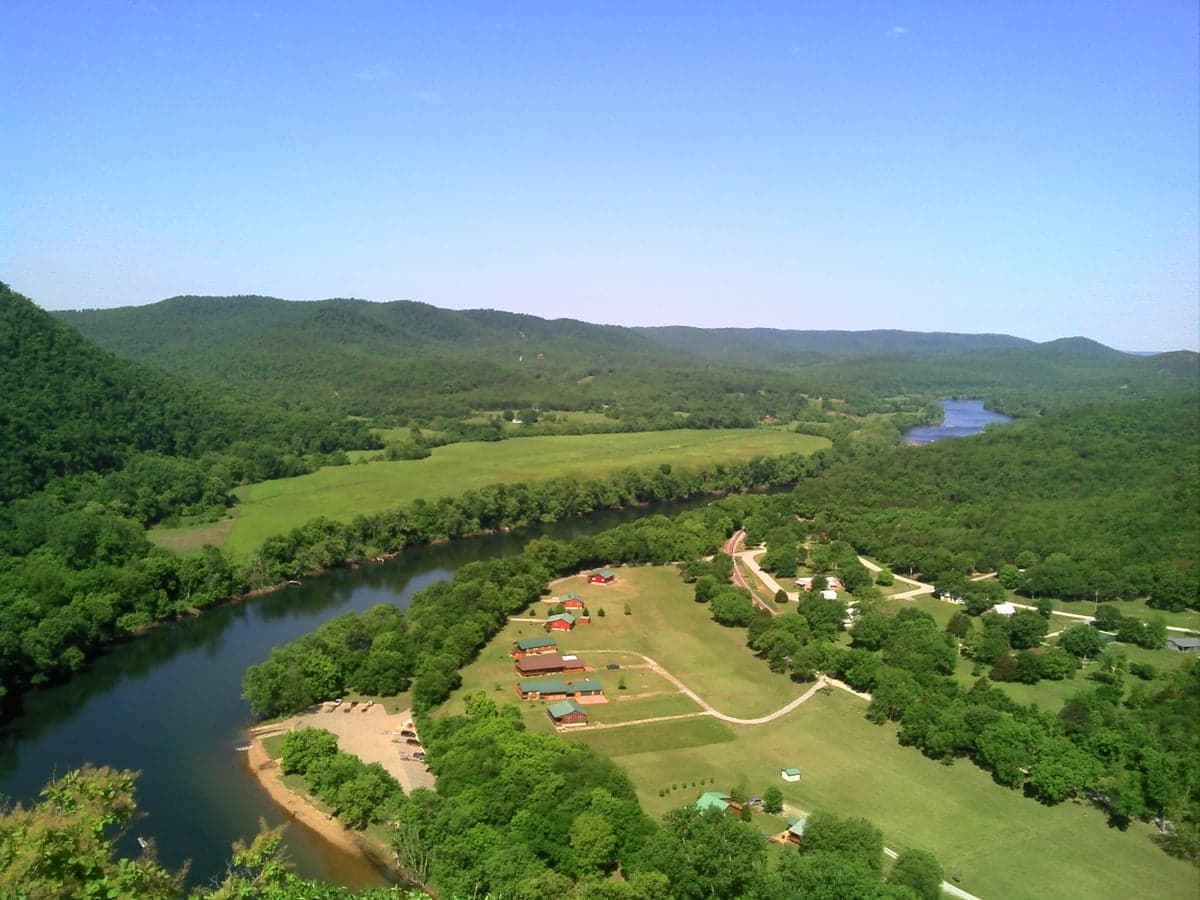
Baxter County, Arkansas, is home to roughly 42,150 residents, making it one of the state's more sparsely populated counties with a distinctively homogenous demographic profile. The population is overwhelmingly White (91.6%), with a very small Hispanic community (2.7%) and negligible shares of Black (0.4%), East/Southeast Asian (0.6%), and Indian subcontinent (0.0%) residents. The county's character is defined by its Ozark Mountain setting, a strong retiree and second-home presence drawn to the White River and Bull Shoals Lake, and a cultural identity rooted in rural self-reliance, outdoor recreation, and a slower pace of life that appeals to conservative-leaning families and individuals seeking escape from urban congestion.
Settlement & growth (pre-1960)
Long before European settlement, the area now known as Baxter County was part of the traditional territory of the Osage Nation, who used the Ozark highlands for hunting and seasonal camps. The Osage were gradually displaced by European-American settlers moving west after the Louisiana Purchase, with the first permanent white settlers arriving in the 1820s and 1830s. These early pioneers were predominantly of Scots-Irish and English stock, migrating from the Upper South states of Tennessee, Kentucky, and Missouri. They were drawn by the promise of cheap, fertile land in the White River valley and the isolation of the Ozark hills, which offered a degree of independence from the plantation economy of the Deep South.
The county was officially formed in 1873 from parts of Marion, Fulton, and Izard counties, with Mountain Home established as the county seat. The arrival of the Missouri Pacific Railroad in the early 1900s transformed Mountain Home from a remote hamlet into a modest trade center for the surrounding timber and agricultural economy. Small communities like Gassville, Cotter, and Norfolk grew as railroad stops and river-landing points, supporting a population of subsistence farmers, loggers, and mill workers. The population remained overwhelmingly native-born White, with very few foreign-born residents—a pattern that would persist for decades. By 1950, Baxter County's population hovered around 11,000, still largely rural and dependent on farming, timber, and the White River's commercial fishing.
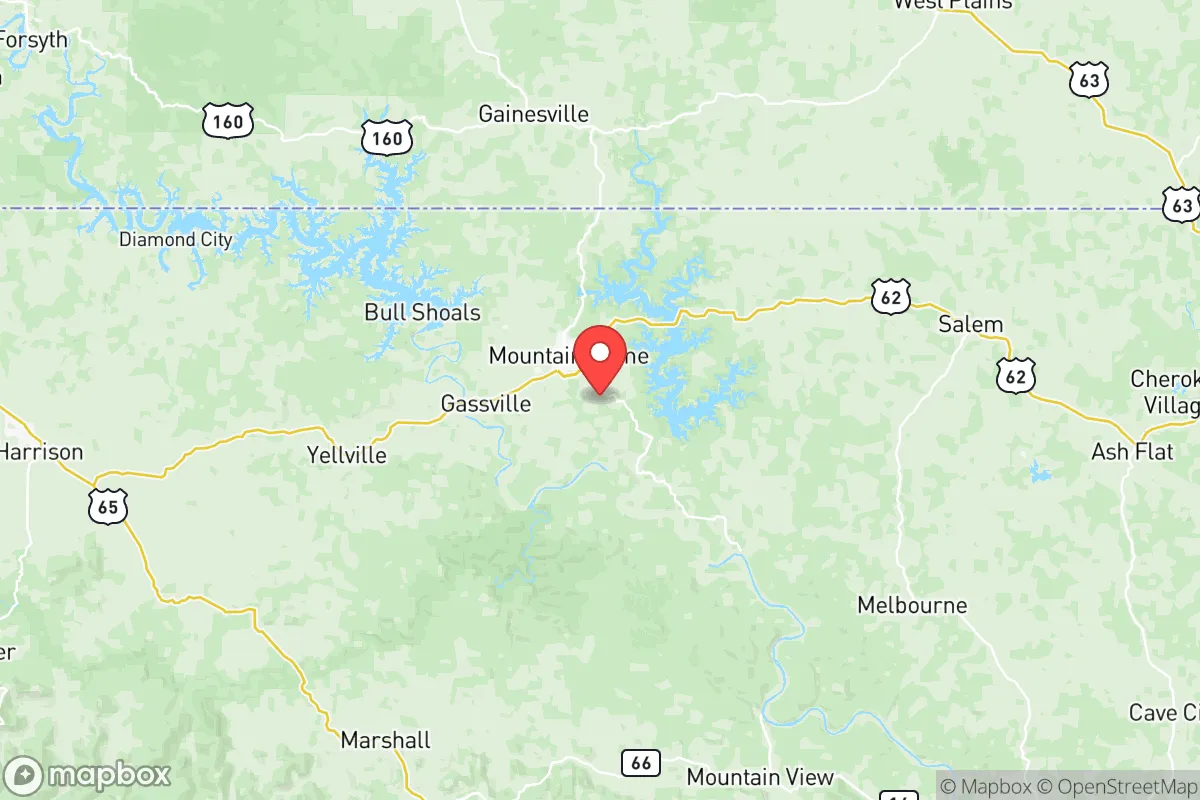
The single most transformative event for Baxter County's population came in the 1950s with the construction of Bull Shoals Dam by the U.S. Army Corps of Engineers. Completed in 1951, the dam created Bull Shoals Lake, one of the largest man-made lakes in the United States. This project brought an influx of construction workers, engineers, and government personnel, many of whom stayed after the dam's completion. The lake and the White River below the dam quickly became a premier destination for trout fishing, boating, and tourism. This triggered a second wave of in-migration: retirees from the Midwest (especially Illinois, Indiana, and Ohio) and the Plains states, drawn by the low cost of living, mild climate, and recreational opportunities. Towns like Bull Shoals and Lakeview were platted specifically as retirement and vacation communities, and the county's population began a steady climb that would accelerate in the following decades.
Modern era (post-1965)
The post-1965 period in Baxter County is not a story of immigration-driven diversity, but rather of continued domestic in-migration from other parts of the United States. The 1965 Hart-Cellar Act, which reshaped immigration nationwide, had virtually no effect here: the foreign-born population remains at just 0.6% in 2026, one of the lowest rates in the country. Instead, the county's growth has been fueled almost entirely by domestic migration—specifically, retirees and second-home buyers from the Midwest, the Rust Belt, and, increasingly, from the fast-growing Sun Belt states of Texas and Florida.
From the 1970s through the 1990s, Baxter County's population more than doubled, reaching roughly 38,000 by 2000. The primary drivers were the expansion of the tourism and healthcare sectors. The Baxter Regional Medical Center in Mountain Home became the county's largest employer, attracting medical professionals and support staff. The construction of new subdivisions around Bull Shoals Lake and along the White River drew affluent retirees seeking lakefront property. Communities like Midway and Briarcliff grew as bedroom suburbs of Mountain Home, offering rural living with proximity to shopping and medical services. The county also saw a modest influx of working-age families drawn by the low crime rates, good schools in the Mountain Home and Cotter school districts, and the availability of affordable housing compared to national averages.
Demographically, the county has remained remarkably stable. The White share of the population has declined only slightly, from over 97% in 1990 to 91.6% today, with the small Hispanic population (2.7%) representing the only notable minority growth. This Hispanic community is concentrated in and around Mountain Home, where they work primarily in construction, landscaping, and the hospitality industry serving tourists. The Black population (0.4%) and East/Southeast Asian population (0.6%) remain tiny and are mostly professionals—doctors, engineers, and business owners—who have moved to the area for specific job opportunities. There is no discernible Indian subcontinent community. The county's college-educated share (18.7%) is below the national average, reflecting the blue-collar and retiree character of the population.
The future
Baxter County's demographic trajectory points toward continued slow growth, an aging population, and persistent homogeneity. The county's population is projected to reach roughly 45,000-47,000 by 2040, driven almost entirely by domestic in-migration of retirees and remote workers. The rise of telecommuting has already begun to attract a younger cohort—families and individuals in their 30s and 40s who can work remotely from the Ozarks and who value the area's low cost of living, outdoor lifestyle, and conservative social environment. This trend is likely to accelerate as more companies embrace permanent remote work, bringing a modest infusion of younger, college-educated residents to areas like Mountain Home and the lakefront communities.
However, the county is unlikely to become significantly more diverse. The foreign-born share will probably remain below 2% for the foreseeable future, as there are no large employers or industries that attract international migration. The Hispanic population may grow slowly, reaching perhaps 4-5% by 2040, but will remain concentrated in service-sector roles. The county's cultural identity—rooted in Ozark traditions, outdoor recreation, and a politically conservative ethos—will likely persist, though it may become slightly more cosmopolitan as remote workers bring outside perspectives. The biggest challenge will be managing growth while preserving the rural character that draws people here: pressure on water resources, increased traffic on Highway 62/412, and the need for expanded healthcare infrastructure for an aging population.
For someone moving to Baxter County now, the bottom line is this: you are choosing a place that is stable, safe, and culturally cohesive, but also demographically static. The county offers a high quality of life for those who value outdoor recreation, low taxes, and a like-minded community, but it is not a place of rapid change or significant diversity. New arrivals will find a welcoming environment in Mountain Home, Bull Shoals, or the smaller communities along the White River, but should expect to integrate into a population that looks and thinks much as it has for decades. The future is one of gradual, managed growth—not transformation.

* Values derived from national, state, county, city and local statistics and may differ in a specific area. Last updated: 2026-06-16T02:27:40.000Z
Narrative content on this page is AI-generated and may contain mistakes. Verify any details that matter before acting on them.
ReloMaps may earn a commission from affiliate links at no extra cost to you.

