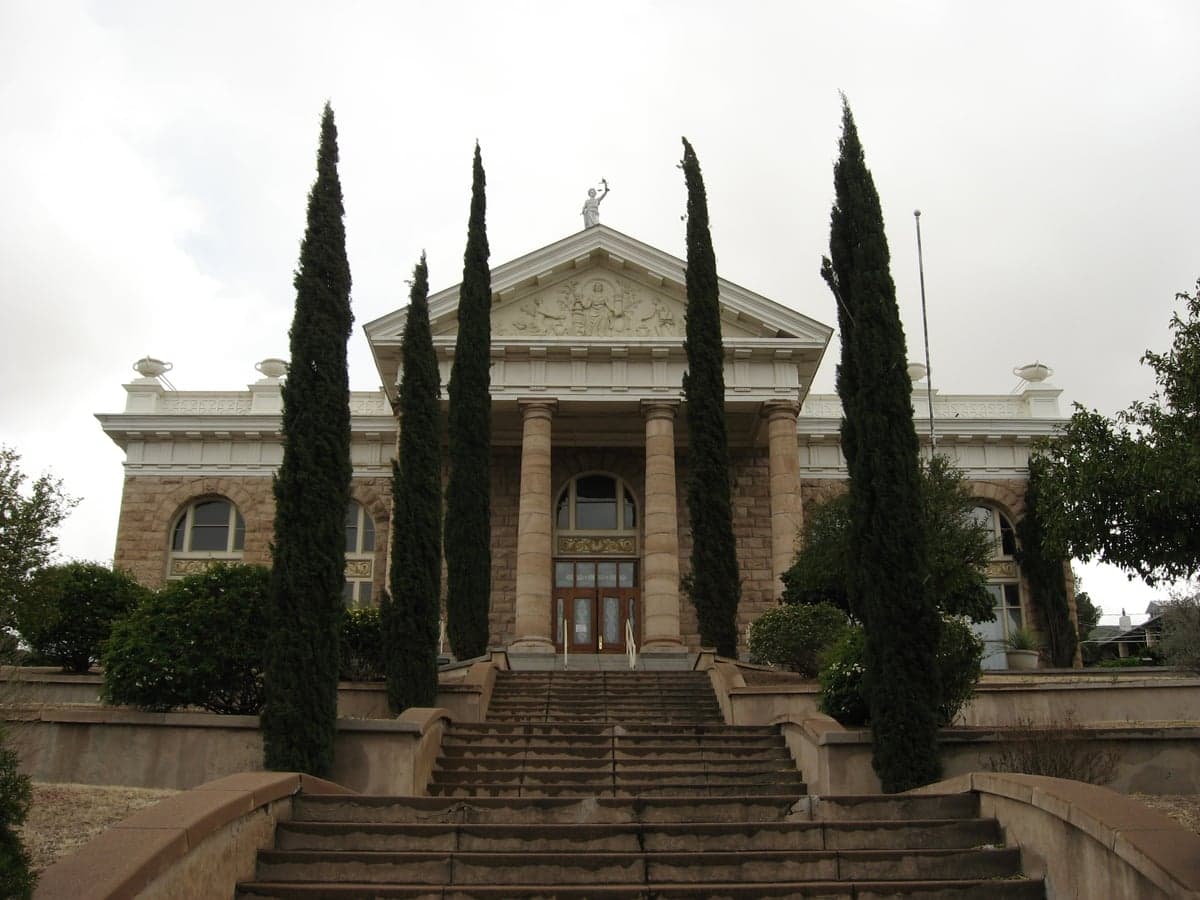
Photo: Wikipedia
Political ClimatePolitical Climate in Santa Cruz County
Showing district-level results — no local-only data available.
Local Political AnalysisPolitical Analysis of Santa Cruz County
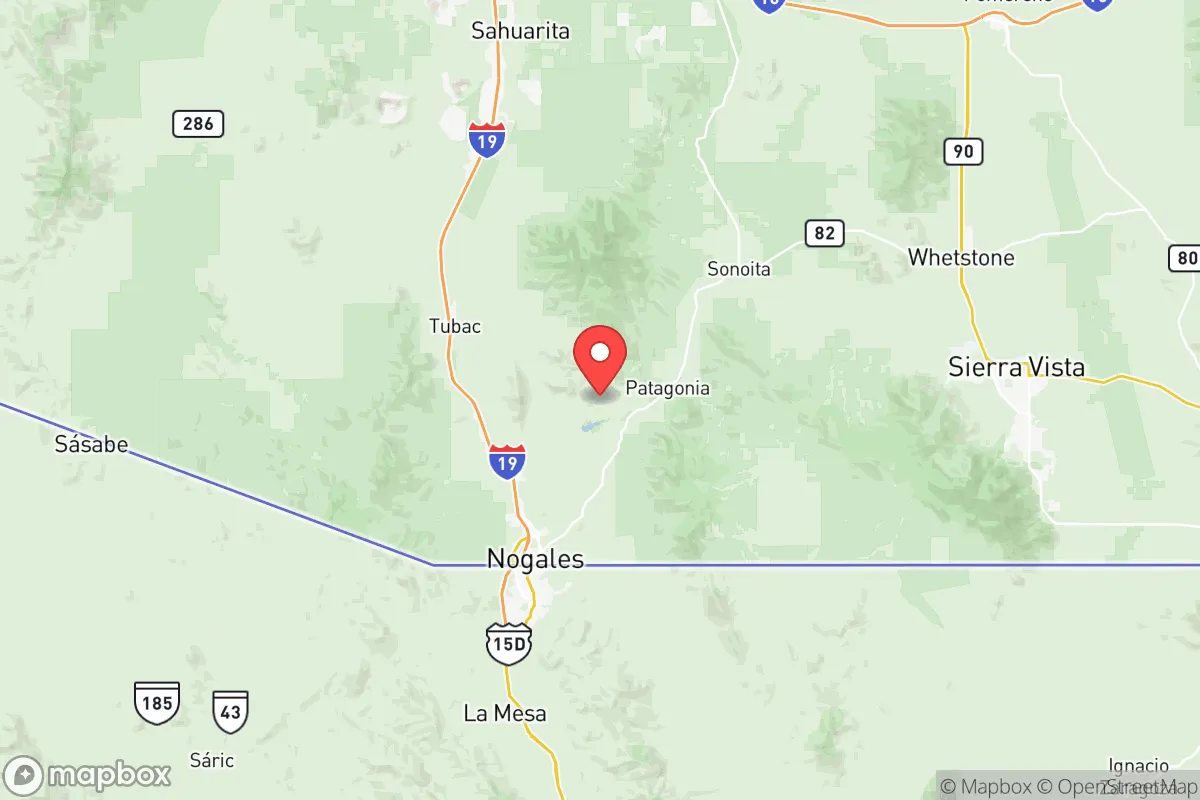
Santa Cruz County is a solidly Democratic stronghold in Arizona, with a Cook Partisan Voting Index of D+13, making it one of the bluest counties in a state that is otherwise a pure toss-up (Cook PVI: EVEN). This isn't a recent shift—the county has voted for the Democratic presidential candidate in every election since at least 1992, often by double-digit margins. The political center of gravity is Nogales, the county seat and largest city, where a heavily Latino, working-class electorate consistently delivers Democratic majorities. However, the county isn't a monolith; smaller communities like Patagonia and Sonoita lean more conservative, and the rural ranching areas east of the Santa Cruz River can swing Republican in local races. The trajectory is toward a slight deepening of the blue lean, driven by population growth in Nogales and the broader trend of Latino voters consolidating behind Democrats, though the county's small overall size (roughly 47,000 residents) means national trends can feel muted here.
How it compares
Compared to Arizona as a whole, Santa Cruz County is a political outlier. The state's Cook PVI of EVEN reflects its status as a perennial battleground, where Maricopa County (Phoenix) and Pima County (Tucson) swing the outcome. Santa Cruz, by contrast, is reliably Democratic—think of it as Arizona's equivalent of a deep-blue urban county, but rural and border-focused. In the 2022 gubernatorial race, Democrat Katie Hobbs won Santa Cruz County with roughly 65% of the vote, while she narrowly won the state overall. The county's Democratic lean is driven by its demographics: over 80% of residents are Hispanic or Latino, and the economy is tied to cross-border trade, immigration, and agriculture—issues that align more with the Democratic platform. Meanwhile, the rest of Arizona is whiter, more suburban, and more evenly split, with Republican strongholds in Mohave and Yavapai counties offsetting Democratic gains in Maricopa and Pima. The practical effect is that Santa Cruz County often feels politically disconnected from the rest of the state, especially during heated statewide races where the county's votes are a foregone conclusion.
What this means for residents
For liberal residents, Santa Cruz County offers a comfortable political environment where Democratic candidates are the norm and progressive policies on immigration, labor rights, and public health are broadly supported. Local government in Nogales is reliably Democratic, and the county board of supervisors has a Democratic majority. Conservative residents, particularly in the rural areas around Patagonia and Sonoita, are a clear minority but not invisible—they tend to be more active in local Republican Party events and often find common ground with Democrats on issues like property rights, water management, and opposition to federal land-use restrictions. The political reality is that while the county is blue, it's not a place of intense partisan conflict; the small population and shared border concerns (like port-of-entry wait times and drug trafficking) create a pragmatic, issue-focused atmosphere. For both sides, the biggest practical impact is that statewide elections rarely hinge on Santa Cruz County votes, so local issues—like school funding, hospital access, and infrastructure at the Nogales port—dominate political conversation more than national partisan battles.
Culturally, Santa Cruz County's political lean is intertwined with its binational identity. The county's Democratic tilt is less about progressive activism and more about a lived reality of cross-border family ties, trade, and a deep skepticism of hardline immigration enforcement. Policy-wise, this means local leaders often advocate for more federal funding for border infrastructure and humane immigration processing, rather than the "build the wall" rhetoric common in other parts of Arizona. The county's small size and rural character also mean that politics here is personal—you're likely to know your county supervisor or school board member by name. For newcomers, whether from Phoenix or out of state, the key takeaway is that Santa Cruz County is a blue island in a purple state, where the political climate is shaped more by the border and the land than by national party platforms. It's a place where a conservative rancher and a liberal teacher can agree on the need for better roads and water conservation, even if they disagree on the presidential race.

State Political ClimatePolitical Climate in Arizona
State Political AnalysisPolitical Environment in the State
Arizona is the ultimate swing state in 2026, with a Cook PVI of EVEN that perfectly captures its knife-edge balance. Over the past 20 years, the state has shifted from a reliably Republican stronghold—where George W. Bush won by 11 points in 2004—to a purple battleground where Joe Biden won by just 10,457 votes in 2020 and Donald Trump reclaimed it by roughly 2 points in 2024. The dominant coalitions are a fast-growing, diverse Maricopa County electorate (home to 60% of the state’s voters) that leans slightly Democratic in presidential years, pitted against a deeply red rural and exurban base in places like Mohave, Yavapai, and Pinal counties. For a relocator, this means you’ll live in a state where your vote genuinely matters, but where the cultural and policy pendulum swings hard every two years.
Urban vs. rural divide
The political map of Arizona is a story of three distinct regions. Maricopa County, anchored by Phoenix, Mesa, Chandler, and Scottsdale, is the decisive battleground. The city of Phoenix itself is solidly Democratic, but the sprawling suburbs tell a more nuanced story: Mesa and Gilbert remain conservative-leaning, while Chandler and Tempe have trended blue as tech and semiconductor jobs (hello, TSMC and Intel) draw younger, college-educated transplants. Tucson and Pima County are reliably Democratic, driven by the University of Arizona and a strong Hispanic voting bloc. Meanwhile, the rural north—Prescott in Yavapai County, Kingman in Mohave County, and Lake Havasu City—vote Republican by margins of 30-40 points. The White Mountains region around Show Low and Pinetop-Lakeside is also deeply red. The urban-rural split is so stark that statewide races are decided almost entirely by which side turns out more in Maricopa’s fast-growing suburban corridors like Buckeye and Goodyear, which are still conservative but diversifying fast.
Policy environment
Arizona’s policy environment is a patchwork of conservative fundamentals and occasional libertarian streaks. The state has a flat income tax rate of 2.5% (passed in 2021 and fully phased in by 2023), one of the lowest in the nation, and no estate tax. Property taxes are moderate, with an average effective rate around 0.62%. The regulatory posture is business-friendly, especially for manufacturing and data centers—Arizona has no statewide minimum wage preemption, so cities like Flagstaff and Tucson set their own higher floors ($16.85 and $14.35 respectively as of 2025). Education policy is a flashpoint: the state has one of the nation’s most expansive Empowerment Scholarship Account (ESA) programs, giving nearly all families public funds for private or homeschool use, but public school funding per pupil remains near the bottom nationally. Healthcare is mixed—Medicaid expansion under the Affordable Care Act was adopted in 2013 (thanks to then-Governor Jan Brewer), but the state has not expanded postpartum coverage or passed a public option. Election laws are a constant tug-of-war: no-excuse mail voting is permanent (over 80% of ballots are cast by mail), but a 2022 law added stricter ID requirements for mail ballots and banned ballot harvesting. The state also has a robust citizen initiative process, which has produced legalized recreational marijuana (2020), a higher minimum wage (2016), and expanded Medicaid (2013)—all passed by voters over legislative opposition.
Recent policy direction
The last five years have seen Arizona lurch rightward on some fronts and hold steady on others. On gun and self-defense law, the state is a constitutional carry jurisdiction since 2010, and in 2021 it passed a law prohibiting local governments from banning firearms in public parks and buildings—a direct rebuke to Tucson and Flagstaff’s local ordinances. Parental and education rights saw a major win for conservatives with the 2022 expansion of ESAs to all K-12 students, though a 2024 ballot measure to require schools to notify parents of curriculum changes failed narrowly. On speech and privacy, Arizona has no statewide social media content moderation law (unlike Texas and Florida), but a 2023 law restricts government surveillance of drone flights over private property. Medical and bodily autonomy is the most volatile issue: a near-total abortion ban from 1864 was repealed in 2024 after a public backlash, replaced by a 15-week ban with exceptions for rape, incest, and life of the mother. A 2024 ballot measure to enshrine abortion rights up to viability failed by 2 points, but the issue remains live. Property rights are strong—Arizona has a right-to-farm law protecting agricultural operations from nuisance lawsuits, and no statewide rent control (cities are preempted from enacting it). Taxation has moved decisively right: the 2021 flat tax cut was paired with a reduction in the corporate income tax rate to 4.9%. Voting and ballot access saw a 2024 law requiring proof of citizenship for federal voter registration (challenged in court), while same-day registration remains illegal. The net effect: a state that is conservative on fiscal and gun issues, but where direct democracy often overrides the legislature on social and labor policy.
Civil unrest & political movements
Arizona has been a national flashpoint for election integrity controversies since 2020. The Arizona Senate’s “audit” of Maricopa County ballots in 2021 (led by Cyber Ninjas) became a national spectacle, and while it found no evidence of widespread fraud, it deepened distrust among Republican voters. Protests have been frequent but localized: in 2022, abortion rights rallies drew thousands to the Arizona Capitol after the Dobbs decision, while Moms for Liberty chapters in Gilbert and Chandler have organized school board protests over library books and LGBTQ+ curriculum. Immigration politics remain intense—the state’s 2010 SB 1070 “show me your papers” law was largely gutted by courts, but Governor Katie Hobbs (a Democrat) has used the National Guard for border security operations since 2023, a bipartisan response to the surge in crossings near Nogales and Yuma. There is no serious secession or nullification movement, but Cochise County supervisors have repeatedly refused to certify election results, leading to court battles. A new resident will notice the constant presence of political signs along major roads (especially in Maricopa County), and the fact that local news is dominated by election administration stories—Arizonans are obsessed with how their votes are counted.
Projection
Over the next 5-10 years, Arizona is likely to remain a true swing state, but the demographic trends favor a slow drift leftward. The state is adding roughly 100,000 new residents per year, many from California and the Midwest, and these newcomers tend to be younger, more diverse, and more moderate-to-liberal on social issues. Maricopa County’s Hispanic population (now over 30%) is growing faster than the white population, and while Hispanic voters are not a monolith (many in rural areas lean conservative), the trend in Phoenix and Tucson is toward Democratic voting. However, the rural and exurban base is also growing—places like Maricopa City (in Pinal County) and Queen Creek are booming with conservative families fleeing higher taxes in California. The wild card is the retiree vote: Sun City and Green Valley are aging, but new active-adult communities in Buckeye and Surprise are attracting younger retirees who may be less reliably Republican. Expect the state to continue passing conservative fiscal policy (no income tax hike, pro-business regulation) while social policy oscillates—a 2026 ballot measure on abortion rights is likely to pass, and marijuana legalization is already settled. The practical takeaway: if you move to Arizona in 2026, you’ll live in a state where your vote is genuinely contested, where policy changes every election cycle, and where the culture war is fought in school boards and city councils, not just the statehouse.
Bottom line for a new resident: Arizona offers low taxes, strong gun rights, and a business-friendly climate that will appeal to conservatives, while its direct democracy system and growing urban base ensure that liberal social policies (abortion access, minimum wage hikes) remain on the table. You’ll pay less in income tax than almost anywhere else, but you’ll also see your property taxes rise as home values climb. The political climate is intense but functional—expect heated debates at the dinner table, but also a state that reliably delivers election results and avoids the kind of paralysis seen in states like Oregon or Illinois. If you’re a conservative, you’ll find your values reflected in state law but will need to engage locally to hold the line. If you’re a liberal, you’ll find a state where your vote counts more than almost anywhere else, but where you’ll need to win over suburban moderates to make progress. Either way, you’re moving to a place that is defining the future of American politics.
* Values derived from national, state, county, city and local statistics and may differ in a specific area. Last updated: 2026-07-30T07:59:17.000Z
Narrative content on this page is AI-generated and may contain mistakes. Verify any details that matter before acting on them.
ReloMaps may earn a commission from affiliate links at no extra cost to you.

