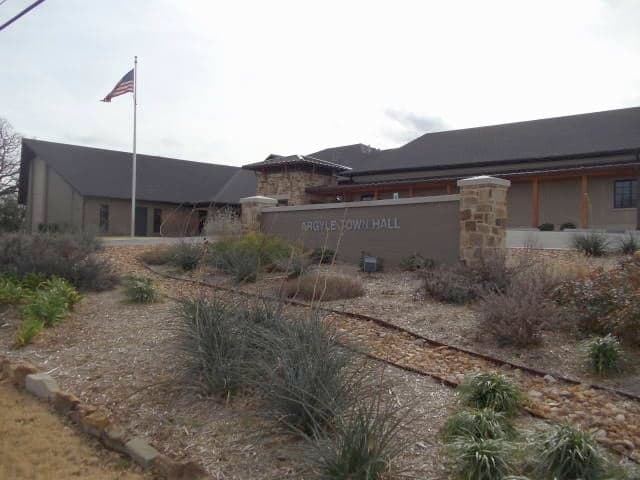
Photo: Wikipedia
Political ClimatePolitical Climate in Argyle, TX
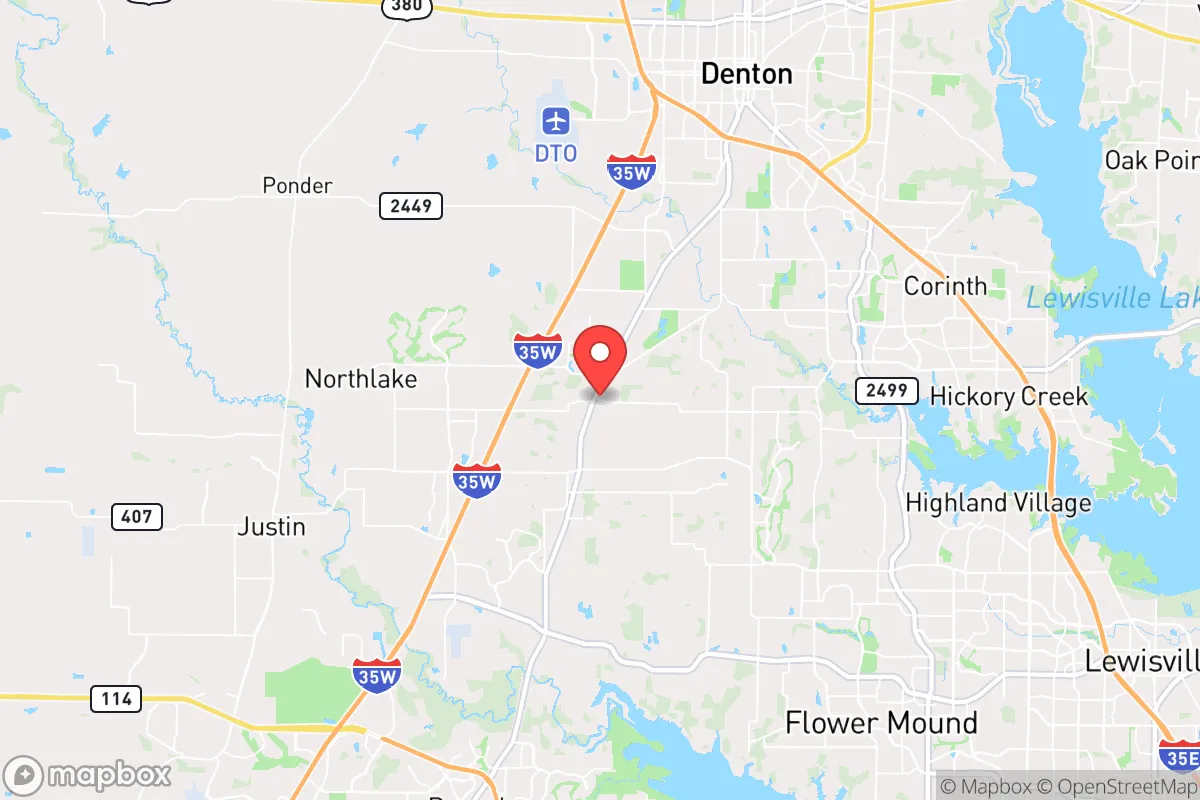
District shown is the primary district for this city’s centroid. Cities may span multiple districts.
Local Political AnalysisPolitical Analysis of Argyle, TX
Argyle, Texas, is about as solidly conservative as small-town North Texas gets, with a Cook PVI of R+11 that reflects decades of consistent Republican voting. The town sits in Denton County, which has seen explosive growth and some political drift in its southern cities, but Argyle itself has held firm. If you look at the voting maps, precincts around Argyle routinely deliver 70-75% of the vote to Republican candidates, even in down-ballot races. That’s not an accident—it’s a community that values limited government, local control, and personal responsibility, and it votes accordingly.
How it compares
Drive 15 minutes south to Flower Mound or Highland Village, and you’ll start seeing more purple precincts—places where school board races get heated over curriculum and where city council candidates sometimes run on “diversity and inclusion” platforms. Head east to Frisco, and the shift is even more pronounced, with some areas trending left as corporate transplants pour in. Argyle, by contrast, still feels like the old Denton County. The town has resisted the kind of zoning overreach and progressive social engineering that’s crept into neighboring suburbs. When you compare Argyle to, say, Austin’s bedroom communities or even parts of Collin County, the difference is stark: here, the prevailing attitude is still “leave us alone, let us live our lives, and keep the taxes low.” That’s a rare thing in 2026, and it’s why a lot of families moved here in the first place.
What this means for residents
For the people who live here, the political climate translates directly into daily life. You don’t see the kind of government overreach that’s become common in blue-run cities—no mask mandates that drag on for years, no heavy-handed business closures, no city councils trying to dictate what you can plant in your front yard or how many chickens you can keep. The school board here still focuses on academics and local control, not national culture wars imported from Washington. Property taxes are a concern everywhere in Texas, but Argyle’s city government is lean and doesn’t go looking for new ways to spend your money. The downside? If you’re hoping for rapid transit expansions or big-city amenities, you’ll be disappointed. But most residents see that as a feature, not a bug. The trade-off is freedom from the kind of bureaucratic meddling that’s pushing people out of places like Portland or Denver.
That said, there are some cultural distinctions worth noting. Argyle is still a place where neighbors know each other, where the high school football game on Friday night is a community event, and where the local churches are woven into the social fabric. You won’t find a lot of political yard signs for progressive candidates here, and that’s by design. The long-term concern is growth: as more people discover North Texas, developers are eyeing Argyle’s open spaces. If the town isn’t careful, it could end up like the suburbs to the south—denser, more regulated, and less conservative. For now, though, Argyle remains a pocket of old-school Texas values in a rapidly changing region. If that’s what you’re looking for, you’ll feel right at home.

State Political ClimatePolitical Climate in Texas
State Political AnalysisPolitical Environment in the State
Texas remains a solidly Republican state, but the margin has tightened noticeably over the past two decades. In 2004, George W. Bush carried the state by over 22 points; by 2024, Donald Trump won it by roughly 9 points. The dominant coalition is still conservative — built on rural and exurban voters, evangelical Christians, and a growing population of fiscally conservative transplants — but the Democratic base in the major metros has been growing faster than the GOP’s rural strongholds. Over the last 10-20 years, the trajectory has been a slow, steady shift from deep red to lean red, driven largely by in-migration from blue states and the explosive growth of the urban core.
Urban vs. rural divide
The political map of Texas is a story of two worlds. The vast rural expanse — from the Panhandle down through West Texas and into the Hill Country — votes overwhelmingly Republican. Counties like Lubbock (home to Texas Tech) and Amarillo in the Panhandle routinely deliver 75-80% of the vote to GOP candidates. Meanwhile, the big metros are the engine of Democratic growth. Harris County (Houston) flipped blue in 2018 and has stayed there, delivering over 56% for Biden in 2020. Dallas County and Travis County (Austin) are now reliably Democratic, with Austin being the most liberal major city in the state. The real battleground is the suburbs — places like Collin County (north of Dallas) and Fort Bend County (southwest of Houston) that were once GOP strongholds but are now competitive. Collin County, home to Plano and Frisco, voted for Trump by only 4 points in 2020 after supporting Romney by 28 points in 2012. That’s a massive shift driven by educated, affluent transplants who lean center-right on economics but left on social issues.
Policy environment
Texas has no state income tax, which remains the single biggest policy draw for conservatives and businesses alike. Property taxes are high — among the top 10 in the nation — but the state legislature has passed multiple rounds of compression and appraisal caps, most notably SB 2 (2023) which cut property tax rates by over $18 billion. The regulatory posture is famously business-friendly: no state-level occupational licensing for many trades, a right-to-work law, and a tort reform system that caps non-economic damages in medical malpractice cases. On education, the state has expanded school choice through HB 3 (2023), which created education savings accounts for special needs students, and there’s a strong push for universal ESAs in 2025. Healthcare policy is a mixed bag: Texas refused Medicaid expansion under the ACA, keeping the system leaner and more market-driven, but that leaves roughly 18% of residents uninsured — the highest rate in the nation. Election laws tightened after 2020 with SB 1 (2021), which banned 24-hour and drive-through voting, added ID requirements for mail ballots, and empowered poll watchers. For a conservative, the policy environment is broadly favorable, but the property tax burden and lack of healthcare access are real trade-offs.
Trajectory & freedom
On the freedom front, Texas has moved in both directions over the last five years. On the positive side for conservatives: constitutional carry (HB 1927, 2021) made Texas the 21st state to allow permitless carry of handguns. Parental rights were strengthened with HB 900 (2023), which requires public school libraries to get parental consent before providing sexually explicit material to minors. The Texas Heartbeat Act (SB 8, 2021) effectively banned abortion after six weeks, and the state’s trigger law (2022) now bans it entirely with narrow exceptions. On the concerning side: the state has aggressively expanded government power in the name of “election integrity” — SB 1 created new criminal penalties for election workers that critics say chill participation. There’s also been a push to regulate social media platforms (HB 20, 2021), which the Supreme Court partially upheld, giving the state power to compel content moderation. Property rights took a hit with SB 147 (2023), which banned certain foreign nationals from buying land near military installations — popular with conservatives but a new restriction on private transactions. Overall, Texas is still one of the freest states in the union by most metrics, but the trend is toward more government involvement in both social and economic life, not less.
Civil unrest & political movements
Texas has seen its share of political flashpoints. The 2020 protests in Austin and Houston over George Floyd’s death were large and occasionally violent, with Austin seeing property damage and a controversial police budget cut that was later partially restored. The “Operation Lone Star” border security initiative, launched by Governor Abbott in 2021, has been a constant source of tension — busing migrants to New York, Chicago, and Denver, and sparking lawsuits over state vs. federal authority. On the right, the Texas Nationalist Movement (Texit) has gained some traction, with a 2022 poll showing 18% support for secession, though it remains a fringe idea. Election integrity remains a hot-button issue: after 2020, a hand recount of Harris County ballots found no significant fraud, but the distrust persists, leading to the removal of the county’s elections administrator in 2023. Immigration politics dominate the border cities — El Paso and the Rio Grande Valley — where local officials often clash with state leaders over enforcement. A new resident in a suburb like Katy or Round Rock will see occasional protests outside city halls, but the day-to-day is generally calm. The real tension is cultural: the state’s rapid demographic change means that the old conservative consensus is constantly being challenged by new arrivals who bring different values.
Projection
Over the next 5-10 years, Texas will likely continue its slow drift toward competitiveness. The 2024 election results showed that the GOP’s margin in the state is now roughly equal to what it was in Florida a decade ago — and Florida is now considered a safe red state. The difference is that Texas’s growth is more concentrated in blue-leaning metros (Austin, Dallas, Houston) while Florida’s growth has been in red-leaning areas (The Villages, Naples). If current trends hold, Texas could be a true swing state by 2032. The key variable is whether the GOP can hold the suburbs — places like Collin County and Bexar County (San Antonio) are the tipping points. For a conservative moving in now, expect that the state will remain Republican-controlled for at least the next decade, but the margin will be thinner, and the policy battles will become more intense. The property tax relief and school choice wins of the last few years are likely to be defended, but new expansions of government — whether on the left (Medicaid expansion, renewable energy mandates) or the right (further election restrictions, immigration enforcement) — will be harder to pass as the legislature becomes more divided.
Bottom line for a new resident: Texas is still a great bet for a conservative who values low taxes, gun rights, and a business-friendly climate. But the political environment is changing fast. If you’re moving to Austin or Dallas, you’ll be in a blue bubble where local politics can feel hostile to your values. If you choose Lubbock, Katy, or the Hill Country, you’ll find a more comfortable fit — but even those areas are seeing demographic shifts. The state’s trajectory is toward more competition, more conflict, and more government involvement in your life. Come for the freedom, but don’t expect it to stay the same forever.
* Values derived from national, state, county, city and local statistics and may differ in a specific area. Last updated: 2026-10-10T16:26:29.000Z
Narrative content on this page is AI-generated and may contain mistakes. Verify any details that matter before acting on them.
ReloMaps may earn a commission from affiliate links at no extra cost to you.

