
Photo: Wikipedia
Strategic Assessment of Appleton, WI
Meaningful friction. Expect exposure to either population pressure, blast zones, or natural disaster risk. Consider buying a retreat property.
What does the Strategic Assessment tell us?
Our Strategic Assessment grades tactical survivability of an area. Major population centers, military targets, fallout zones, natural disasters, and border exposure all drive risk — lower exposure means a more defensible position in a crisis.
This is heavily inspired by Joel Skousen's Strategic Relocation book. Highly recommended you checkout the book ($)What does this tell us?
Our Strategic Assessment grades tactical survivability of an area. Major population centers, military targets, fallout zones, natural disasters, and border exposure all drive risk — lower exposure means a more defensible position in a crisis.
This is heavily inspired by Joel Skousen's Strategic Relocation book. Highly recommended you checkout the book ($)Strategic Pillars

Key Distances
Regional Safe Places
Below is our recommended "safe zones" in Wisconsin and the surrounding area based on our strategic heuristics. For most people, it's unrealistic to live in a “safe zone” full-time due to work, family or other personal reasons. They tend to be more rural. However, many of these areas are perfect for second homes and retreat properties that double as a vacation home or even a short-term rental.
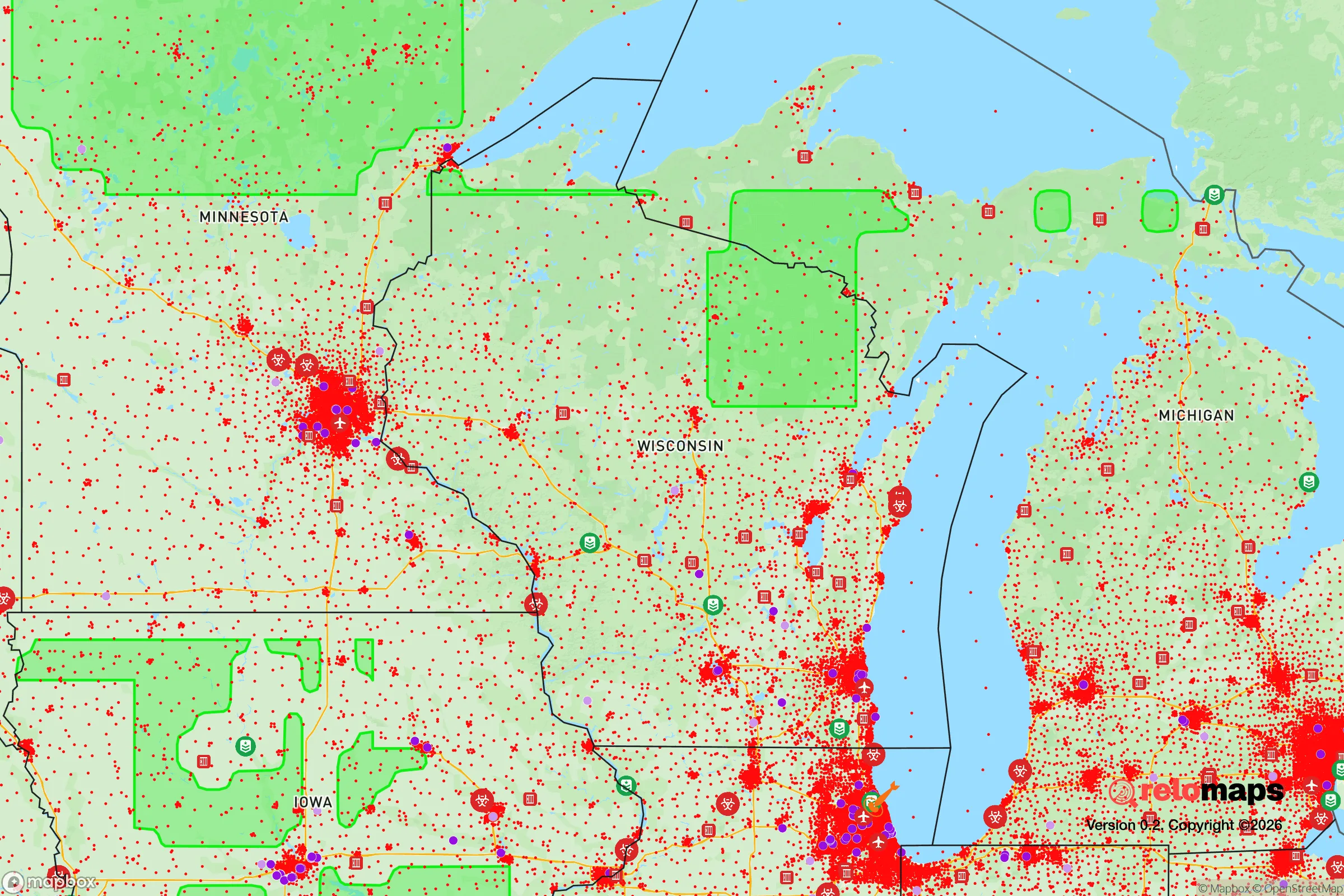


Important Note: For informational purposes only. This does not mean nothing bad ever happens in the green zones. Please use common sense. This is based on public data and modeled with AI. We tried to take a conservative approach but mistakes happen. We update this regularly as new information becomes available.
Solar Generator Recommendations
Backup power matters more here than in safer locations. We've picked three solar generators across budgets and capacity tiers — start with the budget unit if you only need a few essentials, or step up if you want to run a fridge and HVAC for days at a time.

Jackery Portable Power Station Explorer 300
Budget OptionPower on the Go: Weighing only 11 lbs, it's convenient to set up and store with book-sized foldable solar panels

BLUETTI Portable Power Station AC180
Designed for both indoor and outdoor scenarios, AC180 is highly capable as it has a robost capacity and continuous output power.

EF ECOFLOW DELTA Pro Ultra Power Station
Upgraded PickEcoFlow DELTA Pro Ultra is a whole-home energy system designed to grow with your family. Integrated with the Smart Home Panel 2, it scales to meet your evolving energy needs — keeping your home powered, intelligent, and secure through every stage of life.
We earn a commission, at no additional cost to you.
Strategic Assessment Analysis
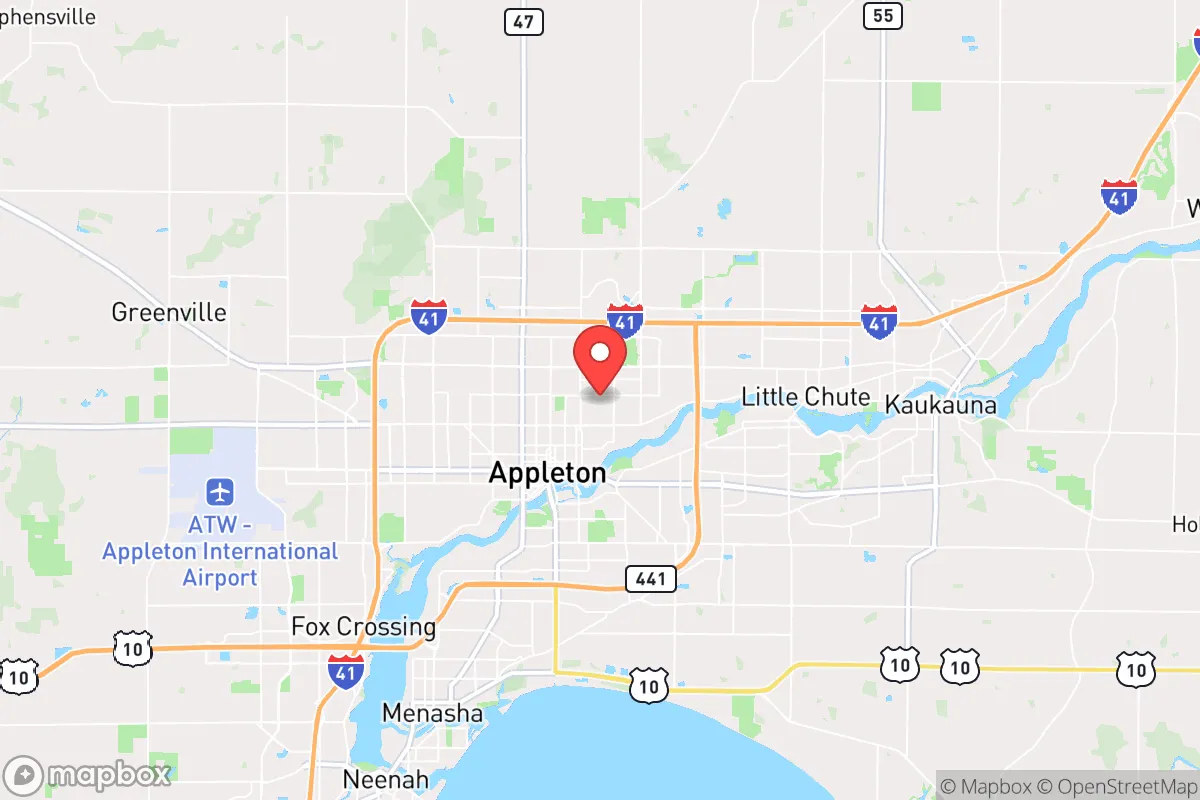
Appleton, Wisconsin, offers a surprisingly resilient strategic position for those prioritizing preparedness, combining a robust local economy with a location that keeps major threats at a manageable distance. Nestled in the Fox River Valley, this city of roughly 75,000 sits far enough from the nation's most volatile corridors—Chicago and Milwaukee—to avoid the worst of urban collapse, yet close enough to access their resources if needed. For a conservative-leaning relocator focused on self-reliance, Appleton’s mix of agricultural hinterlands, industrial capacity, and a politically moderate-to-conservative population makes it a credible base for weathering civic unrest, economic disruption, or larger-scale disasters.
Geographic position and natural advantages for long-term stability
Appleton’s geographic strength lies in its position within the Fox River Valley, a region defined by fertile farmland, abundant freshwater, and a climate that, while harsh in winter, discourages mass migration from warmer crisis zones. The city sits about 100 miles north of Milwaukee and 30 miles southwest of Green Bay, placing it in a corridor that has historically been insulated from the worst of coastal or border-state instability. The Fox River itself runs through the city, providing a reliable surface water source, while Lake Winnebago—the largest inland lake in Wisconsin—lies just 20 miles to the south, offering a massive freshwater reservoir. The surrounding terrain is mostly flat to gently rolling, which limits natural defensibility but also means no major choke points that would funnel unrest or disaster refugees directly into the area. The region’s agricultural output is substantial: Outagamie County, where Appleton sits, is part of Wisconsin’s dairy and grain belt, meaning local food production is a realistic fallback. Winters are cold and snowy, which can be a hardship but also a natural barrier—few unprepared populations will attempt a northward trek in January. For a prepper, this climate demands serious preparation (heating fuel, cold-weather gear, food storage), but it also buys time and isolation.
Risks, exposures, and proximity to fallout-relevant landmarks
No location is without vulnerabilities, and Appleton has several that a strategic relocator must weigh. The most obvious risk is proximity to the Fox Cities metropolitan area—Appleton is the largest city in a cluster that includes Neenah, Menasha, and Kaukauna, totaling roughly 250,000 people. This density means that a localized disaster (chemical spill, civil unrest, pandemic) could cascade across the valley. The city is also within 100 miles of the Kewaunee Nuclear Power Plant, a single-unit pressurized water reactor on Lake Michigan about 50 miles northeast. While the plant has a solid safety record, any major incident there could force evacuation or contamination of the Fox River watershed, which is Appleton’s primary water source. Additionally, the city lies along major rail lines and Interstate 41, a north-south corridor that connects Green Bay to Milwaukee. In a national crisis, this highway could become a funnel for refugees from the south, straining local resources. The nearest major military installation is Fort McCoy, about 100 miles west, which is a training base and not a direct threat, but it could become a staging area for federal response in a worst-case scenario. For the conservative prepper, the key takeaway is that Appleton is not a remote bunker—it’s a regional hub with real exposure to cascading failures from the Great Lakes industrial corridor. Mitigation requires a rural buffer: a property in the surrounding townships of Grand Chute, Greenville, or Freedom would cut population density by 90% while keeping access to Appleton’s hospitals and supply chains.
Practical resilience for a relocator: food, water, energy, and defensibility
For someone serious about self-sufficiency, Appleton’s practical resilience is a mixed bag that rewards preparation. Food security is strong—the region is dotted with small farms, farmers’ markets (the Appleton Downtown Farm Market runs May through October), and ample hunting opportunities for deer and waterfowl. The Fox River and Lake Winnebago provide fishing year-round, though ice fishing requires gear and know-how. Local soil is fertile for gardening, with a growing season of roughly 140 days (May to September), enough for potatoes, squash, beans, and cold-hardy greens. Water is abundant but requires treatment—the Fox River is navigable but carries industrial runoff from paper mills (Appleton is historically a paper-making hub), so filtration or well water is essential. Municipal water comes from Lake Michigan via a pipeline, which is a vulnerability if power fails. A backup well on rural property is a wise investment. Energy is a concern—the grid is reliable day-to-day, but winter storms can knock out power for days. Natural gas is common for heating, but a wood stove or propane backup is critical. Solar is viable but less efficient in Wisconsin’s cloudy winters; a generator with stored fuel is more practical. Defensibility is moderate—Appleton itself is a grid of streets with limited natural barriers, making it hard to secure in a breakdown scenario. However, the surrounding countryside offers better options: farmhouses with cleared sightlines, creeks as natural boundaries, and rural roads that can be monitored. The local population leans conservative and community-oriented, with a strong hunting culture and a network of churches and civic groups that could form mutual-aid networks. The Outagamie County Sheriff’s Office is professional and well-funded, but in a prolonged crisis, you’re on your own—plan accordingly.
The overall strategic picture for Appleton is one of calculated risk. It’s not a remote survivalist’s paradise—you’re within a few hours of major population centers and their associated dangers. But for a relocator who wants a functioning small city with a real economy, decent healthcare (ThedaCare Regional Medical Center is a Level II trauma center), and a population that largely shares conservative values of self-reliance and community, it’s a solid choice. The key is to treat Appleton as a hub, not a haven: secure a rural property within 20-30 minutes, stockpile for winter, and build relationships with local farmers and gun clubs. The Fox River Valley has weathered economic shifts, industrial decline, and political turbulence before—it’s not flashy, but it’s durable. If you’re looking for a place that balances access to resources with a buffer from the worst of national chaos, Appleton deserves a serious look. Just don’t expect to be completely isolated—plan for the neighbors, and you’ll be fine.

* Values derived from national, state, county, city and local statistics and may differ in a specific area. Last updated: 2026-04-21T10:10:59.000Z
Narrative content on this page is AI-generated and may contain mistakes. Verify any details that matter before acting on them.
ReloMaps may earn a commission from affiliate links at no extra cost to you.

