Photo: Wikipedia
Demographics of Anaheim, CA
Affluence Level in Anaheim, CA
A middle-class area roughly in line with national averages across income, home values, education, and employment.
People of Anaheim, CA
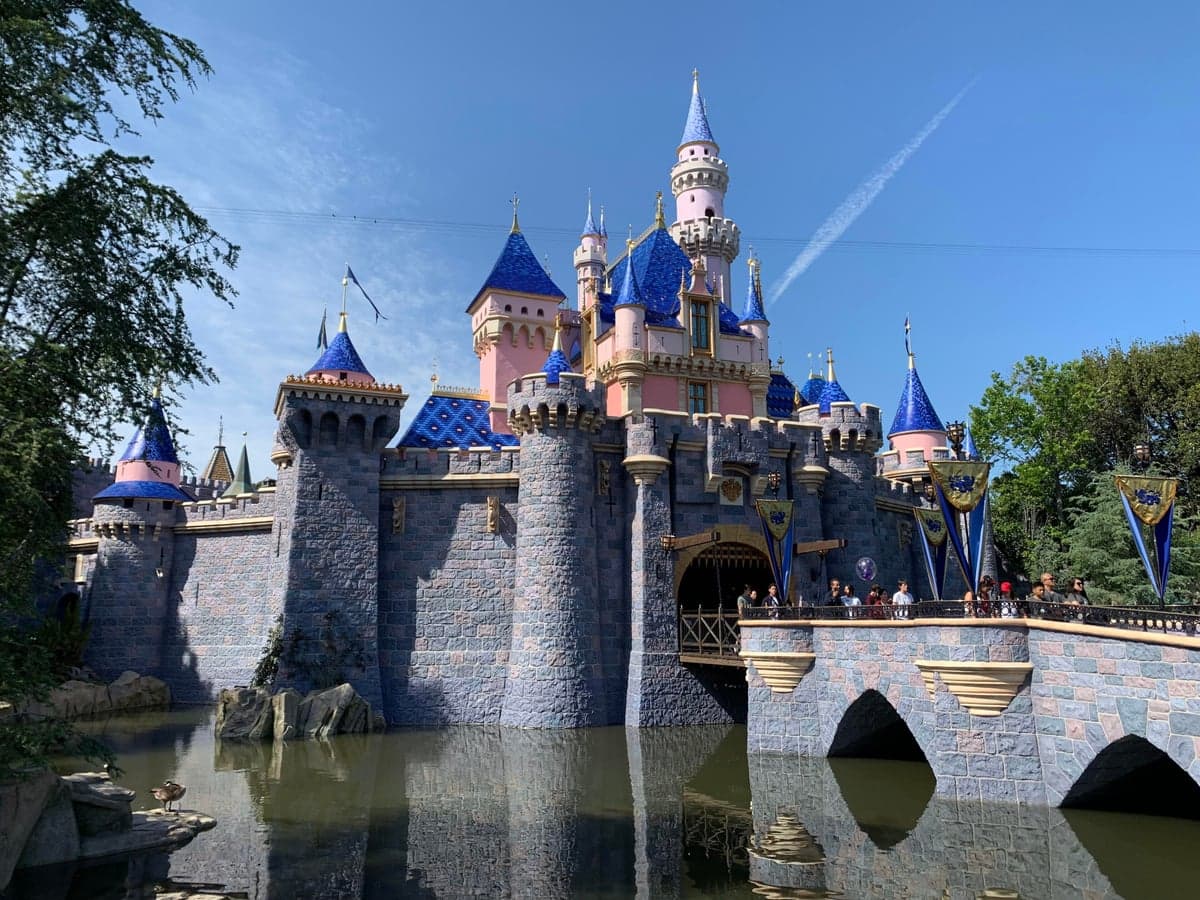
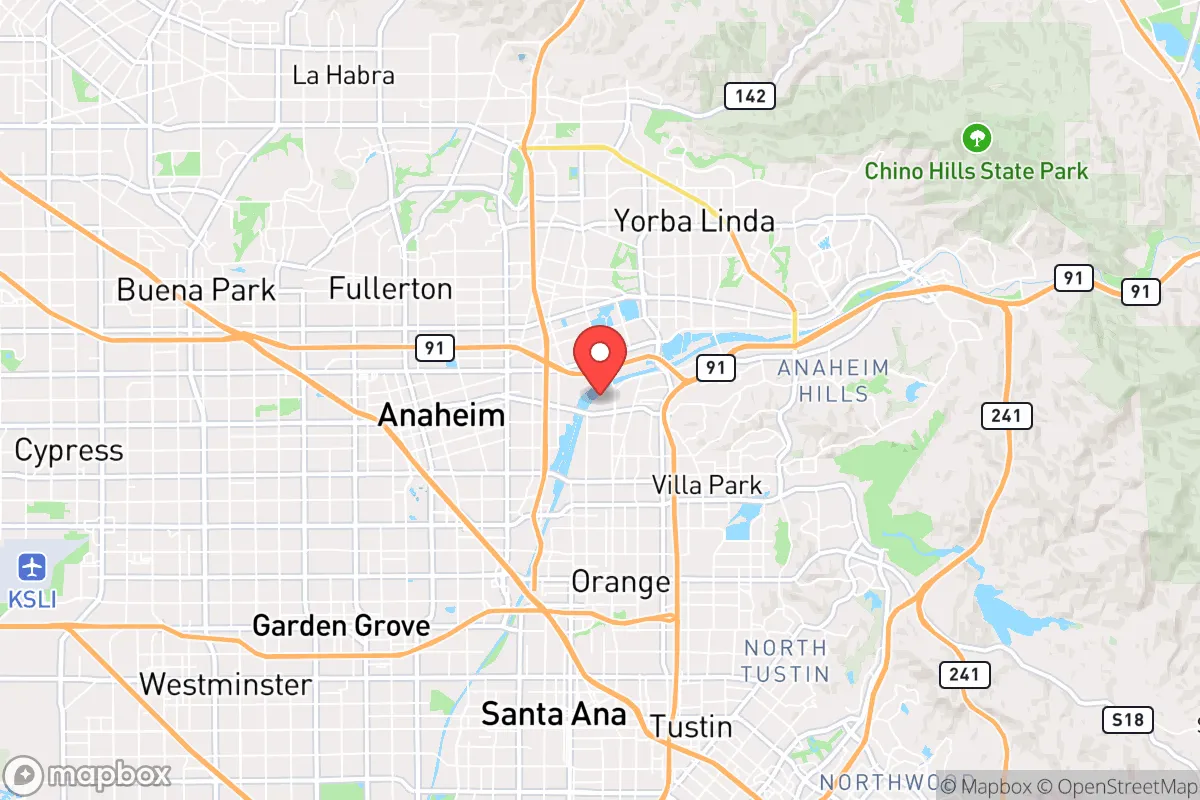
Anaheim, California, is a city of 344,553 residents defined by its majority-Hispanic population (52.5%) and a significant East/Southeast Asian community (16.1%), creating a distinctly bicultural, working-to-middle-class character. The city is denser than most of Orange County, with a foreign-born share of 17.5% and a college attainment rate of 28.8%, reflecting a population shaped by decades of industrial employment and immigrant entrepreneurship. Its identity is less the tourist magnet of Disneyland and more a patchwork of historic neighborhoods where successive waves of German, Mexican, and Vietnamese families built stable, often multigenerational communities.
How the city was settled and grew
Anaheim was founded in 1857 by 50 German-American families from San Francisco, who purchased a 1,165-acre tract of the former Rancho San Juan Cajón de Santa Ana to establish a wine-growing colony. These settlers, mostly Lutheran and Methodist, laid out a compact grid centered around what is now Downtown Anaheim, building the city's first homes, a school, and a church. The original German population remained dominant through the late 19th century, but the phylloxera blight of the 1880s killed the wine industry, forcing a shift to citrus and walnuts. By the early 1900s, Mexican laborers arrived to work the citrus groves, settling in the La Colonia neighborhood just west of downtown, which became the city's first enduring Hispanic enclave. The post-World War II boom transformed Anaheim from a farm town into a manufacturing and aerospace hub, driven by the opening of Disneyland in 1955 and the expansion of defense contractors like Northrop and Rockwell. This drew white Midwestern and Southern migrants into new tract-home subdivisions such as Anaheim Hills, a master-planned community of single-family homes on the city's eastern edge, and the West Anaheim neighborhoods built around the booming industrial corridor along the Santa Ana River.
Modern era (post-1965)
The Immigration and Nationality Act of 1965 reshaped Anaheim's demographics dramatically. Mexican immigration accelerated, expanding the historic La Colonia core into a broad Hispanic belt stretching west from downtown through West Anaheim, where many families found work in the city's hotels, restaurants, and light manufacturing. By 2020, Hispanics made up 52.5% of the population, up from roughly 15% in 1970. Simultaneously, the fall of Saigon in 1975 brought a wave of Vietnamese refugees, who clustered in the Little Saigon area along the city's southeastern edge, near the border with Garden Grove. This East/Southeast Asian community (16.1% of the city today) built a dense commercial corridor of phở restaurants, bakeries, and shopping plazas that anchors one of the largest Vietnamese populations outside Vietnam. The white population, which was over 80% in 1970, declined to 23.2% by 2026, with many older white families moving to Anaheim Hills or out of the city entirely. The Black population has remained small and stable at 2.3%, concentrated in the Brookhurst Street corridor and parts of central Anaheim. The Indian-subcontinent population (2.3%) is a newer, smaller group, largely professionals drawn to tech and healthcare jobs, settling in Anaheim Hills and the newer developments near the 91 freeway.
The future
Anaheim's population is trending toward greater ethnic consolidation rather than homogenization. The Hispanic share is projected to grow slowly, possibly reaching 55-58% by 2040, driven by higher birth rates and continued immigration from Mexico and Central America. The East/Southeast Asian community appears to be plateauing, with younger Vietnamese-Americans increasingly moving to more affordable inland suburbs like Riverside and Corona. The white population will likely continue its slow decline, though Anaheim Hills will remain a predominantly white, affluent enclave. The Indian-subcontinent community is the fastest-growing segment, albeit from a small base, and is expected to double to around 5% by 2040 as tech employment in nearby Irvine and Tustin expands. The city is not tribalizing into hostile camps, but it is becoming more spatially segregated by ethnicity and income: Hispanic families in West Anaheim and La Colonia, Asian families near Little Saigon, and white families in Anaheim Hills. The foreign-born share (17.5%) is slightly below the national average for large cities, suggesting a population that is increasingly native-born and second-generation, which may accelerate English acquisition and political assimilation over the next decade.
For a conservative-leaning individual or family moving to Anaheim today, the city offers a choice of distinct neighborhoods with very different characters. West Anaheim and La Colonia are dense, family-oriented, and heavily Hispanic, with strong Catholic parish life and a lower cost of living. Anaheim Hills is suburban, predominantly white and Asian, with top-rated schools and a more politically conservative tilt. The city as a whole is becoming more diverse, more native-born, and more economically stratified, but it remains a place where working-class immigrant communities have put down deep roots and where a stable, family-centered lifestyle is still attainable for those willing to navigate the trade-offs of density, traffic, and school quality.

* Values derived from national, state, county, city and local statistics and may differ in a specific area. Last updated: 2026-04-24T03:37:24.000Z
Narrative content on this page is AI-generated and may contain mistakes. Verify any details that matter before acting on them.
ReloMaps may earn a commission from affiliate links at no extra cost to you.

