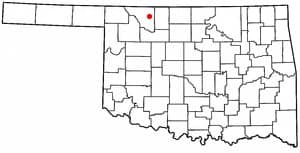
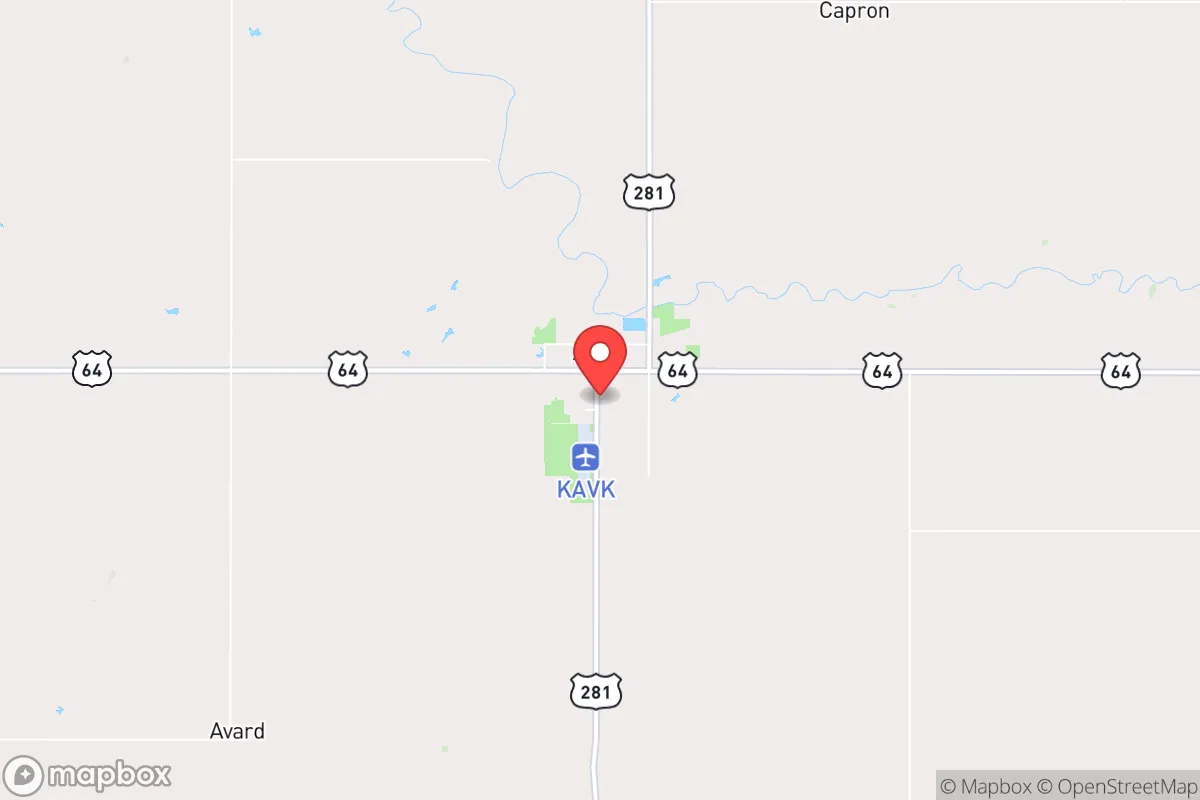
Photo: Wikipedia
Personal Sovereignty in Alva, OK
Strong independent fundamentals that actively favor personal liberty and low regulation.
What does Personal Sovereignty tell us?
Personal Sovereignty measures your capacity for self-reliance and independence with minimal government friction. Higher scores mean fewer barriers between you and the way you want to live... but it assumes you have the space you need and good neighbors.
What does this tell us?
Personal Sovereignty measures your capacity for self-reliance and independence with minimal government friction. Higher scores mean fewer barriers between you and the way you want to live... but it assumes you have the space you need and good neighbors.
State Policy
Energy independence: Net exporter (180% of energy produced in-state)
Personal Liberty
Homesteading

Personal Liberty Analysis
Alva, Oklahoma, offers a personal sovereignty environment that is among the most permissive in the nation, grounded in Oklahoma’s strong constitutional protections for individual rights and a state-level political culture that consistently prioritizes limited government. For a single individual or family who values autonomy—whether in self-defense, property use, medical decisions, or financial independence—Alva represents a low-friction jurisdiction where the default answer from local government is typically "yes" unless a specific public safety or health concern is demonstrated. The city’s small size (roughly 5,000 residents) and its location in rural Woods County mean that regulatory oversight is minimal, enforcement is often neighbor-driven rather than code-driven, and the practical ability to live according to one’s own choices is high.
Tax burden and regulatory posture in Alva and Woods County
Oklahoma’s overall tax burden ranks among the lowest in the country, and Alva residents benefit directly from that posture. There is no state income tax on retirement income, and the state’s flat personal income tax rate is 4.75% as of 2026, with scheduled reductions tied to revenue triggers. Property taxes in Woods County are exceptionally low by national standards—effective rates typically fall between 0.6% and 0.9% of assessed value—because Oklahoma caps property tax growth and limits millage rates. Sales tax in Alva combines the state rate of 4.5% with local levies, bringing the total to roughly 8.5% to 9%, which is moderate for Oklahoma but still below many coastal metro areas. The regulatory posture at the city level is light-touch: Alva does not impose rent control, has no local minimum wage above the state’s $7.25, and does not require business licenses for most home-based sole proprietorships. Zoning is present but not aggressive; the city’s code primarily addresses commercial setbacks and lot use rather than dictating aesthetic or lifestyle choices. For a reader comparing Alva to states with more complex regulatory frameworks (California, New York, Colorado), the difference is stark—fewer permits, lower fees, and a general expectation that residents can manage their own affairs without bureaucratic pre-approval.
Self-defense rights and Oklahoma gun law specifics in Alva
Oklahoma is a constitutional carry state, meaning that any person 21 or older who can legally possess a firearm may carry it openly or concealed without a permit. Alva does not impose any local firearm ordinances that exceed state law; there are no city-level restrictions on magazine capacity, firearm type, or storage requirements. The state’s Stand Your Ground statute is among the strongest in the country, removing any duty to retreat before using deadly force in any place where the individual is lawfully present. Castle Doctrine protections extend to occupied vehicles and workplaces, not just residences. For a family moving to Alva, the practical effect is that self-defense decisions are governed by a clear legal framework that presumes the defender acted reasonably unless evidence proves otherwise. There are no waiting periods for firearm purchases, no state-level registry, and no requirement to notify law enforcement when carrying. The local sheriff’s office in Woods County is generally supportive of gun rights, and the nearest major population center (Enid, about 60 miles southeast) has multiple gun shops and ranges. For a reader who prioritizes the ability to defend themselves and their family without government permission or delay, Alva is essentially a best-case scenario within the continental United States.
Self-reliance and homesteading viability: lot sizes, zoning, and off-grid feasibility
Alva’s rural character and permissive zoning make it a strong candidate for anyone interested in homesteading, small-scale agriculture, or off-grid living. Within the city limits, standard residential lots range from one-quarter acre to one-half acre, but larger parcels—one to five acres—are common on the outskirts and in unincorporated Woods County. The city’s zoning code allows for keeping chickens, goats, and other small livestock on residential lots, though larger animals like horses or cattle typically require a minimum lot size of one to two acres. There are no city-level restrictions on rainwater collection, composting, or gardening for personal use. Off-grid feasibility is high: Oklahoma law does not require connection to municipal water or sewer if a property has a permitted well and septic system, and solar panel installation is not subject to HOA or city aesthetic review in most of Woods County. The county does not enforce building codes outside of incorporated towns, meaning that a family building a home on rural land can choose their own construction standards, materials, and timeline without plan review or inspection. Internet access is available via fixed wireless and satellite, but fiber is limited to the Alva city core; for a remote worker or homesteader, Starlink is a reliable option. The combination of low land prices (rural acreage in Woods County often sells for $1,500 to $3,000 per acre), minimal permitting, and tolerant zoning creates an environment where self-reliance is not just possible but practically encouraged.
Personal liberties: parental rights, medical autonomy, speech, and property
Oklahoma has enacted several laws in recent years that strengthen parental rights in education and healthcare. Parents have the legal right to opt their children out of any curriculum or school activity they find objectionable, and the state’s Parents’ Bill of Rights explicitly affirms that parental authority is the default unless a court orders otherwise. In Alva Public Schools, this translates to a conservative administrative culture that generally defers to family decisions on medical treatment, vaccination, and instructional content. Medical autonomy for adults is similarly broad: Oklahoma does not have a state-level vaccine mandate, does not require health insurance for medical procedures, and allows direct primary care arrangements that bypass insurance entirely. Freedom of speech and assembly are protected under the Oklahoma Constitution, which contains its own free speech clause that has been interpreted by state courts as at least as protective as the First Amendment. Property rights are robust: Oklahoma is a "right to farm" state, meaning that agricultural operations—including small homesteads—are protected from nuisance lawsuits if they predate nearby residential development. Eminent domain is limited to public use projects, and the state has passed legislation restricting the use of eminent domain for private economic development. For a reader who values the ability to make decisions about their own body, their children’s upbringing, and their land without government interference, Alva offers a legal environment that is consistently deferential to individual choice.
Compared to other areas of the country, Alva, Oklahoma, ranks among the most sovereignty-friendly small towns in the Great Plains. The combination of constitutional carry, low taxes, minimal zoning, strong parental rights, and a culture of self-reliance creates a place where personal freedom is the baseline assumption rather than an exception. For a single individual or family moving from a high-regulation state, the adjustment is less about learning new rules and more about realizing how few rules actually exist. The trade-offs are real—limited healthcare access, fewer entertainment options, and a slower pace of life—but for a reader whose primary relocation priority is maximizing personal sovereignty, Alva delivers on that promise with fewer compromises than most comparable towns in Oklahoma or neighboring states.

* Values derived from national, state, county, city and local statistics and may differ in a specific area. Last updated: 2026-10-18T15:18:42.000Z
Narrative content on this page is AI-generated and may contain mistakes. Verify any details that matter before acting on them.
ReloMaps may earn a commission from affiliate links at no extra cost to you.

