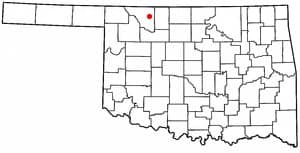
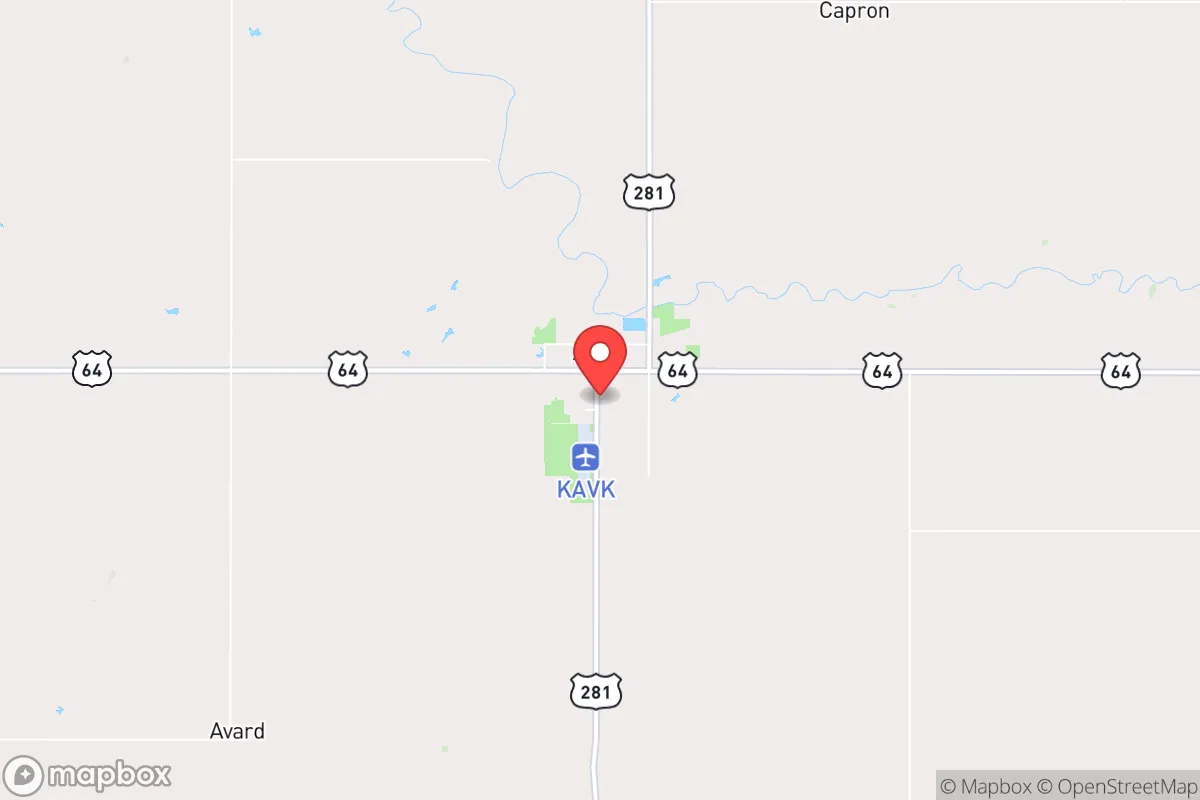
Photo: Wikipedia
Demographics of Alva, OK
Affluence Level in Alva, OK
A low-income area with significant economic hardship. Household wealth and educational attainment are well below national averages.
People of Alva, OK
The people of Alva, Oklahoma today number 5,009, forming a predominantly white (81.3%) community with a growing Hispanic population (10.5%) and a small but present Black (1.7%) and foreign-born (2.3%) contingent. The city retains a distinctively rural, conservative character rooted in its agricultural and energy history, with a college-educated rate of 37.9% that reflects the influence of Northwestern Oklahoma State University. Alva’s identity is shaped by its relative ethnic homogeneity and a slow, steady population decline from a mid-20th-century peak, making it a place where long-standing family networks and newer Hispanic families coexist in a tight-knit, low-crime setting.
How the city was settled and grew
Alva was founded in 1893 during the Cherokee Outlet land run, which drew thousands of homesteaders—mostly white settlers from the Midwest and Upper South—to claim 160-acre plots. The railroad’s arrival in 1893 cemented the town as a regional trade hub for wheat, cattle, and later oil. The original settlers clustered around the downtown core and the historic East Alva neighborhood, where many early merchants and farmers built homes. A second wave of growth came with the 1909 discovery of oil in the nearby Woods County fields, attracting roughnecks and speculators who settled in West Alva, a working-class area near the rail yards. By the 1920s, Alva’s population had swelled to over 5,000, and the College Hill district—named for the 1897 founding of Northwestern State Normal School (now NWOSU)—became home to faculty and professionals. The Great Depression and Dust Bowl slowed growth, but the post-WWII oil boom revived the economy, drawing a modest influx of white families from rural Oklahoma into South Alva, a mid-century subdivision of ranch-style homes.
Modern era (post-1965)
After the 1965 Hart-Cellar Act, Alva saw little direct immigration from Asia or Latin America compared to larger Oklahoma cities. The foreign-born share remains just 2.3%, and East/Southeast Asian residents make up only 0.1% of the population. The most significant demographic shift since the 1970s has been the growth of the Hispanic population, which rose from negligible levels to 10.5% today. This wave began in the 1990s, driven by labor demand in the region’s oil fields, feedlots, and agricultural processing. Hispanic families have concentrated in North Alva, a lower-cost area near the highway, and in rental housing around the NWOSU campus, where some students and young workers have settled. The Black population (1.7%) remains small and dispersed, with no distinct ethnic neighborhood. The white population, while still dominant, has aged and declined as younger residents leave for larger cities, a trend visible in the older College Hill and East Alva neighborhoods, where many homes are now occupied by retirees or rented to students.
The future
Alva’s population is projected to continue a slow decline, mirroring rural Oklahoma trends, with the white share shrinking gradually as the Hispanic share grows. The Hispanic population is expected to become the primary source of any future growth, likely dispersing beyond North Alva into South Alva and West Alva as families move into more established housing. The city’s cultural identity is evolving from a nearly all-white, agricultural-oil town into a more bilingual, bicultural community, though change is gradual and intergroup relations remain stable. The university will continue to anchor the population, attracting a small number of out-of-state and international students, but Alva is unlikely to see significant diversification beyond the Hispanic trend. For a new resident, this means joining a community where traditional values and local networks still dominate, but where the Hispanic presence is becoming an increasingly visible part of daily life—from local restaurants to school enrollment.
Alva is becoming a slightly more diverse, slowly shrinking rural community where long-established white families and a growing Hispanic population share a common identity rooted in agriculture, energy, and the university. For someone moving in now, the city offers a stable, low-cost, conservative environment with a clear sense of place, but little of the rapid change or ethnic variety found in larger Oklahoma metros.

* Values derived from national, state, county, city and local statistics and may differ in a specific area. Last updated: 2026-10-18T15:18:42.000Z
Narrative content on this page is AI-generated and may contain mistakes. Verify any details that matter before acting on them.
ReloMaps may earn a commission from affiliate links at no extra cost to you.

