Photo: Wikipedia
Political ClimatePolitical Climate in Alexandria, VA
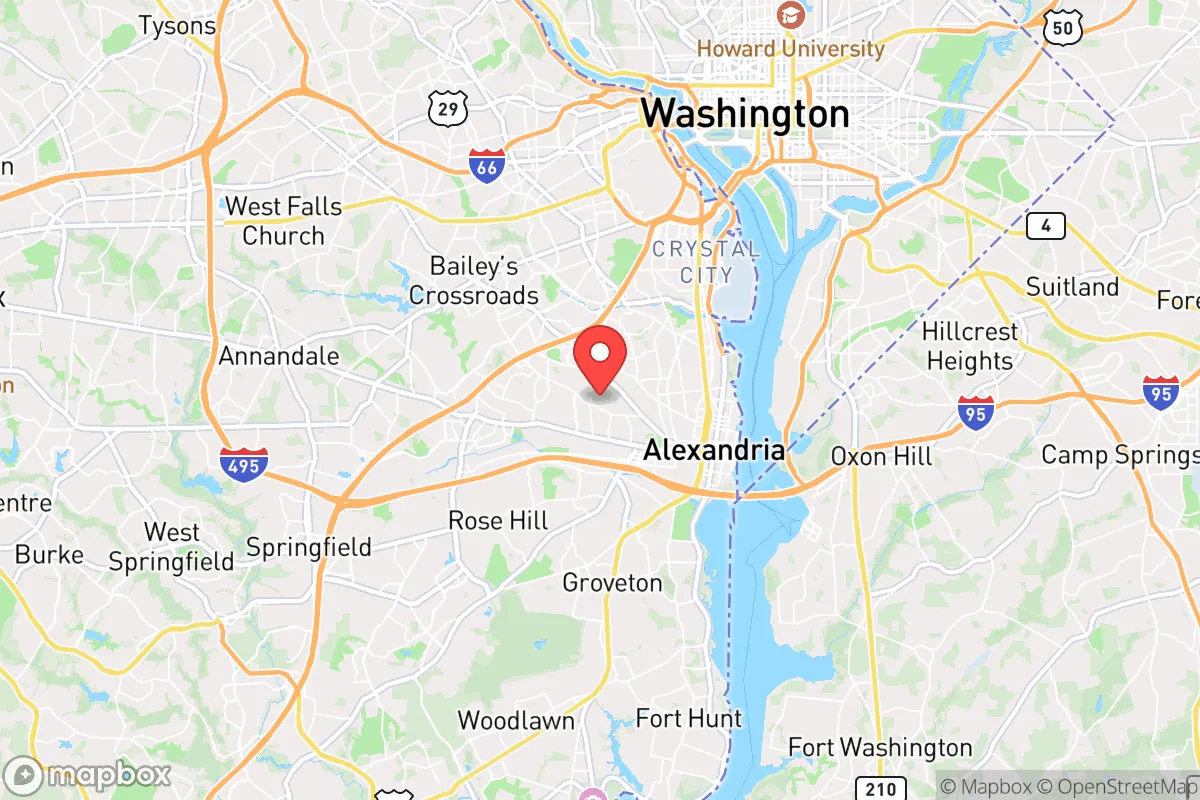
District shown is the primary district for this city’s centroid. Cities may span multiple districts.
Local Political AnalysisPolitical Analysis of Alexandria, VA
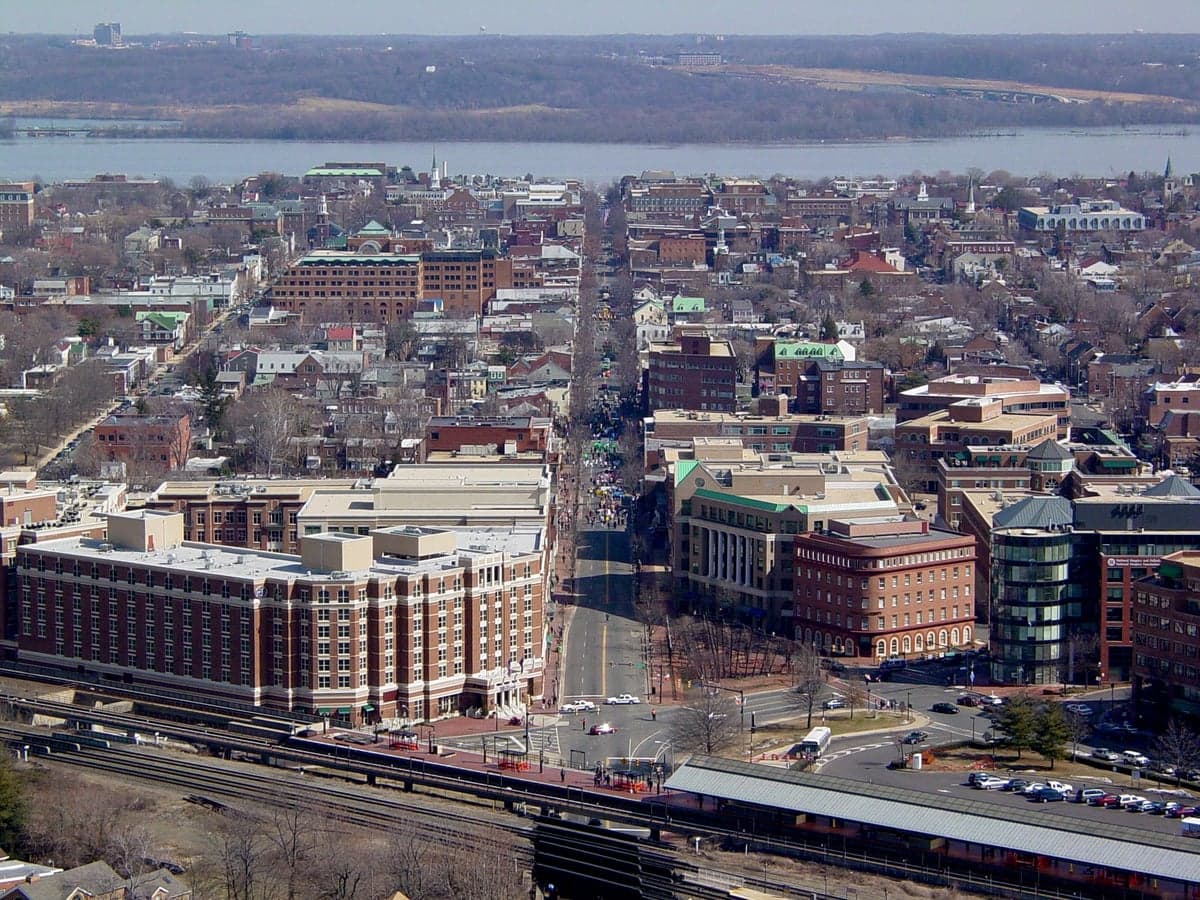
Look, I’ve lived in Alexandria long enough to remember when this town had a more balanced, live-and-let-live vibe. Today, the political climate here is overwhelmingly progressive, with a Cook PVI of D+26—meaning it votes about 26 points more Democratic than the national average. That shift has been steady and unmistakable over the past decade, and it’s not just about elections; it’s about how the city governs daily life. If you value personal freedoms and limited government, you’ll want to understand what that D+26 really means on the ground.
How it compares
Alexandria is a deep-blue island surrounded by a mix of red and purple. Drive 15 minutes west to Fairfax County and you’ll find a more moderate suburban landscape—still Democratic-leaning, but with a stronger streak of fiscal conservatism and property-rights advocacy. Head south to Prince William County or Stafford County, and you’re in reliably red territory where tax rates are lower and zoning laws are looser. Even within the D.C. metro, Alexandria stands out: it’s more progressive than Arlington (D+35) but far less polarized than D.C. proper. The contrast is stark when you cross the Potomac into Maryland’s Montgomery County, which shares Alexandria’s blue tilt but has a more established tradition of pragmatic governance. Here, the progressive agenda feels newer and more aggressive—like it’s trying to outrun its own history.
What this means for residents
For a conservative-leaning resident, the D+26 reality translates into policies that can feel intrusive. Zoning and land-use rules have tightened significantly, with the city pushing for higher-density development and “missing middle” housing that often overrides neighborhood input. Property taxes have crept up to fund expanded social programs, and there’s a growing list of local ordinances—from plastic bag bans to energy-efficiency mandates—that add layers of bureaucracy to everyday life. The school board has embraced progressive curriculum changes that some parents find out of step with traditional values. If you’re someone who believes local government should stay out of your backyard, your garage, and your child’s classroom, Alexandria’s trajectory is concerning. The city council and school board elections are dominated by candidates who see government as a tool for social engineering, not as a protector of individual rights.
Cultural and policy distinctions
What really sets Alexandria apart is the cultural enforcement of its politics. It’s not just the laws—it’s the social pressure. Neighbors, local businesses, and civic groups often expect conformity to progressive norms, and dissent can feel isolating. The city’s historic Old Town district is a beautiful place, but its charm masks a political monoculture where alternative viewpoints are rarely heard in public forums. The police department has faced repeated calls to defund or restructure, even as crime rates in nearby areas have ticked up. And while Alexandria’s economy is strong—thanks largely to federal contractors and D.C. commuters—the regulatory environment makes it harder for small businesses and independent contractors to thrive. If you’re considering a move here, know that the political climate isn’t just a backdrop; it’s a daily reality that shapes everything from your tax bill to your child’s education to your freedom to speak your mind without being labeled. I’d keep an eye on the next few election cycles—if the trend continues, Alexandria may become even more of a one-party town, and that’s rarely good for anyone’s liberties.

State Political ClimatePolitical Climate in Virginia
State Political AnalysisPolitical Environment in the State
Virginia has shifted from a reliably purple swing state to a solidly blue one over the past 15 years, driven largely by explosive growth in the Washington, D.C. suburbs. The state’s overall partisan lean is now comfortably Democratic at the statewide level, with Democrats controlling the governorship, both chambers of the General Assembly, and both U.S. Senate seats. However, this blue veneer masks a deep internal divide: the rural, mountainous west and the agricultural south remain deeply conservative, while the urban crescent from Northern Virginia down through Richmond to Hampton Roads dictates the state’s political direction. The trajectory has been a steady leftward march since 2008, with no signs of reversal.
Urban vs. rural divide
The political map of Virginia is a tale of two commonwealths. The entire political gravity of the state is centered on Northern Virginia—specifically the counties of Fairfax, Loudoun, Prince William, and Arlington, plus the city of Alexandria. This region alone accounts for roughly one-third of the state’s population and votes overwhelmingly Democratic, often by margins of 60-70%. Richmond and Norfolk/Virginia Beach also lean blue, though Virginia Beach remains a competitive swing city. Meanwhile, the rest of the state is deeply red. The Shenandoah Valley (counties like Rockingham, Augusta, and Shenandoah) and the Southside (Danville, Martinsville, and the counties along the North Carolina border) vote Republican by 30-40 point margins. The Roanoke and Lynchburg areas are conservative strongholds, with Lynchburg being a hub for evangelical Christian political activism. The divide is so stark that a candidate can win the governorship by running up the score in NoVA and Richmond while losing the other 90% of the state’s landmass.
Policy environment
Virginia’s policy environment has become increasingly progressive under Democratic control. The state income tax is a flat 5.75%, but sales tax varies by locality and can reach 7% in Northern Virginia. Property taxes are set at the local level and are generally moderate, but they have been rising steadily in high-demand areas. The regulatory posture is business-friendly in name but increasingly burdensome in practice, especially for energy and manufacturing. Education policy has been a flashpoint: the state eliminated public school mask mandates and critical race theory bans, but the Virginia Department of Education has pushed for expanded LGBTQ+ curriculum and social-emotional learning standards that many conservatives view as ideological. Election laws have been loosened: no-excuse absentee voting, same-day voter registration, and a permanent absentee voter list are now law. The state also legalized recreational marijuana in 2021, though retail sales have been delayed repeatedly. Gun laws have tightened significantly: a 2020 package included universal background checks, a one-handgun-per-month limit, and a red flag law allowing temporary firearm seizure without a criminal conviction.
Trajectory & freedom
Virginia is becoming less free by any conservative measure. The most significant contraction of personal liberty came with the 2020 gun control package, which included the red flag law (SB 70 and HB 2) and a ban on assault weapons for those under 21. In 2021, the state repealed its right-to-work law for public-sector unions, making it easier for government employee unions to organize and collect dues. Parental rights took a hit in 2022 when the state adopted model policies for transgender students that allow them to use preferred names and pronouns without parental consent, and to access bathrooms and locker rooms matching their gender identity. On the medical autonomy front, Virginia has not expanded abortion restrictions post-Dobbs; in fact, the state codified abortion access into law in 2020 and expanded Medicaid under the Affordable Care Act. Property rights have been eroded by aggressive zoning changes in Northern Virginia, including the elimination of single-family-only zoning in Arlington and Alexandria. The only bright spot for conservatives has been the 2023 repeal of the grocery tax, which provided modest tax relief, and the state’s continued refusal to adopt a state-level individual mandate for health insurance.
Civil unrest & political movements
Virginia has been a national epicenter for political flashpoints. The 2017 Unite the Right rally in Charlottesville remains the most infamous, leading to the state’s ban on firearms in public parks and government buildings. In 2020, Richmond saw massive Black Lives Matter protests that escalated into nightly clashes with police, culminating in the removal of Confederate statues from Monument Avenue. The Loudoun County school board became a national symbol of parental rights activism in 2021-2022, after a series of sexual assault cases and the board’s refusal to notify parents of their children’s gender identity changes. This sparked the “Parents Matter” movement that helped flip the Virginia House of Delegates to Republican in 2021, though Democrats regained control in 2023. Immigration politics are relatively quiet compared to border states, but Northern Virginia has several sanctuary cities, including Alexandria and Arlington, which limit cooperation with ICE. Election integrity remains a concern for conservatives: the state’s move to universal mail-in ballots and same-day registration has not produced widespread fraud, but trust in the system is low among rural voters. The Second Amendment sanctuary movement swept through 90+ counties and cities in 2019-2020, with local sheriffs vowing not to enforce the new gun laws—a rare act of local nullification that has so far held up in court.
Projection
Over the next 5-10 years, Virginia will likely continue its leftward drift, driven by relentless population growth in Northern Virginia and the Richmond suburbs. The state’s in-migration is heavily skewed toward young, college-educated professionals who lean Democratic. The rural exodus will accelerate, further diluting conservative voting power. The 2030 redistricting cycle will likely lock in Democratic control of the General Assembly for another decade. Expect further gun control measures (magazine capacity limits, a full assault weapons ban), expansion of transgender rights in schools, and a push for a state-level carbon tax. The one wild card is the growing Hispanic population in the Woodbridge and Manassas areas, which has shown signs of shifting rightward on economic issues. If that trend accelerates, it could slow the blue wave. But for now, the trajectory is clear: Virginia is becoming a solidly blue state, and anyone moving here should expect a policy environment that increasingly mirrors Maryland or New Jersey.
Bottom line for a new resident: If you value low taxes, gun rights, parental control over education, and limited government, Virginia is a state you should approach with caution. The rural areas and smaller cities like Roanoke, Lynchburg, and Harrisonburg still offer a conservative lifestyle, but you will be fighting an uphill battle at the state level. Your vote will matter less and less as the NoVA machine grows. If you do move here, choose your county carefully—local government is where you still have real influence. But be prepared for a state government that is increasingly hostile to traditional values and personal freedoms.
* Values derived from national, state, county, city and local statistics and may differ in a specific area. Last updated: 2026-05-02T01:19:06.000Z
Narrative content on this page is AI-generated and may contain mistakes. Verify any details that matter before acting on them.
ReloMaps may earn a commission from affiliate links at no extra cost to you.

