Photo: Wikipedia
Personal Sovereignty in Alexandria, VA
Viable for self-reliance. Generally workable, though some barriers may limit total independence.
What does Personal Sovereignty tell us?
Personal Sovereignty measures your capacity for self-reliance and independence with minimal government friction. Higher scores mean fewer barriers between you and the way you want to live... but it assumes you have the space you need and good neighbors.
What does this tell us?
Personal Sovereignty measures your capacity for self-reliance and independence with minimal government friction. Higher scores mean fewer barriers between you and the way you want to live... but it assumes you have the space you need and good neighbors.
State Policy
Energy independence: Importer (20% of energy produced in-state)
Personal Liberty
Homesteading

Personal Liberty Analysis
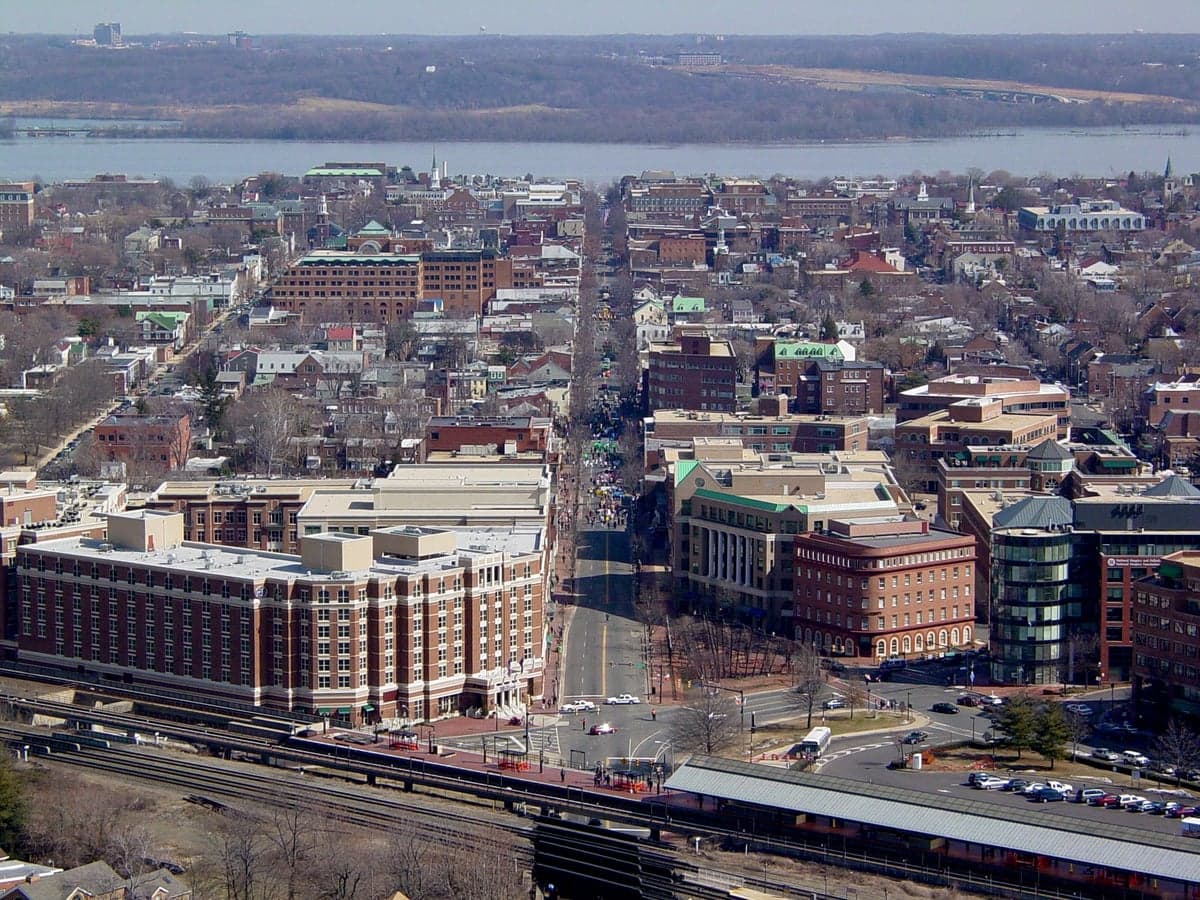
Alexandria, Virginia presents a complex and often contradictory environment for personal sovereignty, one that demands careful scrutiny from anyone prioritizing autonomy over government reach. While the city offers proximity to federal power and a dense, walkable urban core, its governance structure—deeply embedded in Northern Virginia’s progressive political culture—imposes significant constraints on individual freedoms that a survivalist or prepper mindset would find troubling. The overarching reality is that Alexandria’s local ordinances and Virginia state laws create a framework where personal liberty is frequently secondary to collective mandates, making it a location that requires strategic navigation rather than passive acceptance.
Tax burden and regulatory posture: how much of your income and property stays yours
Virginia’s tax structure is a mixed bag, but Alexandria’s local implementation tilts heavily toward extraction. The state income tax is a flat 5.75% on all income over $17,000, which is moderate compared to high-tax states like California or New York, but still a non-trivial cut from earnings. Property taxes in Alexandria are a more aggressive story: the city’s real estate tax rate is $1.13 per $100 of assessed value (2025 rate), among the highest in Virginia. With median home values hovering around $650,000, that translates to an annual property tax bill of roughly $7,345—a substantial recurring cost that directly reduces your ability to invest in self-reliance infrastructure like land, supplies, or alternative energy. The city also imposes a personal property tax on vehicles, boats, and even business equipment, with rates around $5.00 per $100 of assessed value for cars. Regulatory posture is equally dense: Alexandria enforces strict zoning codes, building permits, and environmental regulations that can delay or block modifications to your property. For example, installing a rainwater catchment system or solar panels requires permits and adherence to historic district rules in many neighborhoods. The cumulative effect is a governance model that treats your property and income as communal resources, not your own sovereign domain.
Self-defense and gun law specifics: what you can carry and where you can’t
Virginia is a shall-issue state for concealed carry permits, meaning if you meet the requirements—including a background check and a 16-hour training course—the state must issue the permit. Alexandria, however, is a jurisdiction where local enforcement and cultural attitudes create friction. The city has passed ordinances banning firearms in city-owned buildings, parks, and recreation centers, and while state preemption laws technically limit local gun control, Alexandria has aggressively pushed boundaries. Open carry is legal for those 18 and older with a valid permit, but in practice, doing so in Alexandria’s dense urban environment invites police scrutiny and public alarm. The real constraint is the patchwork of “sensitive places” where carry is prohibited: schools, courthouses, airports, and any property with posted signage. For a prepper, this means your ability to defend yourself is severely limited in daily life—commuting on the Metro (which bans firearms entirely), visiting a government office, or even walking through a city park. The state’s red flag law, enacted in 2020, allows law enforcement to seek temporary removal of firearms from individuals deemed a threat, based on a civil petition with no criminal conviction required. This is a direct threat to due process and personal sovereignty, as it bypasses traditional legal protections. In short, Alexandria is not a place where you can rely on your own means of self-defense without navigating a thicket of restrictions.
Self-reliance and homesteading viability: lot sizes, zoning, and off-grid feasibility
For anyone serious about homesteading or off-grid living, Alexandria is fundamentally hostile terrain. The city’s zoning code is designed for dense, interconnected urban living, not self-sufficient parcels. Typical residential lot sizes in neighborhoods like Del Ray or Old Town are 0.1 to 0.25 acres, with many homes on narrow lots of 2,500 to 5,000 square feet. This leaves virtually no room for substantial gardening, livestock, or water storage. Raising chickens is permitted only in limited circumstances—hens are allowed with a permit and strict coop requirements, but roosters are banned outright. Keeping goats, bees, or larger livestock is prohibited in most residential zones. Off-grid systems face even steeper barriers: Alexandria requires connection to municipal water and sewer, and solar panel installations must comply with historic district guidelines in many areas. Rainwater harvesting is technically allowed but limited to 1,000 gallons per property, and any system must be registered with the city. The climate itself—humid summers and cold winters—makes passive solar or geothermal systems less efficient without significant investment. For a prepper seeking true self-reliance, Alexandria offers little more than a balcony herb garden and a backup generator. The city’s infrastructure is entirely dependent on centralized grids and supply chains, which is precisely the vulnerability a survivalist mindset seeks to mitigate.
Personal liberties: parental rights, medical autonomy, speech, and property
Alexandria’s local government has a track record of prioritizing collective outcomes over individual rights, which creates friction for those who value parental authority and medical freedom. Parental rights are under pressure: the city’s public school system, Alexandria City Public Schools, has implemented policies that allow students to change their names and pronouns without parental notification, and the district’s health curriculum includes comprehensive sex education that parents cannot opt out of entirely. This directly undermines the family as the primary unit of sovereignty. Medical autonomy is similarly constrained—Virginia mandates vaccines for school attendance with limited religious exemptions, and during public health emergencies, the state has broad authority to impose restrictions. The city also enforces strict noise ordinances, sign regulations, and public assembly permits that can limit free expression. Property rights are the most concrete battleground: Alexandria’s zoning board and historic preservation commission have broad power to deny modifications to your home, from window replacements to fence heights. The city’s rental inspection program requires landlords to submit to periodic inspections, and owner-occupied homes in historic districts face similar scrutiny. For a property owner, this means your land is not truly yours to modify as you see fit—the city’s aesthetic and safety standards override your personal judgment.
In the broader context of the Mid-Atlantic region, Alexandria ranks low for personal sovereignty compared to more rural or libertarian-leaning areas like Virginia’s Shenandoah Valley or West Virginia’s eastern panhandle. Its tax burden, gun restrictions, zoning density, and progressive governance create an environment where individual autonomy is constantly negotiated against collective mandates. For a single individual or parent with a survivalist mindset, Alexandria is a place to work and engage strategically, but not to plant deep roots for self-reliance. The city’s strengths—economic opportunity, infrastructure, and cultural amenities—come at the cost of constant government oversight and limited personal latitude. If sovereignty is your primary metric, you would be better served by a county with looser zoning, lower taxes, and stronger property rights, where your ability to prepare, defend, and live on your own terms is not subject to a city council vote.

* Values derived from national, state, county, city and local statistics and may differ in a specific area. Last updated: 2026-05-02T01:19:06.000Z
Narrative content on this page is AI-generated and may contain mistakes. Verify any details that matter before acting on them.
ReloMaps may earn a commission from affiliate links at no extra cost to you.

