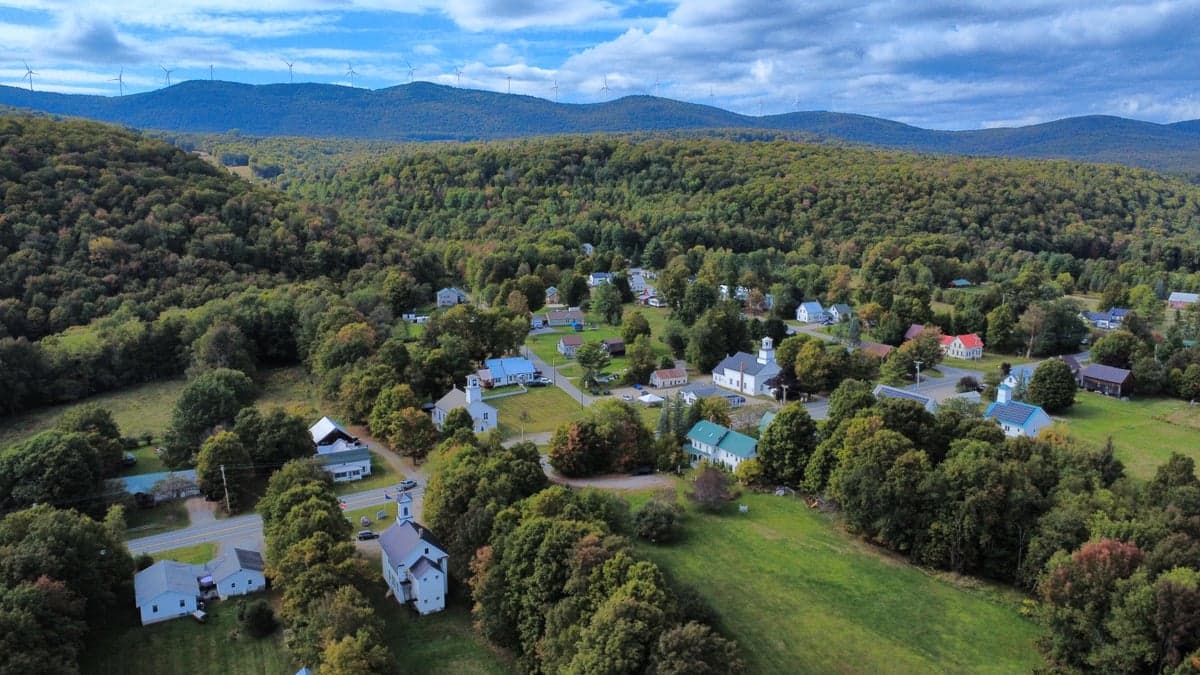
Photo: Wikipedia
Strategic Assessment of Albany, VT
Meaningful friction. Expect exposure to either population pressure, blast zones, or natural disaster risk. Consider buying a retreat property.
What does the Strategic Assessment tell us?
Our Strategic Assessment grades tactical survivability of an area. Major population centers, military targets, fallout zones, natural disasters, and border exposure all drive risk — lower exposure means a more defensible position in a crisis.
This is heavily inspired by Joel Skousen's Strategic Relocation book. Highly recommended you checkout the book ($)What does this tell us?
Our Strategic Assessment grades tactical survivability of an area. Major population centers, military targets, fallout zones, natural disasters, and border exposure all drive risk — lower exposure means a more defensible position in a crisis.
This is heavily inspired by Joel Skousen's Strategic Relocation book. Highly recommended you checkout the book ($)Strategic Pillars

Key Distances
Regional Safe Places
Below is our recommended "safe zones" in Vermont and the surrounding area based on our strategic heuristics. For most people, it's unrealistic to live in a “safe zone” full-time due to work, family or other personal reasons. They tend to be more rural. However, many of these areas are perfect for second homes and retreat properties that double as a vacation home or even a short-term rental.
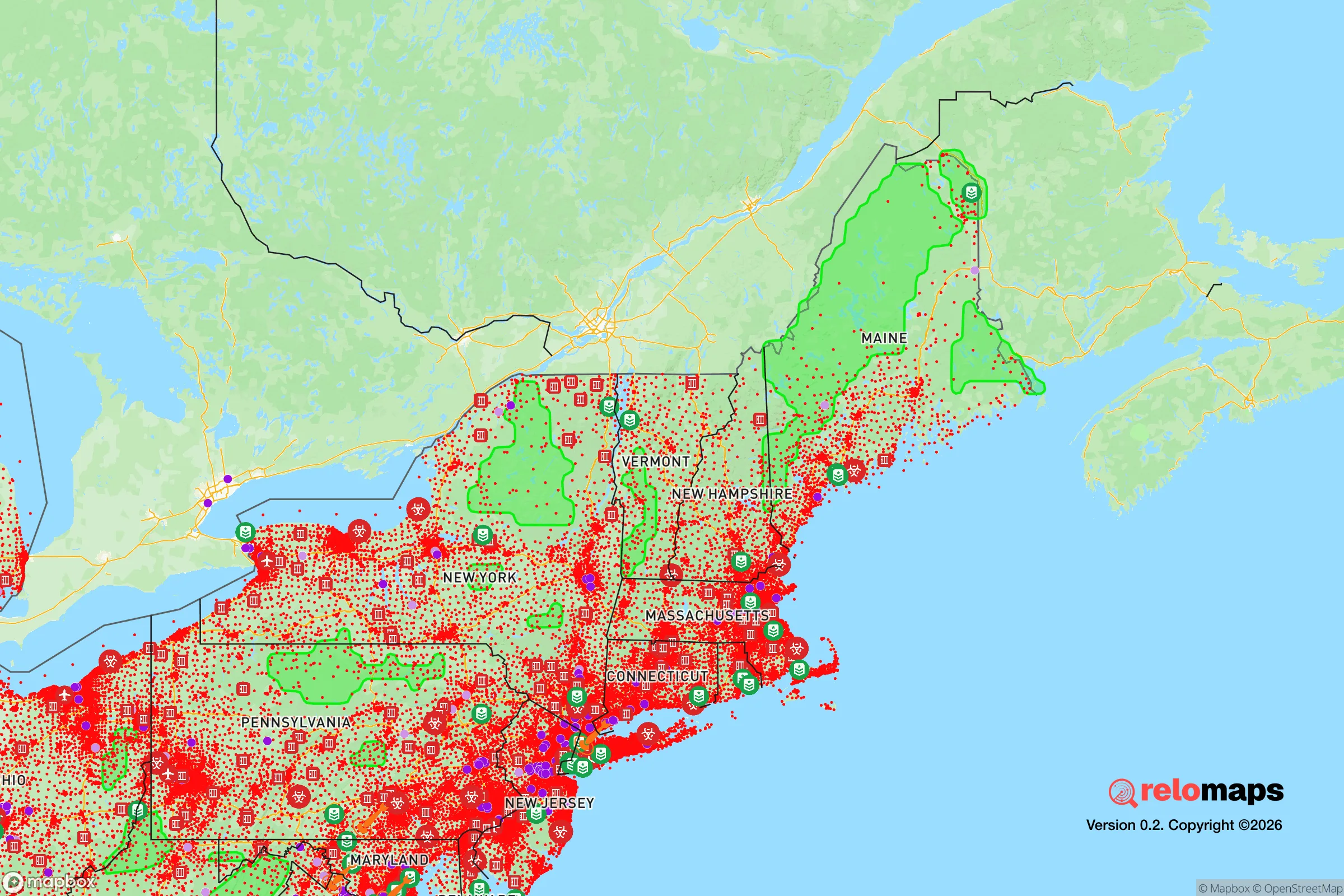
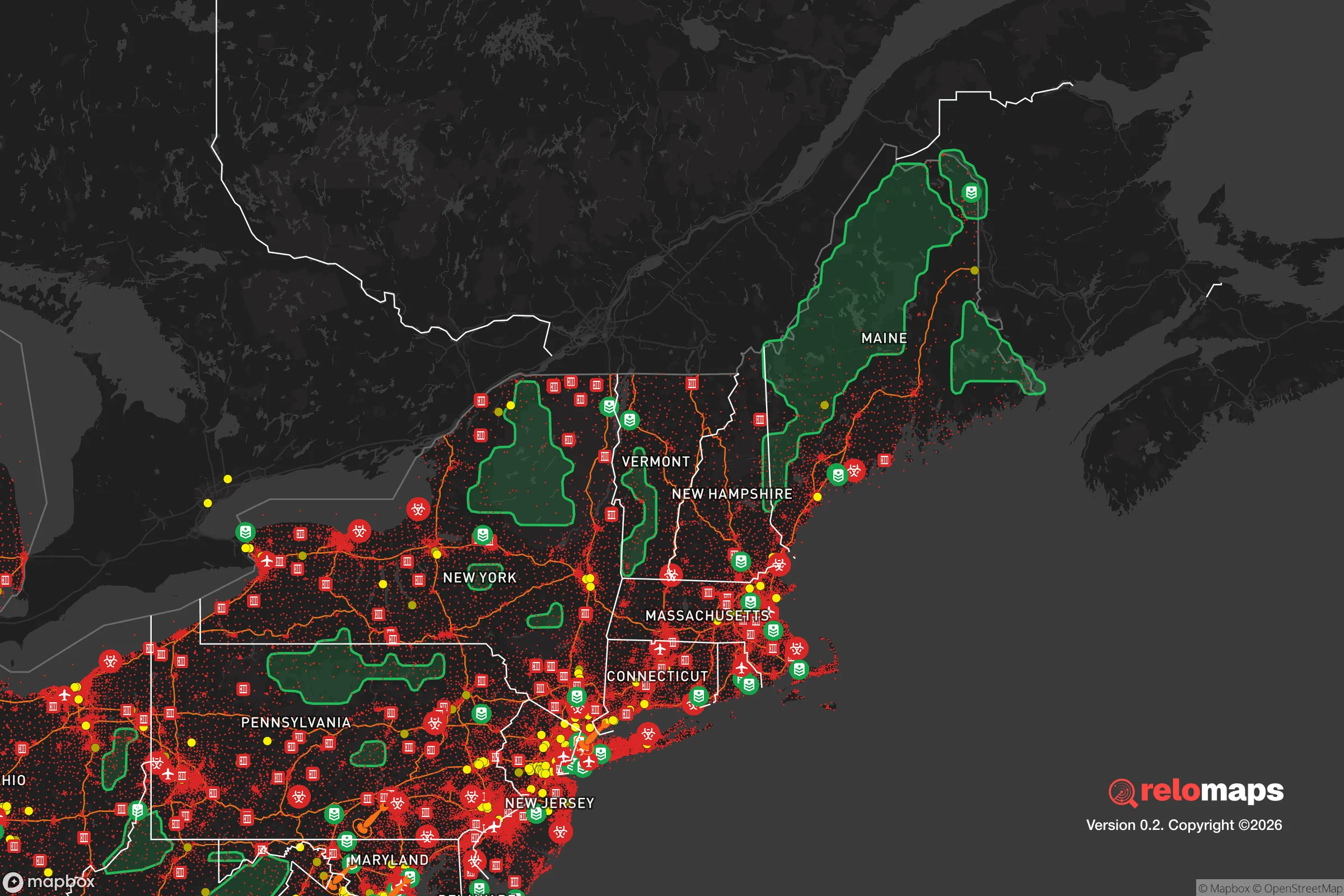


Important Note: For informational purposes only. This does not mean nothing bad ever happens in the green zones. Please use common sense. This is based on public data and modeled with AI. We tried to take a conservative approach but mistakes happen. We update this regularly as new information becomes available.
Solar Generator Recommendations
Backup power matters more here than in safer locations. We've picked three solar generators across budgets and capacity tiers — start with the budget unit if you only need a few essentials, or step up if you want to run a fridge and HVAC for days at a time.

Jackery Portable Power Station Explorer 300
Budget OptionPower on the Go: Weighing only 11 lbs, it's convenient to set up and store with book-sized foldable solar panels

BLUETTI Portable Power Station AC180
Designed for both indoor and outdoor scenarios, AC180 is highly capable as it has a robost capacity and continuous output power.

EF ECOFLOW DELTA Pro Ultra Power Station
Upgraded PickEcoFlow DELTA Pro Ultra is a whole-home energy system designed to grow with your family. Integrated with the Smart Home Panel 2, it scales to meet your evolving energy needs — keeping your home powered, intelligent, and secure through every stage of life.
We earn a commission, at no additional cost to you.
Strategic Assessment Analysis
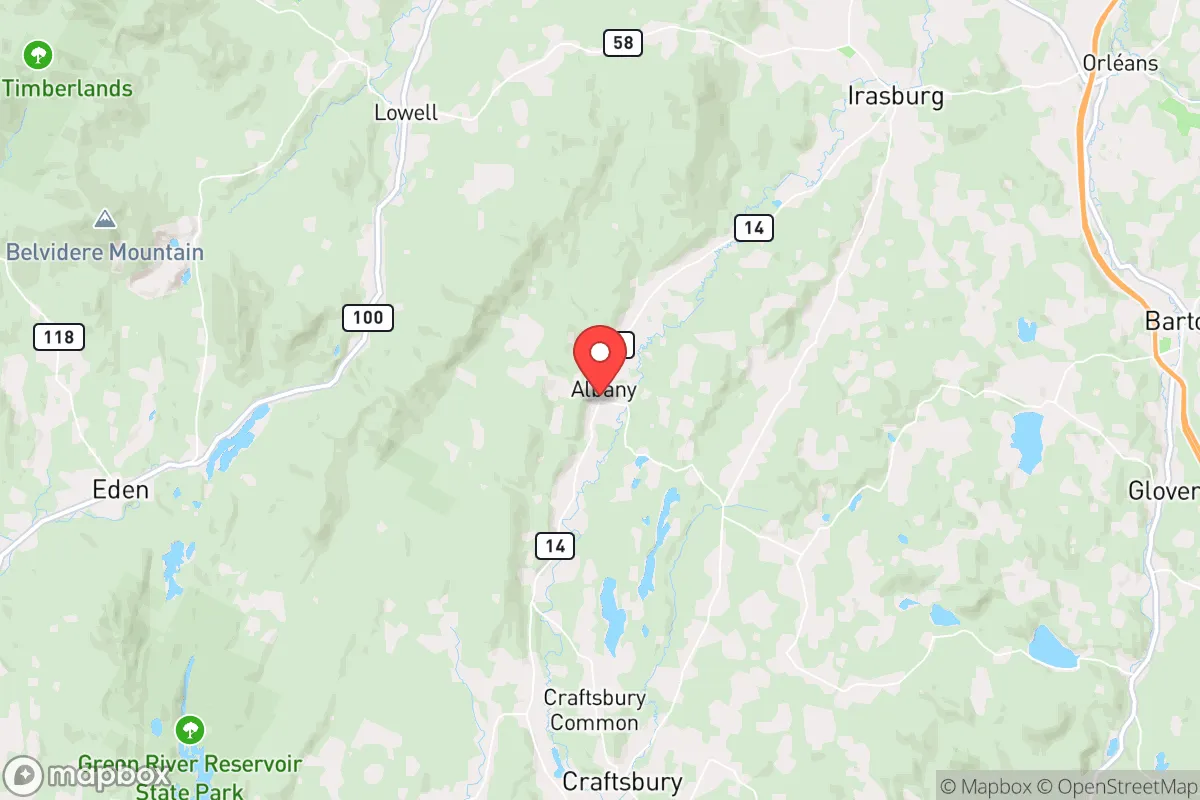
Albany, Vermont, offers a compelling strategic position for those prioritizing resilience and self-sufficiency in an increasingly uncertain national landscape. Situated in Orleans County, this small town of roughly 900 residents sits at a deliberate distance from major population centers—about 45 minutes from the Canadian border, an hour from Burlington, and over three hours from Boston or Montreal—providing a natural buffer against the cascading effects of urban unrest, supply chain disruptions, or mass casualty events. The area’s low population density, combined with its access to the Missisquoi River and the surrounding Green Mountain foothills, creates a foundation for long-term sustainability that is rare in the Northeast. For a conservative-minded relocator, Albany represents a quiet, defensible base where community ties remain strong and the pace of life allows for genuine preparation.
Geographic position and natural advantages for long-term security
Albany’s location in Vermont’s Northeast Kingdom is its primary strategic asset. The town sits at the intersection of Vermont Route 14 and Route 105, offering two viable egress routes without being a major thoroughfare—critical for maintaining low visibility during periods of instability. The surrounding terrain is a mix of forested hills, working farms, and small waterways, providing ample cover and natural resources. The Missisquoi River, which flows through the town, offers a reliable water source for off-grid living, while the region’s abundant hardwood forests supply fuel for heating and cooking without reliance on external energy grids. The area’s elevation, averaging around 1,000 feet, reduces flood risk compared to lower-lying towns along Lake Champlain, and the cold winters—average January lows near 5°F—serve as a natural deterrent to transient populations. For a prepper, this is a landscape that rewards self-reliance: the soil is workable for small-scale agriculture, the deer and turkey populations are healthy, and the local logging industry provides a skills base for those willing to learn. The nearest major interstate, I-91, is 30 minutes east, offering a connection to the broader region without placing Albany directly on a high-risk corridor.
Risks, exposures, and proximity to fallout-relevant landmarks
No location is without vulnerabilities, and Albany’s risks are worth weighing carefully. The most significant exposure is its proximity to the Canadian border—roughly 20 miles north—which, in a scenario of mass migration or border instability, could become a pressure point. The nearby town of Derby Line, a port of entry, is a potential chokepoint for traffic and security concerns. Additionally, Albany lies about 70 miles from the Vermont Yankee nuclear site (now decommissioned but still storing spent fuel) in Vernon, and roughly 100 miles from the Seabrook Station nuclear plant in New Hampshire. While these distances provide a reasonable safety margin for fallout in a major event, they are not negligible—prevailing winds from the south or southwest could carry particulate matter into the region. The town’s reliance on a single primary road (Route 14) for north-south travel is a logistical weakness; a bridge failure or blockage could isolate the community, though this also works in favor of defensibility. There are no major military installations, chemical plants, or large-scale infrastructure targets within a 50-mile radius, which is a net positive. The nearest population center of any size is Newport (pop. 4,500), 15 miles north, which is small enough to avoid the chaos of a major city but large enough to draw resources in a crisis. For a relocator, the key takeaway is that Albany’s risks are manageable with basic preparation—stockpiling food, maintaining alternate routes, and establishing a local network—rather than existential.
Practical resilience for a relocator: food, water, energy, and defensibility
For someone serious about self-sufficiency, Albany offers a practical foundation that requires work but is achievable. The town has no municipal water system; most properties rely on private wells, which means water security is in your hands—test your well yield and consider a hand pump for grid-down scenarios. The Missisquoi River is a backup source, but treatment (boiling or filtration) is essential due to agricultural runoff. Food production is viable: the growing season is short (roughly 120 frost-free days), but cold-hardy crops like potatoes, kale, and root vegetables thrive, and local farmers’ markets in nearby Craftsbury and Hardwick provide access to seeds, livestock, and knowledge. The region’s dairy farms are a protein source, and hunting licenses are affordable for residents. Energy resilience is a mixed picture: grid power is reliable by rural standards, but winter storms can cause multi-day outages. Solar is feasible but requires battery storage for the long, cloudy winters; wood heat is the most dependable option, and most homes have a wood stove or fireplace. Defensibility is strong due to the town’s layout—sparse development, natural sightlines from higher ground, and a tight-knit community where strangers are noticed quickly. The local volunteer fire department and a small sheriff’s presence provide a baseline of security, but in a prolonged crisis, residents would largely rely on each other. The biggest practical challenge is the lack of immediate medical resources: the nearest hospital is North Country Hospital in Newport (15 miles), and trauma care requires a 45-minute drive to Burlington. For a relocator, this means building a robust medical kit and learning basic emergency skills is non-negotiable.
Overall, Albany, Vermont, presents a balanced strategic picture for the conservative prepper seeking a low-profile, sustainable base away from the chaos of urban centers. Its strengths—remote location, natural resources, strong community, and low target value—outweigh its weaknesses, provided you enter with eyes open about the cold winters, limited services, and need for self-reliance. The area is not a bug-out location for a weekend; it’s a place to build a life that can weather both short-term disruptions and long-term decline. For a single individual or family willing to invest in skills, supplies, and local relationships, Albany offers a rare combination of isolation and accessibility that is increasingly hard to find in the Northeast. The key is to act now, while property remains affordable and the community is still welcoming to new faces who share a commitment to preparedness.

* Values derived from national, state, county, city and local statistics and may differ in a specific area. Last updated: 2026-04-22T22:44:33.000Z
Narrative content on this page is AI-generated and may contain mistakes. Verify any details that matter before acting on them.
ReloMaps may earn a commission from affiliate links at no extra cost to you.

