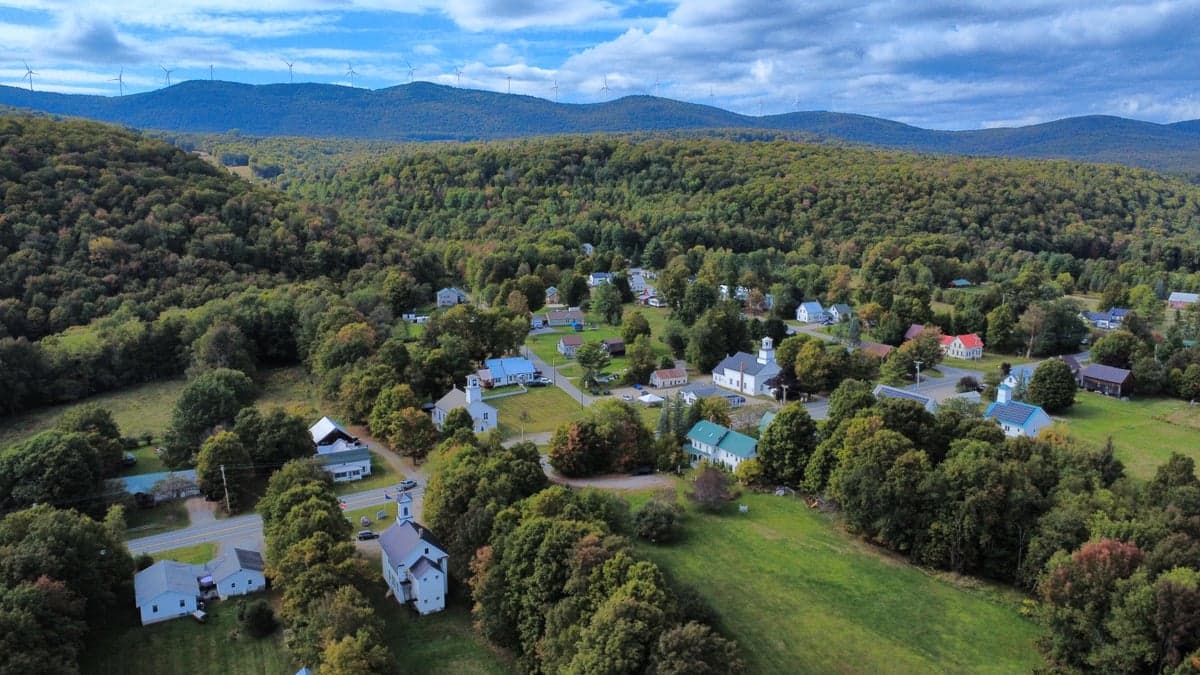
Photo: Wikipedia
Personal Sovereignty in Albany, VT
Moderate friction. Expect trade-offs in some aspect of personal liberty and independence.
What does Personal Sovereignty tell us?
Personal Sovereignty measures your capacity for self-reliance and independence with minimal government friction. Higher scores mean fewer barriers between you and the way you want to live... but it assumes you have the space you need and good neighbors.
What does this tell us?
Personal Sovereignty measures your capacity for self-reliance and independence with minimal government friction. Higher scores mean fewer barriers between you and the way you want to live... but it assumes you have the space you need and good neighbors.
State Policy
Energy independence: Importer (15% of energy produced in-state)
Personal Liberty
Homesteading

Personal Liberty Analysis
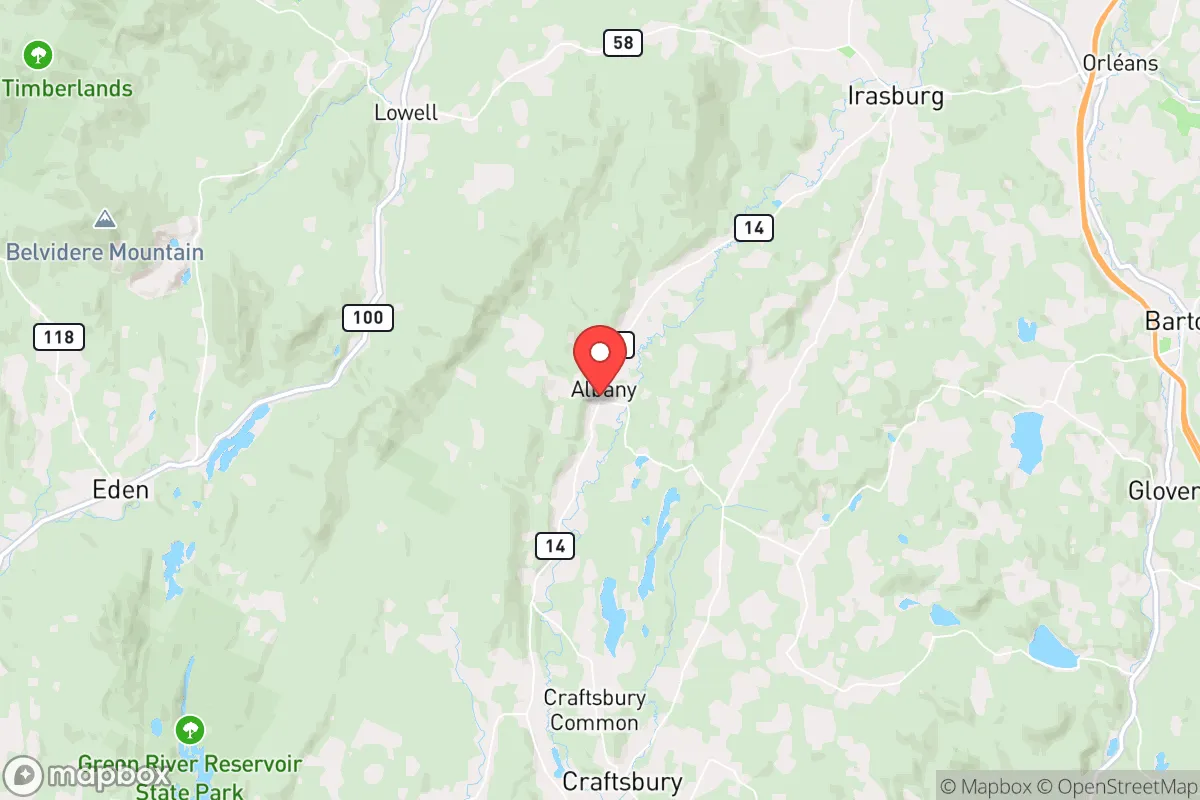
Albany, Vermont, offers a mixed bag for those prioritizing personal sovereignty, sitting in a state that has increasingly centralized authority while retaining pockets of rural autonomy. Nestled in Orleans County near the Canadian border, this small town of roughly 900 residents provides a physical buffer from urban centers, but the legal and regulatory environment is shaped by Montpelier’s progressive leanings. For the survivalist or prepper, Albany’s appeal lies in its low population density and distance from federal overreach, but the state’s tax structure, gun laws, and land-use policies demand careful scrutiny before committing to a move.
Tax burden and regulatory posture: how Vermont’s policies affect your wallet and freedom
Vermont carries a heavy tax load that directly impacts personal autonomy. The state’s income tax is progressive, with rates from 3.35% to 8.75% on high earners, while property taxes are among the highest in the nation—averaging around 1.8% of assessed value. For a modest home in Albany, that could mean $3,000–$4,000 annually, funding a state bureaucracy that has expanded regulatory reach into everything from vehicle emissions to land use. The state’s Act 250, a land-use law, imposes strict permitting on development, even in rural areas, which can frustrate those wanting to build a homestead or workshop without government interference. Sales tax is 6%, with no local option, but the lack of a right-to-work law and mandatory paid family leave (starting 2024) add to the cost of doing business or hiring help. For a prepper, this tax burden reduces disposable income for gear, supplies, or land acquisition, making Albany less attractive than neighboring New Hampshire, which has no income or sales tax.
Self-defense and gun law specifics: what you can and cannot own in Albany
Vermont’s gun laws have tightened significantly in recent years, eroding what was once a stronghold of firearm freedom. While the state still does not require a permit to carry a concealed firearm—a constitutional carry state—the 2023 passage of S.30 raised the purchase age for all firearms to 21, banned magazines over 15 rounds for handguns and 10 for long guns, and outlawed “assault weapons” (defined broadly to include many semi-automatic rifles like the AR-15). A 72-hour waiting period applies to all firearm purchases, and private sales now require a background check through a licensed dealer. For the survivalist, this means building a practical arsenal is legally constrained: standard-capacity magazines for a Glock 19 or a hunting rifle are off-limits, and owning a popular defensive platform like an AR-15 requires a pre-ban model or moving to a friendlier state. Self-defense in the home is protected under the Castle Doctrine, but there is no “Stand Your Ground” law—you have a duty to retreat if safely possible outside your residence. Albany’s rural setting reduces the likelihood of violent crime, but the legal framework limits your ability to prepare for worst-case scenarios. Enforcement is uneven, but state police have shown willingness to prosecute magazine possession, so compliance is risky for those who value their Second Amendment rights.
Self-reliance and homesteading viability: lot sizes, zoning, and off-grid feasibility
Albany’s rural character offers genuine opportunities for self-reliance, but local and state regulations impose limits. Minimum lot sizes in unzoned areas are typically 1–2 acres, though many parcels in Orleans County are 5–20 acres, allowing for gardens, livestock, and small-scale farming. Zoning is minimal in the town itself—Albany has no comprehensive zoning ordinance, only a subdivision regulation—so you can generally build a house, barn, or workshop without a lengthy permit process, provided you comply with Act 250 for projects over 10 acres or involving substantial earth movement. Off-grid living is feasible but not frictionless: Vermont requires a wastewater permit for any dwelling, even if using a composting toilet, and the state’s building codes (based on the 2015 International Residential Code) apply to new construction, including insulation and electrical standards. Solar panels are allowed, but net metering rules are state-controlled, and you cannot disconnect from the grid entirely without a waiver from the utility. Water rights are generally tied to property, but drilling a well costs $5,000–$10,000, and surface water use requires a permit. For the prepper, Albany’s low population density and lax local zoning are assets, but the state’s regulatory tentacles—especially Act 250 and building codes—mean true off-grid autonomy requires navigating bureaucracy. Neighbors are typically self-sufficient types who keep to themselves, which aligns with a survivalist mindset, but the legal hurdles can sap time and money.
Personal liberties: parental rights, medical autonomy, speech, and property
Personal liberties in Albany are constrained by Vermont’s progressive state policies, which have expanded government authority in several areas. Parental rights are under pressure: the state mandates comprehensive sex education in public schools, and parents cannot opt out of LGBTQ-inclusive curriculum. Medical autonomy is limited by Vermont’s vaccine mandates for school attendance (including COVID-19 shots for K-12 students, though exemptions exist for medical and religious reasons) and a strict prescription drug monitoring program. The state also legalized assisted suicide in 2013, which some view as a slippery slope for medical ethics. Free speech is protected under the First Amendment, but Vermont has hate crime laws that enhance penalties for speech deemed threatening, and social media platforms are subject to state scrutiny. Property rights are a bright spot: Vermont has strong eminent domain protections, requiring just compensation and public use, and Albany’s lack of zoning means you can generally use your land as you see fit, barring state environmental rules. However, the state’s carbon tax on heating fuel (proposed but not yet enacted) and mandatory recycling laws add costs and oversight. For the conservative-leaning individual, these policies feel like government overreach into family decisions and personal health choices, making Albany a place where you can live quietly but must stay vigilant against state intrusion.
Overall, Albany offers a moderate level of personal sovereignty compared to other areas, but it falls short for those seeking maximum autonomy. The town’s rural isolation and minimal local government provide a buffer from some overreach, but Vermont’s high taxes, restrictive gun laws, and progressive social policies create a regulatory environment that can frustrate survivalist and prepper priorities. For a single individual or family willing to adapt—perhaps by building a legal off-grid homestead and accepting magazine limits—Albany can work as a base. But for those who prioritize unfettered self-defense, low taxes, and minimal state interference, neighboring New Hampshire or even northern Maine offer stronger sovereignty. Albany is a compromise: a place where you can live on your own terms, but only within the lines drawn by Montpelier.

* Values derived from national, state, county, city and local statistics and may differ in a specific area. Last updated: 2026-04-22T22:44:33.000Z
Narrative content on this page is AI-generated and may contain mistakes. Verify any details that matter before acting on them.
ReloMaps may earn a commission from affiliate links at no extra cost to you.

