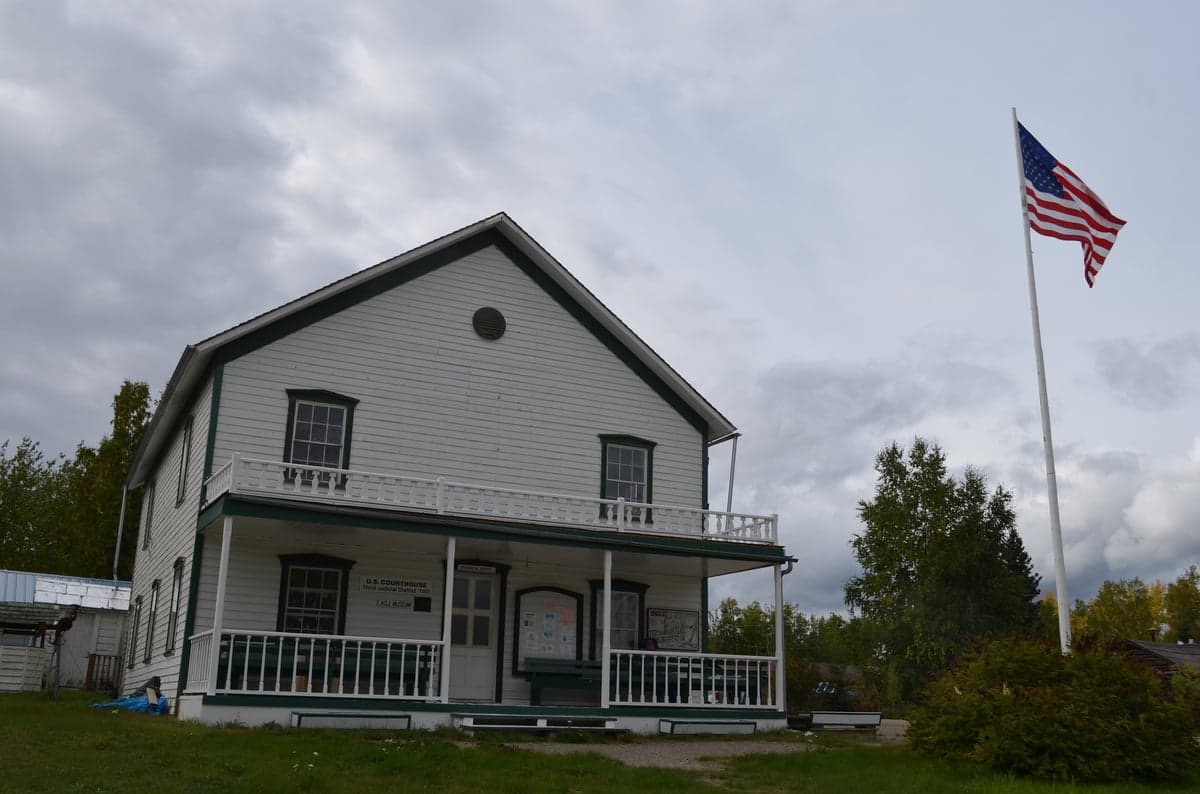
Photo: Wikipedia
Demographics of Southeast Fairbanks County
Affluence Level in Southeast Fairbanks County
A below-average socioeconomic profile. Incomes, home values, and educational attainment trail the U.S., with higher poverty and unemployment.
People of Southeast Fairbanks County
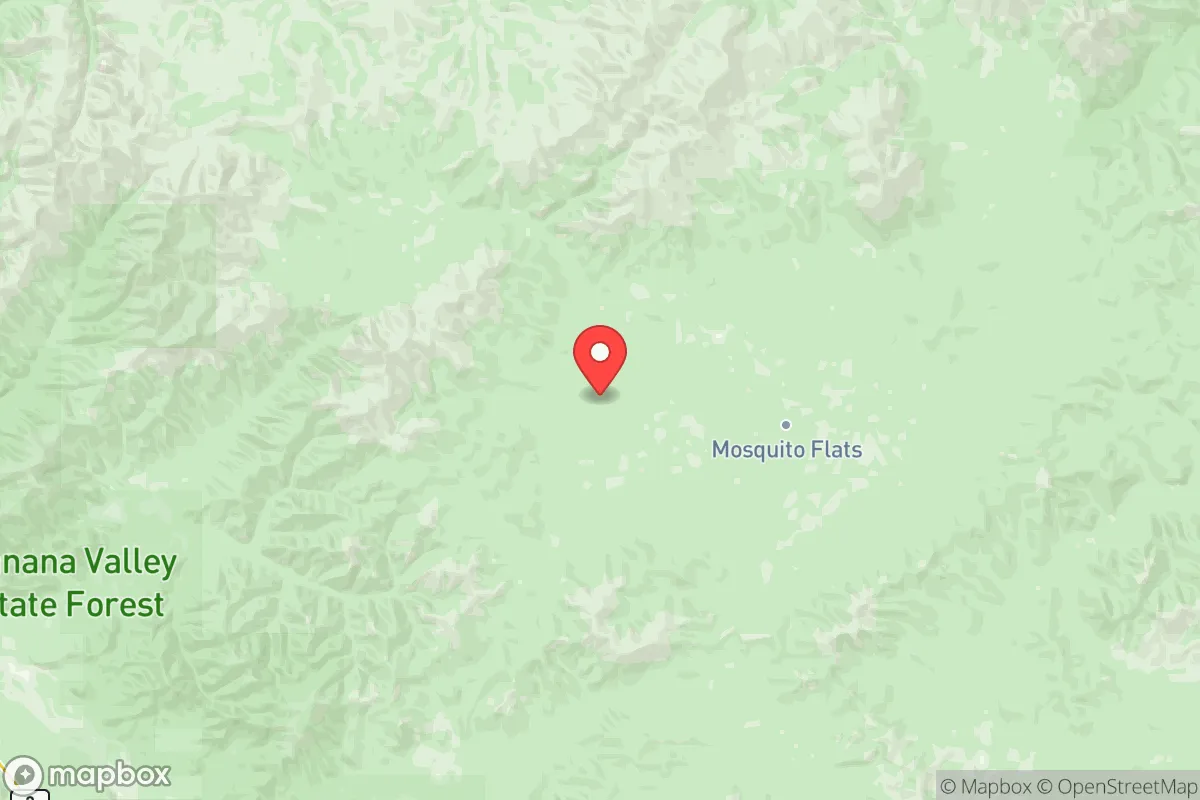
The people of Southeast Fairbanks County, Alaska, today number roughly 6,936, making it one of the most sparsely populated regions in the state. The population is predominantly White (72.5%), with a small but notable Hispanic community (5.8%) and a modest East/Southeast Asian presence (2.0%). The county’s identity is shaped by its remote, subarctic location along the Alaska Highway and the Tanana River, where a mix of Alaska Native heritage, gold rush history, and modern resource extraction creates a distinctive, self-reliant frontier character.
Settlement & growth (pre-1960)
The human history of Southeast Fairbanks County begins with the Athabascan peoples, specifically the Tanana and Upper Tanana tribes, who have inhabited the region for thousands of years. These groups lived a semi-nomadic lifestyle, following caribou herds and fishing for salmon along the Tanana and Delta rivers. Their seasonal camps and trading routes established the earliest human footprint in the area, with permanent villages like Dot Lake and Healy Lake serving as ancestral homes that remain occupied by their descendants today.
Russian colonization had minimal direct impact on this interior region, as Russian activity was concentrated along the coast. The first major non-Native influx came with the Klondike Gold Rush of 1897-1899, which brought prospectors up the Yukon River and into the Tanana Valley. A second, more localized gold rush hit the region in the early 1900s, with strikes near Fairbanks (just outside the county’s western edge) drawing thousands of miners. This wave established Delta Junction as a supply point and Tok as a trail hub, though most of these early settlers were transient single men rather than families.
The Alaska Highway, built by the U.S. Army Corps of Engineers in 1942, permanently transformed the region. The highway connected Southeast Fairbanks to the continental road system, bringing construction workers, military personnel, and eventually homesteaders. After World War II, the federal government promoted agricultural settlement in the Delta Junction area, offering land under the Homestead Act into the 1970s. This drew a wave of farmers from the Lower 48, many of them veterans seeking a fresh start. These homesteaders were overwhelmingly White, often from the Midwest and Pacific Northwest, and they established the county’s agricultural base—barley, hay, and livestock—that persists today. The villages of Big Delta and Northway grew as service centers for this farming population.
Modern era (post-1965)
The 1965 Hart-Cellar Act had a muted effect on Southeast Fairbanks County compared to urban Alaska, as the region’s remote location and limited economy did not attract large-scale immigration. The foreign-born population today stands at just 3.6%, well below the national average. However, the post-1965 period saw significant domestic migration driven by the Trans-Alaska Pipeline System, constructed between 1974 and 1977. The pipeline’s route passed through the county, bringing a boom of construction workers, truck drivers, and support staff to Delta Junction and Tok. Many of these workers stayed after the pipeline’s completion, shifting the local economy toward transportation, logistics, and government services.
The 1980s and 1990s brought a gradual diversification of the county’s population. The Hispanic share (5.8%) grew primarily through migration of workers in construction, mining, and seasonal agriculture, with families settling in Delta Junction and the unincorporated areas around Fort Greely. The East/Southeast Asian community (2.0%) includes a mix of Filipino and Korean families, many connected to military service at Fort Greely or to the healthcare sector. The Black population remains very small at 0.9%, concentrated in Delta Junction and tied to military and government employment.
Suburbanization has been limited by the county’s vast geography and low density. Instead, the pattern has been one of dispersed rural settlement, with families living on large parcels along the highway corridors. The closure of Fort Greely’s main garrison in 2001 caused a population dip, but the base’s reactivation in the 2010s for missile defense brought a new wave of military and contractor families, many of whom are younger and more racially diverse than the long-term resident population. The Alaska Native population, while not separately tracked in the provided data, remains a significant cultural presence, particularly in Dot Lake and Healy Lake, where tribal governance and subsistence traditions continue.
The future
The population of Southeast Fairbanks County is projected to remain stable or decline slightly over the next decade, as outmigration of younger residents to urban centers like Anchorage and Fairbanks offsets modest in-migration. The county’s college-educated share (19.6%) is low, reflecting the predominance of blue-collar and resource-extraction jobs, and this is unlikely to change dramatically unless new industries emerge. The region is becoming slightly more diverse, driven by Hispanic and East/Southeast Asian families moving in for construction and service jobs, but the pace is slow. The Alaska Native population is expected to maintain its presence, with younger tribal members increasingly commuting to Fairbanks for education and work while retaining village ties.
The county’s cultural identity is likely to remain rooted in its frontier and agricultural heritage, with a conservative, self-sufficient ethos that appeals to families seeking space and independence. The Delta Junction area, in particular, is seeing a small influx of remote workers and retirees drawn by lower land costs and a slower pace of life. However, the lack of economic diversification and the high cost of goods and services will continue to limit population growth. The next 10-20 years will likely see a gradual aging of the population, with the county becoming more of a retirement and lifestyle destination than a hub for new families.
For someone moving in now, Southeast Fairbanks County offers a place where community ties are strong, the outdoors are immediate, and the pace of life is dictated by the seasons. It is a region that rewards self-reliance and respects its history, from the Athabascan villages to the homesteader farms. The population is small, stable, and slowly diversifying, but the core character—independent, conservative, and deeply connected to the land—remains unchanged.

* Values derived from national, state, county, city and local statistics and may differ in a specific area. Last updated: 2026-06-16T01:15:17.000Z
Narrative content on this page is AI-generated and may contain mistakes. Verify any details that matter before acting on them.
ReloMaps may earn a commission from affiliate links at no extra cost to you.

