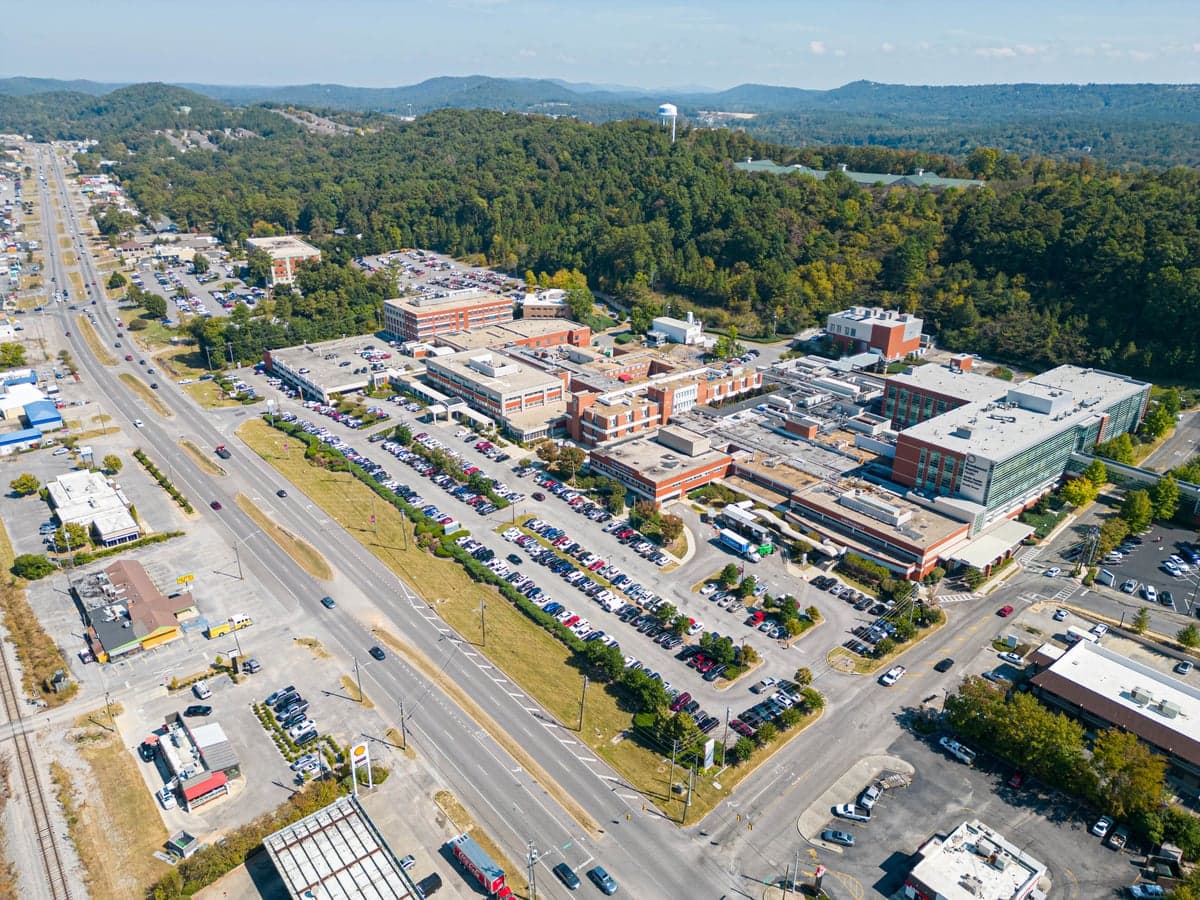
Photo: Wikipedia
Political ClimatePolitical Climate in Alabaster, AL
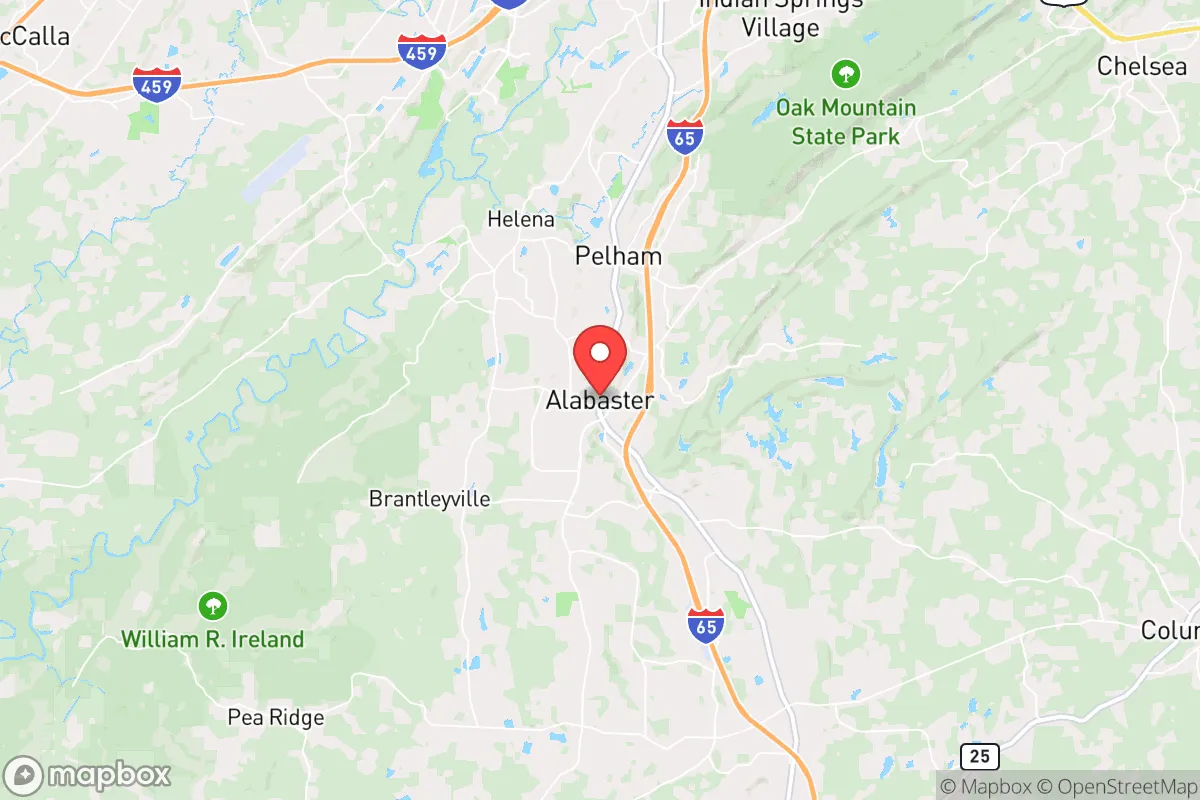
District shown is the primary district for this city’s centroid. Cities may span multiple districts.
Local Political AnalysisPolitical Analysis of Alabaster, AL
Alabaster, Alabama, sits squarely in deep-red territory, with a Cook PVI of R+20 that reflects a community where conservative values aren't just a preference but a way of life. I've watched this town grow from a quiet crossroads into a bustling suburb, and through it all, the political lean has stayed remarkably steady—solidly Republican, with local elections often decided in the primaries. That said, there's been a subtle shift in the last few years, a kind of cultural tension that's worth paying attention to if you're thinking about moving here or just want to understand what makes this place tick.
How it compares
To really get a feel for Alabaster's politics, you've got to look at the neighbors. Head north into Birmingham's Jefferson County, and you're in a different world—blue-leaning, with a more progressive city council and a vibe that can feel like a different state altogether. Places like Homewood and Mountain Brook are more moderate, but they still have a noticeable urban influence. Drive south or west into rural Shelby County, though, and you're back in familiar territory: unapologetically conservative, with a strong emphasis on local control and limited government. Alabaster sits right at that edge, absorbing some of the suburban growth from Birmingham while holding onto its small-town, freedom-first roots. The contrast is stark—you can literally see the political line shift as you cross the county border.
What this means for residents
For folks living here, the R+20 rating isn't just a statistic; it shapes daily life in real ways. Property taxes stay low because the county commission isn't keen on expanding government programs. Zoning and development decisions tend to favor business owners and homeowners over dense, city-led projects. You won't find a lot of talk about progressive social policies at city council meetings—the focus is on roads, schools, and keeping the tax burden light. But here's the thing: as Alabaster grows, there's been a quiet push from some newcomers who want more "urban amenities" and a bigger government footprint. That's a red flag for those of us who've been here long enough to remember when the biggest debate was whether to widen Highway 31. If you value personal freedoms and minimal government overreach, this is still a solid bet, but keep an eye on those school board and city council races—that's where the real battles are happening.
Culturally, Alabaster has a few distinctions that set it apart. The city has a strong tradition of church involvement in community life, and you'll see that reflected in everything from local charity events to the way the police department engages with neighborhoods. There's a palpable resistance to any kind of "woke" ideology creeping into schools or public spaces—parents here are vocal and organized. The long-term trajectory feels stable, but I'd be lying if I said there wasn't a quiet worry about the direction of the state as a whole. If the progressive wave that's hit Birmingham starts spilling over into Shelby County, you can bet there'll be a fight. For now, though, Alabaster remains a place where you can still raise a family without feeling like the government is looking over your shoulder at every turn.

State Political ClimatePolitical Climate in Alabama
State Political AnalysisPolitical Environment in the State
Alabama is a deeply conservative state, with a Republican trifecta that has held the governorship, legislature, and all statewide offices for over a decade, and it voted for Donald Trump by a margin of roughly 25 points in 2024. The dominant coalition is a mix of rural traditionalists, suburban fiscal conservatives, and a growing evangelical base, though the state has seen a slow but steady rightward shift in its rural areas even as the Birmingham and Huntsville metros have become more politically competitive. Over the last 20 years, Alabama has moved from a reliably red state to a deeply red one, with Democrats now holding zero statewide offices and only a handful of legislative seats in urban strongholds.
Urban vs. rural divide
The political map of Alabama is starkly divided between its rural counties and its few urban centers. The state's largest metro, Birmingham (Jefferson County), is the primary Democratic stronghold, delivering about 60% of its vote to Joe Biden in 2020 and Kamala Harris in 2024, driven by a large African American population and a growing professional class. Huntsville (Madison County), home to the Redstone Arsenal and a booming tech sector, has become a fascinating battleground: it voted for Trump in 2024 but by a much narrower margin than the rest of the state, as in-migration of engineers and defense contractors has brought a mix of libertarian-leaning and moderate voters. Mobile and Montgomery are more conservative than Birmingham but still have significant Democratic pockets, particularly in their majority-Black precincts. Meanwhile, rural counties like DeKalb, Marshall, and Blount in the northeast, and the Black Belt counties like Lowndes and Wilcox, are worlds apart: the former are deeply red and heavily white, while the latter are overwhelmingly Black and vote 80%+ Democratic, though with low turnout. The suburbs of Birmingham—places like Hoover, Vestavia Hills, and Alabaster—are reliably Republican but have shown slight shifts toward the center in recent cycles, especially among college-educated women.
Policy environment
Alabama’s policy environment is aggressively conservative, with a low-tax, low-regulation posture that appeals to many relocating families. The state has no income tax on Social Security benefits, a flat 5% income tax on other earnings, and a state sales tax of 4% (though local add-ons can push it to 10%+ in some cities). Property taxes are among the lowest in the nation, averaging about 0.4% of assessed value, which is a major draw for homeowners. Education policy is a flashpoint: the state passed a school choice law in 2024 that expanded charter schools and created a new Education Savings Account (ESA) program for low- and middle-income families, a win for parental rights advocates. However, the state’s public schools remain underfunded and rank near the bottom nationally, so many conservative families opt for private or homeschool options. Healthcare is a mixed bag: Alabama did not expand Medicaid under the Affordable Care Act, keeping the state’s uninsured rate high, but it also means no state-level mandates for employer coverage. Election laws are strict: voter ID is required, early voting is limited to a single day of absentee voting in most counties, and the state passed a 2021 law banning curbside voting and limiting ballot drop boxes—measures supporters say protect election integrity. On social issues, Alabama has some of the nation’s strongest pro-life laws, including a near-total abortion ban passed in 2019, and it has passed laws protecting religious freedom and prohibiting transgender athletes from competing in female sports.
Trajectory & freedom
On balance, Alabama is becoming more free in the sense of limited government, particularly on economic and Second Amendment fronts. The state passed constitutional carry (permitless carry of a concealed handgun) in 2022, and in 2024 it expanded that to allow firearms in places of worship and on public transportation. Property rights were strengthened by a 2023 law that limits the use of eminent domain for private economic development, a response to a controversial case in Baldwin County. However, there are concerning trends. The state’s medical marijuana program, approved by voters in 2021, has been mired in bureaucratic delays and legal challenges, leaving patients without access. More troubling for conservatives is the growing influence of federal mandates: Alabama has resisted EPA clean water rules that threaten its timber and agriculture industries, but it has also seen the Biden administration’s Title IX changes force schools to adopt policies on gender identity that conflict with state law. The state legislature has pushed back with a 2024 law requiring schools to notify parents of any changes to a child’s gender identity or pronouns, a strong parental rights measure. On the whole, Alabama is moving toward more personal liberty in areas like guns and school choice, but the tension with federal overreach is a constant battle.
Civil unrest & political movements
Alabama has seen relatively little civil unrest compared to other states, but there are active political movements on both sides. The most visible flashpoint in recent years was the 2023 controversy over the state’s new congressional map, which a federal court ruled diluted Black voting power; the legislature eventually drew a second majority-Black district, leading to a lawsuit from conservative groups arguing it was a racial gerrymander. Immigration politics are less heated than in border states, but the 2024 arrest of a Guatemalan national in Huntsville for a violent crime reignited calls for stronger enforcement, and the state has a law requiring police to check immigration status during traffic stops. Election integrity remains a live issue: after the 2020 election, a group of Republican activists in Shelby County pushed for a forensic audit of voting machines, though the state’s Republican Secretary of State resisted, citing no evidence of fraud. On the left, the Poor People’s Campaign and Black Lives Matter have held protests in Montgomery and Birmingham, but they are small and localized. A new resident would notice the strong presence of conservative churches and civic groups, like the Alabama Citizens for Life and the Alabama Policy Institute, which host regular events and voter drives. The state’s secessionist rhetoric has faded since the 2010s, but nullification talk resurfaces occasionally, particularly around federal gun laws.
Projection
Over the next 5-10 years, Alabama is likely to remain deeply Republican, but the demographic shifts in Huntsville and the Gulf Coast could create new political dynamics. Huntsville is growing fast—its population increased by 15% between 2020 and 2025—and the influx of out-of-state tech workers, many from California and Texas, is bringing a more libertarian-leaning, less socially conservative electorate. This could push the state toward a more business-friendly, less culture-war-focused Republicanism, similar to what happened in Georgia’s suburbs. Meanwhile, the Black Belt is losing population, which will further dilute the Democratic base outside of Birmingham and Montgomery. The biggest wildcard is education: if the ESA program succeeds, it could accelerate the decline of public schools and create a more fragmented, choice-based system that appeals to conservative families but may deepen rural-urban divides. On the freedom front, expect more battles over federal overreach, particularly on environmental regulations affecting the state’s coal and timber industries, and on medical freedom, as the state’s medical marijuana program finally gets off the ground. A new resident moving in now should expect a state that is stable in its conservatism but not static—the Huntsville corridor will become a political battleground, and the culture war fights will continue over school curriculum, transgender rights, and gun laws.
For a conservative family or individual considering a move, Alabama offers a low-tax, low-regulation environment with strong protections for gun rights, parental choice in education, and religious freedom. The trade-offs are a weak public school system, limited healthcare access in rural areas, and a political climate that is deeply red but not immune to the national culture wars. If you value limited government and a community that shares your values, Alabama is a solid bet—just keep an eye on Huntsville, because that’s where the future of the state’s politics is being written.
* Values derived from national, state, county, city and local statistics and may differ in a specific area. Last updated: 2026-04-19T18:40:45.000Z
Narrative content on this page is AI-generated and may contain mistakes. Verify any details that matter before acting on them.
ReloMaps may earn a commission from affiliate links at no extra cost to you.

