Photo: Wikipedia
Demographics of Russell County
Affluence Level in Russell County
A below-average socioeconomic profile. Incomes, home values, and educational attainment trail the U.S., with higher poverty and unemployment.
People of Russell County
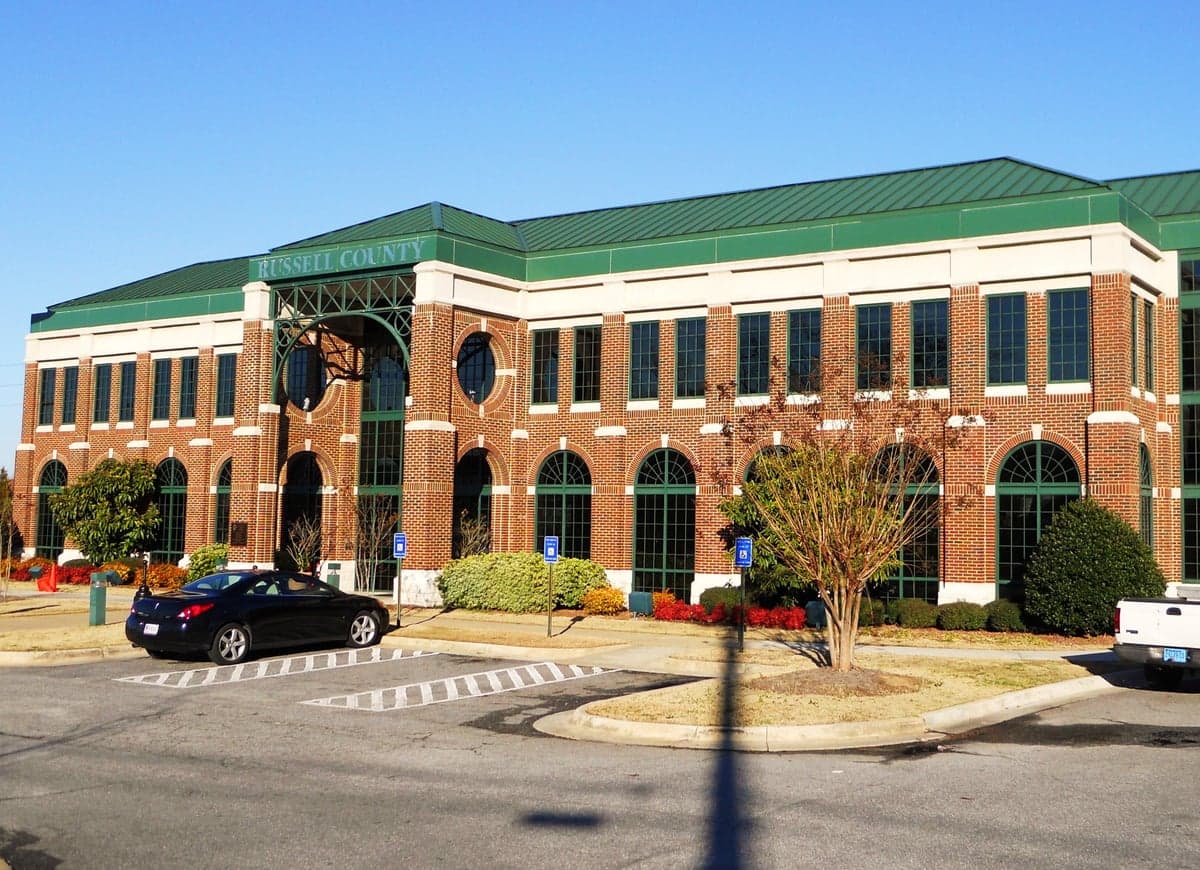
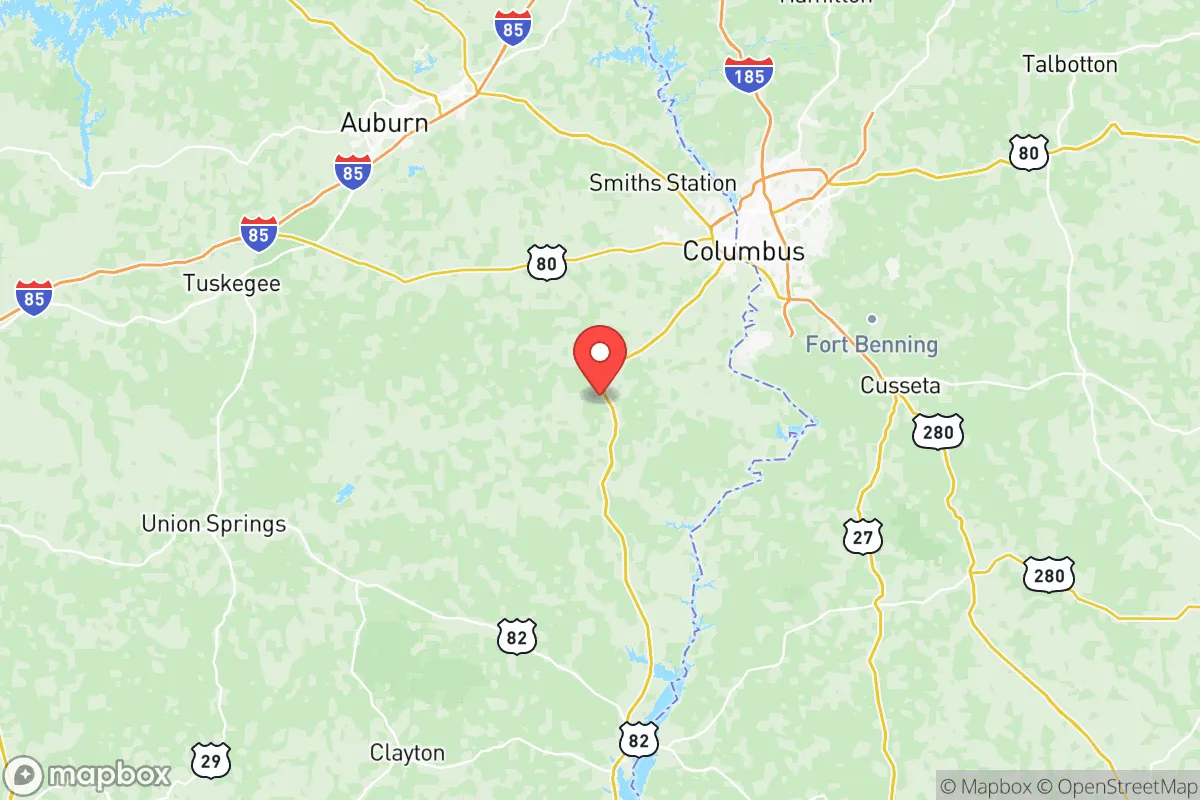
Today, Russell County, Alabama, is a community defined by a near-even racial balance between its Black and White populations, a stark contrast to the state's overall demographics. With a population of 58,858, the county is predominantly rural and small-town, anchored by the county seat of Phenix City, which sits directly across the Chattahoochee River from Columbus, Georgia. The population is characterized by a strong sense of local identity, a relatively low foreign-born share of just 1.1%, and a deep-rooted history that has shaped its distinctive biracial character, making it a place where the legacy of the Old South and the modern Sunbelt converge.
Settlement & growth (pre-1960)
Long before European settlement, the area that is now Russell County was the heartland of the Creek Confederacy, particularly the Lower Creek towns along the Chattahoochee River. The Creeks were forcibly removed in the 1830s via the Trail of Tears, opening the land for white settlement. The county was created in 1832, named after a U.S. Army colonel, and quickly became a center for cotton agriculture. The first major wave of settlers were Anglo-American planters and their enslaved African laborers from Georgia and the Carolinas, who established large plantations along the fertile river bottoms near present-day Phenix City and Seale.
After the Civil War and emancipation, the county's population shifted dramatically. Freedmen and women, seeking to reunite families and build independent lives, remained in the area as sharecroppers and tenant farmers. This created the foundation for Russell County's large Black population, which has remained a defining demographic feature for over 150 years. The post-Reconstruction era saw the establishment of small, self-sufficient Black communities like Ladonia and Hatchechubbee, where churches, schools, and mutual aid societies formed the backbone of social life. Meanwhile, the white population consolidated around the county seat and the commercial hub of Phenix City, which grew as a rough-and-tumble river town and later a center for textile mills and manufacturing.
Through the early 20th century, the county's economy remained tied to agriculture and the emerging industrial base in Phenix City. The Great Migration saw a significant outflow of Black residents to northern industrial cities, but Russell County's Black population remained substantial, unlike many Deep South counties that experienced a near-total exodus. The construction of Fort Benning (now Fort Moore) just across the river in Georgia during World War I and its expansion during World War II brought a new economic dynamic, but the county's residential population remained overwhelmingly native-born and biracial, with little in-migration from outside the region.
Modern era (post-1965)
The post-1965 era in Russell County has been less about new immigrant waves and more about internal demographic consolidation and suburbanization. The 1965 Hart-Cellar Act, which reshaped immigration nationwide, had a negligible effect here. The county's foreign-born population remains at just 1.1%, far below the national average, and the small Asian (0.6%) and Indian (0.0%) populations are almost entirely absent. The modest Hispanic population of 5.7% is a relatively recent development, primarily consisting of families who moved from Mexico and Central America to work in construction, poultry processing, and agriculture. These newer residents are most concentrated in and around Phenix City and the unincorporated area of Fort Mitchell, where they have formed small but growing communities.
The most significant demographic shift since 1965 has been the suburbanization of Phenix City and the gradual depopulation of the county's rural areas. As Columbus, Georgia, expanded, Phenix City transformed from a small, somewhat notorious river town into a bedroom community for the military and civilian workforce at Fort Moore. This brought an influx of white and Black families from across the country, though the county's overall racial balance remained stable. The white population, now at 44.0%, and the Black population, at 45.1%, have maintained a near-parity that is unusual for the region. The county's college-educated share is low at 16.9%, reflecting a workforce heavily oriented toward blue-collar and service-sector jobs tied to the military base and regional manufacturing.
Domestic migration has been the primary driver of change. The county has attracted retirees and families from the Rust Belt and other parts of the South seeking a lower cost of living and a slower pace of life. New subdivisions have sprouted around Smiths Station and along the U.S. Highway 280 corridor, drawing residents who work in Columbus but prefer Alabama's lower taxes and more relaxed regulations. Meanwhile, historic rural communities like Seale and Hatchechubbee have seen population decline as younger generations move toward the urbanized areas.
The future
Russell County's population is projected to remain stable or see modest growth, driven primarily by continued suburban expansion from the Columbus metropolitan area. The county is becoming slightly more diverse, with the Hispanic share expected to rise gradually as families settle in for the long term, but it will likely remain a predominantly Black and White community for the foreseeable future. The most significant demographic trend is the aging of the population, as younger, college-educated residents continue to leave for larger cities, reinforcing the county's low educational attainment rate.
New residential development will concentrate in the Phenix City and Smiths Station areas, where land is available and infrastructure is being extended. The rural interior, including communities like Uchee and Pittsview, will continue to lose population as farming and small-scale agriculture become less viable. The county's cultural identity is evolving from its historic roots in cotton and sharecropping toward a more suburban, military-adjacent character, though the deep legacy of the Civil Rights era and the strong Black community institutions remain central to the area's sense of place.
For someone moving in now, Russell County offers a stable, affordable, and deeply rooted community where the racial balance creates a unique social dynamic. It is not a place of rapid demographic change or new immigrant enclaves, but rather a slow-growing Southern county where the future will look much like the present: a biracial, working-class population centered on Phenix City, with the Chattahoochee River as a constant backdrop and Fort Moore as the economic engine. The county's appeal lies in its low cost of living, its proximity to a mid-sized city, and its quiet, family-oriented lifestyle.

* Values derived from national, state, county, city and local statistics and may differ in a specific area. Last updated: 2026-06-16T09:12:40.000Z
Narrative content on this page is AI-generated and may contain mistakes. Verify any details that matter before acting on them.
ReloMaps may earn a commission from affiliate links at no extra cost to you.

