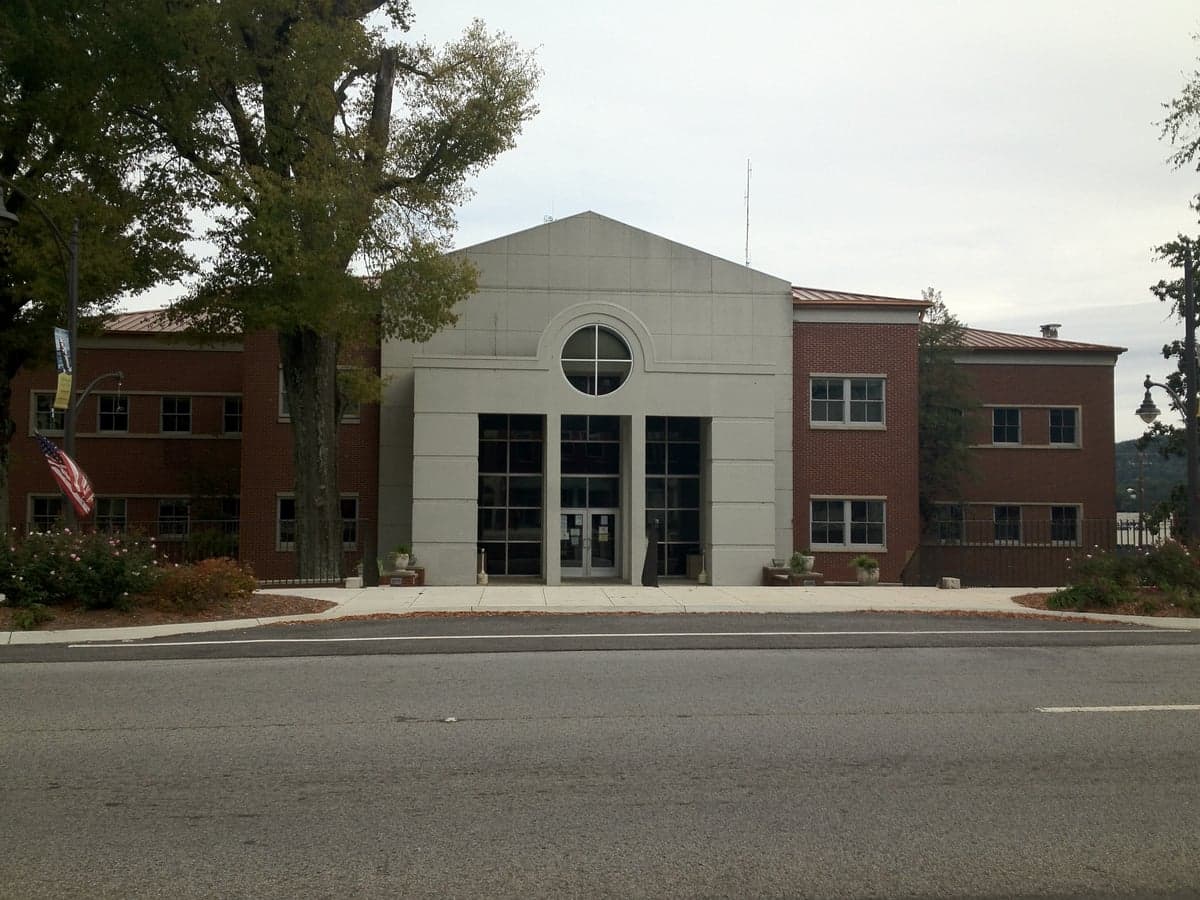
Photo: Wikipedia
Political ClimatePolitical Climate in Marshall County
Showing district-level results — no local-only data available.
Local Political AnalysisPolitical Analysis of Marshall County
Marshall County is about as solidly conservative as it gets in Alabama, with a Cook PVI of R+33 that makes the state's already strong R+14 lean look almost purple by comparison. This isn't a recent shift either; the county has been a Republican stronghold for decades, and the trend lines are only getting redder. You can see it in the presidential returns — Donald Trump pulled over 80% of the vote here in 2020, and the margins have only widened since. The real story, though, is how that deep-red majority plays out across the county's different towns and communities, and what it means for the people who actually live here.
How it compares
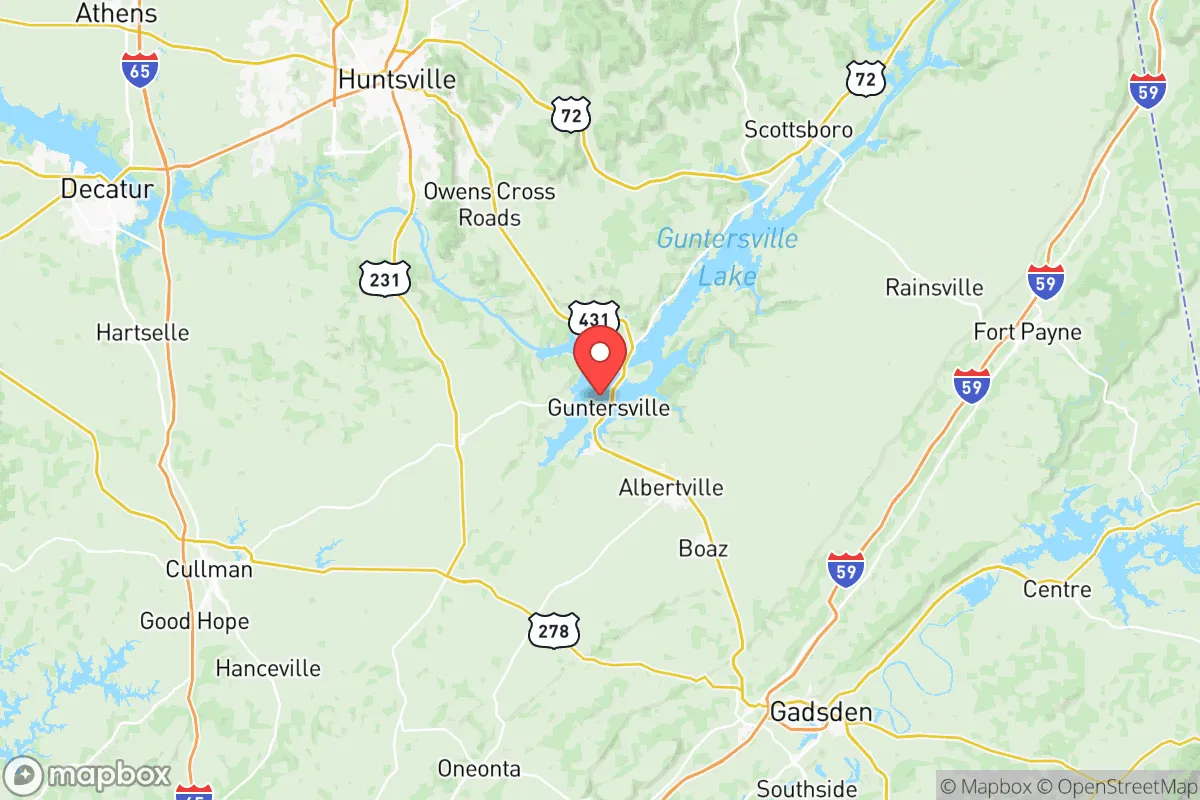
The gap between Marshall County and Alabama as a whole isn't just a number on a chart — it's a lived reality. While the state has seen some suburban areas around Birmingham and Huntsville drift toward the center, Marshall County has held firm. Albertville and Guntersville are the population centers, and both vote reliably Republican, though there are subtle differences. Guntersville, with its lakefront properties and more affluent retirees, tends to be a bit more establishment-Republican — think Chamber of Commerce types who care about property taxes and business incentives. Albertville, with its strong manufacturing base and larger working-class population, leans more populist, with a heavier focus on trade policy and immigration enforcement. Boaz and Arab are even more conservative, often pushing 85% Republican in local races. The only real exceptions are a handful of precincts in Grant and Douglas, where a few older Democratic families still hold sway, but those are fading fast. Compared to the state, Marshall County is a fortress of traditional values — less affected by the cultural shifts that have nudged places like Jefferson or Madison counties leftward.
What this means for residents
For folks living here, the political climate translates into a government that mostly stays out of your way. Local officials are overwhelmingly conservative, which means less red tape on everything from building a new shop to homeschooling your kids. The county commission and school boards are filled with people who believe in limited government, and that shows in the tax rates — property taxes are among the lowest in the state, and there's no county-level income tax. The trade-off is that public services are lean; don't expect the kind of rapid transit or extensive social programs you'd find in a blue metro area. For residents who value personal freedom and local control, that's a feature, not a bug. The biggest concern among longtime locals is the slow creep of progressive ideas into the schools and county planning — things like DEI initiatives or zoning changes that feel like overreach. So far, the community has pushed back hard, but it's something to keep an eye on.
Culturally, Marshall County is distinct from the rest of Alabama in a few key ways. The strong presence of the poultry industry — with Wayne Farms and Tyson Foods as major employers — gives the area a blue-collar, self-reliant character. There's also a noticeable libertarian streak here, especially in the rural areas around Horton and Union Grove, where folks are more likely to grumble about federal overreach than about state politics. Gun rights are a given, and the local sheriff's office is known for its Second Amendment-friendly stance. If you're looking for a place where the government respects your privacy and your right to live as you see fit, Marshall County is about as close as it gets in modern Alabama. Just don't expect much diversity of opinion — and if you're worried about the direction of the country, you'll find plenty of neighbors who share that concern.

State Political ClimatePolitical Climate in Alabama
State Political AnalysisPolitical Environment in the State
Alabama is a deeply conservative state with a Cook PVI of R+14, meaning it votes about 14 points more Republican than the national average in presidential elections. Over the last 10-20 years, the state has only hardened in its partisan lean, with Democrats losing nearly all remaining footholds outside of a few majority-Black counties and the city of Birmingham. The dominant coalition is a mix of traditional rural conservatives, evangelical Christians, and a growing number of suburban families who have moved in from bluer states, all united by a general distrust of federal overreach and a preference for local control.
Urban vs. rural divide
The political map of Alabama is starkly divided. The rural Black Belt counties—like Greene, Sumter, and Lowndes—vote overwhelmingly Democratic, often 70-80% for the party, driven by a legacy of civil rights alignment and strong church-based community organizing. Meanwhile, the fast-growing suburbs of Madison (near Huntsville), Shelby County (south of Birmingham), and Baldwin County (near Mobile) are the engine of the state’s Republican dominance. Huntsville itself is a fascinating exception: a high-tech, educated city that leans Republican but with a libertarian streak—many engineers and defense contractors vote GOP but bristle at social conservatism. Mobile and Montgomery are more evenly split, with Mobile’s port economy and military presence creating a pragmatic, business-first conservatism, while Montgomery’s state government and historically Black population keep it competitive. The rural north—places like DeKalb and Jackson counties—are reliably red, but with a populist edge that sometimes breaks with establishment Republicans on trade and immigration.
Policy environment
Alabama’s policy environment is aggressively pro-business and low-tax. There is no state income tax on Social Security or retirement income, and the state’s property taxes are among the lowest in the nation—typically 0.4% of assessed value, which is a major draw for retirees and families. The state sales tax, however, is high (4% state, plus local add-ons that can push it to 10% in some cities like Birmingham), which hits lower-income residents harder. Education policy is a mixed bag: the state has a robust school choice program, including the Alabama Accountability Act, which provides tax credits for private school tuition, and the new CHOOSE Act (2024) expanded Education Savings Accounts. However, public school funding remains low, and many rural districts struggle. Healthcare is a flashpoint: Alabama has not expanded Medicaid under the Affordable Care Act, leaving a coverage gap for about 300,000 working poor. This is a deliberate policy choice—state leaders argue expansion would create long-term fiscal dependency on the federal government. Election laws are strict: voter ID is required, and the state has purged inactive voter rolls aggressively. In 2024, Alabama passed a law banning ballot drop boxes and making it a felony for anyone other than a family member or caregiver to return an absentee ballot—moves supporters say protect election integrity and critics call voter suppression.
Trajectory & freedom
On the whole, Alabama is moving in a direction of expanded personal freedom in several key areas, but with some concerning caveats. Gun rights are strong: in 2022, Alabama became a constitutional carry state, meaning no permit is needed to carry a concealed firearm. The state also passed a law in 2023 prohibiting state and local enforcement of federal gun laws that don’t exist in Alabama—a direct nullification-style move. Parental rights have been strengthened: the 2022 "Don't Say Gay" style law (the Alabama School Choice and Student Safety Act) bans classroom instruction on sexual orientation and gender identity in K-5, and a 2024 law requires parental consent for any student to use a name or pronoun different from their birth certificate. Medical autonomy is a mixed bag: the state has a near-total abortion ban (the Human Life Protection Act of 2019), which many conservatives see as protecting life, but it also restricts access to certain gender-affirming care for minors (the Vulnerable Child Compassion and Protection Act, 2022). Property rights are generally strong, with no statewide zoning mandates, though some cities like Birmingham have imposed short-term rental restrictions that libertarians view as overreach. The biggest freedom concern is the state’s heavy reliance on sales tax, which effectively punishes consumption and can feel regressive for lower-income families moving in.
Civil unrest & political movements
Alabama has not seen the kind of large-scale civil unrest seen in places like Portland or Atlanta, but there have been flashpoints. In 2020, Birmingham saw protests after the killing of George Floyd, including a notable incident where a statue of Confederate soldier Charles Linn was toppled. The state’s political movements are organized and active: the Alabama Policy Institute and the Eagle Forum of Alabama are influential on the right, pushing for school choice and limited government. On the left, the Alabama Poor People’s Campaign and the Alabama Coalition for Immigrant Justice are active but have limited legislative success. Immigration politics are heated: the 2011 Beason-Hammon Alabama Taxpayer and Citizen Protection Act (HB 56) was one of the toughest state-level immigration laws in the country, though much of it was later struck down in court. In 2024, a new bill (SB 184) was introduced to ban sanctuary city policies, though no Alabama city has formally declared itself a sanctuary. Election integrity remains a live issue: after the 2020 election, the state’s Republican Secretary of State, John Merrill, certified the results but pushed for the stricter laws mentioned earlier. A new resident would notice that political signs and flags are common in rural areas, and that local news often covers school board and county commission meetings with intense passion—politics here is local and personal.
Projection
Over the next 5-10 years, Alabama is likely to become even more Republican, but with a growing libertarian-populist tension. In-migration from states like California, Illinois, and New York is accelerating, particularly to the Huntsville and Baldwin County areas. These newcomers are often conservative but less culturally evangelical—they care more about low taxes and gun rights than about social issues. This could shift the GOP primary dynamics toward a more "leave me alone" conservatism. The Black Belt will remain Democratic, but its population is shrinking due to out-migration, reducing its electoral weight. The biggest wildcard is education: if the CHOOSE Act and ESAs lead to a flourishing of private and homeschool options, the state could become a national model for school choice, attracting more families. However, if public schools continue to decline, it could exacerbate rural-urban divides. On healthcare, the Medicaid expansion debate will likely resurface as hospital closures in rural areas (like in Greene County) become a crisis. A new resident moving in now should expect to find a state that is politically stable, low-tax, and increasingly diverse in its conservatism—but with a government that is still willing to intervene on social issues in ways that may surprise someone from a more libertarian state.
For a new resident, the bottom line is this: Alabama offers a high degree of personal freedom in terms of taxes, gun rights, and school choice, but you should be comfortable with a government that is not shy about legislating morality. If you value low property taxes, strong Second Amendment protections, and a community that largely shares your conservative values, you’ll feel at home. If you’re looking for a truly hands-off, live-and-let-live environment, you may find the state’s social conservatism a bit heavy-handed—especially in the more rural areas. The best bet for a balanced life is the Huntsville metro or the Baldwin County coast, where economic growth and in-migration are creating a more pragmatic, less ideological conservatism.
* Values derived from national, state, county, city and local statistics and may differ in a specific area. Last updated: 2026-06-06T08:30:42.000Z
Narrative content on this page is AI-generated and may contain mistakes. Verify any details that matter before acting on them.
ReloMaps may earn a commission from affiliate links at no extra cost to you.

