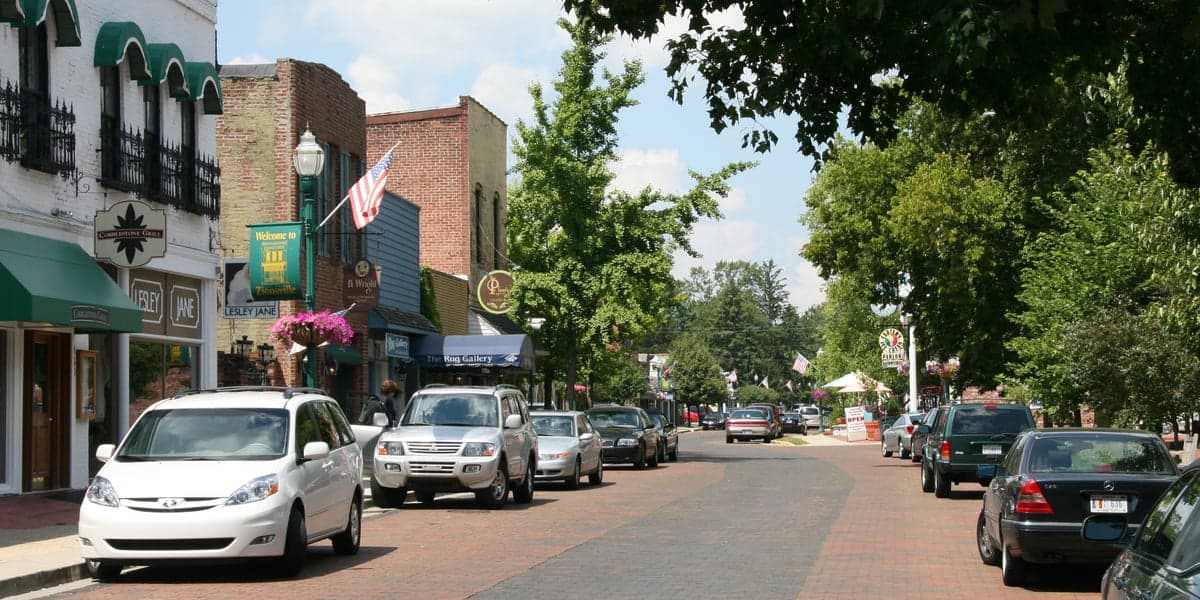
Photo: Wikipedia
Political ClimatePolitical Climate in Zionsville, IN
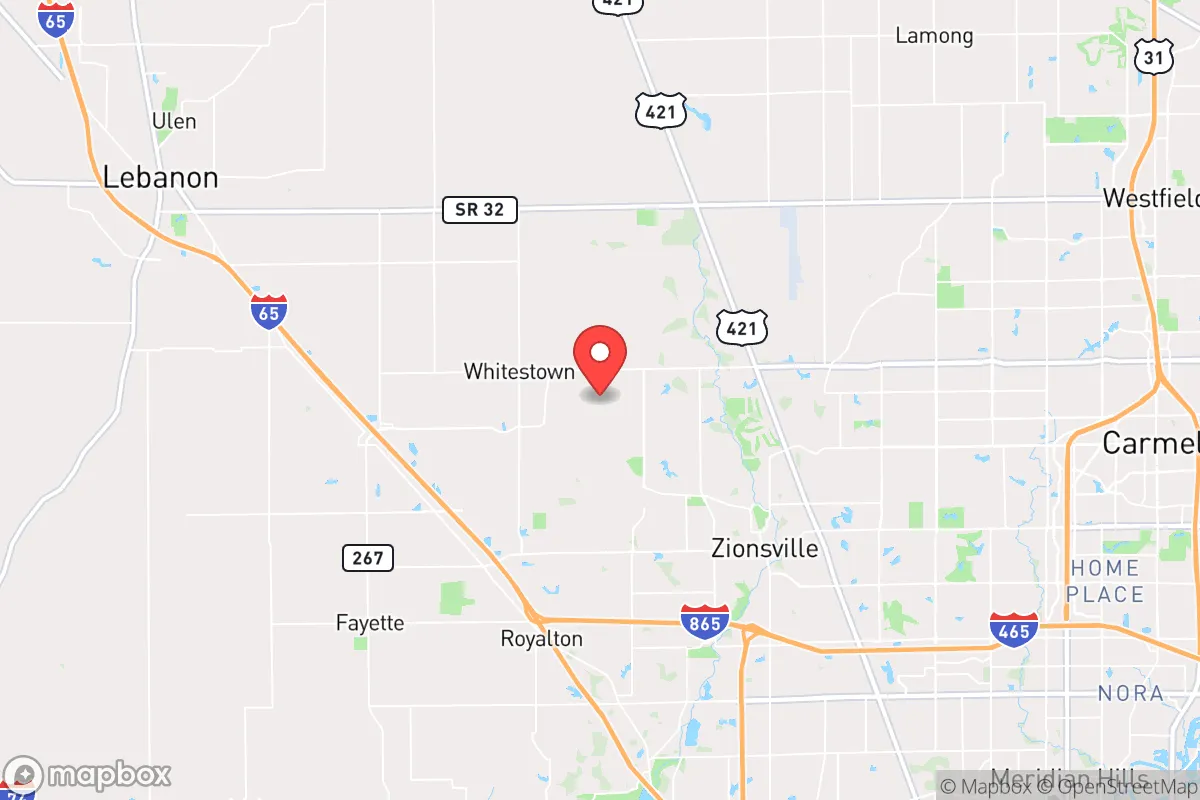
District shown is the primary district for this city’s centroid. Cities may span multiple districts.
Local Political AnalysisPolitical Analysis of Zionsville, IN
Zionsville has long been a reliably conservative stronghold, and that hasn't changed much at the ballot box. The area carries a Cook PVI of R+15, meaning it votes about 15 points more Republican than the national average. But if you've lived here as long as I have, you've noticed the political winds shifting under the surface. The old-school, small-government conservatism that defined this town for decades is now bumping up against a wave of new arrivals from places like Indianapolis and Chicago, and some of those folks bring a different set of priorities. The voting patterns still lean red, but the conversations at the coffee shop and the school board meetings are getting a lot more interesting—and a lot more tense.
How it compares
Drive ten minutes east to Carmel, and you're in a different world. Carmel has embraced a more progressive, high-density, transit-oriented vision, with a Republican mayor who governs like a moderate Democrat on many social and fiscal issues. Zionsville, by contrast, has fought to keep its rural character and its local control. Head south to Indianapolis proper, and the contrast is even starker—Marion County is a deep blue island surrounded by a sea of red. Zionsville sits in Boone County, which is one of the most reliably Republican counties in the state, but even here, the margins have tightened. In the 2020 presidential election, Boone County went for Trump by about 25 points, down from 30 points in 2016. That 5-point shift might not sound like much, but it's a warning sign for those of us who value limited government and personal freedom. The new subdivisions popping up along 106th Street are bringing in families who are less concerned with property rights and more interested in things like bike lanes and diversity initiatives.
What this means for residents
For the long-time resident, the biggest concern is government overreach creeping into everyday life. The town council has already debated mask mandates, zoning restrictions on short-term rentals, and even a proposed "welcoming" resolution that felt like a foot in the door for more progressive social policies. So far, the conservative majority has held the line, but it's a constant battle. What this means for you is that your property rights, your school choice, and your ability to live your life without a bunch of red tape are all on the table. The school board, in particular, has become a battleground over curriculum transparency and parental rights. If you value the freedom to raise your kids without the state telling you what they can and can't learn, you need to stay engaged. The next few election cycles will determine whether Zionsville stays a place where the government stays out of your business or starts acting like a mini-Indianapolis.
Culturally, Zionsville still feels like a small town where neighbors know each other and the Fourth of July parade is a big deal. But there's a growing divide between the old guard and the newcomers. The old guard wants to keep the zoning loose, the taxes low, and the government small. The newcomers often push for more "community" programs, which usually means more spending and more regulations. The biggest policy distinction you'll notice is in housing: Zionsville has resisted the high-density apartment complexes that have transformed Carmel and Fishers. That's a good thing for property values and for keeping the town's character intact, but it also means housing prices are climbing fast. If you're looking for a place where your voice still matters and the government hasn't gotten too big for its britches, Zionsville is still a solid bet—but don't take it for granted. Keep an eye on the town council meetings, and vote like your freedoms depend on it, because they do.

State Political ClimatePolitical Climate in Indiana
State Political AnalysisPolitical Environment in the State
Indiana has long been a reliably Republican state in presidential elections, voting for the GOP candidate in every cycle since 2008 except for Barack Obama’s narrow 2008 win. The state’s political center of gravity is solidly center-right, driven by a coalition of rural conservatives, suburban moderates, and a growing exurban population. Over the past 10-20 years, Indiana has shifted further right on cultural and economic issues, though the Indianapolis metro area has become a notable blue island, creating a sharper urban-rural divide than in decades past. For a conservative-leaning individual or family, Indiana offers a policy environment that generally prioritizes low taxes, gun rights, and school choice, but recent trends warrant a close look at where the state is headed.
Urban vs. rural divide
The political map of Indiana is a study in contrasts. The Indianapolis metro area, including Marion County and its inner-ring suburbs like Carmel and Fishers, has become increasingly Democratic. Marion County has voted blue in every presidential election since 2008, and the affluent, educated suburbs of Hamilton County—once a GOP stronghold—have shifted purple, with Joe Biden winning Hamilton County by a slim margin in 2020. Meanwhile, the rest of the state is deeply red. Rural counties like Kosciusko (home to Warsaw), Steuben, and Gibson routinely deliver 70-80% of their votes to Republican candidates. The state’s second-largest city, Fort Wayne (Allen County), remains a GOP bastion, while Evansville (Vanderburgh County) and South Bend (St. Joseph County) are competitive but lean right. The divide is stark: the I-69 corridor from Indianapolis to Bloomington (home to Indiana University) is a liberal pocket, while the rest of the state’s small towns and farming communities are reliably conservative. This geographic split means state-level politics are dominated by rural and suburban Republicans, but the growing population in the Indianapolis suburbs is slowly shifting the balance.
Policy environment
Indiana’s policy environment is broadly favorable for conservatives. The state has a flat income tax rate of 3.15% (set to decline further under recent legislation), no estate tax, and a sales tax of 7%. Property taxes are capped at 1% of assessed value for owner-occupied homes, a major draw for families. The regulatory climate is business-friendly, with a right-to-work law (enacted in 2012) and a low unionization rate. On education, Indiana was an early adopter of school choice, with the Choice Scholarship Program (vouchers) and a robust charter school sector. The state also passed a near-total abortion ban in 2022 (Senate Enrolled Act 1), with limited exceptions. Election laws are moderately restrictive: voter ID is required, early voting is available for 28 days, and no-excuse absentee voting was expanded during COVID but later rolled back. Gun laws are among the most permissive in the Midwest—Indiana is a constitutional carry state (permitless carry since 2022) and has a “stand your ground” law. However, the state does have a red flag law (the “Jake Laird Law”), which allows for temporary firearm seizure via court order, a point of contention for some gun rights advocates. For a conservative newcomer, the policy environment is largely aligned with limited government principles, though the red flag law and the state’s reliance on property taxes (even with caps) are worth noting.
Trajectory & freedom
Indiana’s trajectory on personal freedom has been mixed over the past decade. On the positive side for conservatives, the state has expanded gun rights significantly: the 2022 permitless carry law (House Enrolled Act 1296) removed the requirement for a license to carry a handgun, and the 2023 law allowing teachers to be armed in schools (House Enrolled Act 1177) strengthened school safety. Parental rights were bolstered by the 2023 law requiring schools to notify parents of any changes to a student’s health or well-being (Senate Enrolled Act 480), and the state banned gender-affirming care for minors in 2023 (Senate Enrolled Act 480). Medical freedom saw a setback with the 2022 abortion ban, but that aligns with conservative values. On the concerning side, the state’s red flag law remains on the books, and there have been efforts to expand it. Additionally, the state’s COVID-era emergency powers were a flashpoint—Governor Eric Holcomb’s executive orders during the pandemic drew criticism from conservatives who felt they overreached, leading to a 2021 law (House Enrolled Act 1123) that limited the governor’s emergency powers. Overall, Indiana has moved toward greater individual liberty on guns, parental rights, and medical choice for minors, but the red flag law and the state’s relatively high sales tax (7%) are areas where freedom advocates remain vigilant.
Civil unrest & political movements
Indiana has seen its share of political activism, but it has been less volatile than many states. The 2020 Black Lives Matter protests in Indianapolis were large and occasionally violent, leading to property damage and a controversial police response. In response, the state legislature passed a law in 2021 increasing penalties for rioting and blocking highways, which was seen as a crackdown on protest activity. On the right, the Indiana Firearms Coalition and local 2A groups are active, particularly in rural areas like Rush County and Henry County. Immigration politics are relatively low-key—Indiana has no sanctuary cities, and the state passed a law in 2011 (Senate Enrolled Act 590) requiring local law enforcement to cooperate with federal immigration authorities. Election integrity has been a topic of debate, with the 2020 election sparking calls for tighter security, leading to a 2021 law (House Enrolled Act 1316) that standardized drop box locations and shortened the absentee ballot request window. There is no significant secession or nullification movement in Indiana, though some rural counties have passed symbolic resolutions opposing federal overreach. For a new resident, the political climate is generally stable, with activism focused on gun rights, school choice, and election integrity rather than street-level unrest.
Projection
Over the next 5-10 years, Indiana is likely to remain a Republican-leaning state, but the margin of control may narrow. The Indianapolis suburbs—particularly Hamilton County and Hendricks County—are growing rapidly and becoming more diverse and educated, trends that typically push areas leftward. If this pattern continues, the state could become more competitive at the statewide level, similar to what has happened in Ohio and Michigan. However, the rural and exurban areas are also growing, and the state’s in-migration from blue states (like Illinois and California) is still relatively small compared to the Sun Belt. The state’s Republican supermajority in the legislature is likely to hold for the near term, but the governor’s race in 2028 could be competitive if the Indianapolis suburbs continue to trend blue. For a conservative moving in now, the state will likely remain a safe bet for the next decade, but the political landscape will become more nuanced, with the Indianapolis metro area becoming a more influential blue counterweight. The key battleground will be the suburbs—places like Noblesville and Zionsville—where the fight for the state’s future will be decided.
For a conservative individual or family considering Indiana, the bottom line is this: you’ll find a state that largely respects your values on taxes, guns, and education, but you should be aware of the growing blue influence in the Indianapolis suburbs and the state’s red flag law. The policy environment is solidly center-right, and the trajectory is stable, but the cultural and political divide between urban and rural areas is real. If you’re looking for a place where your vote counts and your way of life is respected, Indiana is a strong choice—just keep an eye on the suburbs, because that’s where the future of the state is being shaped.
* Values derived from national, state, county, city and local statistics and may differ in a specific area. Last updated: 2026-04-22T10:06:46.000Z
Narrative content on this page is AI-generated and may contain mistakes. Verify any details that matter before acting on them.
ReloMaps may earn a commission from affiliate links at no extra cost to you.

